
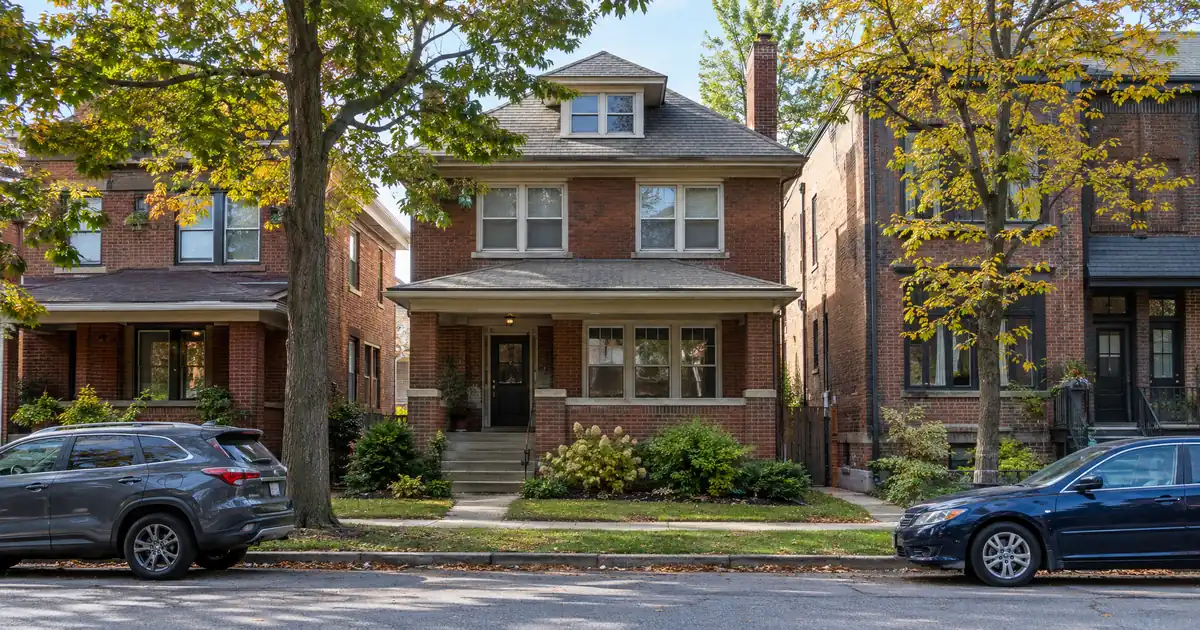
Tourism in Hocking County produces roughly $295 million in total economic impact, including 1,635 jobs, according to a Tourism Economics study reported by the Logan Daily News. Nearly every DSCR page written about the region treats that money as a cabin story. For an investor planning a cash out refinance investment property strategy in Hocking Hills, Ohio, the more interesting asset is the one the tourism boom has made scarce: the long-term lease on an in-town Logan duplex or workforce house.
Investors underwriting deals in Hocking Hills, Ohio can use DSCR programs Lendmire arranges — available across 41 markets, including D.C. — and Lendmire (NMLS# 2371349), a non-QM mortgage broker, structures these files around rental income rather than personal income paperwork, subject to lender guidelines. This report is written for owners who already hold a rental and want to pull equity out of it. It skips purchase mechanics. It tests whether the coverage math supports a cash-out, and it is skeptical where the numbers are thin.
DSCR Cash-Out Calculator
Run the cash-out numbers in Hocking Hills, OH
Rate source: Freddie Mac 30-yr average via FRED® — Federal Reserve Bank of St. Louis · effective Sep 24, 2026
Prefilled with starting assumptions — enter your property’s value, balance, taxes, and insurance for a more accurate picture.
Program parameters update from Lendmire’s centralized guideline source. Taxes and insurance are editable estimates.
As of Sep 24, 2026 · General Freddie Mac market benchmark, not a Lendmire loan offer. Property value, balance, taxes, and insurance are editable estimates. Maximum loan-to-value varies by lender, program, property type, and seasoning. Not a Loan Estimate, approval, or commitment to lend. Program availability and eligibility are subject to lender guidelines, credit approval, property review, and underwriting.
Key Takeaways:
A DSCR cash-out refinance in Hocking Hills, Ohio fits owners of in-town, long-term-leased rentals, underwritten primarily on the property’s rental income measured against its full monthly obligation. It is a poor fit for cabins and gorge-corridor stock built for lodging.
- Logan’s median sale price is $260,000 per Redfin, but only nine homes sold in the period measured.
- Single-unit apartment rents near $1,400 model below 1.00 against that value, so unit count matters.
- Cash-out is capped at 75 percent LTV with about six months of seasoning, subject to lender guidelines.
- Cabin and log-home stock falls outside these programs or underwrites poorly on long-term rent.
Hocking Hills Market Snapshot
A quick read on the Hocking Hills investor landscape — figures come from the cited sources below. Confirm current property-level numbers before underwriting.
| Metric | Detail |
|---|---|
| Home prices | Median value $208,879 (NeighborhoodScout, Logan) |
| Recent appreciation | 10-year appreciation 107.09% (NeighborhoodScout, Logan) |
| Employment | 1,635 jobs (Logan Daily News, tourism) |
| Vacancy | 6.8% rental (Wikipedia, Hocking County, Ohio) |
The Scarce Asset Isn’t the Cabin
Hocking Hills runs a lodging economy on top of a small-town housing base, and the conversion of homes into short-term rentals has thinned workforce housing. A local tourism official told WOUB that Logan is where a large share of the region’s workforce lives, and that conversions eliminate housing those workers could rent. That is the thesis: when supply of long-term leases shrinks while the tourism base keeps employing people, stabilized in-town rentals hold their occupancy.
The claim needs a fence around it. It is an analytical inference from the sources, not a measured rent premium, and no source in the research quantifies one. Treat it as a reason to prefer one property type over another, not as a forecast.
The employment base that supports it is real but narrow. OhioBiz names Logan-Hocking Local Schools, Hocking Valley Community Hospital, and General Mills as the county’s largest employers, with no headcounts published. Hocking County held 28,050 residents at the last decennial count, and Logan, the county seat, sits around 7,000. USAFacts puts Logan nearer 6,600 more recently. So this is a flat-to-slightly-shrinking town, not a growth story. Nobody should underwrite a refinance here on population gains.
Housing type matters too. Per NeighborhoodScout, single-family detached homes are 70.55 percent of Logan’s housing units. Duplexes and small multifamily are the minority product, which makes them harder to find and, for the right building, more valuable to a cash-out lender looking at coverage.
Logan In-Town: Where the Coverage Math Works
The in-town Logan market, ZIP 43138, is the best DSCR fit in the county. It holds the older single-family and small multi-unit stock, and it sits near the county’s anchors: the hospital, the school district, General Mills, and the downtown and Hocking River corridor.
Hocking Valley Community Hospital is a 25-bed critical access hospital. It is affiliated with OSU Wexner Medical Center and has operated as a non-profit community hospital since 1949. Stock within walking distance of that campus and the downtown core is the most defensible location for a long-term-rental refinance. Employee counts are unpublished, so keep that argument qualitative.
Here is the catch on pricing. Redfin reports a Logan median sale price of $260,000, up 7.5 percent year over year. Homes sold after 84 days on the market versus 61 a year earlier. Only nine homes sold in that window, which is a tiny sample, so the median says more about which houses happened to trade than about a market trend. NeighborhoodScout shows a median house value of $208,879 and a ten-year cumulative rise of about 107 percent. The two sources conflict because their methods differ. An appraiser will find comps somewhere between them, and the spread is the appraisal risk.
Rents come from Zumper, which reports average Logan rents of $1,400 for apartments and $2,070 for houses, with the one-bedroom average at $600 and the two-bedroom at $1,500. Zumper itself notes it lacks enough inventory for neighborhood-level data, so these are directional. The $600-to-$1,500 spread between unit sizes is wide, and it tells an investor that unit mix drives revenue in this town more than location does.
A published benchmark helps. HUD Fair Market Rent for the area runs from $737 to $1,383 depending on unit size, per a secondary source citing HUD. The range appears county-wide. It is a neutral, conservative rent input when an appraiser’s market-rent schedule comes back thin, and a fair sanity check on any lease that looks rich.
Run the Coverage Math Before You Trust the Appraisal
The rent-to-value ratio is the first filter. Dividing the $1,400 apartment average by the $260,000 median gives about 0.54 percent per month. That is an illustrative ratio built from two thin sources, not a market-verified yield. It is also well short of what most long-term-rental DSCR files need.
To see why, run the numbers on three modeled cases. These are assumptions, not sourced facts. All three assume a property appraising near the $260,000 Redfin median, a 75 percent LTV cash-out, and coverage measured as monthly rent divided by full PITIA (principal, interest, taxes, insurance, and any HOA dues) on a 30-year structure.
| Modeled case | Rent assumption | Approx. coverage |
|---|---|---|
| Single apartment unit | $1,400 | About 0.8x |
| Single-family house | $2,070 | About 1.15x |
| Duplex, two doors | $1,000 each | About 1.1x |
Figures include taxes and insurance and are rounded down. Treat them as modeling, not quotes.
The apartment case is the warning. A lone $1,400 lease against a $260,000 valuation sits below the 1.00 standard that most DSCR programs are built around. Some lenders review lower or no-ratio scenarios, but those usually require stronger compensating factors, lower leverage, different pricing, or more equity left in the property. Options a lender may review on a sub-1.00 file include a sub-1.00 program, an interest-only structure, or a lower LTV. Whether any of them applies depends on lender guidelines, credit approval, and property review.
The house and duplex cases clear 1.00 by thin margins. So the logic points toward multiple doors on one roof. A second lease lifts gross rent against a single obligation, which improves coverage and supports a larger refinance balance. The effect is strongest where price per door is low, and that points to Logan’s older in-town buildings. No duplex, triplex, or fourplex price and rent series exists in the research, so this is a method to apply to a specific building, not a market figure to quote.
One more input belongs in the model. According to Census data as compiled on Wikipedia, Hocking County’s rental vacancy rate was 6.8 percent, and 26.9 percent of occupied units were renter-occupied. The 12.0 percent total vacancy figure is inflated by seasonal and second-home units, so do not read it as rental vacancy. A separate aggregator suggests in-town Logan runs tighter than the county, but its methodology is undisclosed, so treat that as directional only. A 6.8 percent haircut is the conservative input.
DSCR files in markets like this one typically look the same on paper. The rent schedule is modest, the comp set is wide, and the appraisal is the swing factor. The stronger files usually arrive with a signed lease in place, a documented rent history, and a clear view of what the property appraises at before the application goes in. When comps disagree by tens of thousands of dollars, as the Redfin and NeighborhoodScout figures do here, the file that survives is the one sized on in-place rent rather than hoped-for value.
What the 75 Percent Cap Actually Leaves You
Equity extraction here is constrained from three sides, and investors tend to count only one of them. The program ceiling on cash-out is 75 percent LTV, a hard cap, and the purchase-side 80 percent figure does not carry over. Seasoning runs about six months of ownership, measured from title recording. Reserves typically run about six months of PITIA. Credit tiers on these programs run from 620 up through 660, 680, and 700, and stronger scores generally improve eligibility and pricing, subject to lender guidelines. Loan amounts go up to $3,000,000 on standard programs, and smaller balances route through select lenders in the network, which is relevant in a market where building values are modest.
What that leaves is not a guaranteed cash figure. Equity available depends on rent used for lender review, PITIA, reserves, and the LTV ceiling, in that order of importance. Consider an investor holding a Logan duplex she bought on the older in-town grid and has owned past the seasoning window. If the building appraises near the median, the 75 percent cap sets the ceiling. If coverage on the existing leases lands near 1.1x, the file has room but not much. If it lands under 1.00 at 75 percent, the balance may need to come down until the ratio clears.
Appreciation is a weaker lever here than the headline number suggests. A ten-year gain of about 107 percent sounds like a large cushion. But the current market shows longer days on market, a tiny sales sample, and conflicting valuations. A realtor quoted by Spectrum News said that a decade ago a young family could find a home under $150,000, and the same home now costs about $300,000. That is anecdotal, but it fits the shape of the run-up.
This one is a genuine toss-up for timing. Investors who bought early have large paper equity, and the cap makes most of it reachable. But a cash-out sized on that paper gain carries the most appraisal risk. The more defensible approach is to size the refinance on rent and treat any value gain as upside. A Logan deal is cash-flow-led, not appreciation-led.
For the mechanics of how the program works, see the guide “The Refi Options”. For a broader look at what sits alongside it, the brokerage’s refinancing options page covers rate-and-term alternatives.
Nelsonville, West Logan, and Green Township: Thin Data, Real Caveats
Beyond Logan’s core, the research runs thin. No reliable price or rent series exists for these submarkets, so the notes below are qualitative.
Nelsonville sits about 12 miles from Logan and hosts Hocking College, a public community college on a 2,300-acre campus. It brings student and workforce demand along with the Hocking Valley area’s affordable housing stock. Older enrollment claims for the college are outdated, and current figures conflict by source, so no student count is used here. Student-oriented rentals carry turnover and lease-cycle questions that a lender’s rent review will probe, which is reason to document the lease history carefully.
West Logan, a census-designated place with 912 residents, sits on the Hocking River between Logan and US 33. No price or rent data exists for it. Green Township, rural and southeast of Logan, counts 3,224 residents and is mostly single-family. Rural single-family is harder to appraise and harder to lease on a stable schedule. Both are candidates for a refinance only when the owner can document a real rent history.
(Honestly, for a first refinance in this county, the smaller in-town property with a clean lease file usually beats the larger rural parcel: less exit liquidity, but fewer comp problems.)
Skip the Gorge Corridor.
The Laurelville, Rockbridge, and South Bloomingville stretch near Old Man’s Cave is cabin and lodge territory. The region’s lodging is predominantly cabins, lodges, and single-family detached homes, according to WYSO. That stock is built for visitors, not for twelve-month leases.
Two problems follow. First, a long-term-rent refinance on a cabin underwrites poorly, because the appraiser’s market-rent schedule has few true long-term comps to lean on. Second, manufactured homes, log homes, and barndominiums fall outside the network’s DSCR programs entirely. Many cabins in this region are log construction. An owner planning to refinance a cabin should confirm the construction type before spending on an appraisal, not after.
DSCR vs. conventional financing
Two common ways to finance an investment property in Hocking Hills, OH. They qualify you differently — here’s how investors weigh them.
Why investors choose it
- Qualifies on the property’s rental income — no personal tax returns, W-2s, or pay stubs needed to document income.
- No personal debt-to-income ceiling to clear, so existing mortgages and obligations don’t cap your borrowing the same way.
- Can be closed in an LLC, keeping the property inside a business entity.
- Built for scaling — not held to the limit on number of financed properties that conventional financing applies.
- Underwriting centers on the deal: generally qualifies when the rent covers the payment, a 1.00x coverage ratio being a common baseline (confirmed in underwriting).
- Designed specifically for investment property, including long-term and, where the program allows, short-term rentals.
Where it’s strong
- Often the lowest ongoing financing cost for a buyer who fully qualifies on personal income — a fit for a first property or a cost-first purchase.
Trade-offs for investors
- Requires full personal income documentation and must fit within a debt-to-income limit — salary, existing debts, and other mortgages all count.
- Typically held in your personal name rather than a business entity.
- Caps how many financed properties you can carry, which can become a ceiling as a portfolio grows.
- Evaluates you as a borrower as much as the property, which usually means more paperwork.
How investors usually choose: a first or single property often optimizes for the lowest financing cost; portfolio builders often optimize for leverage, vesting in an LLC, and scaling past conventional caps. The right answer depends on your goals, the property, and current guidelines — both paths run through select lenders in Lendmire’s wholesale network, with eligibility and terms confirmed in underwriting.
Short-term rental rules here have been moving. Investors should verify current local rental rules, taxes, and insurance with qualified local professionals before building any refinance plan on property in this corridor.
Where the Proceeds Go
Cash-out proceeds are capital, and capital has to land somewhere that clears its own coverage test. In this market, the best destination is usually another small in-town building underwritten on in-place rent, not a larger bet on the tourism corridor. The refinance does not fix a weak property. It recycles equity from a property that already covers itself into one that also must.
Reserves deserve a line in the plan. With about six months of PITIA typically required, an investor should count reserves before counting proceeds, because part of the extracted equity may need to stay liquid. Investors who want to see the combined math on their own property can review their scenario with the brokerage at 828-256-2183.
The qualification side follows the same logic. The guide “What Is a DSCR Loan” explains the coverage ratio in full, and the comparison shows where it differs from conventional underwriting. Investors working elsewhere in the state can start with Lendmire’s Ohio DSCR platform.
Frequently Asked Questions
How do you qualify for a DSCR cash-out refinance in Hocking Hills?
The property’s rent is measured against its full monthly obligation, and most programs are built around a 1.00 minimum ratio. The property also has to clear about six months of seasoning, stay at or below 75 percent LTV, and meet a credit floor of 620, typically. Reserves of about six months of PITIA are common. All of it is subject to lender guidelines, credit approval, and property review.
What are the requirements for an investment property loan in Hocking Hills, Ohio?
A rental property that is not a manufactured home, log home, or barndominium, with documented rent, a qualifying ratio, and reserves. Credit tiers run from 620 to 700, and stronger scores generally help. Smaller Logan-area balances route through select lenders in the network rather than standard programs. Exact eligibility depends on the lender, borrower profile, and state overlays.
Can a cabin near Old Man’s Cave be refinanced through these programs?
Often not. Log-construction cabins fall outside the network’s DSCR programs, and cabin stock is built for lodging rather than long-term leasing, so it rarely produces a clean long-term-rent schedule. In-town duplexes and workforce single-family homes in Logan are a better fit.
Can a self-employed investor buying in Hocking Hills be reviewed for DSCR financing?
Yes, subject to lender guidelines. Lendmire arranges DSCR investor loans and these files are commonly evaluated around the property’s rental income rather than personal income documents. Whether a specific property and borrower qualify depends on program terms and credit review.
How much equity can a Logan duplex realistically release?
Less than the paper gain suggests. The ceiling is 75 percent LTV, and coverage on the actual leases can cut it lower. Conflicting valuations between Redfin and NeighborhoodScout mean the appraisal is the main uncertainty, so sizing the refinance on in-place rent is safer than sizing it on expected appreciation.
The Bottom Line
Hocking Hills will keep attracting lodging capital. But the owners who benefit from a cash-out here are the ones holding stabilized in-town rentals with documented leases, not the ones chasing the gorge corridor. The investors who pull equity from well-leased Logan duplexes now will be the ones with capital ready when the next in-town building comes to market.
For current guidelines and terms, see Lendmire’s DSCR loan programs page.
About Lendmire
Lendmire (NMLS# 2371349), a non-QM mortgage broker serving investors in 41 markets including Washington, D.C., helps structure DSCR scenarios commonly evaluated around a property’s rental income rather than personal income paperwork, subject to lender guidelines. Recognized by Scotsman Guide as a top-ranked workplace in 2025 and a top-ranked workplace in 2026, Lendmire places loans through wholesale investor lenders and is not a direct lender.
Get Started
Ready to find the right loan for you?
In about 30 seconds you can review financing options available for your investment property. No commitment required.
Informational only. Not a Loan Estimate, approval, or commitment to lend. Program availability and eligibility are subject to lender guidelines, credit approval, property review, and underwriting.
References
1. Logan Daily News: Tourism impact study
2. Redfin: Logan housing market
3. NeighborhoodScout: Logan real estate
4. Wikipedia — Hocking County, Ohio
5. WOUB: Economic gains and housing
7. USAFacts: Hocking County population
8. Hocking Valley Community Hospital
9. Zumper: Logan rent research
10. secondary source citing HUD
11. Spectrum News 1: Tourism impact
12. Hocking College
13. WYSO: Hocking Hills crowds
14. Scotsman Guide — Top Workplaces 2025
15. Scotsman Guide — Top Workplaces 2026
This article is part of Lendmire’s investment property cash-out refinance program — full qualification details, guidelines, and scenarios live on the program page.
Related reading: DSCR Cash Out Refinance in Hocking Hills, Ohio: The 2026 DSCR Financing Guide to Route 664 · DSCR Loans In Hocking Hills, Ohio · DSCR Investment Property Loans in Logan, OH: What It Takes to Qualify on Local Rent
Guides: Investment Property Cash-Out Refinance in Ohio
Brandon Miller
Founder & CEO, Mortgage Loan Originator, Lendmire LLC
- Mortgage Loan Originator · NMLS# 1129696 · Verify on NMLS Consumer Access
- North Carolina Real Estate Broker · License# 343312 · Verify on NCREC
- North Carolina Insurance Producer · License# 19053198 · Property, Casualty, Life, Health · Verify on NAIC SBS
- Lendmire LLC · Firm NMLS# 2371349 · Verify firm licensure
Disclosure information. Lendmire is a state-licensed mortgage brokerage under NMLS# 2371349. Lendmire is not a depository institution, direct lender, or financial advisor — all loans referenced are placed through wholesale lender partners and are subject to each lender's underwriting standards. This article is provided for general informational purposes and is not a commitment to lend, nor does it constitute financial, legal, or tax advice. Loan programs, terms, rates, and qualification standards change without notice and depend on borrower profile, property type, and the state in which the subject property is located. Equal Housing Opportunity provider. NMLS Consumer Access: nmlsconsumeraccess.org.