
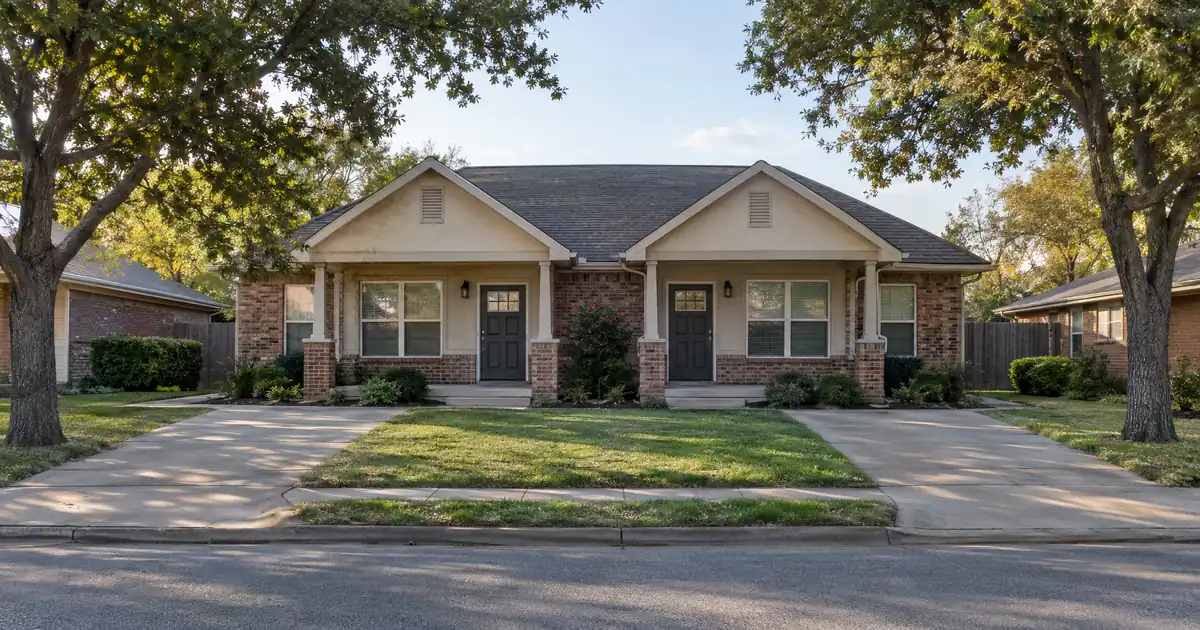
Run a typical Amarillo single-family rental through a DSCR cash-out at the 75 percent LTV ceiling, with taxes and insurance in the payment, and the coverage number generally lands in the high 0.80s to low 0.90s, short of 1.00 across the plausible rate range. RentMarker, drawing on Zillow and Census data, pairs a typical home value of $211,834 with a typical rent of $1,278, a screening gross yield of 7.24 percent before costs. That yield looks healthy until the full monthly obligation goes in the denominator, because Texas property taxes and insurance take a meaningful share of the rent before principal and interest are counted. This article is about what that gap means for an investor who already owns property here and wants to pull equity out of it, and why a duplex or a lower-leverage structure may be the more workable path.
TL;DR: A DSCR cash-out refinance in Amarillo, Texas is underwritten primarily on the property’s rental income measured against its full monthly obligation, with proceeds capped by a 75 percent LTV ceiling and the file’s reserves, credit and seasoning.
DSCR Cash-Out Calculator
Run the cash-out numbers in Amarillo, TX
Rate source: Freddie Mac 30-yr average via FRED® — Federal Reserve Bank of St. Louis · effective Sep 24, 2026
Prefilled with starting assumptions — enter your property’s value, balance, taxes, and insurance for a more accurate picture.
Program parameters update from Lendmire’s centralized guideline source. Taxes and insurance are editable estimates.
As of Sep 24, 2026 · General Freddie Mac market benchmark, not a Lendmire loan offer. Property value, balance, taxes, and insurance are editable estimates. Maximum loan-to-value varies by lender, program, property type, and seasoning. Not a Loan Estimate, approval, or commitment to lend. Program availability and eligibility are subject to lender guidelines, credit approval, property review, and underwriting.
- Median single-family rent against the full monthly obligation models below 1.00 at 75 percent LTV.
- Older duplexes stacking two rent streams can model above 1.00, if leases are documented.
- Pantex payroll of 4,626 employees underpins long-term tenant demand (ABC 7 Amarillo).
- Modest appreciation means equity usually comes from purchase basis or renovation, not market drift.
Amarillo Market Snapshot
A quick read on the Amarillo investor landscape — figures come from the cited sources below. Confirm current property-level numbers before underwriting.
| Metric | Detail |
|---|---|
| Employment | 5,000+ combined hospital jobs (Amarillo Economic Development) |
| Vacancy | 3.0–3.8% SFR (HUD Comprehensive Housing) |
What Does the Coverage Number Look Like at 75 Percent LTV?
At the 75 percent LTV ceiling, a median-priced Amarillo single-family rental models in the high-0.8s on coverage, while an older duplex at a typical Amarillo price can reach 1.0 or better. The difference is two rent streams on one purchase price. Taxes and insurance sit inside both numbers.
Here is how the number is built. DSCR is monthly rent used for lender review divided by the full monthly obligation: principal, interest, taxes, insurance and any HOA dues. Most standard programs use a 1.00 benchmark because rent covers the obligation at that level. Some lenders will look below it, but usually with lower leverage, stronger credit, deeper reserves or different pricing. The guide “What Is a DSCR Loan” covers the mechanics in full.
Run the numbers on two modeled cases. These are illustrative inputs, not market data. The first is a house valued near the citywide figure above, renting at the $1,278 typical rent. The second is a duplex at the average listing price of $223,184 from Realmo, with each side renting for a modeled $1,000. A sourced Amarillo sample on Trulia shows a 2-bed, 1-bath duplex unit asking $725. Including taxes and insurance, the house sits around 0.85 to 0.9. The duplex models near 1.3 at $1,000 a side and around 0.95 at $725 a side.
Read that spread carefully. The duplex clears the benchmark only if the leases hold up. Asking rents on a thin listing sample are not leases.
Where Does the Equity Come From When Appreciation Is Modest?
In Amarillo, cash-out equity comes mostly from how the investor bought the property, not from market drift. Zillow’s home value index shows growth of about 3.5 percent year over year. Redfin’s median sale price of $234,900 was essentially flat, down 0.043 percent. The two measure different things (a value index versus actual sales), but both point the same way: low single digits.
That shapes the whole cash-out thesis. An investor holding a rental bought at a discount, or one rehabbed after purchase, has real equity to pull. An investor who paid market and waited has mostly paid down principal. Seasoning matters as well: programs typically look for about six months of ownership measured from title recording. Texas is a non-disclosure state, so sold prices aren’t public record. Appraisers lean on MLS comps and listing data that investors can’t see directly.
Picture an investor who bought an older duplex at roughly 60 percent of its renovated value and finished the work. At a 75 percent LTV ceiling, that gap is the cash-out. Another investor who bought at full value and sees 3 percent appreciation has almost nothing to pull. Same market, opposite outcomes. Equity available is never a guaranteed figure. It depends on rent used for lender review, the full obligation, reserves (typically about six months) and that 75 percent ceiling, all subject to lender guidelines.
San Jacinto, Southwest and the Rest
San Jacinto and the Route 66 corridor offer the best small-multifamily fit for a cash-out. Wolflin and City View are strong neighborhoods but poor coverage plays. The Soncy corridor is newer workforce territory. East Amarillo is the value bet that needs the most skepticism.
San Jacinto and the Route 66 Historic District. Homes.com describes a mix of ranch homes, bungalows and multifamily properties built in the 1920s and 1940s, mostly on small lots. RentCafe apartment averages run $1,176 in the Historic Route 66 District and $955 in Old San Jacinto. Those are apartment figures, not house rents, and no reliable submarket price source exists. Tenants are service and hospitality workers plus downtown employees near the Sixth Street shops and restaurants. This is where converted and small buildings concentrate, so it is where a duplex or fourplex thesis is most testable.
Wolflin, Westcliff, City View and Sleepy Hollow. Homes.com puts neighborhood medians at $278,900 for Wolflin, $287,500 for Westcliff and $315,000 for City View. Sleepy Hollow sits at $420,000 and The Colonies at $658,700. With rents anchored to a roughly $1,100 to $1,300 city, coverage at those prices falls well short. These are hold-for-stability neighborhoods near the medical district, not cash-out candidates. Run coverage honestly before assuming otherwise. (The medians are undated listing figures, so treat them as directional.)
Southwest and the Soncy corridor. Soncy apartment rents average $1,019 and Amarillo SouthWest $989. Newer single-level and build-to-rent product serves families and medical workers near the hospital district and I-40. Newer construction tends to carry less deferred maintenance, which helps an appraisal.
East Amarillo. Rentastic calls it more affordable and attractive to value-seeking investors. That’s all this article will claim, since the sales data is too thin to quote. Low basis can create large equity spreads. It can also mean uneven comps and a harder appraisal.
Why Pantex Matters More Than Any Listing Portal
The most defensible demand driver in Amarillo is Pantex, not a neighborhood trend. ABC 7 reports 4,626 employees, making it the largest employer in the Texas Panhandle, up from about 3,100 a decade earlier. NewsChannel 10 reports its management contractor added around 1,500 employees and opened an Amarillo office campus. Defense payroll lands in the local rental pool.
Other anchors per the Dallas Fed: Bell’s helicopter plant at about 900 workers and Southwestern Public Service at more than 1,400. Amarillo EDC puts BSA Health System and Northwest Texas Healthcare System at more than 5,000 full-time employees combined. Unemployment held at 3.1 percent in TRERC’s Panhandle outlook, which also describes a proposed Fermi data-center campus near Pantex at 18 million square feet and about 11 GW. That campus is a possible demand catalyst, not a lease. Underwrite on what tenants pay today.
The population base is modest. Census QuickFacts shows 200,411 residents in the city. Census Bureau QuickFacts shows 278,330 across the metro, with median household income of $69,595. Rent growth has a ceiling set by those incomes, so a cash-out file should be underwritten on today’s rents, not assumed increases.
One soft spot: West Texas A&M enrollment fell about 4 percent to 8,866 from 9,257 the prior fall. Canyon is 15 to 20 minutes south, so the effect on Amarillo rentals is indirect.
Duplex or House? (Pick the Rent Evidence First)
For cash-out purposes, a documented duplex usually beats a single-family house in Amarillo, but only when leases back the rent and the comps support the value. The housing stock explains why. RentMarker puts single-family at 74.37 percent of units and large multifamily at just 8.45 percent. Small multifamily is a niche, and about 40.31 percent of occupied units are renter-occupied.
| Factor | Single-family | Small multifamily |
|---|---|---|
| Modeled coverage at 75 percent LTV | High-0.8s | About 0.95 to 1.3 |
| Comp depth | Deeper pool | Shallow, wide range |
| Appraisal basis | Sales comps | Often income-influenced |
| Main risk | Coverage shortfall | Rent and value uncertainty |
A local property manager’s blog, Blaze Property, says small multifamily is commonly underwritten at cap rates in the high-7s to 8-plus percent, above single-family. That is vendor commentary, not transaction data, but the logic is sound: income-based valuation rewards well-documented rents.
Working DSCR brokers see a recurring pattern in older, low-priced markets like this one: the appraisal is often where files get stuck. Files with complete leases, rent rolls, entity documents and a clean title package tend to move through lender review with fewer questions. The cleanest files come with rent evidence the appraiser can verify.
Comp depth is the practical constraint. Homes.com lists 64 multifamily properties averaging 45 days on market, priced from $67,000 to $3,650,000. That range spans duplexes through apartment complexes, so true 2-to-4 unit comps are scarce. Plan for a conservative LTV and an appraisal buffer.
Age is the other variable. HUD’s housing market analysis found about 80 percent of single-family rentals were built before 1980, against 62 percent nationally. Professionally managed detached homes ran 3.0 to 3.8 percent vacancy, though HUD’s apartment vacancy of 11.7 percent is older and softer. Older stock means condition matters at appraisal. Manufactured homes, log homes and barndominiums fall outside these programs.
What Does a Lender Want Before Proceeds Move?
A cash-out file needs a 1.00 coverage benchmark, a 620 credit floor (higher tiers of 660, 680 and 700 generally improve options) and reserves around six months of the full obligation. Ownership should be about six months seasoned, and the 75 percent LTV ceiling applies. All of it is subject to lender guidelines and property review.
Entity-held properties work too, subject to lender program eligibility, so LLC-owned Amarillo rentals are not a barrier. Loan sizes generally run up to $3,000,000 on standard programs, and smaller balances route through select lenders in the network. Most Amarillo balances fall in that smaller category.
The sensible order of operations: document the leases first, line up reserves second and order the appraisal last. Cash-out refinance details and the investor refinance breakdown cover how the two paths differ. Investors weighing this against bank financing can read Lendmire’s DSCR-versus-conventional breakdown. Conventional wins for a single, personally held rental with strong traditional employment income. DSCR wins when the portfolio is entity-held or when traditional personal-income documentation understates rental income. For a broader view, see Texas DSCR financing.
When Not to Pull Cash Here
The answer is no when the property models below 1.00 and the only reason to proceed is the cash. Some lenders review sub-1.00 structures, such as a sub-1.00 program or an interest-only structure. Those typically come with lower leverage, stronger credit or heavier reserves, and eligibility review depends on lender guidelines, credit approval and property review. Whether to use one is the better question.
If the property has a real value-add story, a sub-1.00 structure can be defensible. If the investor is reaching because no Amarillo rental they hold pencils at standard coverage, the signal points to the portfolio, not the loan type. Pulling equity to deploy into out-of-state markets where the math doesn’t work at current pricing is a similar trap. It is worth stress-testing before committing.
Whether to pull equity out is a genuine toss-up for investors holding Wolflin-type properties. The equity is real, but the rents don’t support much debt against it. Cash flow may argue for leaving it alone. Estate or portfolio-rebalancing reasons might argue otherwise.
DSCR vs. conventional financing
There are two common ways to finance an investment property in Amarillo, TX, and they qualify you differently — here’s how investors weigh them.
Why investors choose it
- Qualifies on the property’s rental income — no personal tax returns, W-2s, or pay stubs needed to document income.
- No personal debt-to-income ceiling to clear, so existing mortgages and obligations don’t cap your borrowing the same way.
- Can be closed in an LLC, keeping the property inside a business entity.
- Built for scaling — not held to the limit on number of financed properties that conventional financing applies.
- Underwriting centers on the deal: generally qualifies when the rent covers the payment, a 1.00x coverage ratio being a common baseline (confirmed in underwriting).
- Designed specifically for investment property, including long-term and, where the program allows, short-term rentals.
Where it’s strong
- Often the lowest ongoing financing cost for a buyer who fully qualifies on personal income — a fit for a first property or a cost-first purchase.
Trade-offs for investors
- Requires full personal income documentation and must fit within a debt-to-income limit — salary, existing debts, and other mortgages all count.
- Typically held in your personal name rather than a business entity.
- Caps how many financed properties you can carry, which can become a ceiling as a portfolio grows.
- Evaluates you as a borrower as much as the property, which usually means more paperwork.
How investors usually choose: a first or single property often optimizes for the lowest financing cost; portfolio builders often optimize for leverage, vesting in an LLC, and scaling past conventional caps. The right answer depends on your goals, the property, and current guidelines — both paths run through select lenders in Lendmire’s wholesale network, with eligibility and terms confirmed in underwriting.
Local rental rules, taxes and insurance vary by property, so check them with qualified local professionals before committing. Reach a DSCR broker at 828-256-2183 or compare DSCR options to run a specific property.
The Watchlist for the Next Quarter
Three indicators decide whether this market is worth moving on now or later:
- Pantex hiring and the Amarillo campus. Headcount growth sustains rent demand. A slowdown would show up in lease-up before it shows in prices.
- Duplex listing depth and days on market. Fewer comparable 2-to-4 unit sales means a tougher appraisal. Faster absorption would improve value support.
- The Fermi data-center campus timeline. Construction activity could lift workforce rentals, but only signed leases move a coverage number.
Frequently Asked Questions
How do you qualify for a DSCR cash-out refinance in Amarillo, Texas?
The property generally needs coverage around 1.00 or better, credit at or above 620, about six months of reserves and roughly six months of seasoning. Cash-out LTV tops out at 75 percent. Loan balances, property type and credit tiers all shape the final terms, subject to lender guidelines.
What are the requirements for an investment property loan in Amarillo, Texas?
Expect a lender to review rent evidence (leases or market rent), title, entity documents where relevant and the property’s condition. Older stock is common here, so appraisal and condition review matter.
Does Amarillo’s slow appreciation make a cash-out refinance pointless?
Not necessarily. Equity can come from purchase basis or renovation rather than market growth, and that’s where Amarillo cash-outs usually work. Investors who paid full price and rely on appreciation of about 3.5 percent may find little to extract.
Is a duplex or a single-family rental better for a cash-out in Amarillo?
For coverage, a documented duplex usually models better, since two rents sit against one price. For appraisal certainty, single-family has deeper comps. The right choice depends on lease documentation and how well nearby sales support the value.
For current guidelines and terms, see Lendmire’s DSCR loan programs page.
About Lendmire
As a non-QM mortgage broker (NMLS# 2371349), Lendmire facilitates DSCR investor loans across 41 markets, including Washington, D.C. DSCR eligibility is generally reviewed around a property’s rental income rather than personal income documentation, subject to lender guidelines, which suits LLC-structured portfolios and self-employed borrowers outside conventional boxes. Lendmire was a top-ranked workplace in 2025 and a 2026 Scotsman Guide Top Mortgage Workplace.
Get Started
Ready to find the right loan for you?
In about 30 seconds you can review financing options available for your investment property. No commitment required.
Informational only. Not a Loan Estimate, approval, or commitment to lend. Program availability and eligibility are subject to lender guidelines, credit approval, property review, and underwriting.
References
1. RentMarker
3. Amarillo Economic Development Corporation
4. HUD Comprehensive Housing Market Analysis: Amarillo
5. Realmo
6. Trulia
8. Redfin’s
9. Homes.com
10. RentCafe
11. NewsChannel 10
12. Dallas Fed: At the Heart of Texas, Amarillo
13. Texas Real Estate Research Center: Panhandle Outlook
14. Census Reporter: Amarillo Metro Area
15. West Texas A&M
16. Blaze Property
17. Homes.com
18. Scotsman Guide — Top Workplaces 2025
19. a 2026 Scotsman Guide Top Mortgage Workplace
This article is part of Lendmire’s investment property cash-out refinance program — full qualification details, guidelines, and scenarios live on the program page.
Related reading: Cash Out Refinance on an Amarillo Investment Property · DSCR Loans in Amarillo, Texas: Investor Financing for Wolflin, Southwest Amarillo, and Medical District — Texas Panhandle Cash Flow, Energy Economy Rentals, and High Plains Investment · DSCR Cash Out Refinance in Buda, Texas: Pulling Equity From Flat-Price Rentals
Guides: Investment Property Cash-Out Refinance in Amarillo, TX · Investment Property Cash-Out Refinance in Texas
Brandon Miller
Founder & CEO, Mortgage Loan Originator, Lendmire LLC
- Mortgage Loan Originator · NMLS# 1129696 · Verify on NMLS Consumer Access
- North Carolina Real Estate Broker · License# 343312 · Verify on NCREC
- North Carolina Insurance Producer · License# 19053198 · Property, Casualty, Life, Health · Verify on NAIC SBS
- Lendmire LLC · Firm NMLS# 2371349 · Verify firm licensure
Disclosure information. Lendmire is a state-licensed mortgage brokerage under NMLS# 2371349. Lendmire is not a depository institution, direct lender, or financial advisor — all loans referenced are placed through wholesale lender partners and are subject to each lender's underwriting standards. This article is provided for general informational purposes and is not a commitment to lend, nor does it constitute financial, legal, or tax advice. Loan programs, terms, rates, and qualification standards change without notice and depend on borrower profile, property type, and the state in which the subject property is located. Equal Housing Opportunity provider. NMLS Consumer Access: nmlsconsumeraccess.org.