
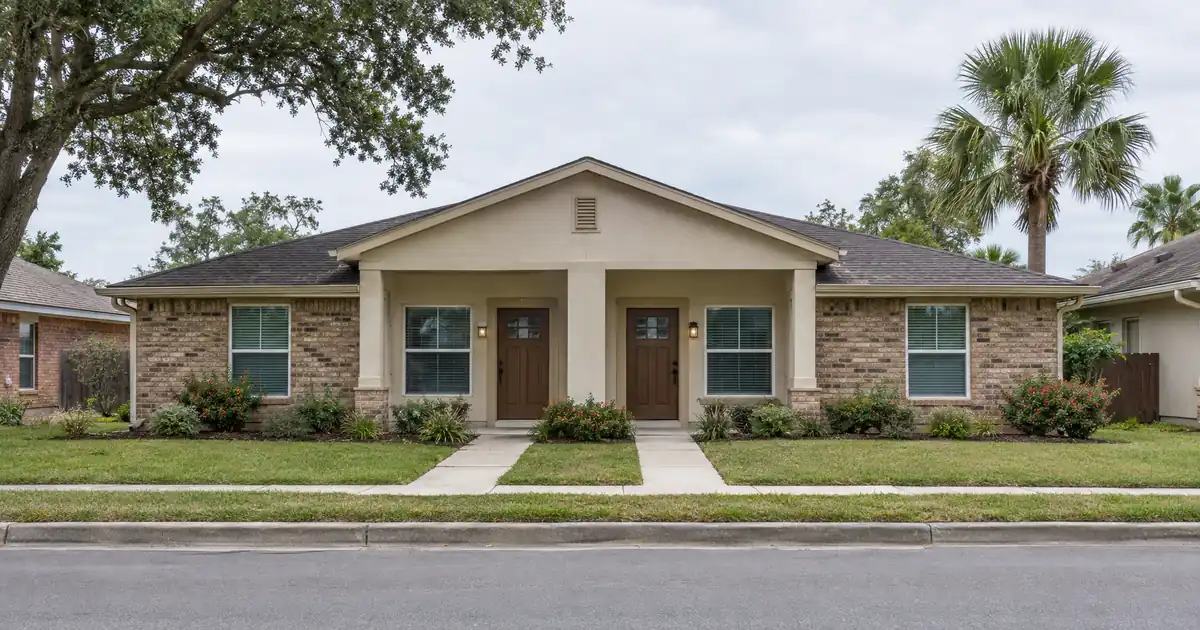
Downtown Pharr looks like the best coverage story in the city and the hardest one to trust. NeighborhoodScout puts the median price in the older core at $81,837 against an average rent of $1,004, the widest rent-to-price spread in any Pharr submarket with published data. The same page shows a 17.1 percent vacancy rate. A refinance on that kind of asset depends less on the headline spread than on whether the rent survives an appraiser’s scrutiny. That tension between a rich ratio and an unproven rent runs through every cash-out decision in this market.
DSCR Cash-Out Calculator
Run the cash-out numbers in Pharr, TX
Rate source: Freddie Mac 30-yr average via FRED® — Federal Reserve Bank of St. Louis · effective Sep 24, 2026
Prefilled with starting assumptions — enter your property’s value, balance, taxes, and insurance for a more accurate picture.
Program parameters update from Lendmire’s centralized guideline source. Taxes and insurance are editable estimates.
As of Sep 24, 2026 · General Freddie Mac market benchmark, not a Lendmire loan offer. Property value, balance, taxes, and insurance are editable estimates. Maximum loan-to-value varies by lender, program, property type, and seasoning. Not a Loan Estimate, approval, or commitment to lend. Program availability and eligibility are subject to lender guidelines, credit approval, property review, and underwriting.
Key Takeaways:
A cash-out refinance on a Pharr, Texas rental is underwritten primarily on the property’s rental income measured against its full monthly obligation, and because single-family rent-to-value is thin here, coverage rather than the 75 percent LTV ceiling is usually what limits the proceeds.
- Downtown Pharr shows the richest rent-to-price spread but carries a 17.1 percent vacancy flag.
- Citywide, median rent runs about 0.54 percent of median value per month, per Foreclosure.com.
- Values are down 1.34 percent year over year, so equity comes from basis, not appreciation.
- Small multifamily spreads one loan across several rents and tends to clear coverage more easily.
Pharr Market Snapshot
A quick read on the Pharr investor landscape — figures come from the cited sources below. Confirm current property-level numbers before underwriting.
| Metric | Detail |
|---|---|
| Home prices | $81,837 median price (NeighborhoodScout) |
| Typical rents | $1,004 (NeighborhoodScout) |
| University enrollment | 27,431 total (Data USA) |
| Population | 79,809 population (HomeSnacks) |
| Employment | 2,200+ faculty and staff (South Texas College) |
| Vacancy | 17.1% (NeighborhoodScout) |
Where the Equity Actually Sits in Pharr
A cash-out refinance only works if there is equity to extract, and Pharr’s equity comes from a low purchase basis or a value-add, not from market drift. Home values here are running about -1.34 percent year over year on Foreclosure.com’s AVM-based figures, which puts the citywide median at $166,537. Census-based figures run lower. Texas Ally, citing the Census, shows a median value of $122,100, and the gap between sources reflects methodology and vintage.
The metro tells a similar story. The RGV Business Journal reported a McAllen metro median sale price essentially unchanged from the prior-year month. It is not a market where a refinance gets sized on the assumption that next year’s appraisal beats this year’s.
That reframes the exercise. An investor who bought a Pharr property at a discount, or who has held long enough to pay down principal, has real equity to access. An investor who paid full retail expecting price gains to do the work probably does not. The refinance should be sized on today’s appraised value and in-place rents.
The Mechanics, Step by Step
The cash-out sequence has four gates: seasoning, value, coverage and reserves. Each one can cap the proceeds independently, and the binding gate in Pharr is usually coverage.
Seasoning. Programs generally look for about six months of ownership, measured from title recording, before cash-out proceeds are available. A property bought and renovated inside that window waits.
Value and the LTV ceiling. Cash-out refinance LTV is capped at 75 percent, a tighter ceiling than the purchase side. Take the appraised value, multiply by 75 percent, subtract the existing payoff, and what remains is the theoretical maximum. The calculator converts that to dollars. This article stays in percentages.
Coverage. rent used for lender review must cover the full monthly obligation (principal, interest, taxes, insurance and any HOA dues). The standard benchmark is 1.00x, and the guide “What Is a DSCR Loan” explains the ratio in detail. Some scenarios below 1.00x may be reviewed under different structures, but they typically come with lower leverage, different pricing or more cash in the deal.
Reserves. Programs generally expect about six months of PITIA in reserves, more on larger balances. Cash-out proceeds may or may not count toward that, depending on the lender’s guidelines. Credit tiers start at a 620 floor and step up through 660, 680 and 700, with leverage and pricing improving at the higher tiers. All of it is subject to lender guidelines and property review.
The Coverage Math: Why Single-Family Is the Hard Part
At current pricing, a Pharr single-family cash-out at maximum leverage lands under 1.00x. Modeled on a 30-year amortization with full taxes and insurance, a property needs monthly rent of roughly 0.68 percent of value to reach 1.00x at 75 percent LTV. These are modeled assumptions, not sourced market facts.
Now compare that requirement with what the data shows:
| Submarket | Price | Avg. Rent | Rent/price (monthly) |
|---|---|---|---|
| Downtown Pharr | $81,837 | $1,004 | about 1.23% |
| Pharr Southeast | $218,302 | $1,232 | about 0.56% |
| Citywide (AVM) | $166,537 | $900 | about 0.54% |
The neighborhood price and rent figures come from NeighborhoodScout’s Pharr Southeast page and its Downtown page. They are modeled estimates, not MLS data. Run the citywide and Southeast ratios through the model and modeled coverage, including taxes and insurance, lands in the low 0.8s at a full 75 percent draw. Drop to 65 percent leverage and it improves to just under 0.90. Still short.
So a typical newer Pharr single-family rental does not clear 1.00x at meaningful cash-out leverage. That is the finding. The paths from there are a sub-1.00 program, an interest-only structure or a lower draw, each reviewed by a lender subject to credit approval and property review, with no assurance of terms.
Downtown flips the picture. On paper the ratio produces coverage of 1.7x or better. But that rent sits in a submarket with 17.1 percent vacancy, and a low balance narrows lender options. Smaller loans route through select lenders in the network rather than standard programs. Coverage that looks strong on a model can shrink once an appraiser’s market-rent figure replaces the asking rent.
Small Multifamily: The Better Cash-Out Candidate
Fourplexes fit the cash-out math far better than single-family houses in Pharr because one loan spreads across four rent streams at a lower per-door basis. LoopNet listings in a dated snapshot showed Pharr fourplexes asking around $450,000 (broker-stated cap rate of 6.00 percent) and an 18-unit building at $2,499,000 with an 8.10 percent stated cap rate. Those are asking figures, not closed sales. At $450,000 the fourplex works out to about $112,500 per door, roughly a third below the citywide single-family median.
Run the numbers on a hypothetical fourplex at that price, with four 3-bed units at a modeled $1,100 each. That is a modeled rent, chosen to sit between the Apartments.com 2BR and 3BR averages ($1,024 and $1,131) from an older snapshot. Rent runs near 0.98 percent of price monthly. At the full 75 percent draw, coverage including taxes and insurance runs roughly 1.4x. Stress the rent down to the lower of those two averages per door and coverage still holds near 1.2x. Even the pessimistic case clears the benchmark.
Consider what that does to an existing owner. Say an investor holds a fourplex bought at 65 percent leverage. Value at purchase was the appraisal, and a 75 percent ceiling leaves about ten points of value to pull, before payoff costs and reserves. That is the shape of the deal: modest proceeds, adequate coverage, no reliance on appreciation.
The stock helps. Redfin listings show much of the Pharr fourplex inventory is newer, gated or townhouse-style product in 2BR/2BA and 3BR/2BA layouts, often separately metered, including a 2022 new-build community of all 3-bed/2-bath units. Similar units give an appraiser cleaner comps. Separate meters put utilities on tenants, which protects net income. And Point2Homes and RentCafe data show two-bedroom units are the largest share of Pharr rentals, at 50 percent, which supports underwriting around 2/2 and 3/2 layouts.
A caution on rents. RentCafe’s Yardi data shows the average rent in Pharr buildings of 50 or more units falling from $1,038 to $932, while the McAllen-Pharr metro moved from $983 to $989. Large complexes compete with small buildings for the same tenants. Underwrite at the conservative end. Do not use the highest in-place lease as the rent used for lender review.
A Note on Pharr Northwest (and What Falls Outside the Programs)
Pharr Northwest posts an average rent of $1,567 against a $143,753 median price, per NeighborhoodScout. The ratio is too high for the stock and should be treated as directional only. The bigger issue is composition: the area’s inventory is mostly mobile homes and small apartment buildings. Manufactured homes, single- or double-wide, fall outside the network’s DSCR programs, along with log homes and barndominiums. Only the small-apartment slice of that submarket is even a candidate, and rents there need local verification.
That leaves Pharr Southeast, the newer, owner-heavy single-family area, as the deepest pool of reviewable single-family stock but also the weakest coverage. Not ideal for a maximum draw. Reasonable for a modest one, or for an investor who wants proceeds structured with lower leverage. Whether to prefer Southeast’s cleaner collateral or Downtown’s better ratio is a genuine toss-up, and the answer depends on how much vacancy risk the borrower is willing to underwrite.
What Keeps Pharr Tenants in Place
Rental demand in Pharr rests on a mix of cross-border logistics, education and healthcare employment. The Pharr Economic Development Corporation cites the Pharr-Reynosa International Bridge as the top produce crossing in the country, alongside industrial parks, cold storage and temperature-controlled inspection facilities. Rio South Texas Region adds that the City of Pharr owns and operates the bridge, so logistics jobs are tied to the city itself, an unusual arrangement among Texas cities of this size.
Education adds a second anchor. Pharr–San Juan–Alamo ISD serves about 29,000 students and is a major local employer, with starting teacher pay of $59,300. South Texas College has more than 2,200 faculty and staff and a Pharr presence at its Regional Center for Public Safety, and Data USA shows enrollment of 27,431. Healthcare rounds it out, with Rio Grande Regional Hospital and South Texas Health System McAllen serving the area.
No source I found gives a headcount for any of these employers beyond the figures above, and no city vacancy rate. The demand case is qualitative but well-anchored. RentCafe reports 9,591 renter-occupied households, about 41 percent of the city, and NeighborhoodScout puts the population at 81,142 (other sources run slightly lower, so roughly 80,000 is a fair working figure).
What Working Brokers See
Working DSCR brokers see a recurring pattern in low-price border and Valley-style markets: the property with the best headline rent-to-price ratio is often the one with the least reliable rent, while the property with the cleanest collateral has the thinnest coverage. Files that get through smoothly tend to be the ones where the investor arrives with signed leases, a rent schedule the appraiser can tie to comps, and a leverage request already dialed down to what coverage supports.
Where the Proceeds Go
The point of pulling equity is redeployment, and in Pharr the redeployment target matters as much as the extraction. Proceeds from a fourplex refinance that clears 1.2x could seed a second small multifamily purchase. Proceeds from a thin single-family refinance carry a cost: the new debt adds obligation to a property whose coverage was already marginal, and the next purchase inherits the same thin-ratio problem.
Investors who prefer a wage-based product for the next purchase can weigh the key differences between DSCR and conventional financing. For most portfolio builders in this market, though, the cash-flow ratios argue for keeping the acquisition side on small multifamily and using the refinance to fund it.
Pharr is a cash-flow market, not an appreciation market, and the refinance strategy has to match. Verify current local rental rules, taxes and insurance with qualified local professionals before committing.
Frequently Asked Questions
How do you qualify for a DSCR cash-out refinance in Pharr, Texas?
The property’s rent used for lender review must cover its full monthly obligation, with 1.00x as the standard benchmark. Lenders also review credit (a 620 floor, with better terms at higher tiers), reserves of about six months of PITIA and the appraisal. In Pharr, single-family rentals at high leverage often fall short on coverage, while small multifamily more often clears it. All of it is subject to lender guidelines.
DSCR vs. conventional financing
Two common ways to finance an investment property in Pharr, TX. They qualify you differently — here’s how investors weigh them.
Why investors choose it
- Qualifies on the property’s rental income — no personal tax returns, W-2s, or pay stubs needed to document income.
- No personal debt-to-income ceiling to clear, so existing mortgages and obligations don’t cap your borrowing the same way.
- Can be closed in an LLC, keeping the property inside a business entity.
- Built for scaling — not held to the limit on number of financed properties that conventional financing applies.
- Underwriting centers on the deal: generally qualifies when the rent covers the payment, a 1.00x coverage ratio being a common baseline (confirmed in underwriting).
- Designed specifically for investment property, including long-term and, where the program allows, short-term rentals.
Where it’s strong
- Often the lowest ongoing financing cost for a buyer who fully qualifies on personal income — a fit for a first property or a cost-first purchase.
Trade-offs for investors
- Requires full personal income documentation and must fit within a debt-to-income limit — salary, existing debts, and other mortgages all count.
- Typically held in your personal name rather than a business entity.
- Caps how many financed properties you can carry, which can become a ceiling as a portfolio grows.
- Evaluates you as a borrower as much as the property, which usually means more paperwork.
How investors usually choose: a first or single property often optimizes for the lowest financing cost; portfolio builders often optimize for leverage, vesting in an LLC, and scaling past conventional caps. The right answer depends on your goals, the property, and current guidelines — both paths run through select lenders in Lendmire’s wholesale network, with eligibility and terms confirmed in underwriting.
What are the requirements for an investment property cash-out loan in Pharr, Texas?
Expect about six months of ownership seasoning from title recording, a maximum 75 percent LTV on cash-out and rent used for program review supported by an appraisal rent schedule. Loan amounts run up to $3,000,000 on standard programs, with smaller balances routed through select lenders. Manufactured homes, log homes and barndominiums are outside these programs, which matters because mobile homes make up much of the stock in parts of Pharr Northwest.
How does rental income affect DSCR refinance eligibility in Pharr?
Rental income is the core of the file: lenders divide rent used for eligibility review by the property’s full monthly obligation to get the coverage ratio. Eligibility remains subject to lender guidelines.
Can a fourplex beat a single-family house for cash-out coverage in Pharr?
Usually, yes. Fourplexes listed near $450,000 work out to roughly $112,500 per door, well below the citywide single-family median value of about $166,537, so each rent stream carries less debt. A modeled fourplex at $1,100 per door covers at roughly 1.4x including taxes and insurance, while a typical Southeast single-family lands in the low 0.8s.
Does a cash-out refinance still make sense in Pharr when values are flat?
It can, provided the sizing rests on today’s value and in-place rents. With values down about 1.34 percent year over year, an investor should not assume equity will grow into the loan. The stronger candidates are properties bought at a discount or held long enough to build equity through amortization, refinanced at a leverage level that coverage supports.
The Blind Spot: Underwriting the Rent
The single biggest risk for DSCR-financed investors in Pharr is the rent input, not the price. Published rent figures run from roughly $900 to $1,050 depending on source, neighborhood modeling shows outliers like Pharr Northwest’s $1,567, and Downtown’s 17.1 percent vacancy shows how far asking rent can sit from collected rent. Lenders commonly look at the lower of the in-place lease and the appraiser’s market rent, so a deal that pencils on the seller’s number can lose a full tier of coverage on the appraisal. In a market where prices are flat and single-family ratios are already thin, that gap is the difference between a refinance that clears and one that stalls.
For current guidelines and terms, see Lendmire’s DSCR loan programs page.
About Lendmire
A non-QM mortgage broker (NMLS# 2371349), Lendmire arranges DSCR financing for real estate investors in 41 markets, 40 states plus Washington, D.C. Because deals are underwritten primarily on property cash flow rather than personal income documentation, the structure suits self-employed buyers and entity-owned portfolios, subject to lender program eligibility. Lendmire places loans through wholesale investor lenders and is not a direct lender. It was recognized as a 2026 Scotsman Guide Top Workplace and a top-ranked workplace in 2025.
For broader investor-financing rules and property-type coverage across the state, see Texas DSCR loans.
Investors weighing their equity options can start with cash-out refinance on an investment property.
Get Started
Ready to find the right loan for you?
In about 30 seconds you can review financing options available for your investment property. No commitment required.
Informational only. Not a Loan Estimate, approval, or commitment to lend. Program availability and eligibility are subject to lender guidelines, credit approval, property review, and underwriting.
References
1. NeighborhoodScout, Downtown Pharr
3. Data USA, South Texas College
4. HomeSnacks
6. Texas Ally
8. NeighborhoodScout’s Pharr Southeast page
10. Apartments.com 2BR and 3BR averages
11. Redfin listings
12. Point2Homes
13. RentCafe, Pharr
15. Pharr Economic Development Corporation
19. a 2026 Scotsman Guide Top Workplace
20. Scotsman Guide — Top Workplaces 2025
This article is part of Lendmire’s investment property cash-out refinance program — full qualification details, guidelines, and scenarios live on the program page.
Related reading: DSCR Cash Out Refinance Pharr Texas · Cash Out Refinance Investment Property Harlingen Texas · DSCR Cash Out Refinance Mission Texas
Guides: Investment Property Cash-Out Refinance in Pharr, TX · Investment Property Cash-Out Refinance in Texas
Brandon Miller
Founder & CEO, Mortgage Loan Originator, Lendmire LLC
- Mortgage Loan Originator · NMLS# 1129696 · Verify on NMLS Consumer Access
- North Carolina Real Estate Broker · License# 343312 · Verify on NCREC
- North Carolina Insurance Producer · License# 19053198 · Property, Casualty, Life, Health · Verify on NAIC SBS
- Lendmire LLC · Firm NMLS# 2371349 · Verify firm licensure
Required disclosures. Lendmire (NMLS# 2371349) operates as a licensed mortgage broker, not a direct lender or depository. The discussion in this article is general in nature and should not be relied upon as financial, legal, or tax advice — every investment scenario is unique and should be reviewed by a qualified professional. Any loan inquiry is subject to lender underwriting, and this article is not a commitment to lend or a guarantee of approval. Mortgage rates, loan terms, and program guidelines vary by borrower, property, and state, and may change without notice. Equal Housing Opportunity. Verify licensure at NMLS Consumer Access.