
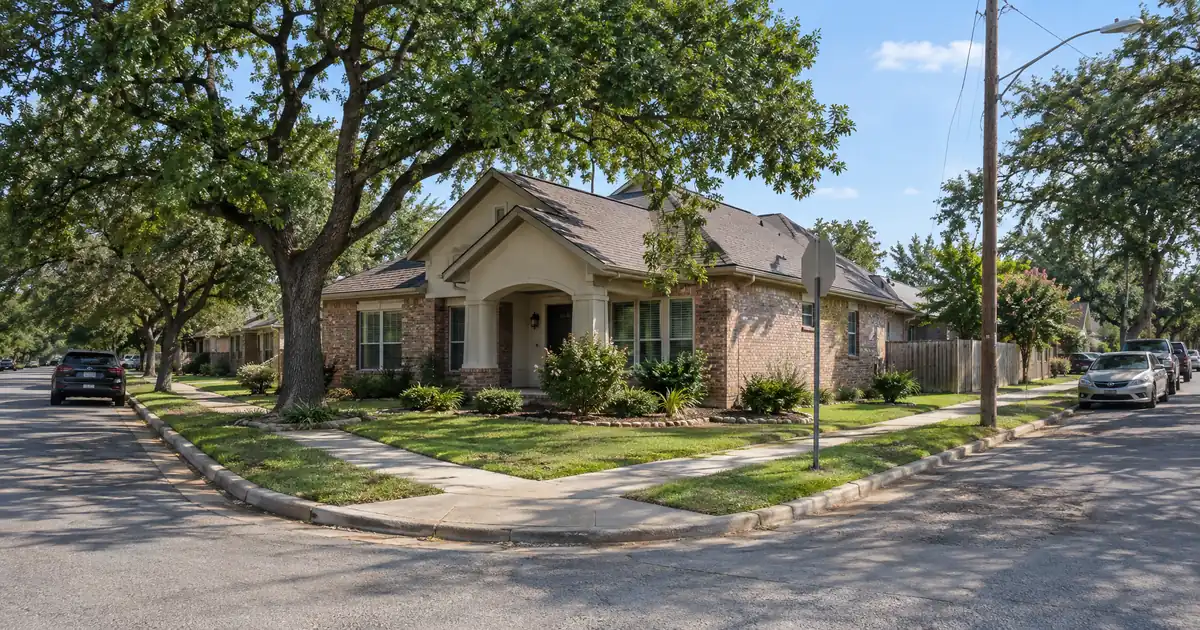
Most investors who want to pull equity in Temple start from the wrong question. They ask how much cash they can take out. The better question is which property will still cover its own debt after the cash comes out, because Temple’s home values have drifted lower, not higher. Zillow’s value index sits near $249,780, down 2.5% year over year. Equity in this market comes from how a property was bought or improved, not from a market tide.
DSCR Cash-Out Calculator
Run the cash-out numbers in Temple, TX
Rate source: Freddie Mac 30-yr average via FRED® — Federal Reserve Bank of St. Louis · effective Sep 24, 2026
Prefilled with starting assumptions — enter your property’s value, balance, taxes, and insurance for a more accurate picture.
Program parameters update from Lendmire’s centralized guideline source. Taxes and insurance are editable estimates.
As of Sep 24, 2026 · General Freddie Mac market benchmark, not a Lendmire loan offer. Property value, balance, taxes, and insurance are editable estimates. Maximum loan-to-value varies by lender, program, property type, and seasoning. Not a Loan Estimate, approval, or commitment to lend. Program availability and eligibility are subject to lender guidelines, credit approval, property review, and underwriting.
The Quick Read:
A DSCR cash-out refinance on a Temple, Texas rental is underwritten primarily on the property’s rental income measured against its full monthly obligation, including taxes and insurance, so the file works or fails on coverage and appraised value, not on your personal income documents.
- Temple’s closed-sale median is $275,000 across 842 closings, per Resideline.
- Cash-out leverage is capped at 75% LTV, with about 6 months of seasoning from title recording.
- Modeled single-family coverage at the median price lands below 1.00; a duplex can clear it.
- Healthcare anchors the tenant base: Temple EDC says over 40% of the workforce is in it. These specifics are subject to lender guidelines and a full review of property, leverage, and credit.
Temple Market Snapshot
A quick read on the Temple investor landscape — figures come from the cited sources below. Confirm current property-level numbers before underwriting.
| Metric | Detail |
|---|---|
| Home prices | $239,000 median value (DataUSA) |
| Typical rents | $1,324 median gross (City-Data) |
| University enrollment | 40 students first class (fall 2023) (FOX 44 News) |
| Population | 96,268 population (Census Reporter) |
| Employment | 6,708 health jobs (DataUSA) |
| Vacancy | 2.8% SFR (2021) (HUD Comprehensive Housing) |
Why Equity Pulls Pencil Differently Here
A cash-out in Temple usually works on small multi-unit buildings and usually struggles on median-priced single-family homes. The reason is arithmetic. Rents in this market are modest relative to prices, and lenders measure coverage against the full monthly obligation, taxes and insurance included.
Start with the rent side. Zillow Rental Manager puts the average across all bedroom counts and property types at $1,600. Apartment List reports a median of $980, down 1.1% year over year. The two measure different things (one leans toward houses, the other toward apartment listings), but neither shows strong rent growth. Underwrite on where rents are today, not where a brochure says they’re headed.
Then the price side. The Resideline closed-sale median of $275,000 reflects real closings over a recent stretch of sales, which makes it the most grounded price anchor in the research. Other sources land a little higher or lower depending on method. That spread alone tells you appraisals deserve respect.
A DSCR loan, for anyone new to it, tests whether a property’s rent covers its monthly debt service. The guide “What Is a DSCR Loan” walks through the calculation. Most programs are built around a 1.00x baseline, though exact eligibility depends on lender guidelines, credit, reserves, and property review.
Run the Numbers: Single-Family vs. Duplex
At the citywide median price, a single rental house does not clear 1.00 at maximum cash-out leverage. A side-by-side duplex at a moderate price usually does. These are modeled assumptions, not sourced rent rolls. Coverage bands below include taxes and insurance.
| Structure | Modeled inputs | Modeled coverage |
|---|---|---|
| Single-family | $275,000 value, $1,600 rent, 75% LTV | Mid-0.8s |
| Single-family | Same, at 65% LTV | Mid-0.9s |
| Side-by-side duplex | $330,000 value, $3,200 total rent, 75% LTV | Around 1.4x |
| Older-core house | $164,000 value, $1,667 rent, 75% LTV | Above 1.4x on paper |
Here’s what sits behind those assumptions. The single-family rent is Zillow’s $1,600 all-types average, which is generous for an older 3BR and plausible for a newer one. The duplex assumes two units at that same figure, a modeling shortcut rather than a measured duplex rent, since no verified duplex rent rolls turned up for Temple. The last row mixes Apartments.com’s $1,667 average three-bedroom rent with a thin-sample Redfin Temple Historic District median near $164,000. Treat it as a hypothesis to test with actual leases and appraisals. Older stock brings repair costs that coverage math doesn’t capture.
Below 1.00 isn’t a dead end, but it changes the question. A lender may review a sub-1.00 program, an interest-only structure, or a lower LTV that brings coverage up, each with its own tradeoffs in leverage, credit, and cost. Qualification stays subject to lender guidelines, credit approval, and property review. The more useful read is this: if a single-family house only works at 65% LTV, the cash you can pull shrinks accordingly, and you should ask whether that draw justifies the transaction at all.
DSCR files in markets like this one typically look a certain way. The rent comes in a bit under what the owner expected, the appraisal lands near the middle of the comps rather than the top, and the file turns on the gap between those two. Files that pencil on an asking-rent assumption often tighten once the lender reviews a lease or market-rent estimate. Files that clear comfortably usually have an appraiser-supported rent, conservative leverage, and reserves already in hand.
The Multi-Unit Case (and Its Limits)
Duplexes and small multifamily are where Temple’s rent-to-value looks best, and the listing data backs up that they are common. Homes.com showed 43 multifamily listings priced from $120,000 to $426,280, a listing snapshot rather than sold data. In West Temple, the listings run from $219,900 to $470,000, including remodeled fourplexes and side-by-side 3BR/2BA duplexes. Census-derived figures from City-Data show a mean value of $210,889 for two-unit structures against $315,679 for detached houses. Small samples skew that mean, so read it as direction, not precision.
The income-stacking logic is simple. Two units share one roof, one lot, one tax bill, and one insurance policy, so each dollar of rent carries less fixed cost. That’s the structural reason the duplex row above clears where the house doesn’t.
Here’s the catch. A duplex that’s modeled at 1.4x has less room for error than it looks. A single vacant unit cuts gross rent roughly in half, and if a lender sizes the file on market rent rather than in-place lease rent, your actual cushion may differ from your spreadsheet. That’s where the flip point lies. An owner with stable tenants and current leases on both sides can lean on the higher coverage. An owner with one unit mid-turnover should wait for the lease before applying.
Where the Tenants Come From
Temple’s rental demand rests on hospitals first, manufacturing and logistics second, and a just-launched data center a distant third. The healthcare concentration is unusual for a city of roughly 96,000 residents, per Census Bureau QuickFacts.
Start with the anchor. Baylor Scott & White Medical Center – Temple is a 640-bed hospital and the only Level I trauma center between Dallas and Austin. Temple EDC cites more than 7,000 BSW employees in Temple. The hospital also runs 31 accredited residency and fellowship programs and hosts a regional Baylor College of Medicine campus whose first class began with 40 students. That matters for landlords in a particular way: residents, fellows, students, and rotating clinicians tend to sign 12-month-plus leases and don’t move on the housing cycle.
Next, the wider base. The Central Texas VA medical center and the TxEDC regional profile round out the picture, including more than 36,000 active-duty personnel supported at Fort Cavazos less than 30 miles away. DataUSA counts 6,708 residents working in healthcare and social assistance, ahead of retail trade at 4,246 and educational services at 4,139.
Then the newcomer. KWTX reports that Meta’s $1.2 billion data center has gone live with nearly 100 operations roles, after a construction workforce that peaked near 1,200 skilled trades. Don’t underwrite permanent housing demand off that. The construction headcount has already peaked, and the permanent job count is small. It’s a supporting detail, not a thesis.
Renters in Temple aren’t captive to one employer. That tends to shorten vacancy on well-located three-bedroom units, but it won’t rescue a unit priced above what the market pays.
Submarkets That Earn Attention
West Temple (76504) and the 76502 corridor near Baylor Scott & White have the strongest case for duplex and fourplex cash-outs. Both sit close to the VA campus, the hospital, and the medical district, and both show listing concentration in small multifamily. West Temple’s Homes.com median of $300,000 is a listing-portal figure, so treat it as a signpost. No reliable neighborhood-level rent source exists for Temple, and Zumper itself notes it lacks enough inventory to publish one. That means the rent side of any neighborhood claim rests on comps you pull yourself.
The older core, including the Historic District and 76501, is the contrarian play. The price points are lower, so a given rent covers a smaller balance, and the modeled coverage above reflects that. The downsides are real. Older stock means deferred maintenance, appraisal comps can be thin, and the loan balances are small enough that some routing to select lenders in the network may apply. (Verify flood mapping on any older-core address against FEMA maps rather than relying on anyone’s neighborhood percentage.) It’s a tradeoff between higher paper coverage and higher operating risk.
East and North Temple skew toward newer duplexes and closer proximity to the logistics and manufacturing employers, including Wilsonart, Walmart’s distribution center, and H-E-B’s frozen-food facility. Those jobs support workforce tenants without the hospital’s lease-length advantage.
One more wrinkle concerns new construction, and it cuts against investors. Builders in Temple have been offering incentives, and newly built rental communities with three- and four-bedroom homes compete head-on with investor-owned single-family rentals. Zumper reported Temple’s average rent down 11.49% year over year in its latest reading, though a smaller portal sample can exaggerate swings. A landlord with an older 3BR competes with that product on price. That’s another reason to sanity-check rent assumptions before leaning on them.
Seasoning, Appraisals, and the Flat-Price Problem
A cash-out refinance on a Temple rental generally requires about 6 months of ownership, measured from title recording, and a 75% LTV ceiling applied to the appraised value. Those are the program parameters; the cash you can actually pull depends on the appraisal, rent used for lender review, full monthly obligation, and reserves.
Here’s how the flat market changes the calculus. Suppose you bought a house in Temple near the top of the recent cycle, and the appraisal now comes in at or below your purchase price. At 75% LTV, there may be little left after paying off your existing balance. The cash-out thesis depends on a purchase below market, a meaningful renovation, or a forced-equity play like converting a rough duplex into two rentable units. It doesn’t depend on waiting for the market to lift you.
Appraisal depth also varies by subdivision. Established neighborhoods with resale history give an appraiser cleaner comps than new-build communities still selling from builder inventory, and thin comps make valuations harder to predict. Ask the lender up front how many closed comparable sales it expects for a property like yours.
Other parameters matter to the structure, though none outweighs the cap itself. Credit minimums start at a 620 floor, with tiers at 660, 680, and 700. Reserves are typically about 6 months of the full monthly obligation. Loan amounts run up to $3,000,000 on standard programs, though a smaller Temple balance may route through select lenders in the network. Program terms are guidelines, not commitments, and they change.
Where the Cash Goes Next
The cash-out only makes sense if the proceeds buy something that performs better than the asset they came from. Redeploying equity into a second Temple duplex, where the modeled coverage clears, is a straightforward argument. Pulling cash from a flat-priced house to buy into a market where coverage doesn’t pencil is a different decision, and one worth stress-testing before committing.
If you’re weighing the alternatives, the conventional-vs-DSCR tradeoffs are worth reading. Conventional financing may cost less for a single rental owned personally by a borrower with strong traditional employment income. DSCR becomes more practical for LLC-held portfolios, self-employed owners, or anyone whose traditional personal-income documentation doesn’t show the rental income cleanly. For entity-held properties, eligibility is subject to lender program requirements.
One reminder belongs here, once: verify current local rental rules, taxes, and insurance with qualified local professionals, since those inputs move the coverage number more than most borrowers expect.
Is Temple a Cash-Flow Market? (A Genuine Toss-Up)
It depends on what you call cash flow. The case for: healthcare employment is deep, tenant turnover is plausibly lower near the medical district, and multi-unit pricing gives coverage room the single-family market doesn’t. The case against: rents are flat to slightly negative, prices are soft, and new-build supply competes with older product.
The stronger play might be the older duplex near the medical district over a newer single-family rental, though an investor who values condition and low maintenance could reasonably argue the other way. Neither answer is wrong. They’re different bets, and the financing should match the bet.
Frequently Asked Questions
What property types work best for DSCR cash-out in Temple?
Small multifamily, especially side-by-side duplexes and fourplexes near the medical district, tends to pencil best because rent stacks against a single tax-and-insurance load. Lendmire arranges DSCR investor loans with cash-out leverage generally capped at 75% LTV. Manufactured homes, log homes, and barndominiums fall outside these programs.
DSCR vs. conventional financing
Two common ways to finance an investment property in Temple, TX. They qualify you differently — here’s how investors weigh them.
Why investors choose it
- Qualifies on the property’s rental income — no personal tax returns, W-2s, or pay stubs needed to document income.
- No personal debt-to-income ceiling to clear, so existing mortgages and obligations don’t cap your borrowing the same way.
- Can be closed in an LLC, keeping the property inside a business entity.
- Built for scaling — not held to the limit on number of financed properties that conventional financing applies.
- Underwriting centers on the deal: generally qualifies when the rent covers the payment, a 1.00x coverage ratio being a common baseline (confirmed in underwriting).
- Designed specifically for investment property, including long-term and, where the program allows, short-term rentals.
Where it’s strong
- Often the lowest ongoing financing cost for a buyer who fully qualifies on personal income — a fit for a first property or a cost-first purchase.
Trade-offs for investors
- Requires full personal income documentation and must fit within a debt-to-income limit — salary, existing debts, and other mortgages all count.
- Typically held in your personal name rather than a business entity.
- Caps how many financed properties you can carry, which can become a ceiling as a portfolio grows.
- Evaluates you as a borrower as much as the property, which usually means more paperwork.
How investors usually choose: a first or single property often optimizes for the lowest financing cost; portfolio builders often optimize for leverage, vesting in an LLC, and scaling past conventional caps. The right answer depends on your goals, the property, and current guidelines — both paths run through select lenders in Lendmire’s wholesale network, with eligibility and terms confirmed in underwriting.
How do you qualify for a DSCR cash-out refinance in Temple?
The lender reviews whether the property’s rent used for program review covers its full monthly obligation, with 1.00x the common baseline. It also reviews credit, reserves, seasoning, and the appraisal. In Temple, where median-priced houses can land below that baseline at full leverage, a duplex or a lower LTV is often what gets the file to the line. Everything is subject to lender guidelines and credit approval.
What are the requirements for an investment property cash-out loan in Temple, Texas?
Expect about 6 months of ownership from title recording, a 75% LTV ceiling, and credit tiers that begin at a 620 floor. Reserves typically run about 6 months of the full monthly obligation. Requirements vary by lender and borrower, so treat these as typical ranges, not promises.
Does Temple’s flat price trend hurt a cash-out refinance?
Yes, if you bought near the peak or paid full retail. Zillow’s index shows values down 2.5% year over year, so the cash available depends on today’s appraisal, not on a rebound. Investors who bought below market, renovated, or converted a property to multiple units are better positioned than those counting on appreciation.
Should underwriting lean on hospital demand or on the Meta data center?
Lean on the hospital. Temple EDC says more than 40% of the local workforce works in healthcare, and that base is large and stable. The data center’s construction workforce has peaked, and its permanent headcount is around 100, so it supports the market without carrying it.
The Number That Reframes Temple
Temple’s healthcare base is large enough that more than 40% of its workforce works in it, yet the city’s typical home still closed at a median of $275,000 across 842 sales. That’s a stable tenant pool sitting on a price level that barely moves, which is exactly why the next dollar of equity here comes from buying right, not from waiting.
For current guidelines and terms, see Lendmire’s DSCR loan programs page.
About Lendmire
A DSCR-focused mortgage broker, Lendmire (NMLS# 2371349) places investor financing across 41 markets, meaning 40 states plus Washington, D.C. DSCR eligibility is generally reviewed by the lender on property cash flow rather than traditional personal-income documentation, subject to lender guidelines. The firm was recognized by Scotsman Guide as a 2026 Top Workplace and recognized by Scotsman Guide in 2025 as a Top Mortgage Workplace.
For broader investor-financing rules and property-type coverage across the state, see Texas DSCR loans.
For the mechanics of pulling equity out of a rental property, see cash-out refinance on an investment property.
Get Started
Ready to find the right loan for you?
In about 30 seconds you can review financing options available for your investment property. No commitment required.
Informational only. Not a Loan Estimate, approval, or commitment to lend. Program availability and eligibility are subject to lender guidelines, credit approval, property review, and underwriting.
References
2. Resideline
3. Temple EDC, VA Medical Center
5. City-Data
6. FOX 44 News
9. Zillow Rental Manager, Temple
10. Apartment List, Temple rent report
11. Apartments.com’s $1,667 average three-bedroom rent
12. Redfin Temple Historic District median
13. Homes.com
14. West Temple
15. Census Reporter, Temple profile
16. Baylor Scott & White Medical Center – Temple
17. Temple EDC
18. Texas Economic Development Corporation, Killeen-Temple-Fort Hood
19. KWTX
20. Zumper
21. recognized by Scotsman Guide as a 2026 Top Workplace
22. recognized by Scotsman Guide in 2025
This article is part of Lendmire’s investment property cash-out refinance program — full qualification details, guidelines, and scenarios live on the program page.
Related reading: DSCR Loans in Killeen / Temple, Texas: Investor Financing for Fort Cavazos, Harker Heights, Belton & Real Estate Investors · Cash Out Refinance Investment Property in Weslaco, Texas: Can Your Rent Cover the New Loan? · DSCR Cash Out Refinance in Brownsville, Texas: Equity From a Flat-Price Market
Guides: Investment Property Cash-Out Refinance in Temple, TX · Investment Property Cash-Out Refinance in Texas
Brandon Miller
Founder & CEO, Mortgage Loan Originator, Lendmire LLC
- Mortgage Loan Originator · NMLS# 1129696 · Verify on NMLS Consumer Access
- North Carolina Real Estate Broker · License# 343312 · Verify on NCREC
- North Carolina Insurance Producer · License# 19053198 · Property, Casualty, Life, Health · Verify on NAIC SBS
- Lendmire LLC · Firm NMLS# 2371349 · Verify firm licensure
Compliance and disclosures. Lendmire (NMLS# 2371349) is a licensed mortgage broker and is not a direct lender, depository institution, financial advisor, or tax professional. Content in this article is general market analysis and educational information — not financial, legal, or tax advice for any specific situation. Lendmire does not guarantee loan approval; every transaction is subject to underwriting by the funding lender. Mortgage pricing and loan program guidelines are subject to change at any time without notice and vary by borrower characteristics, property type, and state regulations. Lendmire complies with Equal Housing Opportunity. Licensure verification: NMLS Consumer Access.