
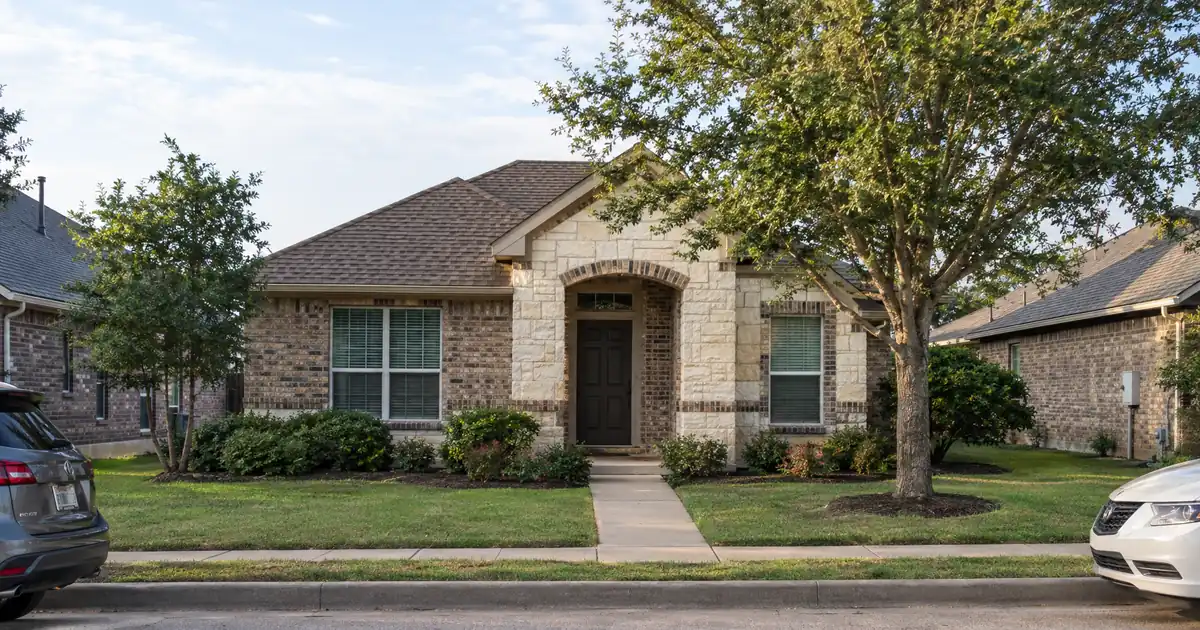
An out-of-state investor scrolling Kyle listings sees a city that keeps growing, sits about 7 miles south of Austin city limits per Kyle Economic Development, and has a hospital, big-box retail and plenty of master-planned streets. What the listings don’t show is whether the equity on an existing Kyle rental is still there. Zillow’s typical home value for Kyle sits near $341,856 and is down 9.9 percent over the past year, per Zillow’s Kyle home value index. For a cash-out refinance, that number matters more than the growth story.
At a Glance: A DSCR cash-out refinance in Kyle, Texas is underwritten primarily on the property’s rental income measured against its full monthly obligation, so the file works only if appraised value, rent and leverage line up together, and softer local values make the appraisal the first thing to test.
DSCR Cash-Out Calculator
Run the cash-out numbers in Kyle, TX
Rate source: Freddie Mac 30-yr average via FRED® — Federal Reserve Bank of St. Louis · effective Sep 24, 2026
Prefilled with starting assumptions — enter your property’s value, balance, taxes, and insurance for a more accurate picture.
Program parameters update from Lendmire’s centralized guideline source. Taxes and insurance are editable estimates.
As of Sep 24, 2026 · General Freddie Mac market benchmark, not a Lendmire loan offer. Property value, balance, taxes, and insurance are editable estimates. Maximum loan-to-value varies by lender, program, property type, and seasoning. Not a Loan Estimate, approval, or commitment to lend. Program availability and eligibility are subject to lender guidelines, credit approval, property review, and underwriting.
- Zillow’s typical Kyle value is $341,856, down 9.9 percent year over year (Zillow).
- Cash-out leverage tops out at 75 percent LTV, with about six months of seasoning from title recording.
- Kyle rent-to-price runs roughly 0.56 to 0.58 percent monthly, so 75 percent leverage often lands below 1.00.
- Reserves of about six months of PITIA are the typical expectation, subject to lender guidelines.
Kyle Market Snapshot
A quick read on the Kyle investor landscape — figures come from the cited sources below. Confirm current property-level numbers before underwriting.
| Metric | Detail |
|---|---|
| Home prices | $350,990 median (Homes.com multi-family listings) |
| Employment | 800 jobs (headline) (Community Impact, Kyle Park) |
Why Kyle Equity Needs a Reality Check First
The appraisal is the variable that decides whether a cash-out pencils in Kyle. Values have softened, builder inventory is heavy, and the 75 percent LTV ceiling applies to the appraised value, not to what the investor paid.
Sources disagree on price, so the range matters more than any single number. Zillow’s typical value is $341,856. Census-based figures from Data USA put the owner-reported median property value at $334,600. A small closing tracker, Resideline, shows a $300,500 median across 176 tracked closings. Texas is a non-disclosure state, so that last one is directional only. Nobody should treat any of these as an appraisal.
Homes.com lists hundreds of new-construction homes for sale in Kyle, including in Crosswinds and Sage Hollow. Builder incentives can pull resale comps down. An investor who bought near the top of the local market, or who put in a smaller down payment, may find that 75 percent of today’s appraised value leaves little to extract. Nothing wrong with that outcome. It just means the refinance may be a rate-and-term move rather than a capital-raising one.
Cash-out makes sense here for the investor who bought with real equity built in, or who has held long enough to pay down principal. It is weaker for someone expecting appreciation to do the work. Run fresh comps before anything else.
The Coverage Math Is Thinner Than the Growth Story
Kyle single-family rentals usually land below 1.00 on coverage at 75 percent leverage, and clearing the standard 1.00 benchmark generally takes either lower leverage or higher rent. Rent-to-price here is roughly 0.56 to 0.58 percent per month, well under the old 1 percent rule.
That ratio comes from my own arithmetic on sourced figures, not a published stat. RentCafe reports a 3-bedroom average of $1,967, though it covers only buildings with 50 or more units. Divided by Zillow’s $341,856, that is about 0.58 percent. Census-based median gross rent against the Data USA property value gives a similar read.
The table models a home at Zillow’s typical value with two assumed rents. These are modeled assumptions, not market data. Coverage is rent divided by full PITIA (principal, interest, taxes and insurance), using Texas-average tax and insurance loads.
| Modeled leverage | Rent of $2,000 | Rent of $2,200 |
|---|---|---|
| 75 percent LTV | about 0.85 | about 0.95 |
| 65 percent LTV | about 0.95 | about 1.05 |
| 60 percent LTV | about 1.00 | about 1.10 |
Read it plainly. At the 75 percent cap, a typical Kyle house needs rent above the modeled range to clear 1.00. Dropping leverage to the low-60s is what gets the number over the line, which also shrinks the cash you can pull.
Some lenders review sub-1.00 files through a sub-1.00 program, an interest-only structure, or lower leverage with compensating factors such as stronger credit and deeper reserves. Those are options a lender would review, and approval depends on lender guidelines, credit, reserves and property review. If the only way a file works is sub-1.00 at high leverage, that usually signals the property or the target rent needs another look. Tightening the loan request is the better response.
Reserves are the other gate. Typical guidance is about six months of PITIA held after closing, with a credit floor of 620 and better tiers at 660, 680 and 700, all subject to lender guidelines. More on how the structure works in Lendmire’s DSCR guide.
Where Kyle Rentals Sit, Neighborhood by Neighborhood
The neighborhoods with the most rent-to-value potential are the older, more established pockets, but no neighborhood-level sale-price source exists to rank them. What can be said comes from a dated Redfin rent snapshot and qualitative descriptions.
Redfin’s Kyle rental page lists neighborhood median rents in a dated snapshot: Plum Creek at $2,195, Blanco Vista at $2,200, Waterleaf at $2,125, Downtown Kyle at $2,100, Creekway East at $2,025 and Creekway West at $1,922. Treat them as reference points, since listing rents tend to overstate what gets signed.
Plum Creek is a large mixed-use master-planned community with a golf course and a wide range of home sizes. It carries the second-highest snapshot rent, which helps coverage. It also carries a higher price per door, so the ratio may not improve. Older Plum Creek stock may offer more equity cushion for long-term owners than newer builder product nearby.
Kyle Crossing is a retail hub with H-E-B, Target and Walmart, and it is where Ascension Seton Hays sits, per Homes.com’s local guide. Properties within commuting distance of the hospital and the Kyle Parkway corridor draw from a steady employment base.
Waterleaf and Downtown Kyle are the areas with older resale stock and, by inference, lower price per square foot. Whether they pencil better is unverified. Here’s the catch: the only Downtown price data found is stale, so anyone leaning on it should pull their own comps.
Tenant demand has a real anchor. Ascension’s Seton Hays campus is a regional hospital with 24/7 emergency care and is described as the largest medical campus in Hays County. Hays CISD, headquartered in Kyle, is a major public employer, and NCES lists 28 schools in the district. Neither source gives headcounts, so no employee numbers appear here.
Duplexes and Small Multi-Unit: The Better Math, Unproven
Small multi-unit may produce stronger coverage than single-family in Kyle, but the local evidence is thin. Listings on Homes.com show multi-family homes from $325,000 to $623,500, with a median near $350,990 and an average of 77 days listed. The page mixes in some nearby listings, so read it as approximate.
The inference is straightforward. The low end of the multi-family band sits at or near the all-home median, so a second rent stream can lift coverage on a similar loan size. The caution is equally plain. Seventy-seven days on market points to thin buyer depth, and few comps means an appraiser may lean on a small sample. That can cap the value a cash-out is based on.
One listing pattern deserves a flag. Some small Kyle-area portfolios on Redfin bundle manufactured homes with site-built units. Manufactured homes, log homes and barndominiums fall outside these DSCR programs, so they can’t count toward coverage or collateral. Check property eligibility before building a deal around a mixed package.
Duplex, fourplex and ADU rent data for Kyle was not found in the research. Anyone planning around multi-unit rents needs actual unit-level leases.
A Note From the Deal Desk
On files from suburban growth markets like this one, the common friction point is the gap between the value the owner expects and the value the appraisal supports. The cleaner files from a documentation standpoint tend to arrive with a signed lease, a recent rent comp set and proof of the original purchase date so seasoning is easy to confirm. Files built on asking rents rather than executed leases tend to need more rework once coverage is calculated on the lower number.
What the Rental Pool Looks Like
Kyle is a commuter market with a real but modest rental pool. Census Bureau QuickFacts shows roughly 65,839 residents in the most recent five-year survey, with a mean commute of 36.4 minutes. Per RentCafe, 32 percent of households (5,913) rent and 68 percent own. Data USA puts employment among Kyle residents at 31.8 thousand, up 12.4 percent, with retail trade (4,717), educational services (3,922) and construction (3,735) as top sectors.
Kyle Economic Development says Kyle grew from 5,000 residents in 2000 to over 62,500, and calls it the nation’s third fastest growing city among places over 50,000, with Hays County at 269,225 residents. That is the agency’s own claim, so treat it as attribution rather than an independent ranking. The U.S. Census Bureau QuickFacts page is the official reference for anyone who wants to cross-check.
Rents are not rising to match. Apartment List shows a Kyle median of $1,234, down 6.8 percent year over year, though likely apartment-weighted. RentCafe shows about 0.7 percent growth. No reliable vacancy figure turned up, so none is used here. The Dallas Fed notes that Texas multifamily vacancy improved through concessions and flexible lease terms, with absorption lagging completions. It isn’t about Kyle specifically, but it argues for underwriting at signed rents instead of asking rents.
Where the Proceeds Go Matters
The cash-out thesis depends on what the money does next. Pulling equity to buy another rental in a submarket where coverage clears at current pricing is a clean argument. Pulling it to fund a project in a market where the numbers don’t pencil is a different decision and deserves a stress test first.
Kyle Park adds a wrinkle. Per Community Impact, the 101-acre project is slated to bring 450,000 square feet of commercial space and housing, with a headline figure of 800 jobs. More jobs support renter demand. The housing mix wasn’t verified, so new units could also compete with existing rentals. Honestly, this one’s a toss-up until unit counts are public.
For the investor weighing this against conventional financing, how the two loan types differ comes down to portfolio size and income documentation. A W-2 borrower with one or two financed properties may find conventional cheaper. DSCR fits better for entity-owned portfolios and self-employed investors, and LLC-held files are subject to lender program eligibility. Texas-specific context lives on the page for DSCR loans in Texas.
DSCR vs. conventional financing
Two common ways to finance an investment property in Kyle, TX. They qualify you differently — here’s how investors weigh them.
Why investors choose it
- Qualifies on the property’s rental income — no personal tax returns, W-2s, or pay stubs needed to document income.
- No personal debt-to-income ceiling to clear, so existing mortgages and obligations don’t cap your borrowing the same way.
- Can be closed in an LLC, keeping the property inside a business entity.
- Built for scaling — not held to the limit on number of financed properties that conventional financing applies.
- Underwriting centers on the deal: generally qualifies when the rent covers the payment, a 1.00x coverage ratio being a common baseline (confirmed in underwriting).
- Designed specifically for investment property, including long-term and, where the program allows, short-term rentals.
Where it’s strong
- Often the lowest ongoing financing cost for a buyer who fully qualifies on personal income — a fit for a first property or a cost-first purchase.
Trade-offs for investors
- Requires full personal income documentation and must fit within a debt-to-income limit — salary, existing debts, and other mortgages all count.
- Typically held in your personal name rather than a business entity.
- Caps how many financed properties you can carry, which can become a ceiling as a portfolio grows.
- Evaluates you as a borrower as much as the property, which usually means more paperwork.
How investors usually choose: a first or single property often optimizes for the lowest financing cost; portfolio builders often optimize for leverage, vesting in an LLC, and scaling past conventional caps. The right answer depends on your goals, the property, and current guidelines — both paths run through select lenders in Lendmire’s wholesale network, with eligibility and terms confirmed in underwriting.
The mechanics are covered in the cash-out refinance details and refi programs pages. To see what a specific Kyle property might support, investors can compare DSCR options or call Lendmire at 828-256-2183. Verify current local rental rules, taxes and insurance with qualified local professionals before committing.
Frequently Asked Questions
Can a Kyle rental bought a few years ago still support a cash-out refinance?
Possibly, but the appraisal decides it. With Kyle values down about 9.9 percent year over year, an owner who put down a smaller share at a higher price may have little room under the 75 percent LTV ceiling. Pull fresh comps before assuming any equity exists.
Why does a typical Kyle house often land below 1.00 coverage?
Rents are modest relative to prices. Rent-to-price runs roughly 0.56 to 0.58 percent monthly on sourced figures, and coverage is measured against full PITIA including taxes and insurance. At 75 percent leverage the modeled band sits under 1.00, and lower leverage is usually what moves it over.
How long must I own the property before pulling cash out?
Typically about six months, measured from title recording, though specifics depend on the lender and loan scenario. An investor who closed recently should confirm the recording date before planning a refinance.
Do duplexes in Kyle work better for cash-out than single-family homes?
They can, since a second rent stream helps coverage, but Kyle multi-family comps are thin. Listings average 77 days on market, so an appraiser may work from few sales. Unit-level leases and a conservative value assumption matter more than the property type.
Can I include a manufactured home or a barndominium in a Kyle DSCR cash-out?
No. Manufactured homes, log homes and barndominiums fall outside these DSCR programs. That matters in Kyle’s edge-of-city listings, where mixed packages appear.
Where Kyle Goes From Here
Over the next 6 to 24 months, the likeliest Kyle story is a slow grind rather than a snapback. Builder inventory, flat rents and a value trend still pointing down suggest cash-out refinances will keep favoring long-held properties and lower leverage. If the hospital corridor and Kyle Park add jobs faster than new housing adds units, rent growth could firm up enough to lift coverage on existing rentals. That outcome is uncertain, and it would show up in signed leases before it shows up in listing data.
For current guidelines and terms, see Lendmire’s DSCR loan programs page.
About Lendmire
Lendmire, NMLS# 2371349, is a DSCR and non-QM mortgage brokerage with investor loan programs in 41 markets, including Washington, D.C. Lenders commonly review DSCR eligibility around property-level rent rather than personal income documentation, subject to lender guidelines, and the brokerage helps arrange financing for LLC-owned portfolios that have outgrown conventional financed-property limits. It was recognized as a 2026 Scotsman Guide Top Workplace and a top-ranked workplace in 2025.
Get Started
Ready to find the right loan for you?
In about 30 seconds you can review financing options available for your investment property. No commitment required.
Informational only. Not a Loan Estimate, approval, or commitment to lend. Program availability and eligibility are subject to lender guidelines, credit approval, property review, and underwriting.
References
1. Kyle Economic Development, Demographics
3. Homes.com
4. Community Impact, Kyle Park
6. Resideline
7. Homes.com
12. U.S. Census Bureau QuickFacts page
13. Apartment List, Kyle Rent Report
14. Dallas Fed, Texas multifamily
15. a 2026 Scotsman Guide Top Workplace
16. Scotsman Guide — Top Workplaces 2025
This article is part of Lendmire’s investment property cash-out refinance program — full qualification details, guidelines, and scenarios live on the program page.
Related reading: DSCR Cash Out Refinance in Austin, Texas: Soft Rents and Equity Sized to Current Value · Investment Property Loans in Austin, TX: The 2026 DSCR Financing Guide to the Domain Corridor · Cash Out Refinance Investment Property in Keller, Texas: Premium Prices and Thin Rent Coverage
Guides: Investment Property Cash-Out Refinance in Kyle, TX · Investment Property Cash-Out Refinance in Texas
Brandon Miller
Founder & CEO, Mortgage Loan Originator, Lendmire LLC
- Mortgage Loan Originator · NMLS# 1129696 · Verify on NMLS Consumer Access
- North Carolina Real Estate Broker · License# 343312 · Verify on NCREC
- North Carolina Insurance Producer · License# 19053198 · Property, Casualty, Life, Health · Verify on NAIC SBS
- Lendmire LLC · Firm NMLS# 2371349 · Verify firm licensure
Legal disclosures. Lendmire (NMLS# 2371349) is a state-licensed mortgage brokerage that arranges financing through wholesale lender relationships. Lendmire is not a direct lender, depository institution, or registered financial advisor. The discussion above is general informational content about real estate financing — it is not financial, legal, or tax advice, and readers should consult licensed professionals for guidance on their individual circumstances. Loan inquiries are subject to lender underwriting; this article does not represent a commitment to lend. Loan terms, rates, and qualification standards vary by borrower, property, and state, and are subject to change at any time. Equal Housing Opportunity. NMLS Consumer Access: nmlsconsumeraccess.org.