
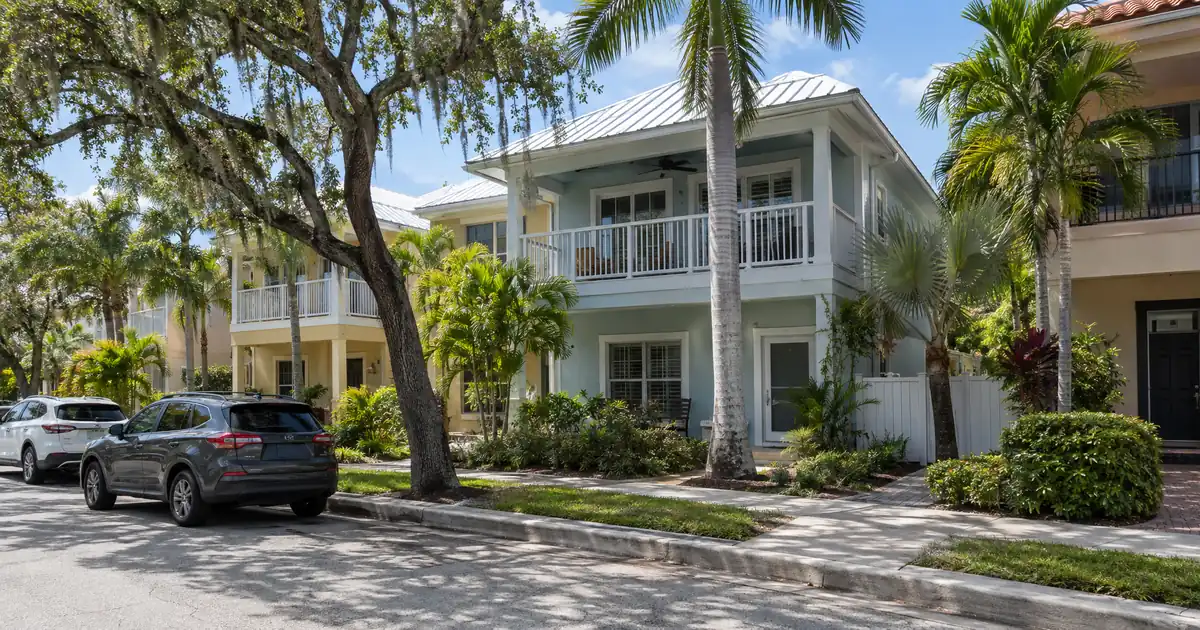
Marathon’s median home sale price hit $965,000 in November, up 22.2% year over year, even as homes sat on the market for 147 days compared to 121 the year before — Redfin’s data on that combination is the real story here. Prices climbing while velocity slows is a specific signal: equity is real, but liquidity is thinner than the price chart suggests. For an owner sitting on a Marathon rental bought a few years back, that gap between rising value and slowing turnover is exactly the environment where a cash-out refinance — rather than a sale — starts to look like the smarter move.
At a Glance: A Marathon cash-out refinance is underwritten primarily on the property’s rental income measured against its full monthly obligation, which fits investors holding duplex, triplex, or small multifamily stock better than single-unit workforce rentals given the city’s $965,000 median sale price.
DSCR Cash-Out Calculator
Run the cash-out numbers in Marathon, FL
Rate source: Freddie Mac 30-yr average via FRED® — Federal Reserve Bank of St. Louis · effective Sep 17, 2026
Prefilled with starting assumptions — enter your property’s value, balance, taxes, and insurance for a more accurate picture.
Program parameters update from Lendmire’s centralized guideline source. Taxes and insurance are editable estimates.
As of Sep 17, 2026 · General Freddie Mac market benchmark, not a Lendmire loan offer. Property value, balance, taxes, and insurance are editable estimates. Maximum loan-to-value varies by lender, program, property type, and seasoning. Not a Loan Estimate, approval, or commitment to lend. Program availability and eligibility are subject to lender guidelines, credit approval, property review, and underwriting.
- Cash-out LTV in Florida runs up to a 70% geographic ceiling under current network overlays
- Typical seasoning before cash-out is about 6 months of ownership from title recording
- Zillow’s ZHVI shows a 29.0% one-year gain in typical home value, to $705,398
- Rent estimates for Marathon span $1,790 to $3,997/month depending on data source — a wide spread investors should treat carefully
- Multi-unit properties (duplex/triplex) show the strongest rent-to-value math in this market
Marathon Market Snapshot
A quick read on the Marathon investor landscape — figures come from the cited sources below. Confirm current property-level numbers before underwriting.
| Metric | Detail |
|---|---|
| Home prices | $965,000 median (Redfin Housing Market:) |
| Typical rents | $3,997 median (Zumper Rent Research: Marathon) |
| Recent appreciation | +29.0% yoy (Zillow Home Values: Marathon, FL) |
| Population | Population ~9,914-10,039 range (U.S. Census Bureau QuickFacts:) |
| Employment | 5.04K employees (Data USA: Marathon, FL) |
Why Marathon’s Growth Cap Changes the Refinance Math
Marathon can’t build its way out of scarcity, and that’s the single fact that should shape how an investor thinks about pulling equity here. Monroe County, along with Marathon, Islamorada, Layton and Key West, operates under a state-mandated Building Permit Allocation System — Monroe County’s Land Development Code caps the number of new residential permits issued each year, a growth-management structure most Florida cities never have to deal with. Per one local brokerage’s explainer on the ROGO/BPAS process, the Keys have essentially run out of vacant land to build on.
That regulatory quirk matters for cash-out math in a specific way: existing multi-unit buildings can’t be replicated. NeighborhoodScout data shows large apartment complexes already account for 21.28% of Marathon’s housing stock, alongside 49.53% single-family detached homes — and under ROGO, that multi-unit share is effectively frozen. New competition can’t get built. If an investor already owns a legal duplex or triplex in Marathon, that structure sits on land that legally cannot be replicated at scale, which is a scarcity premium most refinance underwriting doesn’t fully price in through comps alone.
The flip side: this cuts against single-family workforce rentals pulling large cash-out balances. A single $965,000 SFR producing one rent check has to clear its full monthly obligation on that one income stream — a much heavier lift than a duplex splitting the same valuation across two.
The Multi-Unit Income-Stacking Case
Marathon’s clearest cash-out opportunity is the duplex or triplex that’s already producing two or three rent checks against one loan balance. Actual multi-family listings on Homes.com show a duplex with an upper unit renting near $3,000/month and a lower unit near $3,200/month — combined, that’s over $6,000/month in gross rent from a single parcel, a materially different DSCR picture than a $965,000 single-family home leaning on one tenant.
The same listing set shows multi-family prices in Marathon ranging from $675,000 to $35 million, against that citywide median of $965,000 cited for all property types. That spread means a duplex or triplex in the lower band — say $675,000 to $1 million — can sit near or below the median single-unit price while carrying two or three income streams. Running modeled numbers on a hypothetical $800,000 duplex at 70% LTV (just under the program’s standard 75% cash-out ceiling, which applies in Florida as in every state) with combined rents near $6,000/month against a full monthly obligation — principal, interest, taxes, and insurance at Florida-typical rates — lands the coverage ratio somewhere in the mid-1.0x to low-1.2x range, depending on the exact insurance line, which runs higher in flood zones common throughout the Keys. That’s a workable coverage band, though it’s a modeled illustration, not a quoted rate or guaranteed outcome, and every file gets confirmed individually. Final terms depend on lender guidelines, property type, leverage, and the borrower’s complete credit picture.
Sombrero Beach stands out as the submarket most likely to hold this kind of stock. Local brokerage descriptions note the area has “a mixture of single family homes, condominiums and multi-family units” — an explicit multi-family zoning mix that’s harder to find in Duck Key or Coco Plum, where the product leans single-family and condo, closer to an appreciation play near Hawk’s Cay Resort than a cash-flow one. Grassy Key, quieter and Gulf-side, anchored partly by the Dolphin Research Center, skews toward lower-density residential rather than multi-unit stock — fine for a long-term hold, less obvious for aggressive income-stacked refinancing.
Where the Workforce Housing Angle Fits
A portion of Marathon’s scarce building allocations are set aside specifically for workforce housing, and that detail carries real weight for rental-income stability. Under a 2025 state bill analyzed by the Florida House of Representatives, at least 70% of a 500-unit allocation pool must go to workforce housing — units restricted to households earning most of their income from local employment in Monroe County.
For an investor holding a legally-conforming, deed-restricted workforce rental, that restriction is arguably a feature rather than a limitation from a lending standpoint: the tenant base is tied to durable local employment — fishing, tourism, healthcare, county government — rather than speculative seasonal turnover. That’s a stable-income narrative DSCR underwriting responds well to. The caveat is real, though: deed restrictions, occupancy verification, and permit history need to be confirmed locally before any refinance moves forward. This is a case where the loan-level math might pencil clean while the title-level compliance work still needs a local professional’s eyes on it.
Employment Base — Small, but Diversified Around Tourism
Marathon’s economy runs on tourism-adjacent work rather than a single dominant employer. Data USA shows the most common employment sectors as Retail Trade (621 workers), Accommodation & Food Services (617), and Construction (592) — a service-and-trades economy, not a corporate or institutional one. Total employment grew modestly, from about 5,000 to 5,040 workers between the two most recent years measured.
Fishermen’s Community Hospital, part of the Baptist Health system, operates locally but at small scale — staffing directories put it around 87 employees with as few as 4 staffed beds, rebuilt after Hurricane Irma. It’s real, but it’s not a demand anchor on the order of a regional medical center. The honest read here: Marathon rental demand leans on tourism, marine trades, and construction tied to the Keys’ ongoing rebuild cycles — not a university, not a large single employer. There’s no college in Marathon either; the nearest is the College of the Florida Keys in Key West, so this isn’t a student-rental market by any measure.
The Appreciation-vs-Cash-Flow Tension
Marathon’s near-term refinance thesis should treat recent appreciation as banked equity, not a trend to extrapolate. Zillow’s typical home value climbed 29.0% over the past year to $705,398, and Redfin’s median sale price rose 22.2% to $965,000 over a similar window — both real, both recent, and both worth locking into a refinance now rather than assuming they repeat next year. Slowing days-on-market (147 versus 121) alongside rising prices is the kind of divergence that shows up before a market cools, even if it hasn’t cooled yet.
That argues for a specific posture: use a cash-out refinance to capture equity that’s already been earned, and lean on multi-unit rental income — not further appreciation — to make the new loan’s coverage work. An investor betting the next 12 months brings another 20%+ gain is making a different bet than one simply converting existing equity into deployable capital.
DSCR files in markets shaped by hard land-supply caps like this one tend to follow a recognizable pattern: appraisals lean heavily on a thin comp set given low transaction volume, insurance quotes swing wider than in mainland Florida due to flood-zone elevation requirements, and the strongest files are the ones where the investor has already secured a current insurance quote before the file goes to underwriting rather than after. Files built around single-unit workforce rentals with borderline coverage tend to get more scrutiny on rent comps than multi-unit files where combined income provides more cushion.
What the 6-Month Seasoning Clock Actually Means Here
Seasoning before a cash-out refinance is typically measured from the date of title recording — about 6 months of ownership under current program guidelines — and Marathon’s price trajectory over the past year makes that clock meaningfully relevant. An investor who closed a purchase roughly seven or eight months ago at, say, $750,000 and is now sitting on a property appraising closer to today’s market levels has real, bankable appreciation to draw against, subject to the 70% Florida cash-out LTV ceiling and a minimum 1.00 DSCR on the refinanced balance.
Reserves matter too: current guidelines call for about six months of full monthly obligation in reserve, rising to roughly nine months above the $1.5 million loan threshold — a real consideration for anyone eyeing the higher end of Marathon’s multi-family price range, where $2 million-plus properties aren’t unusual. None of this locks in a guaranteed proceeds figure; rent used for lender review, the reserve requirement, and the LTV ceiling all interact to determine what’s actually available, and that’s a conversation worth having with a lender before assuming a number. These specifics are subject to lender guidelines and a full review of property, leverage, and credit.
For investors weighing whether DSCR is even the right lane versus a conventional investor loan, Marathon’s answer leans toward DSCR for anyone holding title in an LLC or drawing rental income that doesn’t cleanly show up on traditional personal-income documentation — which describes a large share of Keys investment property owners. A W-2 employee with one clean single-family rental and strong personal income might still find conventional refinancing cheaper on the margin; DSCR’s edge shows up when the file is entity-owned, multi-unit, or when rental income is the cleaner qualifying basis than a personal return. Reviewing the DSCR qualification mechanics and refinance details before running specific numbers is a reasonable first step, and Lendmire’s team can be reached at 828-256-2183 to talk through a specific file.
The Florida DSCR loans page outlines the state-level parameters that apply across Keys submarkets, subject to lender program eligibility for LLC-titled files. For an investor comparing a straight refinance against a full cash-out structure, the refi options page walks through both paths side by side.
Frequently Asked Questions
Does Marathon’s building permit cap actually affect my refinance appraisal?
Indirectly, yes. Because Monroe County’s growth ordinance limits new construction, existing multi-unit properties in Marathon carry a scarcity value that newer, unrestricted markets don’t have — appraisers working comps in a land-locked market like this one are working from a smaller, less replaceable inventory pool, which can support value on legally-conforming multi-unit parcels.
Why do rent figures for Marathon vary so much between sources?
Different platforms weight their samples differently, and Marathon’s small sample size amplifies the gap between them. Some aggregators skew toward broader regional averages while others emphasize a narrower slice of listings, producing figures that can diverge sharply from each other — a spread this wide means any refinance file should use documented, in-place lease income rather than an aggregator average.
DSCR vs. conventional financing
Two common ways to finance an investment property in Marathon, FL. They qualify you differently — here’s how investors weigh them.
Why investors choose it
- Qualifies on the property’s rental income — no personal tax returns, W-2s, or pay stubs needed to document income.
- No personal debt-to-income ceiling to clear, so existing mortgages and obligations don’t cap your borrowing the same way.
- Can be closed in an LLC, keeping the property inside a business entity.
- Built for scaling — not held to the limit on number of financed properties that conventional financing applies.
- Underwriting centers on the deal: generally qualifies when the rent covers the payment, a 1.00x coverage ratio being a common baseline (confirmed in underwriting).
- Designed specifically for investment property, including long-term and, where the program allows, short-term rentals.
Where it’s strong
- Often the lowest ongoing financing cost for a buyer who fully qualifies on personal income — a fit for a first property or a cost-first purchase.
Trade-offs for investors
- Requires full personal income documentation and must fit within a debt-to-income limit — salary, existing debts, and other mortgages all count.
- Typically held in your personal name rather than a business entity.
- Caps how many financed properties you can carry, which can become a ceiling as a portfolio grows.
- Evaluates you as a borrower as much as the property, which usually means more paperwork.
How investors usually choose: a first or single property often optimizes for the lowest financing cost; portfolio builders often optimize for leverage, vesting in an LLC, and scaling past conventional caps. The right answer depends on your goals, the property, and current guidelines — both paths run through select lenders in Lendmire’s wholesale network, with eligibility and terms confirmed in underwriting.
Is a single-family workforce rental a good candidate for cash-out here?
It’s usable, but it’s a weaker cash-out candidate than multi-unit stock given Marathon’s $965,000 median price and a single rent check. Single-family workforce rentals tend to fit purchase-money DSCR scenarios more comfortably than aggressive cash-out refinances, where combined multi-unit income has an easier time clearing the required coverage.
Can I refinance a workforce-housing deed-restricted unit with a DSCR loan?
Potentially, subject to lender review of the specific deed restriction and occupancy requirements — this isn’t something to assume without verifying the restriction terms locally first. The stable, employment-tied tenant base these units carry can support a rental-income underwriting case, but the restriction itself needs confirmation before a lender can size the file.
How does the slowing days-on-market trend affect a cash-out appraisal?
A rising median price paired with 147 days on market (up from 121) suggests thinner buyer demand at current price points, so an appraisal relying on stale or optimistic list-price comps could overstate value. Comps should reflect actual closed sales, not asking prices, when a refinance file is being sized.
For current guidelines and terms, see Lendmire’s DSCR loan programs page.
About Lendmire
Lendmire (NMLS# 2371349) is a mortgage brokerage built around DSCR investor lending, with programs available in 41 markets, including Washington, D.C. DSCR lenders commonly evaluate rental-income coverage instead of personal income paperwork — a practical fit for LLC-owned and multi-property investors. Terms vary by lender, property, leverage, and program. The firm was recognized by Scotsman Guide in 2025 and again as a 2026 Scotsman Guide Top Mortgage Workplace, detailed further in the 2026 Top Workplace recognition announcement.
A city that has physically run out of room to build new housing doesn’t behave like the rest of Florida’s real estate market — and that scarcity, not the tourism economy alone, is what makes Marathon’s existing multi-unit stock worth a second look before assuming a $965,000 single-family comp tells the whole story.
Get Started
Ready to find the right loan for you?
In about 30 seconds you can review financing options available for your investment property. No commitment required.
Informational only. Not a Loan Estimate, approval, or commitment to lend. Program availability and eligibility are subject to lender guidelines, credit approval, property review, and underwriting.
References
1. Redfin Housing Market: Marathon, FL
2. Zumper Rent Research: Marathon
3. Zillow Home Values: Marathon, FL
4. U.S. Census Bureau QuickFacts:
6. Monroe County Land Development Code, Chapter 138
8. NeighborhoodScout Marathon Real Estate
9. Homes.com Marathon Multi-Family Listings
10. Florida House of Representatives Bill Analysis H0995
12. a 2026 Scotsman Guide Top Mortgage Workplace
13. the 2026 Top Workplace recognition announcement
This article is part of Lendmire’s investment property cash-out refinance program — full qualification details, guidelines, and scenarios live on the program page.
Related reading: Cash Out Refinance Investment Property Marathon Florida · DSCR Loans Key West & Florida Keys: Investor Financing for Old Town, Islamorada, Marathon, Big Pine Key & Real Estate Investors · DSCR Cash Out Refinance in Weston, Florida: Townhome and Villa Equity Extraction
Guides: Investment Property Cash-Out Refinance in Marathon, FL · Investment Property Cash-Out Refinance in Florida
Brandon Miller
Founder & CEO, Mortgage Loan Originator, Lendmire LLC
- Mortgage Loan Originator · NMLS# 1129696 · Verify on NMLS Consumer Access
- North Carolina Real Estate Broker · License# 343312 · Verify on NCREC
- North Carolina Insurance Producer · License# 19053198 · Property, Casualty, Life, Health · Verify on NAIC SBS
- Lendmire LLC · Firm NMLS# 2371349 · Verify firm licensure
Disclosures. The information presented in this article is general market commentary, not financial, legal, or tax advice. Lendmire is a mortgage brokerage (NMLS# 2371349) — not a direct lender or depository institution — and loan placement is subject to lender underwriting. Nothing in this content represents a commitment to lend. Loan terms, pricing, and program availability vary based on borrower qualifications, property characteristics, and state of subject property, and are subject to change at any time. Lendmire complies with Equal Housing Opportunity requirements. Consumer access: nmlsconsumeraccess.org.