
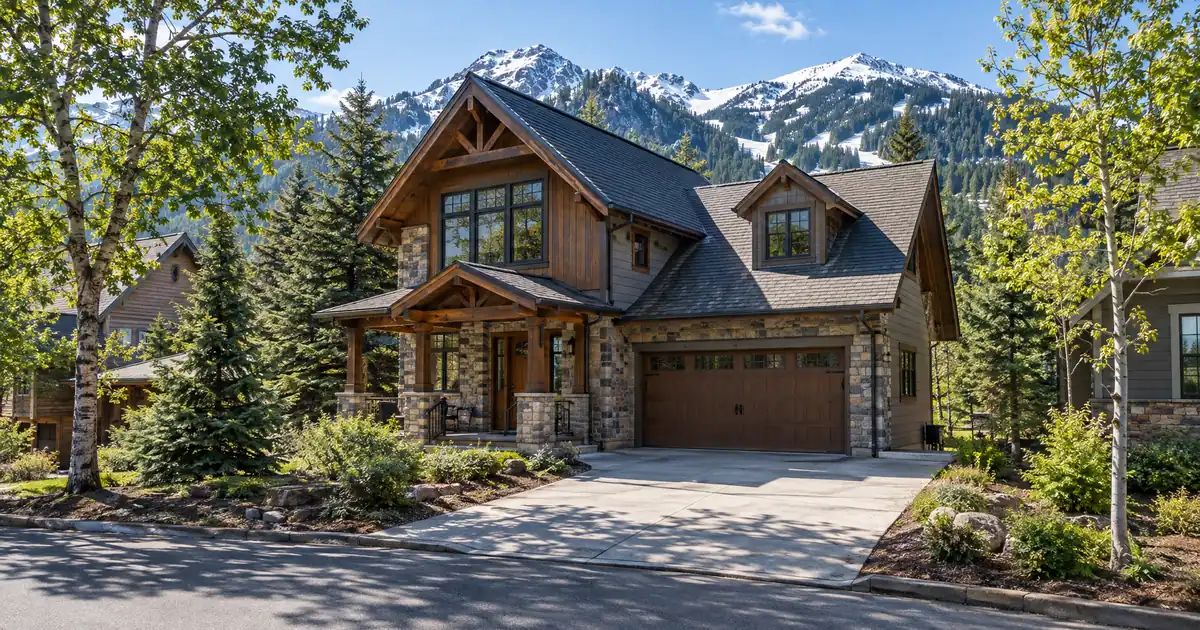
Boone landlords are heading into a stretch where the story shifts from “nothing ever sits empty” to “underwrite for vacancy.” RentCafe shows average rent down 10.71 percent from a year earlier, and the Watauga Democrat reports rental vacancies that “haven’t existed in years.” Mountaineer Ridge, an App State development with 852 student beds, is on the way too. If you own a rental here and you’re weighing a DSCR cash out refinance in Boone, North Carolina, the next 6 to 18 months matter. Appraisals and rent schedules are being set in a softening market, so the equity you pull should be sized for the market you’ll hold through, not the one you bought into.
DSCR Cash-Out Calculator
Run the cash-out numbers in Boone, NC
Rate source: Freddie Mac 30-yr average via FRED® — Federal Reserve Bank of St. Louis · effective Sep 24, 2026
Prefilled with starting assumptions — enter your property’s value, balance, taxes, and insurance for a more accurate picture.
Program parameters update from Lendmire’s centralized guideline source. Taxes and insurance are editable estimates.
As of Sep 24, 2026 · General Freddie Mac market benchmark, not a Lendmire loan offer. Property value, balance, taxes, and insurance are editable estimates. Maximum loan-to-value varies by lender, program, property type, and seasoning. Not a Loan Estimate, approval, or commitment to lend. Program availability and eligibility are subject to lender guidelines, credit approval, property review, and underwriting.
Key Takeaways:
A DSCR cash-out refinance in Boone, North Carolina is underwritten primarily on the property’s rental income measured against its full monthly obligation of principal, interest, taxes and insurance rather than personal income paperwork, and it lets you borrow against equity in a rental you already own, subject to lender guidelines, seasoning, reserves and a loan-to-value ceiling.
- Redfin puts the median sale price near $380K, down 8.8 percent, so appraisals drive your proceeds.
- Zumper’s $2,330 average house rent models near 1.0x coverage including taxes and insurance at 75 percent LTV.
- Only 12.08 percent of Boone housing is duplex-to-small-multifamily, so comps for those buildings run scarce.
- Cash-out tops out at 75 percent LTV after roughly six months of ownership.
- App State’s 21,798 students anchor demand, but growth is steering online rather than into Boone.
Boone Market Snapshot
A quick read on the Boone investor landscape — figures come from the cited sources below. Confirm current property-level numbers before underwriting.
| Metric | Detail |
|---|---|
| University enrollment | 21,798 total (Appalachian Today) |
| Employment | Health care 4,047 jobs (myFutureNC Watauga County) |
Equity Here Is Thinner Than It Looks
Boone’s equity story is flat-to-soft, not surging. Redfin shows a median sale price of $380K over the trailing three months, down 8.8 percent year over year, while Zillow puts the average home value at $482,733, up 0.7 percent. Those numbers don’t contradict each other. They measure different things.
Zillow’s figure is a modeled value index across the housing stock, and Redfin’s is what actually sold. Redfin also shows only 29 homes sold in July, so the sold-price median can swing on a handful of closings. Redfin’s price per square foot is up 6.8 percent even as the median price fell, which usually means the mix of homes selling changed, not that values cracked.
Why does this matter for a cash-out? The appraiser is working from a shallow comp pool in a market where prices are roughly flat, so appreciation after purchase may not have created much equity. The investors who have real equity to pull are mostly those who bought well below today’s values, added value through renovation, or paid down a balance over years. If you bought at the top of a recent cycle, run the appraisal-side math before you pay for anything.
That’s the uncomfortable part. The more encouraging part is that Boone’s supply is physically constrained by mountain terrain, which is a big reason prices have flattened rather than fallen apart.
How the Cash-Out Box Works
For a rental you already own, the cash-out lane has four moving parts: the loan-to-value ceiling, seasoning, coverage and reserves. All four are guidance, not guarantees, and each depends on lender guidelines, credit profile and property review.
Lendmire (NMLS# 2371349) places DSCR investor financing for Boone, North Carolina through non-QM wholesale channels that cover 41 markets, including Washington, D.C. On the cash-out side, the typical parameters look like this:
- Leverage: up to 75 percent of appraised value on a cash-out. That’s lower than the 80 percent purchase ceiling, and the two shouldn’t be mixed up.
- Seasoning: about six months of ownership, measured from title recording.
- Coverage: a 1.00x benchmark, meaning rent used for lender review covers the full monthly obligation (principal, interest, taxes, insurance and any HOA dues). Some lenders review lower ratios, but usually with lower leverage, stronger credit or more cash reserves.
- Reserves: roughly six months of the full monthly obligation, with more required on larger balances.
Credit tiers step up from a 620 floor through 660, 680 and 700, and better tiers generally open up more leverage and better terms. Standard programs go up to $3,000,000, with smaller balances routed through select lenders in the network. Any property held in an LLC is reviewed subject to lender program eligibility.
One property-type note matters in the High Country: manufactured homes, log homes and barndominiums fall outside these programs. Mountain cabins are a common product up here, so check construction type before you count a property as a candidate.
For a plain-English walkthrough of the underwriting side, see the guide “What Is a DSCR Loan”. The equity-extraction mechanics and the refinance side are covered in more depth on their own pages, and the statewide picture lives at North Carolina DSCR financing.
Run the Numbers on a Median Boone House
A median-priced Boone house sits right at the coverage line, and that’s the honest headline. Picture a house you own near Deerfield Road. Assume an appraisal lands at the $380K Redfin median and market rent comes in at $2,330, which is Zumper’s average house rent. Both inputs are modeled assumptions, not a prediction for any specific property.
Divide that rent by a full monthly obligation that includes taxes and insurance at typical North Carolina levels, and 75 percent LTV produces coverage right around 1.0x. Not comfortable. It’s a file that might clear at the benchmark or might not, depending on the actual insurance quote, the lender’s rent figure and the property’s tax bill. Drop leverage to 65 percent and the same house moves closer to 1.15x, which is a much sturdier file.
That’s a real tradeoff. Pulling the full 75 percent gets you more capital but leaves almost no cushion if the lender’s rent schedule comes in below listing asks. Pulling less leaves capital on the table but makes the file easier to place. Which is better depends on what the proceeds will do. If the next purchase covers itself comfortably, the smaller pull is probably fine.
Now the duplex version. Homes.com lists four multi-family homes in Boone from $549,000 to $1,390,000. Model a $549K duplex with two-bedroom units at Zumper’s $1,500 average two-bedroom rent, about $3,000 a month gross. At 75 percent LTV with taxes and insurance included, coverage lands in the low-0.9s. A second unit adds absolute dollars of income, but the gross yield is close to what a single-family house delivers, so it doesn’t automatically improve coverage.
When a duplex model falls below 1.00x on long-term rent, there are structures a lender may review: a sub-1.00 program, an interest-only structure, or lower leverage. All of them are subject to lender guidelines, credit approval and property review. Here’s the catch. If you’re reaching for sub-1.00 because nothing in your target neighborhoods pencils at standard lender review, that’s a signal to re-examine the entry price or the submarket, not just the loan type.
DSCR files in markets like this one typically look like a tight-coverage story on paper that improves or worsens based on three items: the actual lease in place, the insurance quote and the appraiser’s rent schedule. In small, seasonal, terrain-constrained markets, the borrower who brings signed leases and a fresh insurance quote to the file usually has fewer surprises than the one who leans on listing-site averages. Where public rent sources disagree, the file should be sized to the conservative end of the range.
Which Boone Submarkets Carry the Refinance?
Deerfield Road and Downtown carry the strongest non-student demand stories, while the University District is the most exposed to new supply. Boone’s neighborhood names come from listing guides, not from a clean price-and-rent series, so the read below is qualitative unless a figure is cited.
Deerfield Road
Deerfield Road runs past Boone Golf Club and the Watauga Medical Center, a 117-bed regional referral hospital that App State’s career center describes as part of the county’s economic core. Health care and social assistance is the largest county industry by jobs at 4,047, or 19.0 percent, per myFutureNC. Tenants here skew toward hospital staff and professionals on longer leases, which is what a cash-out file wants to see. For an investor with equity in a house or townhome on this corridor, the demand case is easier to defend to an appraiser than a student-oriented property.
Downtown and King Street
Walkable, near Mast General Store, cafes and galleries, and popular with young professionals, students and visitors. Zumper lists Downtown Boone rent at $1,800, though the bedroom count is unspecified. Redfin’s neighborhood page shows a $410K median, but that’s built on a single sale. Treat it as directional at best. The asset story here is location durability, not yield.
The University District
Rivers Street, the Kidd Brewer Stadium area and the Holmes Convocation Center corridor put tenants within easy reach of campus. Demand is real, since App State’s fall enrollment reached 21,798 and U.S. News reports 69 percent of students live off campus. But this is the submarket where new purpose-built beds compete most directly with converted houses. More on that below.
The Rest of the Map
Blowing Rock Road near the Boone Mall corridor draws service and retail workers and roommate groups, and the big-box and grocery access supports steady occupancy, though rents aren’t documented at the corridor level. East Boone (New Market Center and Bamboo Road) has good US-421 connections and no price data. Poplar Grove and Perkinsville are hillside options a short hop from King Street and campus. Junaluska and Howard’s Knob offer wooded streets and views, minutes from downtown. Outlying areas like Vilas, Deep Gap and Todd offer acreage and privacy, but that’s a different tenant pool and a thinner rental market. Blowing Rock is a luxury market where high-end listing prices make coverage math harder, not easier.
The Student Supply Question (What Happens When 852 Beds Arrive)
Boone’s tenant base is stable, not surging, and that distinction shapes how much cash-out an investor should take. The Watauga Democrat reports several complexes, including The Standard, The Finmore at 241 and Peak of Boone, still advertising as “now leasing.” Mountaineer Ridge is expected to add 852 student beds by the following fall.
App State’s own enrollment growth overview says future growth will focus on online students or sites outside the Boone area. Fall growth was boosted by a 28 percent rise in online students, and on-campus enrollment has moved by less than 3 percent year to year over six years. So the university is a reliable anchor, but not a growth engine for the local rental base.
There are two ways to read that. The bullish read: landlords are protected from a runaway enrollment surge that would trigger overbuilding. The cautious read: rent growth has a ceiling, and the new supply arrives into flat demand. Honestly, this is a genuine toss-up, and it’s why the underwriting assumption matters more than the headline rent. For student-oriented product, use higher vacancy than Boone’s historical near-zero, and expect a lender’s rent figure to reflect that.
Rent data shows the same softness. RentCafe’s $2,198 average comes only from 50-plus-unit buildings, so it’s not a read on houses and small buildings. Zumper’s blended average is $1,480, with apartments at $1,325 and houses at $2,330. Two 2026 sources show rents falling 7 to 11 percent year over year. Use the low end of that range when you size a loan, and don’t count on rent growth to rescue thin coverage.
Duplexes: Scarce Product, Thin Comps
Boone’s housing stock is dominated by large complexes. NeighborhoodScout puts large apartment complexes at 56.64 percent of units, single-family detached at 25.05 percent and duplexes or small converted buildings at 12.08 percent. It also shows 82.05 percent of dwellings as rentals, while RentCafe’s census-based figure is 74 percent of households renting. The two aren’t measuring the same thing, but both say this is a renter town.
For a cash-out, the scarcity of small multifamily cuts both ways. It means a well-located duplex or fourplex faces limited direct competition for tenants. It also means the appraiser has few nearby comparable sales, and the comps they do find may be institutional buildings that don’t translate. If you own a small building, underwrite on actual in-place leases, keep documentation clean, and expect the valuation to take more judgment than a single-family house would.
Multi-bedroom houses and townhomes near campus and the hospital fit a per-bedroom leasing approach, and that model can produce stronger rent per property than a two-unit building at the same price. Whether that beats a duplex on coverage depends on entry price and the actual leases, not on the property type label.
Where Cash-Out Beats a Conventional Refinance (and Where It Doesn’t)
For an LLC-held portfolio or a self-employed owner whose traditional personal-income documentation doesn’t show the true income, DSCR is usually the more practical path. Underwriting rests on the property’s rent against its full monthly obligation, and there’s no need to document personal income the same way. Once you’re past four financed properties, the conventional lane tends to run out entirely.
DSCR vs. conventional financing
Two common ways to finance an investment property in Boone, NC. They qualify you differently — here’s how investors weigh them.
Why investors choose it
- Qualifies on the property’s rental income — no personal tax returns, W-2s, or pay stubs needed to document income.
- No personal debt-to-income ceiling to clear, so existing mortgages and obligations don’t cap your borrowing the same way.
- Can be closed in an LLC, keeping the property inside a business entity.
- Built for scaling — not held to the limit on number of financed properties that conventional financing applies.
- Underwriting centers on the deal: generally qualifies when the rent covers the payment, a 1.00x coverage ratio being a common baseline (confirmed in underwriting).
- Designed specifically for investment property, including long-term and, where the program allows, short-term rentals.
Where it’s strong
- Often the lowest ongoing financing cost for a buyer who fully qualifies on personal income — a fit for a first property or a cost-first purchase.
Trade-offs for investors
- Requires full personal income documentation and must fit within a debt-to-income limit — salary, existing debts, and other mortgages all count.
- Typically held in your personal name rather than a business entity.
- Caps how many financed properties you can carry, which can become a ceiling as a portfolio grows.
- Evaluates you as a borrower as much as the property, which usually means more paperwork.
How investors usually choose: a first or single property often optimizes for the lowest financing cost; portfolio builders often optimize for leverage, vesting in an LLC, and scaling past conventional caps. The right answer depends on your goals, the property, and current guidelines — both paths run through select lenders in Lendmire’s wholesale network, with eligibility and terms confirmed in underwriting.
Flip the profile and the answer changes. A W-2 borrower with one or two rentals in their own name, clean traditional personal-income documentation and a strong income story may find conventional financing carries lower cost and less friction, even with the cash-out cap. Break-even sits somewhere around the third financed property, or earlier if personal returns don’t support rental income add-backs. The full comparison is laid out at “Where DSCR and Conventional Diverge”.
What the Proceeds Should Do
The cash-out thesis depends on what the money does next. Pulling equity to buy another Boone rental where coverage still pencils at current pricing is a clear-cut argument. Take the duplex model above: if entry price and leases produce coverage near or above 1.0x on the new asset, the proceeds are working. If the new purchase needs a sub-1.00 structure to work, you’ve layered leverage onto a market with softening rents, and that deserves a stress test before committing.
Deploying proceeds into out-of-state markets where the math doesn’t pencil is a different decision altogether. Boone is a small, mountain-constrained micro-market with one dominant employer. Diversifying away from that concentration is a reasonable goal, but only if the new market’s coverage holds up at real prices.
Two more points. Boone’s population is about 19,773 per Hometown Locator’s Census-based estimate, and Watauga County’s job base runs through health care, accommodation and food service, and retail. Those are sturdy anchors but not fast-growing ones. Second, Samaritan’s Purse, headquartered in Boone with 500 to 999 employees, adds a non-student professional renter pool that isn’t tied to the academic calendar. Both support a steady, unspectacular hold, which is precisely what a cash-out file wants (and what an investor chasing appreciation shouldn’t expect). Investors should also verify current local rental rules, taxes and insurance with qualified local professionals before sizing any deal.
To see how a specific property might pencil, an investor can get a rental-income loan quote or call 828-256-2183 to talk through a file.
Frequently Asked Questions
How much equity can a Boone investor realistically pull with a DSCR cash-out?
Up to 75 percent of appraised value, minus the existing payoff, and only if coverage clears the lender’s baseline. In Boone, where the median sale price has softened and comps are thin, the appraisal is often the limiting factor. The actual figure depends on rent used for lender review, the full monthly obligation, reserves and lender guidelines.
Does the six-month seasoning rule matter for Boone landlords who just bought?
Yes. Programs typically look for about six months of ownership measured from title recording before a cash-out is on the table. In a flat market, that clock rarely produces much appreciation, so recent buyers should not count on the refinance to release meaningful equity unless they added value through improvements.
Will the new student housing hurt my appraisal or rent figure?
It can affect the rent side more than the value side. Purpose-built beds like Mountaineer Ridge’s 852 compete most directly with student-oriented houses near campus, and the lender’s rent schedule may reflect that. Properties tied to hospital or professional tenants near Deerfield Road tend to face less of that pressure.
Are cabins and log homes in the High Country eligible?
No. Log homes, manufactured homes and barndominiums fall outside these DSCR programs. Conventionally built houses, townhomes and small multifamily buildings are the property types that generally fit, subject to program review.
Should I use RentCafe’s average rent to estimate coverage?
Not for a house or a small building. RentCafe’s $2,198 average draws from buildings with 50 or more units, and Zumper shows houses averaging $2,330 against apartments at $1,325. Use actual leases first, then a conservative market range, and expect the lender’s figure to land toward the lower end.
The Next Two Lease Cycles
Boone rewards owners who hold steady tenant demand and punishes those who lean on rent growth that isn’t coming. The market is small, the anchors are stable and the supply is constrained, but coverage is thin at median pricing and new student beds are on the way. The investors who size their cash-out to conservative rents and tap equity while their leases are still strong will come out ahead.
For current guidelines and terms, see Lendmire’s DSCR loan programs page.
About Lendmire
Lendmire (NMLS# 2371349) is a mortgage brokerage built around DSCR investor lending, with programs available in 41 markets, including Washington, D.C. DSCR lenders commonly evaluate rental-income coverage instead of personal income paperwork, which is a practical fit for LLC-owned and multi-property investors. Terms vary by lender, property, leverage and program. The brokerage was named a top-ranked workplace in 2026 and was recognized by Scotsman Guide in 2025.
Get Started
Ready to find the right loan for you?
In about 30 seconds you can review financing options available for your investment property. No commitment required.
Informational only. Not a Loan Estimate, approval, or commitment to lend. Program availability and eligibility are subject to lender guidelines, credit approval, property review, and underwriting.
References
1. RentCafe: Boone average rent
2. Watauga Democrat: rental vacancies rising in Boone
3. Redfin: Boone housing market
4. Appalachian Today: App State enrollment
5. myFutureNC: Watauga County profile
6. Zillow
7. Zumper: Boone rent research
8. Homes.com — Boone NC Multi Family Homes for Sale
10. App State: enrollment growth overview
11. NeighborhoodScout: Boone real estate
12. Hometown Locator’s Census-based estimate
13. Scotsman Guide — Top Workplaces 2026
14. recognized by Scotsman Guide in 2025
This article is part of Lendmire’s investment property cash-out refinance program — full qualification details, guidelines, and scenarios live on the program page.
Related reading: Cash Out Refinance Investment Property Boone North Carolina · DSCR Cash Out Refinance in Blowing Rock, North Carolina: The 2026 DSCR Guide to Main Street · DSCR Cash Out Refinance in Morehead City, North Carolina: 2026 DSCR Guide to Arendell Street
Guides: Investment Property Cash-Out Refinance in Boone, NC · Investment Property Cash-Out Refinance in North Carolina
Brandon Miller
Founder & CEO, Mortgage Loan Originator, Lendmire LLC
- Mortgage Loan Originator · NMLS# 1129696 · Verify on NMLS Consumer Access
- North Carolina Real Estate Broker · License# 343312 · Verify on NCREC
- North Carolina Insurance Producer · License# 19053198 · Property, Casualty, Life, Health · Verify on NAIC SBS
- Lendmire LLC · Firm NMLS# 2371349 · Verify firm licensure
Legal disclosures. Lendmire (NMLS# 2371349) is a state-licensed mortgage brokerage that arranges financing through wholesale lender relationships. Lendmire is not a direct lender, depository institution, or registered financial advisor. The discussion above is general informational content about real estate financing — it is not financial, legal, or tax advice, and readers should consult licensed professionals for guidance on their individual circumstances. Loan inquiries are subject to lender underwriting; this article does not represent a commitment to lend. Loan terms, rates, and qualification standards vary by borrower, property, and state, and are subject to change at any time. Equal Housing Opportunity. NMLS Consumer Access: nmlsconsumeraccess.org.