
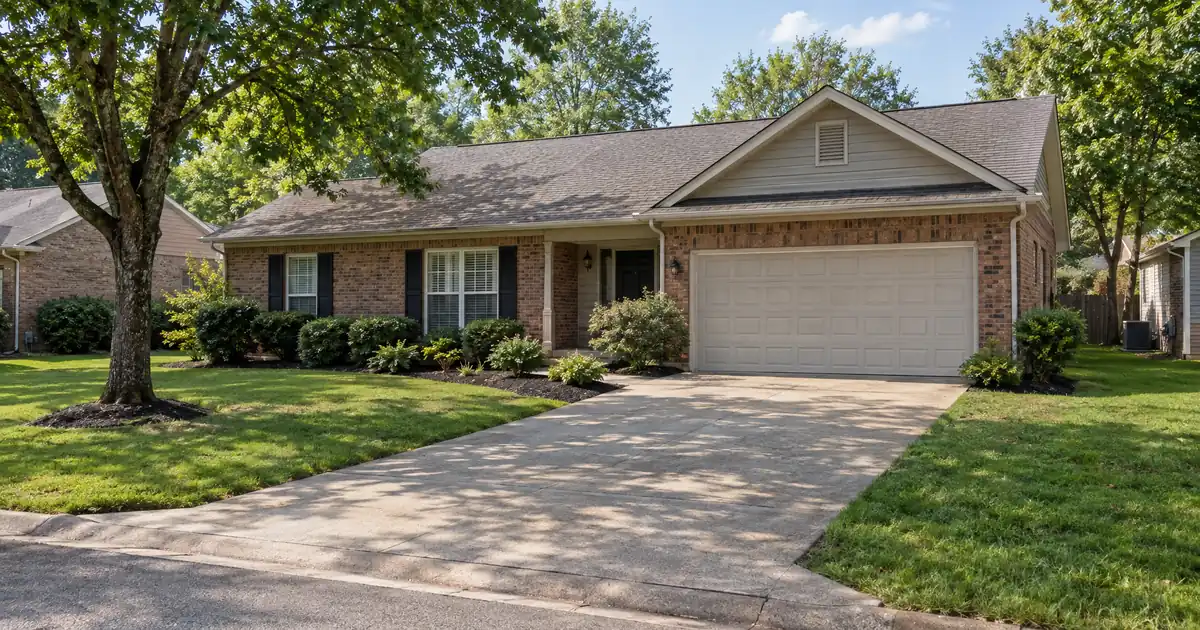
According to the City of Germantown, 87.6 percent of homes in town are owner-occupied. That one figure explains most of what an investor needs to know before pulling equity out of a rental here. The rental pool is small, the houses are large, and the income side of the loan has to work harder than it does in Memphis’ cheaper zip codes.
The Quick Read: Cash-out refinancing in Germantown, Tennessee, is underwritten primarily on the property’s rental income measured against its full monthly obligation. In a suburb where Zillow puts typical values near $485,204, the binding constraint is usually coverage rather than equity, so leverage can land below the 75 percent ceiling, subject to lender guidelines.
DSCR Cash-Out Calculator
Run the cash-out numbers in Germantown, TN
Rate source: Freddie Mac 30-yr average via FRED® — Federal Reserve Bank of St. Louis · effective Sep 24, 2026
Prefilled with starting assumptions — enter your property’s value, balance, taxes, and insurance for a more accurate picture.
Program parameters update from Lendmire’s centralized guideline source. Taxes and insurance are editable estimates.
As of Sep 24, 2026 · General Freddie Mac market benchmark, not a Lendmire loan offer. Property value, balance, taxes, and insurance are editable estimates. Maximum loan-to-value varies by lender, program, property type, and seasoning. Not a Loan Estimate, approval, or commitment to lend. Program availability and eligibility are subject to lender guidelines, credit approval, property review, and underwriting.
- Listing snapshot: single-family rents near $2,900, townhomes near $1,550, per Homes.com.
- Renter households are just 14 percent of the total, per RentCafe.
- The hospital corridor on Poplar Avenue is the clearest long-term tenant anchor.
- Cash-out typically caps at 75 percent LTV after roughly six months of title seasoning.
Germantown Market Snapshot
A quick read on the Germantown investor landscape — figures come from the cited sources below. Confirm current property-level numbers before underwriting.
| Metric | Detail |
|---|---|
| Home prices | $402,300 median value (City of Germantown) |
| Employment | About 500 jobs at shopping centers (Commercial Appeal via Yahoo) |
| Vacancy | up to 15.4% in some submarkets (TenantBase Memphis Q1 2026) |
The Poplar Avenue Corridor Is Where the Tenant Story Starts
The Poplar Avenue spine is the strongest rental-demand pocket in Germantown, because it holds the hospital, the medical offices, and the retail that employ people who need to live nearby. Methodist Le Bonheur Germantown Hospital sits on it, and the Commercial Appeal (syndicated on Yahoo) calls it the city’s biggest employer.
The hospital’s Methodist Health location page also lists nearby surgery centers. Bed counts differ by source, so “roughly 300 or more” is the safe description. Data USA shows health care and social assistance as the top resident sector, at 3,335 people, ahead of manufacturing at 1,849 and professional, scientific, and technical services at 1,666.
There’s no sourced count of how many nurses, techs, and traveling clinicians rent here versus commute from elsewhere. The demand is plausible, not measured. But for a refinance file, an appraiser and a lender both like an employment anchor that doesn’t depend on the housing cycle.
The Germantown Municipal School District (over 600 employees across seven schools) and the City of Germantown itself (about 400 full-time and 200 part-time staff, per the city’s administration page) add a steady public-sector base.
What the Numbers Say About Coverage
Coverage is the pinch point here. Rent-to-value in Germantown runs thin, and a cash-out refinance sized to the 75 percent ceiling can land right around 1.00x on a typical single-family rental once taxes and insurance are counted.
Run the numbers on a modeled house at Zillow’s typical value of $485,204, rented at the $2,900 single-family figure from the Homes.com listing snapshot. Those are modeled assumptions, not a specific property. At 75 percent LTV, full-PITIA coverage (P&I plus taxes and insurance at Tennessee-average loads) comes out at roughly 1.0x, and rounding down is the honest call. Drop the refinance to 65 percent LTV and coverage moves into the low 1.1 range, again including taxes and insurance.
The lesson: at this price point, borrowing less can be the difference between a clean file and a marginal one.
If coverage lands under 1.00x on the long-term rent, there are structures a lender may review. These include a sub-1.00 program, an interest-only period, or a lower LTV with stronger credit and more reserves. Each is subject to lender guidelines, credit approval, and property review, and none is a given. While some DSCR lenders apply tighter sub-1.00 guidelines, Lendmire works with a network of wholesale lenders, so options can differ file by file.
Then the question that matters: should you use one? If the property has a real appreciation story, a lower-coverage structure can be defensible. If you’re reaching for it because the house doesn’t rent for enough, that’s a signal about the property, not the loan.
Rents Aren’t Uniform: The Property-Type Split
Single-family carries the rent in Germantown, and townhomes and condos rent well below it. The Homes.com snapshot of 38 active listings shows a $2,725 median overall, with single-family at $2,900, townhouses at $1,550, and condos at $1,200. It’s a listing snapshot, not a survey, so treat it as directional.
The practical read is that a city-average rent tells you almost nothing. Underwrite each house on its own comps.
RentCafe puts average apartment rent at $1,958, up 4.82 percent, with $1,632 for a one-bedroom, $2,148 for a two, and $2,270 for a three. That data covers buildings of 50 or more units only, so it describes apartments, not the houses most investors here actually hold. Point2Homes shows the largest share of rentals (29 percent) built in the 1970s, which is likely the older apartment and condo stock.
What about duplexes, triplexes, fourplexes, and ADUs? Supply appears thin, and none of the sources checked document it. Read that as an absence of data, not proof of absence. But an investor counting on a small multifamily to stack rent and lift coverage should expect to search hard, or to look outside the city.
Old Germantown and the East Side
Old Germantown, the historic depot and rail district at the city center, is the most plausible place to find older or smaller stock. No sourced price or rent breakdown exists for it, so the argument is qualitative. Character and scarcity likely mean fewer sales and firmer holding values, which suits a refinance but doesn’t help a yield-focused buyer.
The east side toward Wolf River Boulevard is residential, with the same large-house profile that defines the city. NeighborhoodScout describes Germantown as a city of large single-family homes and reports that about 70 percent of homes have three or four bedrooms. Bigger houses can command higher rent, but they also carry higher debt service against it. Coverage still depends on the specific rent comp.
(The Germantown Charity Horse Show in June, which Choose901 says draws 600 to 700 horses a year, tells you plenty about the character of the town. It isn’t an underwriting input.)
Why Investors Pull Equity Here Anyway
The case for a Germantown cash-out is stability and equity, not yield. Homes.com’s rent snapshot and Zillow’s value together give a monthly rent-to-value near 0.6 percent (an arithmetic result, not a sourced statistic). That is not a cash-flow-led market.
Values have been flat-to-soft lately, not surging. Zillow shows typical values up 1.1 percent over the year, while Redfin puts the median sale price near $480,000, down 3.0 percent, with homes taking 37 days to sell. Different methods, different numbers. Neither describes a market where you can count on appreciation to manufacture equity next quarter.
So the honest version of the thesis is: an investor who bought years ago, or who improved a house meaningfully, may hold enough equity to support a cash-out, and Germantown’s stability makes the collateral comfortable. An investor who bought recently near the top of the range may find the 75 percent ceiling leaves little to pull.
Seasoning, LTV, and What Counts as Available Equity
Available equity is a smaller number than most owners expect, because three constraints apply at once. For cash-out on an investment property, the LTV ceiling is 75 percent. Seasoning is typically about six months of ownership, measured from title recording. Coverage generally needs to clear a 1.00x benchmark, and the equity you can actually pull depends on rent used for lender review, full monthly obligation, and reserves. Exact eligibility varies by lender, credit profile, property review, and any state overlays.
Pricing and available terms vary by lender, borrower profile, property type, and full underwriting review. Reserves on most files run around six months of PITIA, moving toward nine months on balances above $1,500,000. Standard programs run up to $3,000,000, with smaller balances routed through select lenders in the network.
Skip the assumption that “75 percent of value” equals your proceeds. It is the ceiling, not the offer. Coverage usually sets the real limit in Germantown. The cash-out qualification details and refi programs pages walk through the mechanics, and the guide “What Is a DSCR Loan” covers the ratio itself.
DSCR files in markets like this one typically look like a high-value house with strong credit and healthy reserves, but coverage sitting close to the 1.00x line. In those files, the number that moves the outcome is usually the rent conclusion. A documented lease and a tight set of local comps tend to support the file better than a broad market average. Investors who get comps and a fresh insurance quote in early tend to have fewer surprises later.
Vacancy: The Metro Number Isn’t the Germantown Number
Memphis-wide vacancy commentary looks worse than what Germantown investors probably face, but the sources don’t tie it to Germantown directly. TenantBase notes rent growth slowed as new supply pushed vacancy up to 15.4 percent in some metro submarkets, without saying which. That is broker commentary, best used directionally.
Meanwhile, MMG Real Estate Advisors expects supply-limited outlying submarkets like Collierville to hold occupancy at 94 percent or better, and says Northeast Memphis will take 84 percent of new completions. Germantown isn’t named, but it borders Collierville. Read that as a regional signal: new construction has been concentrating elsewhere, which helps the rent figure an appraiser can rely on.
Still, oversupply in other Memphis submarkets can leak into appraiser rent conclusions. Prefer Germantown comps. And a genuine toss-up remains: the regional read is friendly, but nothing here proves current Germantown vacancy.
Where the Proceeds Go Next
The point of a cash-out is what you do with it. Redeploying into another Germantown single-family rental repeats the thin-coverage problem. The stronger rent-to-value plays are in workforce submarkets nearby. Redfin’s rental page lists median rents of $1,721 in Cordova, $1,725 in Southwind, $2,000 in Walnut Grove, $1,695 in East Memphis, and $980 in Hickory Hill, against $1,928 for Germantown itself.
Those are rents, not yield calculations, and price data for each would be needed before deciding. But an investor using Germantown equity to buy in a lower-priced part of the metro is making a portfolio-level choice: appreciation-and-stability collateral funding a cash-flow acquisition. It can work, and it deserves a stress test. Compare the new property’s coverage on its own, not on the strength of the refinanced one.
DSCR vs. conventional financing
Two common ways to finance an investment property in Germantown, TN. They qualify you differently — here’s how investors weigh them.
Why investors choose it
- Qualifies on the property’s rental income — no personal tax returns, W-2s, or pay stubs needed to document income.
- No personal debt-to-income ceiling to clear, so existing mortgages and obligations don’t cap your borrowing the same way.
- Can be closed in an LLC, keeping the property inside a business entity.
- Built for scaling — not held to the limit on number of financed properties that conventional financing applies.
- Underwriting centers on the deal: generally qualifies when the rent covers the payment, a 1.00x coverage ratio being a common baseline (confirmed in underwriting).
- Designed specifically for investment property, including long-term and, where the program allows, short-term rentals.
Where it’s strong
- Often the lowest ongoing financing cost for a buyer who fully qualifies on personal income — a fit for a first property or a cost-first purchase.
Trade-offs for investors
- Requires full personal income documentation and must fit within a debt-to-income limit — salary, existing debts, and other mortgages all count.
- Typically held in your personal name rather than a business entity.
- Caps how many financed properties you can carry, which can become a ceiling as a portfolio grows.
- Evaluates you as a borrower as much as the property, which usually means more paperwork.
How investors usually choose: a first or single property often optimizes for the lowest financing cost; portfolio builders often optimize for leverage, vesting in an LLC, and scaling past conventional caps. The right answer depends on your goals, the property, and current guidelines — both paths run through select lenders in Lendmire’s wholesale network, with eligibility and terms confirmed in underwriting.
Conventional refinancing may be the better call for a single rental owned personally by a high-W-2 borrower with clean returns, where a lower cost of capital outweighs non-QM flexibility. The guide “Where DSCR and Conventional Diverge” is worth a read. For entity-owned or multi-property holders, DSCR is often the practical lane, and LLC-titled borrowers are subject to lender program eligibility.
Lendmire (NMLS# 2371349) is a DSCR-focused mortgage broker, and it arranges these loans through wholesale channels rather than lending directly. Investors can review Tennessee DSCR investor loans, connect with Lendmire, or call 828-256-2183. Verify current local rental rules, taxes, and insurance with qualified local professionals.
Frequently Asked Questions
Can a Germantown single-family rental support a 75 percent cash-out?
Sometimes, but coverage is usually the limit before the LTV ceiling is. On a modeled house at Zillow’s typical value rented near the $2,900 single-family listing figure, full-PITIA coverage lands around 1.0x at 75 percent. A lower LTV can improve the ratio. Eligibility is subject to lender guidelines.
Is there enough small multifamily in Germantown for a cash-out strategy?
Probably not. With 87.6 percent owner-occupancy and a stock of large single-family homes, duplex through fourplex and ADU supply is undocumented and appears thin. Investors seeking multi-unit coverage often need to look elsewhere in Shelby County.
Do townhomes and condos work for DSCR cash-out here?
They can, but the rent gap matters. The listing snapshot shows townhouses near $1,550 and condos near $1,200, well under single-family. Coverage depends on the purchase basis, so run each property on its own comps.
How long must I own a Germantown property before a cash-out?
Typically about six months from title recording, though it varies by lender. Reserves of roughly six months of PITIA are common, and higher balances may require more.
Does Memphis-wide apartment vacancy affect my Germantown refinance?
It can, indirectly, through appraiser rent conclusions. TenantBase reports vacancy up to 15.4 percent in some metro submarkets, but it doesn’t identify Germantown. Germantown-specific rent comps carry more weight than metro averages.
For current guidelines and terms, see Lendmire’s DSCR loan programs page.
About Lendmire
Lendmire (NMLS# 2371349) is a mortgage brokerage built around DSCR investor lending, with programs available in 41 markets, including Washington, D.C. DSCR lenders commonly evaluate rental-income coverage instead of personal income paperwork, which suits LLC-owned and multi-property investors. Lendmire was recognized by Scotsman Guide as a 2026 Top Workplace and named a 2025 Scotsman Guide Top Mortgage Workplace. Terms vary by lender, property, leverage, and program.
Get Started
Ready to find the right loan for you?
In about 30 seconds you can review financing options available for your investment property. No commitment required.
Informational only. Not a Loan Estimate, approval, or commitment to lend. Program availability and eligibility are subject to lender guidelines, credit approval, property review, and underwriting.
References
1. City of Germantown, Facts and Figures
2. Zillow Home Values, Germantown
3. Homes.com Germantown Rentals
4. RentCafe, Germantown Rent Trends
5. Yahoo
6. TenantBase
7. Methodist Health location page
9. germantown-tn.gov — Government Administration
10. Point2Homes
12. Choose901
13. Redfin, Germantown Housing Market
14. MMG Real Estate Advisors Memphis Forecast
15. Redfin, Germantown Rental Market
16. recognized by Scotsman Guide as a 2026 Top Workplace
17. a 2025 Scotsman Guide Top Mortgage Workplace
This article is part of Lendmire’s investment property cash-out refinance program — full qualification details, guidelines, and scenarios live on the program page.
Related reading: DSCR Cash Out Refinance in Germantown, Tennessee: Will the Rent Cover a Higher Loan Balance? · Investment Property Loans in Memphis, TN: What It Takes to Qualify on Rental Income · Cash Out Refinance Investment Property in Dickson, Tennessee: Highway 46 Hospital Corridor Equity Play
Guides: Investment Property Cash-Out Refinance in Tennessee
Brandon Miller
Founder & CEO, Mortgage Loan Originator, Lendmire LLC
- Mortgage Loan Originator · NMLS# 1129696 · Verify on NMLS Consumer Access
- North Carolina Real Estate Broker · License# 343312 · Verify on NCREC
- North Carolina Insurance Producer · License# 19053198 · Property, Casualty, Life, Health · Verify on NAIC SBS
- Lendmire LLC · Firm NMLS# 2371349 · Verify firm licensure
Important disclosures. Lendmire (NMLS# 2371349) is a licensed mortgage brokerage. Lendmire is not a direct lender, depository institution, or financial advisor. All loan inquiries are subject to lender underwriting; this article does not constitute a commitment to lend. Rates, terms, and program guidelines are subject to change without notice and vary by borrower profile, property type, and state. Information in this article is general in nature and is not financial, legal, or tax advice. Equal Housing Opportunity. NMLS Consumer Access: nmlsconsumeraccess.org.