
Wilson owns its own fiber network. Greenlight has served the city with community-owned fiber-to-the-home broadband and now counts more than 10,000 customers. Community Networks reports that after the state legislature enacted restrictions, no other North Carolina community has been allowed to build a city-owned network. It is a quirky footnote, and it hints at what Wilson is: a small, self-contained, utility-minded eastern North Carolina city where the equity story depends on rent and financing structure, not market momentum. Investors underwriting deals in Wilson, North Carolina can use DSCR programs Lendmire (NMLS# 2371349) arranges, available across 41 markets, including D.C.
DSCR Cash-Out Calculator
Run the cash-out numbers in Wilson, NC
Rate source: Freddie Mac 30-yr average via FRED® — Federal Reserve Bank of St. Louis · effective Sep 24, 2026
Prefilled with starting assumptions — enter your property’s value, balance, taxes, and insurance for a more accurate picture.
Program parameters update from Lendmire’s centralized guideline source. Taxes and insurance are editable estimates.
As of Sep 24, 2026 · General Freddie Mac market benchmark, not a Lendmire loan offer. Property value, balance, taxes, and insurance are editable estimates. Maximum loan-to-value varies by lender, program, property type, and seasoning. Not a Loan Estimate, approval, or commitment to lend. Program availability and eligibility are subject to lender guidelines, credit approval, property review, and underwriting.
Key Takeaways:
A DSCR cash-out refinance on an investment property in Wilson, North Carolina is underwritten primarily on the property’s rental income measured against its full monthly obligation. Proceeds are capped by a 75 percent loan-to-value ceiling on a property that has seasoned, subject to lender guidelines and property review.
- Median sale price sits near $269,900, so the 75 percent cap defines proceeds.
- Renters are 51 percent of households, 10,257 in total.
- Rents are soft: average rent fell 2.02 percent.
- A modeled 3-bedroom at maximum leverage lands near 1.0x, taxes and insurance included.
- Equity here comes from purchase basis and renovation, not appreciation.
Wilson Market Snapshot
A quick read on the Wilson investor landscape — figures come from the cited sources below. Confirm current property-level numbers before underwriting.
| Metric | Detail |
|---|---|
| Typical rents | $971 median gross (Point2Homes) |
| Employment | 2,000 Truist jobs (Research Triangle Regional) |
| Vacancy | 5.8% rental (Wilson County, NC) |
Old Wilson and Broad-Kenan: The Strongest Pocket, With Caveats
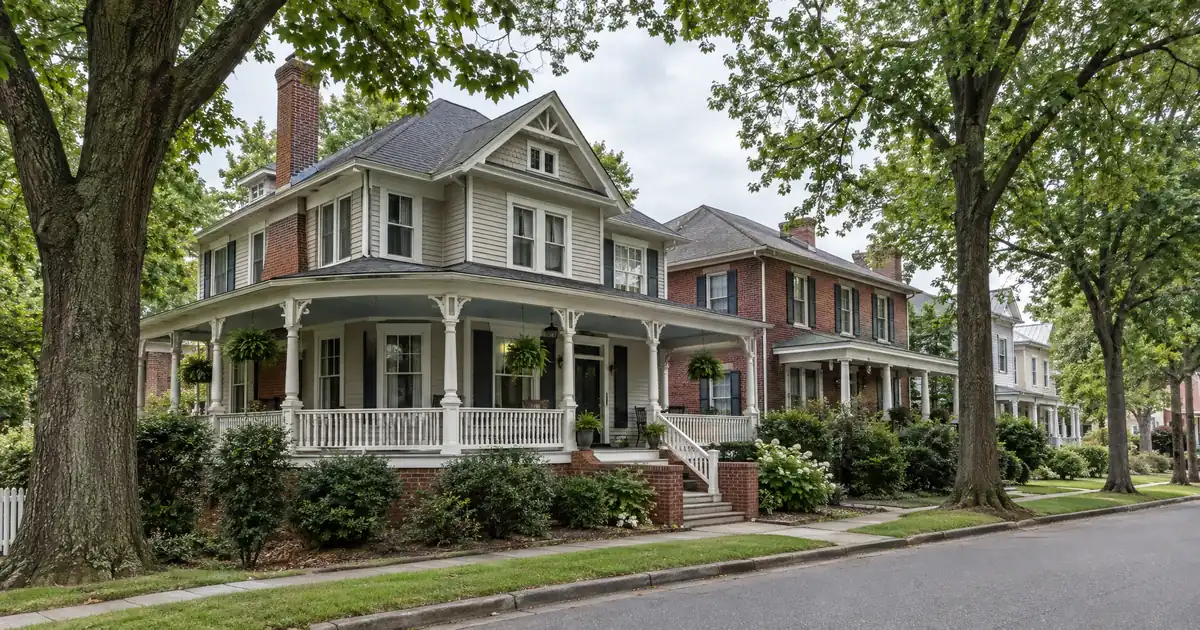
Old Wilson and the adjacent Broad-Kenan district are the most defensible place to hold a refinance-ready rental, mainly because of proximity to jobs. The City of Wilson describes Broad-Kenan as 280 properties forming an intact residential neighborhood, more than 60 percent of them bungalows. Old Wilson is a 164-acre district. Housing is mostly single detached homes, many with two or three bedrooms, which is the product type the rent data favors.
The demand logic is an inference, not a sourced fact: hospital staff, college employees, and downtown workers within a short commute. Wilson Medical Center runs 294 beds with 850-plus employees, and it is the only hospital in the county.
Here’s the catch. No reliable neighborhood-level sale prices or rents exist for any Wilson submarket. Everything below uses city-wide figures, and an appraisal on a specific bungalow may land well off them. Renovation scopes in older districts are a local question; verify current local rules, taxes, and insurance with qualified local professionals before budgeting.
What the Cash-Out Math Actually Looks Like
Coverage clears 1.00x at moderate leverage, without needing rents at the top of the range. That is the central fact for any Wilson cash-out.
Run the numbers on a modeled 3-bedroom appraising near the $269,900 median (assumed inputs, not sourced market data). Divide monthly rent by full PITIA, meaning principal, interest, taxes, and insurance. Model taxes and insurance at North Carolina averages and a standard 30-year amortization. Rent at the RentCast figure of $1,670 gives roughly 1.0x at the 75 percent LTV ceiling. Rent at the RentCafe 3-bedroom average of $1,523 slips into the low-0.9s. Drop leverage to 65 percent and the same two rents produce coverage just above 1.05x and near 1.15x.
The rent source matters as much as the leverage. Prop-metrics, citing RentCast, shows 2-bedrooms at $1,210, 3-bedrooms at $1,670, and 4-bedrooms at $2,000. Census-based median gross rent runs far lower, near $971 per Point2Homes. Which figure the appraiser’s rent schedule reflects can swing the number by a tenth or more.
If coverage falls below 1.00x on long-term rent, the paths a lender might review include a lower LTV, a sub-1.00 program, or an interest-only structure. Qualification stays subject to lender guidelines, credit approval, and property review. A standard DSCR program is built around a 1.00x benchmark because the rent covers the payment at that level. Some lenders will look below it, but that usually costs leverage, pricing, or cash down. Credit tiers generally start at a 620 floor, with reserves around six months of PITIA. For how the ratio works, see the guide “What Is a DSCR Loan”.
DSCR files in markets like this one typically look like a mid-priced workforce rental where the borrower expects full-leverage proceeds and the coverage number says otherwise. The stronger files pair a lower requested LTV with lease-backed rent evidence rather than listing-site averages. Borrowers who bring executed leases before the appraisal is ordered tend to have the cleanest rent schedules.
Equity Without Appreciation
Wilson is a cash-flow market, and cash-out proceeds here come from basis and improvements, not lift. Movoto reports a median sale price of $269,900 and 318 homes sold, up from 272. Days on market rose to 72 from 62. Redfin shows a city median of $264K, up 1.3 percent, while Prop-metrics has $280,000, down 0.8 percent. Zillow’s index sits far lower, at $216,582, reflecting a different methodology. Sources conflict, so a range of roughly $264K to $280K is the honest read.
Rents move the other way. RentCafe shows average rent falling from $1,301 to $1,274, and RentCast shows a 4.9 percent year-over-year decline. Underwrite flat rents, not growth. The median renter household earns $30,559 and spends 38.1 percent of it on rent, so there is little room to push.
Seasoning is about six months of ownership from title recording, and an investor who bought below the median and improved the house gets more from that clock than one buying at market. The mechanics of pulling equity out reward that spread. Equity available always depends on rent used for lender review, PITIA, reserves, and the 75 percent cap. It is never a guaranteed cash figure.
Duplexes, 3-Bedrooms, and the Missing Data
The 3-bedroom single-family house is the best-supported product; small multifamily is promising but under-documented. NeighborhoodScout puts single-family detached homes at 60.39 percent of units, duplexes and small converted buildings at 19.12 percent, and large complexes at 11.63 percent. Renters occupy 52.67 percent of units.
The rental stock leans 2- and 3-bedroom, at 47.7 percent and 35.8 percent. The step from a 2-bedroom at $1,210 to a 3-bedroom at $1,670 is $460 a month. A duplex of two 2-bedrooms carries more gross rent than one 3-bedroom, but no sourced Wilson duplex prices or unit rents exist. Treat any duplex pro forma as unproven until comparable sales and leases are in hand. (Small-building appraisals in thin markets can be slow to support the rent, so budget accordingly.)
East Wilson, Downtown, and the Corridors
East Wilson is the likely entry-price pocket, though price and rent data are not found. The historic district was developed between 1890 and 1940, runs roughly between East Gold and Academy Streets, Ward Boulevard, and the railroad, and includes shotgun houses and one- and two-story frame dwellings, per Preservation of Wilson. Small older units can offer basis advantages, but condition and appraisal risk are the tradeoff. Skip any pro forma that assumes rents without lease evidence.
Downtown around Whirligig Park adds character rather than proven rent premiums. Vollis Simpson Whirligig Park holds 30 whirligigs, and a new ballpark for the Wilson Warbirds sits nearby. Nothing sourced converts that foot traffic into a rent number.
Northwest Wilson and the Forest Hills corridor grew through newer subdivisions and retail. That makes them a plausible fit for workforce single-family rentals, though prices and rents there are also not found.
Barton College enrolls 1,212 students, per its quick facts. It is too small to move rental demand meaningfully. Don’t underwrite around it.
Employment Base: Solid, but Dated
Wilson’s employer roster is diversified but the headcounts are old, so treat them as bands. Per the Research Triangle Regional Partnership, Truist keeps about 2,000 workers in Wilson at its data and back-office centers (the bank began here as BB&T). Bridgestone, Wilson County Schools, and Kidde Aerospace each appeared in the 1000-plus band on older employer lists, and the EDC cites pharmaceuticals, automotive parts, aerospace, packaging, and food preparation as leading industries. Three interstates and two rail lines converge here, and Raleigh is roughly 40 miles west.
Announced pharmaceutical and glass projects, including Johnson & Johnson, Reckitt, SCHOTT Pharma, and IDEXX, are described as set to begin production. Announced is not operating. Don’t underwrite refinance value on jobs that haven’t arrived.
The population base is modest. Census Bureau QuickFacts shows 48,370 residents in the city across 31.6 square miles, and the county sits near 81,200 per USAFacts.
Where the Vacancy Number Gets Fuzzy
No rental-specific vacancy rate exists for the city. The county’s rental vacancy was 5.8 percent at the last decennial Census, a workable but dated baseline. Total housing vacancy in the city runs 10.69 percent, which counts every unit, not just rentals. Don’t mix the two. A rough 6 percent rental vacancy assumption is market-normal, not a sign of severe oversupply.
Structuring the Refinance
Investors holding several Wilson properties should think about sequencing. Where some institutional lenders cap at 10 financed properties, the non-QM DSCR channel is built around each asset’s rent rather than a property-count ceiling, subject to program terms. LLC-titled holdings are typically eligible subject to lender program eligibility. Statewide program context lives at North Carolina DSCR investor loans. To run a specific file, start your quote or call 828-256-2183.
Frequently Asked Questions
Can a Wilson owner pull meaningful equity when prices are flat?
Yes, if the purchase basis was low or renovation added value. Proceeds are capped at 75 percent of the appraised value, less the existing balance, and flat prices mean the appraisal won’t rescue an over-paid property. Reserves of about six months of PITIA also apply.
DSCR vs. conventional financing
Two common ways to finance an investment property in Wilson, NC. They qualify you differently — here’s how investors weigh them.
Why investors choose it
- Qualifies on the property’s rental income — no personal tax returns, W-2s, or pay stubs needed to document income.
- No personal debt-to-income ceiling to clear, so existing mortgages and obligations don’t cap your borrowing the same way.
- Can be closed in an LLC, keeping the property inside a business entity.
- Built for scaling — not held to the limit on number of financed properties that conventional financing applies.
- Underwriting centers on the deal: generally qualifies when the rent covers the payment, a 1.00x coverage ratio being a common baseline (confirmed in underwriting).
- Designed specifically for investment property, including long-term and, where the program allows, short-term rentals.
Where it’s strong
- Often the lowest ongoing financing cost for a buyer who fully qualifies on personal income — a fit for a first property or a cost-first purchase.
Trade-offs for investors
- Requires full personal income documentation and must fit within a debt-to-income limit — salary, existing debts, and other mortgages all count.
- Typically held in your personal name rather than a business entity.
- Caps how many financed properties you can carry, which can become a ceiling as a portfolio grows.
- Evaluates you as a borrower as much as the property, which usually means more paperwork.
How investors usually choose: a first or single property often optimizes for the lowest financing cost; portfolio builders often optimize for leverage, vesting in an LLC, and scaling past conventional caps. The right answer depends on your goals, the property, and current guidelines — both paths run through select lenders in Lendmire’s wholesale network, with eligibility and terms confirmed in underwriting.
Does a 3-bedroom or a duplex work better for cash-out coverage here?
The 3-bedroom is better supported. RentCast shows a $460 monthly jump from 2-bedroom to 3-bedroom rents, while sourced duplex prices and rents don’t exist. Duplex math needs local comparables before it can be trusted.
Which rent figure should an investor trust?
Executed leases beat every aggregate. Listing-based averages run $1,274 to $1,550, while Census-based medians sit near $971. Since appraisers lean on comparable leases, the gap can change the coverage number materially.
Do the hospital and Truist jobs protect a refinance?
They support occupancy, not value. The hospital is the county’s only one, and Truist keeps about 2,000 local jobs. But renters spend 38.1 percent of income on housing, so employment stability doesn’t create room to raise rents.
How long must an investor hold a Wilson rental before a cash-out?
About six months of ownership, measured from title recording. A refinance-ready file also needs a rent used for lender review that supports at least the 1.00x baseline, subject to lender guidelines.
The Number That Frames the Market
At $1,670 for a 3-bedroom against a $269,900 median, Wilson’s rent-to-price runs roughly 0.6 percent a month, and that is the figure every cash-out here has to clear.
For current guidelines and terms, see Lendmire’s DSCR loan programs page.
About Lendmire
Lendmire — NMLS# 2371349 — is a mortgage brokerage specializing in DSCR investor loans, helping arrange financing across 41 markets, including Washington, D.C., through wholesale and investor-lending channels. The model centers on property-level rental income reviewed by the lender rather than W-2 documentation, subject to lender guidelines, suiting entity-owned and multi-property investors. Lendmire is a top-ranked workplace in 2026 and a 2025 Scotsman Guide Top Mortgage Workplace.
Get Started
Ready to find the right loan for you?
In about 30 seconds you can review financing options available for your investment property. No commitment required.
Informational only. Not a Loan Estimate, approval, or commitment to lend. Program availability and eligibility are subject to lender guidelines, credit approval, property review, and underwriting.
References
1. Greenlight Community Broadband
3. $269,900
4. RentCafe
5. Point2Homes
6. Research Triangle Regional Partnership, Wilson
8. City of Wilson Landmarks and Districts
10. Prop-metrics
11. Redfin
14. Barton College Quick Facts
16. USAFacts
17. Scotsman Guide — Top Workplaces 2026
18. a 2025 Scotsman Guide Top Mortgage Workplace
This article is part of Lendmire’s investment property cash-out refinance program — full qualification details, guidelines, and scenarios live on the program page.
Related reading: DSCR Cash Out Refinance Wilson North Carolina · Cash Out Refinance Investment Property Cashiers North Carolina · DSCR Cash Out Refinance Clayton for Rental Investors
Guides: Investment Property Cash-Out Refinance in North Carolina
Brandon Miller
Founder & CEO, Mortgage Loan Originator, Lendmire LLC
- Mortgage Loan Originator · NMLS# 1129696 · Verify on NMLS Consumer Access
- North Carolina Real Estate Broker · License# 343312 · Verify on NCREC
- North Carolina Insurance Producer · License# 19053198 · Property, Casualty, Life, Health · Verify on NAIC SBS
- Lendmire LLC · Firm NMLS# 2371349 · Verify firm licensure
Disclosure information. Lendmire is a state-licensed mortgage brokerage under NMLS# 2371349. Lendmire is not a depository institution, direct lender, or financial advisor — all loans referenced are placed through wholesale lender partners and are subject to each lender's underwriting standards. This article is provided for general informational purposes and is not a commitment to lend, nor does it constitute financial, legal, or tax advice. Loan programs, terms, rates, and qualification standards change without notice and depend on borrower profile, property type, and the state in which the subject property is located. Equal Housing Opportunity provider. NMLS Consumer Access: nmlsconsumeraccess.org.