
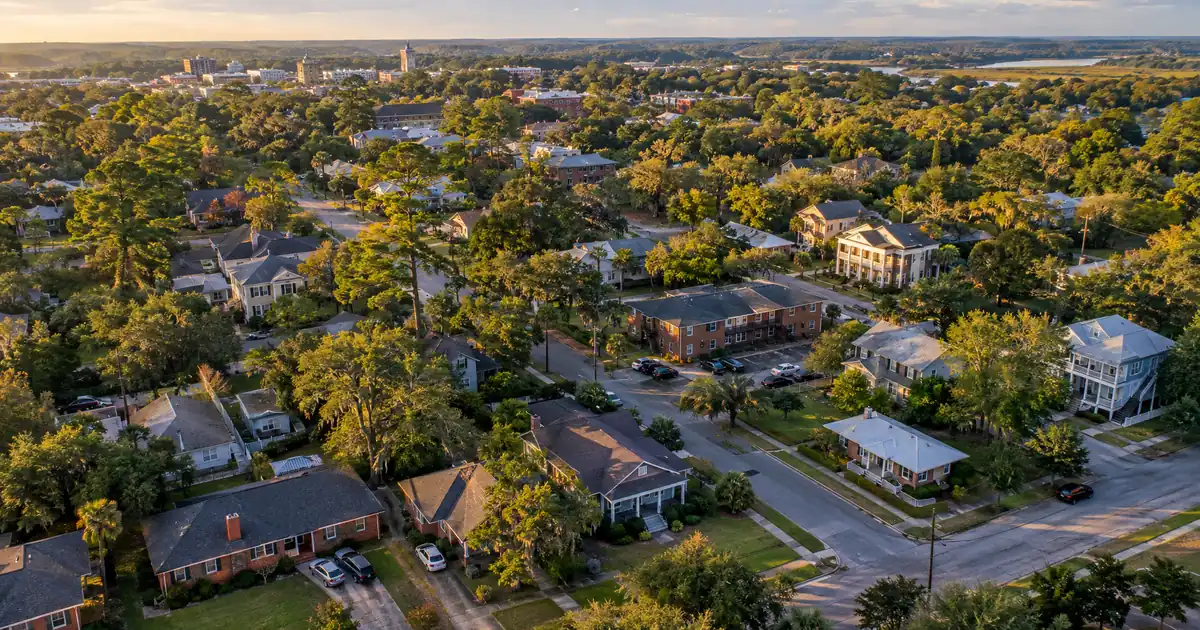
A three-bedroom rental in Westover hits the DSCR cash-out math like this. Say it appraises near Albany’s $185,000 median sale price reported by Homes.com and rents at the $1,230 three-bedroom median that RentCast data shows via Prop-metrics. Modeled at 75 percent LTV and including taxes and insurance, coverage lands in the low-1.1 range. Swap in the $910 three-bedroom average from Apartments.com and the number falls below 1.00. Same house, same loan, opposite answer. That gap is the whole Albany story.
DSCR Cash-Out Calculator
Run the cash-out numbers in Albany, GA
Rate source: Freddie Mac 30-yr average via FRED® — Federal Reserve Bank of St. Louis · effective Sep 24, 2026
Prefilled with starting assumptions — enter your property’s value, balance, taxes, and insurance for a more accurate picture.
Program parameters update from Lendmire’s centralized guideline source. Taxes and insurance are editable estimates.
As of Sep 24, 2026 · General Freddie Mac market benchmark, not a Lendmire loan offer. Property value, balance, taxes, and insurance are editable estimates. Maximum loan-to-value varies by lender, program, property type, and seasoning. Not a Loan Estimate, approval, or commitment to lend. Program availability and eligibility are subject to lender guidelines, credit approval, property review, and underwriting.
Key Takeaways:
Cash-out refinancing an Albany, Georgia rental is underwritten primarily on the property’s rental income measured against its full monthly obligation, and because medians span from $139,000 to $185,000 by source, the appraisal and a documented rent schedule, not portal averages, decide how much equity comes out.
- Albany sale-price medians differ by source, and sales volume is thin enough to make appraisal comps volatile.
- Three-bedroom rent estimates range from about $910 to $1,230 depending on the source.
- Cash-out tops out at 75 percent LTV, and flat values limit how much equity is available.
- Duplexes and small quads stack rents against a low per-door basis.
- Phoebe Putney, Marine Corps Logistics Base Albany, and Albany State anchor the tenant base.
Lendmire (NMLS# 2371349) is a DSCR-focused mortgage broker. DSCR financing for Albany, Georgia investors runs through wholesale lenders that Lendmire works with across 41 markets, including D.C. Everything below assumes you already own the property and want to pull capital out of it. Purchase mechanics are a separate topic.
Why Albany’s Rent-to-Value Looks Better Than It Behaves
Albany is a low-basis, high-yield market on paper. The catch is that the yield is only as good as the appraised value and the rent you can document. Both are harder to pin down here than in a deeper market.
Start with price. Homes.com puts the median sale price at $185,000, up 3 percent year over year. Movoto shows a median list price of $159K. Prop-metrics, drawing on Realtor.com data, reports a $139,000 median price that was down 0.2 percent from the prior year. Those figures use different methods, dates, and geographies, so treat them as a range, not a contradiction.
Now rent. Prop-metrics, citing RentCast data, gives medians of $828 for a one-bedroom, $837 for a two-bedroom, $1,230 for a three-bedroom, and $1,970 for a four-bedroom. The same page says two-bedroom and three-bedroom units make up 50.2 percent and 26.7 percent of the rental stock. Workforce three-bedroom houses are the deepest tenant pool in the city.
Dividing the $1,230 rent by the $139,000 price gives roughly 0.88 percent monthly rent-to-value. That is Lendmire Research arithmetic, not a sourced statistic, and it combines two sources with different dates. A vendor page from Deal Run claims Albany rent-to-price ratios of 1.5 to 2 percent or more. That is a marketing claim about the low-price tier, so read it as an upper bound.
Two Rent Numbers, One Underwriting Answer
Use the lower, documented rent. The spread between portal sources is wide enough to swing coverage from comfortable to sub-1.00 on the same house.
| Unit size | RentCast via Prop-metrics | Apartments.com |
|---|---|---|
| Two-bedroom | $837 | about $886 |
| Three-bedroom | $1,230 | about $910 |
Apartments.com puts the average Albany rent at $764 and shows growth of only 0.7 percent over the year. Prop-metrics reports a 12.7 percent year-over-year rent change from RentCast. Other portals describe rents as roughly flat. Call the trend mixed to flat, and don’t build a cash-out around rent growth you hope will show up.
An appraiser’s rent schedule or signed leases carry more weight with a lender than any portal number. Suppose your leases sit near $1,000 on a three-bedroom and you’re eyeing a value in the neighborhood of the $185,000 Homes.com median. Coverage, including taxes and insurance, lands under 1.00. Suppose the same house sits near the $139,000 Prop-metrics median. Coverage improves to roughly 1.1 to 1.2.
Sub-1.00 files still have paths. A lender may review a sub-1.00 program, an interest-only structure, or a lower requested LTV that trims the debt. Each comes with tradeoffs in pricing, leverage, or cash to close, and eligibility depends on lender guidelines, credit profile, reserves, and property review. If your file lands there, investor refinance options are worth mapping before you order an appraisal.
Thin Comps Are the Real Constraint
Albany’s sales volume is small, and small samples make medians jump around. Redfin’s Albany page has shown a $187K median in a month with only 6 homes sold, described as up 226 percent year over year. A later month showed a $165K median on 25 sales versus 4 a year earlier. Movoto has shown a sharp drop in median list price for the multifamily category. None of those swings reflect the value of your particular house.
For a cash-out, that matters more than anything else in the article. The lender lends against the appraised value, capped at 75 percent LTV, and the appraiser may lean on a handful of comps. A conservative appraisal shrinks the check even when your rent covers the payment easily.
Plan for a valuation at or below the middle of the range, not the top. If your comps are older, the appraiser may reach further out. Renovated product priced above the neighborhood norm can be tough to support.
Stack the Doors: Where Duplexes and Quads Change the Math
Small multifamily is the best structural fit for a DSCR cash-out in a market where individual rents are modest. Two to four rents sit against one loan and one low-basis property, so a single soft unit does less damage to coverage.
Run the numbers on a modeled duplex valued at $200,000, with each side rented at $910. That is the low Apartments.com figure, deliberately conservative. Total rent of $1,820 against full PITIA, including taxes and insurance at Georgia averages, gives coverage around 1.5. These are modeled assumptions, not a sourced deal. Use the higher RentCast three-bedroom median and the number climbs, but underwrite the lower one.
Local listings show what the product looks like. A Redfin duplex in west Lee County, outside the city limits, carries a suggested rent of $1,600 per side on 3BR/2BA units, about $3,200 combined, per Redfin’s multifamily listings. That’s the listing agent’s suggestion, not a lease. Inside the city, Homes.com’s multifamily inventory is mostly small, older brick buildings. Examples include all-brick duplexes in northwest and west Albany with 3BR/2BA or 1BR/1BA sides, an eight-unit package of 2BR/1BA brick quads, and a mixed-use stone building with a duplex above commercial space.
That last one deserves separate treatment. A mixed-use building isn’t a pure residential duplex, and lenders and appraisers may value and classify it differently, so confirm eligibility before you plan a cash-out around it. And a downtown duplex with private entrances that needs heavy renovation is a value-add project, not a stabilized comp.
The mirror image is a mistake investors make often here: assuming three units of rent means three times the borrowing power. It doesn’t. The appraisal and the 75 percent LTV cap still set the ceiling. Stacking helps coverage, not the value. If you’re weighing whether the DSCR route beats a bank product for this kind of asset, conventional vs DSCR on investor loans lays out the tradeoffs.
Submarkets Worth Pulling Equity From
No source in the research gave neighborhood-level rents or prices. What follows is character and likely demand, drawn from Homes.com’s neighborhood pages and listings. Where demand is an inference, it is flagged.
Westover. Mid-century brick homes sit near the Albany State West Campus, Albany Mall, and Tift Park. Albany State enrolled 6,820 students per its Quick Facts report, with undergraduate enrollment of 6,167 and an average undergraduate age of 23. Only some students live on campus, so off-campus rental demand is real. Whether those tenants land in Westover specifically is an inference. The stock is a natural fit for the three-bedroom workforce product.
Downtown and the Historic-Medical District. Older duplexes near the medical core are the most obvious plays for Phoebe-linked tenants. The only hard evidence is a single listing, and it needs heavy renovation. Value-add owners who finished a rehab should focus on getting the rent schedule documented before an appraisal.
Northwest and West Albany. This is where the brick duplex inventory clusters. It suits investors who want two-door product with a low basis, and it is the likeliest place for a refinanced duplex to cover comfortably. Comps are thin, so expect the appraiser to work hard.
Lake Park and Saint Andrews. Lake Park is ranch-style housing near the Albany Museum of Art and Lake Loretta. Saint Andrews is 1970s to 1990s housing on large lots near Albany Mall and Doublegate Country Club, described as more owner-occupant in feel. Rentals exist in both, but neither showed evidence of a deep investor product.
North Albany and the Flint River corridor. The Deal Run page places values here at $60K to $120K, with some flipper activity. That’s a vendor claim. If accurate, low values and a cash-out cap mean small extractable equity, even when rent ratios look great.
West Lee County (adjacent, not Albany). Values and appreciation run higher there than inside the city, per the same vendor page. The split is worth understanding: inside Albany you’re buying cash flow, and just across the line you’re paying for appreciation.
Who Keeps Renting Here (and What Could Change That)
Demand rests on institutions, not population growth. Be honest about that. Census Bureau QuickFacts shows 67,418 residents and a median household income of $47,676, and its metro profile lists 146,051. Georgia-demographics.com cites an 8.5 percent population decline from 2019 to 2024. Shrinking headcount is a reason to skip speculative bets on rent growth. It is not a reason to skip a stabilized, leased rental.
The anchors are concentrated:
- Phoebe Putney Health System. Georgia Trend reports nearly 6,000 employees and an economic impact above $2.5 billion. The Albany-Dougherty EDC says Phoebe runs more than 50 healthcare delivery facilities across the region.
- Marine Corps Logistics Base Albany. Rep. Sanford Bishop’s office reported roughly 4,000 employees. The base’s mission is rebuilding and repairing ground combat equipment, and the only comparable depot is in Barstow, California. That’s a stable federal employment base, though no current off-base housing demand figure turned up.
- Manufacturing and food. The Albany Area Chamber of Commerce points to Procter & Gamble and Molson Coors, and the EDC adds Mars Wrigley, Tara Foods, and Outdoor Network.
- Education and health resident jobs. Data USA lists Health Care and Social Assistance (4,255 workers), Educational Services (3,101), and Retail Trade (3,065) as the most common resident sectors. Albany Technical College adds roughly 2,700 students.
The concentration cuts both ways. Hospital, base, and a few plants mean steady leases and low turnover risk in the neighborhoods near them, but a hit at any one employer shows up quickly in the local rent roll.
What the Program Allows
The verified guidelines for this article are simple. Cash-out refinance on an investment property tops out at 75 percent LTV. Seasoning is about 6 months of ownership, measured from title recording. The DSCR benchmark is 1.00, comparing rent used for lender review to PITIA. Credit tiers run 620, 660, 680, and 700, with 620 as the floor. Reserves run about 6 months of PITIA. Loan amounts go up to $3,000,000 on standard programs, and smaller balances route through select lenders in the network. Those are guideline ranges, not commitments, and eligibility depends on the borrower, property, and lender. A 1.00 baseline is common because the rent covers the payment at that level, though some lenders review lower ratios with stronger compensating factors.
Equity available depends on rent used for lender review, PITIA, reserves, and the LTV ceiling. It is not a guaranteed figure. Manufactured homes, log homes, and barndominiums fall outside these programs, which is worth a check on older rural-edge stock.
DSCR files in markets like this one typically look the same: the rent is fine, the appraisal is the fight. Brokers see files where the investor’s number came from a portal and the lender’s number came from the appraiser’s rent schedule, and the lender’s number wins. The strongest files arrive with signed leases, a clean payment history, and a renovation scope documented before the appraisal is ordered.
If your ownership is under the seasoning window, the cash-out refinance walkthrough covers how the clock works. And if you hold the property in an LLC, that’s generally workable, subject to lender program eligibility.
Don’t Count on Appreciation to Do the Work
Here’s the contrarian read. Albany’s appreciation is roughly flat to modest. Prop-metrics shows a 0.2 percent decline, Homes.com shows a 3 percent gain, and Redfin’s swings are sampling noise. If you’re waiting for market gains to build equity, you may wait a long time.
DSCR vs. conventional financing
Two common ways to finance an investment property in Albany, GA. They qualify you differently — here’s how investors weigh them.
Why investors choose it
- Qualifies on the property’s rental income — no personal tax returns, W-2s, or pay stubs needed to document income.
- No personal debt-to-income ceiling to clear, so existing mortgages and obligations don’t cap your borrowing the same way.
- Can be closed in an LLC, keeping the property inside a business entity.
- Built for scaling — not held to the limit on number of financed properties that conventional financing applies.
- Underwriting centers on the deal: generally qualifies when the rent covers the payment, a 1.00x coverage ratio being a common baseline (confirmed in underwriting).
- Designed specifically for investment property, including long-term and, where the program allows, short-term rentals.
Where it’s strong
- Often the lowest ongoing financing cost for a buyer who fully qualifies on personal income — a fit for a first property or a cost-first purchase.
Trade-offs for investors
- Requires full personal income documentation and must fit within a debt-to-income limit — salary, existing debts, and other mortgages all count.
- Typically held in your personal name rather than a business entity.
- Caps how many financed properties you can carry, which can become a ceiling as a portfolio grows.
- Evaluates you as a borrower as much as the property, which usually means more paperwork.
How investors usually choose: a first or single property often optimizes for the lowest financing cost; portfolio builders often optimize for leverage, vesting in an LLC, and scaling past conventional caps. The right answer depends on your goals, the property, and current guidelines — both paths run through select lenders in Lendmire’s wholesale network, with eligibility and terms confirmed in underwriting.
Equity here usually comes from how you bought or what you did. A discounted purchase, a real renovation, or a converted vacancy into a leased unit all create value. A cash-out is then a way to realize that. Say you bought a dated brick duplex below market, renovated both sides, and leased them at documented rents. The appraisal may reflect the improvement even when the neighborhood median hasn’t moved. But nobody should model a cash-out on the assumption that value drifts upward on its own.
The tension shows up between the sources, too. Cheap stock helps coverage and hurts extractable equity. A house valued in the $100,000s at 75 percent LTV leaves less room after the existing payoff than a house valued in a pricier market. In Albany, cash-out works best when the existing loan is small, or when the property was acquired free and clear, and the refi turns dead equity into working capital.
Where the Proceeds Go
The point of an equity extraction is the next deal. In a low-basis market, proceeds go a long way. They can fund the down payment on a duplex in northwest Albany, cover renovation on a value-add, or add reserves that make the following file stronger. Some investors use them to move capital into a higher-appreciation area, such as west Lee County. Whichever direction you go, the new loan’s coverage has to stand on its own, and the next purchase has to clear its own math.
To see how a specific property pencils, investors can compare DSCR options or call Lendmire at 828-256-2183. Georgia DSCR investor loans are reviewed by lenders on the property’s numbers, and Lendmire’s DSCR guide explains the basics. Verify current local rental rules, taxes, and insurance with qualified local professionals before you commit.
Frequently Asked Questions
How much rent do I need in Albany to clear a 1.00 DSCR on a cash-out?
It depends almost entirely on appraised value. On a house valued near the lower $139,000 median, a rent in the high $800s to $1,000 range can approach or clear 1.00 including taxes and insurance at 75 percent LTV. Near the $185,000 median, you need meaningfully more. Run the number against the appraiser’s rent schedule, not a portal average.
Does Albany’s thin sales volume hurt a cash-out appraisal?
Yes, it’s the biggest practical risk. With months showing only a handful of closed sales, appraisers work from few comps, and a conservative value shrinks the loan. Renovated properties priced above the neighborhood norm are the hardest to support. Documenting the renovation and pulling your own comp set before ordering helps.
Are duplexes easier to refinance than single-family rentals in Albany?
They often cover better because two rents sit against one loan on a low basis. The 75 percent LTV cap still applies, and small-multifamily comps are thin. Mixed-use buildings may be valued and classified differently, so confirm eligibility before you plan around one.
Which employers support long-term rental demand?
Phoebe Putney (nearly 6,000 employees), Marine Corps Logistics Base Albany (roughly 4,000), and Albany State University (6,820 students) are the largest anchors. Manufacturers such as Procter & Gamble, Molson Coors, and Mars Wrigley add industrial employment. The base is concentrated, so watch single-employer exposure.
How long do I need to own the property before a cash-out?
The guideline is about 6 months of ownership, measured from title recording. A property you bought and renovated inside that window has to wait before you can pull equity out.
One Last Read on Albany
Ask a local appraiser what sets values on a brick three-bedroom off Albany’s west side and you’ll hear the same thing: the last few closed sales within a mile, not the metro median. Price your cash-out off those, document the rent with leases, and the low basis becomes an advantage instead of a trap.
About Lendmire
Lendmire is a DSCR-focused mortgage brokerage, NMLS# 2371349, placing investor loans across 41 markets, including Washington, D.C. DSCR eligibility is generally reviewed by the lender on a property’s rental income rather than personal income documentation, which fits LLC-held rentals, self-employed investors, and portfolios scaling past conventional financed-property limits.
Get Started
Ready to find the right loan for you?
In about 30 seconds you can review financing options available for your investment property. No commitment required.
Informational only. Not a Loan Estimate, approval, or commitment to lend. Program availability and eligibility are subject to lender guidelines, credit approval, property review, and underwriting.
References
3. $910 three-bedroom average from Apartments.com
4. Movoto
5. Deal Run
7. Redfin’s multifamily listings
8. Homes.com’s multifamily inventory
9. Homes.com’s neighborhood pages
10. Albany State University Quick Facts
11. Census Reporter, Albany city
12. Census Reporter — Albany Ga Metro Area
14. Georgia Trend, Albany feature
15. Albany-Dougherty EDC, Area Industries
16. Rep. Sanford Bishop’s office
17. Albany Area Chamber of Commerce
18. Data USA
19. Scotsman Guide — Top Workplaces 2026
20. a 2025 Scotsman Guide Top Workplace
This article is part of Lendmire’s investment property cash-out refinance program — full qualification details, guidelines, and scenarios live on the program page.
Related reading: DSCR Cash Out Refinance in New Albany, Indiana: Turning Historic-Core Equity Into Next-Deal Capital · Cash Out Refinance Investment Property Albany Georgia · Cash Out Refinance Investment Property in New Albany, Indiana: Tapping Equity in the Historic Core
Guides: Investment Property Cash-Out Refinance in Albany, GA · Investment Property Cash-Out Refinance in Georgia
Brandon Miller
Founder & CEO, Mortgage Loan Originator, Lendmire LLC
- Mortgage Loan Originator · NMLS# 1129696 · Verify on NMLS Consumer Access
- North Carolina Real Estate Broker · License# 343312 · Verify on NCREC
- North Carolina Insurance Producer · License# 19053198 · Property, Casualty, Life, Health · Verify on NAIC SBS
- Lendmire LLC · Firm NMLS# 2371349 · Verify firm licensure
Compliance and disclosures. Lendmire (NMLS# 2371349) is a licensed mortgage broker and is not a direct lender, depository institution, financial advisor, or tax professional. Content in this article is general market analysis and educational information — not financial, legal, or tax advice for any specific situation. Lendmire does not guarantee loan approval; every transaction is subject to underwriting by the funding lender. Mortgage pricing and loan program guidelines are subject to change at any time without notice and vary by borrower characteristics, property type, and state regulations. Lendmire complies with Equal Housing Opportunity. Licensure verification: NMLS Consumer Access.