
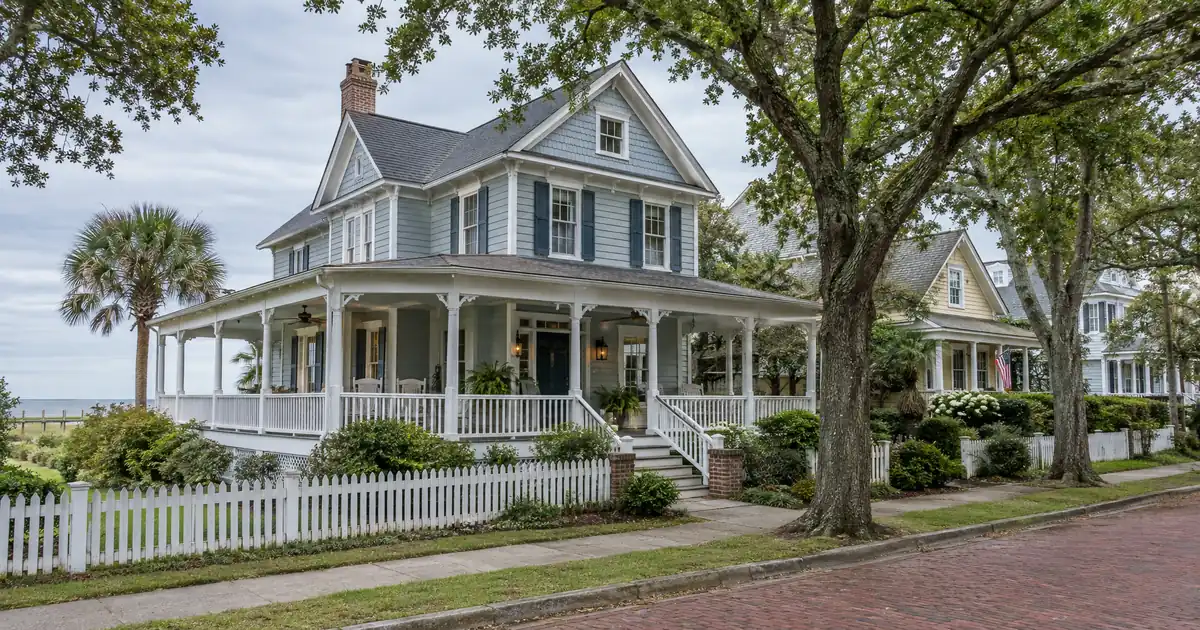
If you own a rental on Oak Island and you’re planning to pull equity out, here’s what most brokers won’t say up front. The equity is probably there. The rent coverage probably isn’t. On a barrier island where single-family cottages dominate and long-term rents sit far below what the homes are worth, the file lives or dies on how the lender’s rent number compares to the full monthly obligation. Not on how much the house has gone up.
The Quick Read: A DSCR cash-out refinance on Oak Island is underwritten primarily on the property’s rental income measured against its full monthly obligation, which makes it a fit for investors holding older cottage stock with real embedded equity and a plan to accept lower leverage.
DSCR Cash-Out Calculator
Run the cash-out numbers in Oak Island, NC
Rate source: Freddie Mac 30-yr average via FRED® — Federal Reserve Bank of St. Louis · effective Sep 24, 2026
Prefilled with starting assumptions — enter your property’s value, balance, taxes, and insurance for a more accurate picture.
Program parameters update from Lendmire’s centralized guideline source. Taxes and insurance are editable estimates.
As of Sep 24, 2026 · General Freddie Mac market benchmark, not a Lendmire loan offer. Property value, balance, taxes, and insurance are editable estimates. Maximum loan-to-value varies by lender, program, property type, and seasoning. Not a Loan Estimate, approval, or commitment to lend. Program availability and eligibility are subject to lender guidelines, credit approval, property review, and underwriting.
- Single-family detached homes make up 86.68 percent of Oak Island housing, so multi-unit stacking is rare.
- Town-wide average rent is $2,150 per Zillow, thin against a sale price near $675,000.
- Cash-out LTV tops out at 75 percent, after roughly six months of seasoning.
- Older cottages have out-appreciated new builds, so they carry the most extractable equity.
Oak Island Market Snapshot
A quick read on the Oak Island investor landscape — figures come from the cited sources below. Confirm current property-level numbers before underwriting.
| Metric | Detail |
|---|---|
| Home prices | $456,500 median value (Data USA) |
| Typical rents | $1,425 1br (Zillow Rental Manager) |
| Recent appreciation | 46% vs 38% (Wilmington Real Estate Blog) |
| Population | 9,030 population (Census Reporter) |
| Employment | 3.6K employees (Data USA) |
| Vacancy | 81.8% (NeighborhoodScout Long Beach) |
Long Beach and West Beach: Where the Equity Sits
Older cottages in the Long Beach and West Beach sections are the strongest cash-out candidates on the island. They carry the most appreciation, the highest measured rents, and the best odds of a legal second unit. They also carry a data-quality problem that every file has to face.
Start with the equity. A local brokerage tracking the market found older, smaller beach cottages up 46 percent versus 38 percent for new construction over the window it measured. An investor holding a cottage bought years ago has more embedded equity to pull than an owner of a recent build, and that gap is the whole reason to look at this segment first.
Now the rent. NeighborhoodScout puts average rent in Long Beach at $2,244, about $100 above the town-wide figure. Sounds helpful. Here’s the catch: the same profile shows 81.8 percent of residential real estate there is vacant, meaning seasonally empty second homes. The rent number rests on a very small pool of actual long-term leases. Treat it as an outlier, not a submarket norm. An appraiser building a rent schedule from a handful of comps will be working with the same thin sample.
West Beach runs from Middleton Road to “The Point” and has a quieter residential character, per Rudd Realty’s island guide. Long-term rental stock there is scattered, and that scarcity makes rent comps hard to document.
The Coverage Number Is the Problem
Here’s the direct read: on a typical Oak Island single-family rental, the coverage ratio lands well below the standard 1.00 benchmark at 75 percent leverage. The rent-to-value gap is structural, not a temporary blip.
Run the numbers on a modeled property. Assume a cottage appraising at $675,000, which matches the Redfin median sale price (up just 0.7 percent year over year). Assume rent at the $2,150 town-wide average. Build the obligation the way a lender does: principal and interest on a 30-year amortization, plus taxes and insurance. At 75 percent LTV, coverage comes out around 0.5x including taxes and insurance. Swap in the $2,244 Long Beach rent and it barely moves. These are modeled assumptions, not sourced figures, and a real file will differ. But it’s not a rounding-error gap.
One contrast on the price data. Data USA reports a median property value of $456,500 with 89.7 percent homeownership, which reflects a census-based, owner-reported methodology and runs well below current sale prices. Lenders order appraisals, so the sale-price range is the one that matters for LTV.
So what does a sub-1.00 file look like when it’s structured? A lender may review a sub-1.00 program, an interest-only structure, or blended income that includes documented short-term rental income where the program allows it. Each usually means lower leverage, a stronger credit profile, or larger reserves. Eligibility depends on lender guidelines, credit approval, and property review.
DSCR files in markets like this one typically look like a large equity position paired with modest long-term rent. The friction is rarely the loan mechanics. It’s the appraisal’s rent schedule, the number of true rental comps, and whether the borrower expected 75 percent leverage that the coverage number can’t support. Borrowers who run the coverage math before ordering the appraisal make fewer preventable mistakes.
The stronger play might be a deliberately conservative pull, taking well under the 75 percent ceiling to keep the file inside what rent can carry. Investors chasing maximum proceeds could argue the other way, but on this island the coverage ratio usually forces the issue anyway.
What the Cash-Out Math Actually Needs
The program parameters are simple, and the friction sits in the documentation. Cash-out refinances generally cap at 75 percent LTV, require about six months of seasoning measured from title recording, and use 1.00 as the standard coverage benchmark. Pricing and available terms vary by lender, borrower profile, property type, and full underwriting review. Review details are subject to lender overlays, so confirm current terms before building a plan around them.
Picture an investor whose cottage would appraise at $675,000 with a loan balance at 40 percent of value. The gap between 40 and 75 percent is the theoretical slice, before reserves, closing costs, and whatever the coverage number allows. Equity available is not a guaranteed cash figure. It depends on rent used for lender review, the full monthly obligation, reserves, and the 75 percent ceiling.
That’s the point of pulling equity out on a DSCR basis: the proceeds become capital for the next acquisition, but only if the coverage math lets the file through in the first place. For the mechanics of how rental-income qualification works, the pillar page covers the ratio itself.
Ownership seasoning is the other trap. A recent purchase can’t be cashed out until the six-month mark, and the settlement statement is the proof. Files that assume the seasoning requirement away are the ones that get kicked back.
Flat Comps, Loose Inventory
Appreciation has stalled. Redfin shows the median sale price near $675,000, essentially flat year over year. A local brokerage’s later update shows a median of $672,500 and 5.71 months of inventory, up from a year earlier. A separate read from Movoto puts the median sold price at $729,000 with homes taking 91 days to sell, so the spread between sources is wide.
What that means for a cash-out file: appraisals will track recent flat comps. An investor counting on another leg of appreciation to open up more proceeds is betting against the current data. The equity you already built is the equity you can use. Equity you’re hoping for isn’t.
Zillow’s average home value sits lower, at $555,572, down 1.4 percent over the past year, reflecting a different methodology that blends all home types. If the appraiser lands nearer that end than the sale-price end, the extractable slice shrinks fast.
Where Long-Term Tenants Actually Come From
Oak Island has no large corporate employer base. Data USA shows about 3.6 thousand employees, with public administration, professional and technical services, and retail trade leading. The permanent population is 9,030 per Census Reporter, swelling to near 50,000 in summer per Wikipedia’s town entry. Year-round rental demand has to come from somewhere other than the beach.
It comes from a few anchors. Dosher Memorial Hospital in Southport has 25 acute care beds and runs clinics across southern Brunswick County. The Military Ocean Terminal Sunny Point, an Army port in the county, is a federal payroll that sits close to Southport and Oak Island. Town and county government round out the base. These are small, steady employers, and they support a workforce-rental thesis on non-oceanfront homes, especially in the West Wooded end and the inland subdivisions.
Brunswick County is growing fast: 4.7 percent year over year, adding nearly 8,000 residents. Fine, but that growth is largely in-migration into second and primary homes. It supports values. It doesn’t prove rental depth on this island.
Duplexes and Suites: Real, but Small
A property with a legal second unit changes the math. Zillow carries a mother-in-law suite and investment rental filter for Oak Island, and some listings are marketed with multiple income-producing units near Middleton Park. That’s an active segment, not a myth. But it’s a handful of properties, not a submarket-wide pattern.
The documentation friction is specific: rent evidence for each unit, a lease or rent schedule the appraiser can use, and clear proof the second unit is legally rentable. Without that, the appraiser may treat the property as a single-family home with a rent estimate, and the coverage math reverts to the thin number.
Building a File That Survives Review
The documents that trip up Oak Island cash-out files are predictable. Title and seasoning proof: the settlement statement showing recording date. Rent evidence: a current lease, or a market rent supported by real comps rather than the Long Beach outlier. Entity paperwork if the property sits in an LLC, subject to lender program eligibility. Reserves documentation: statements showing the six months, not a promise of them. Appraisal access: the property has to be showable, and a seasonal cottage with a locked-out owner or a tenant in place can delay the report.
Unlike lenders that push every investor into the same qualification box, Lendmire (NMLS# 2371349) works as a non-QM mortgage broker across multiple wholesale channels, which matters when a file needs a lender that reviews sub-1.00 scenarios. Investors can request a quote through the quote form or call 828-256-2183. For the broader picture, read about rate-and-term and cash-out refinancing, along with North Carolina DSCR financing. If you’re weighing this against a bank product, the side-by-side comparison lays it out.
One reminder, once: verify current local rules, taxes, and insurance with qualified local professionals before underwriting.
Frequently Asked Questions
Will my Oak Island rental hit a 1.00 coverage ratio on a cash-out?
Usually not on long-term rent alone at high leverage. With a $675,000 value and rent near the $2,150 town average, modeled coverage including taxes and insurance runs around 0.5x at 75 percent LTV. Lower leverage, blended income, or a sub-1.00 program may change the picture, subject to lender guidelines.
DSCR vs. conventional financing
Two common ways to finance an investment property in Oak Island, NC. They qualify you differently — here’s how investors weigh them.
Why investors choose it
- Qualifies on the property’s rental income — no personal tax returns, W-2s, or pay stubs needed to document income.
- No personal debt-to-income ceiling to clear, so existing mortgages and obligations don’t cap your borrowing the same way.
- Can be closed in an LLC, keeping the property inside a business entity.
- Built for scaling — not held to the limit on number of financed properties that conventional financing applies.
- Underwriting centers on the deal: generally qualifies when the rent covers the payment, a 1.00x coverage ratio being a common baseline (confirmed in underwriting).
- Designed specifically for investment property, including long-term and, where the program allows, short-term rentals.
Where it’s strong
- Often the lowest ongoing financing cost for a buyer who fully qualifies on personal income — a fit for a first property or a cost-first purchase.
Trade-offs for investors
- Requires full personal income documentation and must fit within a debt-to-income limit — salary, existing debts, and other mortgages all count.
- Typically held in your personal name rather than a business entity.
- Caps how many financed properties you can carry, which can become a ceiling as a portfolio grows.
- Evaluates you as a borrower as much as the property, which usually means more paperwork.
How investors usually choose: a first or single property often optimizes for the lowest financing cost; portfolio builders often optimize for leverage, vesting in an LLC, and scaling past conventional caps. The right answer depends on your goals, the property, and current guidelines — both paths run through select lenders in Lendmire’s wholesale network, with eligibility and terms confirmed in underwriting.
How much equity can I actually pull?
The ceiling is 75 percent LTV, but the usable amount depends on rent used for lender review, the full monthly obligation, and about six months of reserves. It’s not a guaranteed figure. On a thin-coverage island property, the coverage number often limits proceeds before the LTV cap does.
Does the six-month seasoning rule apply if I just bought a cottage?
Yes. Seasoning is generally measured from the title recording date, and the settlement statement is the proof. Buying below market and expecting an immediate cash-out based on a higher appraisal is the assumption that gets files returned.
Are older cottages better cash-out candidates than new builds?
On equity, yes. Older, smaller cottages appreciated 46 percent versus 38 percent for new construction over the window a local brokerage tracked. On rent evidence, it depends: older stock is where legal second units tend to cluster, but the rent comps remain thin.
Can I use the Long Beach rent figure to support the appraisal?
Use it carefully. The $2,244 figure sits against an 81.8 percent vacancy profile, meaning very few real long-term leases. An appraiser may discount it, so a signed lease and local comps carry more weight.
What the Next Year Looks Like
Expect a slow one. Sale prices are flat, inventory is 5.71 months and loosening, and days on market are stretching, which points to appraisals that track today’s comps rather than anyone’s hopes. Brunswick County’s growth should keep supporting values, but on Oak Island the rent-to-value gap isn’t closing without a real jump in year-round rents. Investors who pull equity in the coming months will do best holding cottage stock with a documented second unit, staying well under the 75 percent ceiling, and treating the appraisal’s rent schedule as the deciding line on the file.
For current guidelines and terms, see Lendmire’s DSCR loan programs page.
About Lendmire
As a non-QM mortgage broker (NMLS# 2371349), Lendmire facilitates DSCR investor loans across 41 markets, including Washington, D.C. Eligibility is generally reviewed around a property’s rental income rather than personal income documentation, subject to lender guidelines, which serves LLC-structured portfolios and self-employed borrowers who don’t fit conventional boxes. The firm was recognized by Scotsman Guide as a 2026 Top Workplace after earning a 2025 Scotsman Guide Top Workplace designation.
Get Started
Ready to find the right loan for you?
In about 30 seconds you can review financing options available for your investment property. No commitment required.
Informational only. Not a Loan Estimate, approval, or commitment to lend. Program availability and eligibility are subject to lender guidelines, credit approval, property review, and underwriting.
References
1. NeighborhoodScout – Oak Island Real Estate
2. Zillow Rental Manager – Oak Island
4. wilmington-real-estate.com — Real Deal About Oak Island Homes and Pricing Trends Apples to Apples
6. NeighborhoodScout – Long Beach Profile
8. Redfin – Oak Island Housing Market
9. wilmington-real-estate.com — Update on Oak Island Real Estate Market April 2026
10. Movoto
11. Zillow — Home Values Oak Island NC
14. Dosher Memorial Hospital – Wikipedia
15. sits close to Southport and Oak Island
16. WilmingtonBiz – Area Growth
17. Zillow — Oak Island NC Investment Rental Att
18. recognized by Scotsman Guide as a 2026 Top Workplace
19. a 2025 Scotsman Guide Top Workplace
This article is part of Lendmire’s investment property cash-out refinance program — full qualification details, guidelines, and scenarios live on the program page.
Related reading: Cash Out Refinance Investment Property in Oak Island, North Carolina · DSCR Cash Out Refinance in Oak Creek, Wisconsin: What It Takes to Qualify on Oak Creek Rents · DSCR Cash Out Refinance in Hatteras, North Carolina: The 2026 DSCR Financing Guide to Hatteras Village
Guides: Investment Property Cash-Out Refinance in North Carolina
Brandon Miller
Founder & CEO, Mortgage Loan Originator, Lendmire LLC
- Mortgage Loan Originator · NMLS# 1129696 · Verify on NMLS Consumer Access
- North Carolina Real Estate Broker · License# 343312 · Verify on NCREC
- North Carolina Insurance Producer · License# 19053198 · Property, Casualty, Life, Health · Verify on NAIC SBS
- Lendmire LLC · Firm NMLS# 2371349 · Verify firm licensure
Legal disclosures. Lendmire (NMLS# 2371349) is a state-licensed mortgage brokerage that arranges financing through wholesale lender relationships. Lendmire is not a direct lender, depository institution, or registered financial advisor. The discussion above is general informational content about real estate financing — it is not financial, legal, or tax advice, and readers should consult licensed professionals for guidance on their individual circumstances. Loan inquiries are subject to lender underwriting; this article does not represent a commitment to lend. Loan terms, rates, and qualification standards vary by borrower, property, and state, and are subject to change at any time. Equal Housing Opportunity. NMLS Consumer Access: nmlsconsumeraccess.org.