
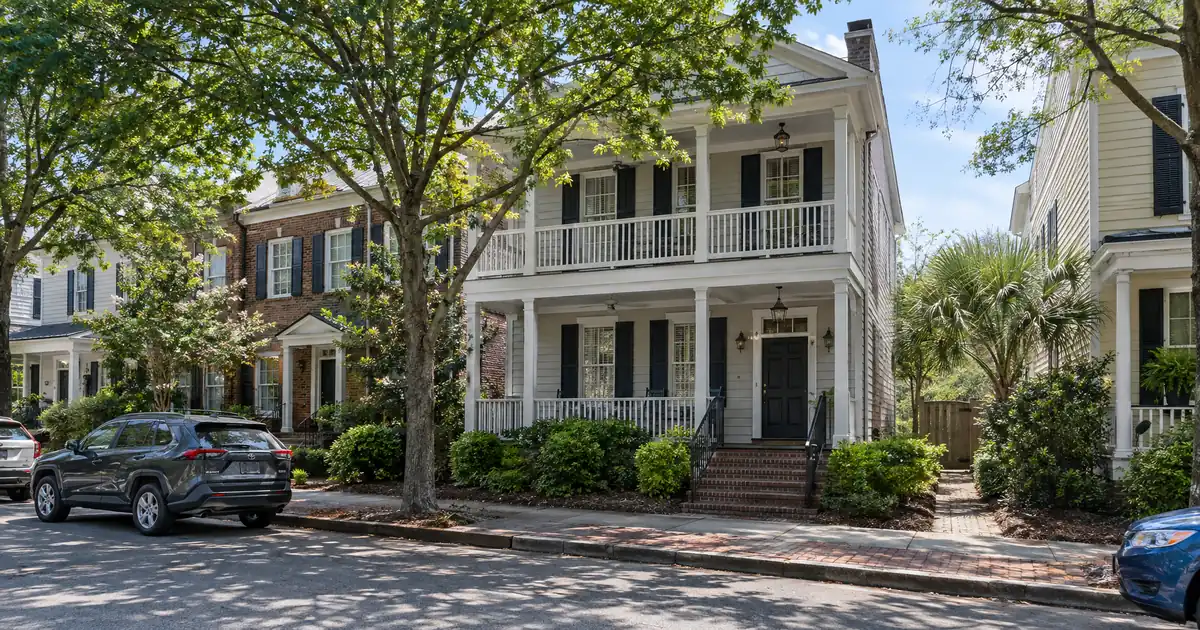
Greer added more residents than any other South Carolina city, growing 7.3 percent, or 3,412 people, to an official population of 50,007 per Census Bureau estimates. Most investors read that headline and assume appreciation will do the work at refinance. The price data says otherwise. Redfin’s latest median sale price sat near $303K, down 8.0 percent year over year. In Greer, the equity story runs on rent coverage and disciplined basis, not on a rising tide.
The Quick Read: A DSCR cash-out refinance in Greer, South Carolina is underwritten primarily on the property’s rental income measured against its full monthly obligation, and the local twist is that flat rents against a manufacturing-anchored tenant base make the coverage ratio a tighter constraint than the 75 percent LTV ceiling.
DSCR Cash-Out Calculator
Run the cash-out numbers in Greer, SC
Rate source: Freddie Mac 30-yr average via FRED® — Federal Reserve Bank of St. Louis · effective Sep 24, 2026
Prefilled with starting assumptions — enter your property’s value, balance, taxes, and insurance for a more accurate picture.
Program parameters update from Lendmire’s centralized guideline source. Taxes and insurance are editable estimates.
As of Sep 24, 2026 · General Freddie Mac market benchmark, not a Lendmire loan offer. Property value, balance, taxes, and insurance are editable estimates. Maximum loan-to-value varies by lender, program, property type, and seasoning. Not a Loan Estimate, approval, or commitment to lend. Program availability and eligibility are subject to lender guidelines, credit approval, property review, and underwriting.
- Average rent sits near $1,800 per Zillow’s rental data, down $50 year over year.
- Modeled coverage on a mid-priced 3-bed hovers around 1.0x at maximum leverage.
- Cash-out generally requires about six months of ownership and caps at 75 percent LTV.
- BMW’s roughly 11,000-person plant anchors workforce tenant demand along Highway 101 and Highway 14.
- True duplexes and fourplexes are scarce, so 3-bed houses and townhomes dominate.
Greer Market Snapshot
A quick read on the Greer investor landscape — figures come from the cited sources below. Confirm current property-level numbers before underwriting.
| Metric | Detail |
|---|---|
| Home prices | Median value $288,700 (Data USA, Greer SC) |
| Typical rents | $1,888 metro median asking (SFR Analytics) |
| University enrollment | 76,000+ Greenville county students (Move Upstate SC, Greer profile) |
| Population | 50,007 population (Post and Courier) |
| Employment | About 11,000 bmw employees (City of Greer, Doing Business) |
The Appreciation Trap
Greer’s price signals disagree with each other, and an investor planning a cash-out needs to understand why before ordering an appraisal. Zillow’s modeled average value is $353,318, up 1.7 percent. Redfin’s median sale price is the $303K figure above, with price per square foot essentially flat at $167. Census-derived Data USA shows a median property value of $288,700, a lagging survey number. Resideline’s six-month sold median runs higher, near $360K. Zillow places the value above Redfin’s sales-based median because it models every home rather than only those that sold, which is why this article treats the $353,318 as a modeled average and the rest as cross-checks.
Read together, they describe a flat market with a wide band. Not a boom.
That matters because a cash-out refinance sizes off the appraised value, and a lender’s appraiser works from recent closed comps, not from last cycle’s peak. An investor who bought a few years ago and assumes a big step-up may find the appraisal lands close to purchase price. The safer posture is to underwrite to today’s comps and treat any uplift as upside.
What’s the Catch on Thin Comps?
Sales volume is the quieter risk. Redfin recorded just 34 sales in its latest winter month against 82 a year earlier, with homes sitting around 92 days on market. One winter month overstates seasonal weakness, but the direction is clear: fewer comparables means more appraisal variance. That variance bites hardest on renovated or value-add properties, where the appraiser needs close comps to support an after-repair value. If the renovation thesis depends on a specific number, an investor might build in a cushion instead of pushing to the ceiling.
What Rents Actually Say
Greer rents are flat to slightly down across every source that publishes them, and the sources differ mainly by property type. The gap between house rents and apartment rents is the useful signal for a DSCR file.
| Source | Measure | Figure |
|---|---|---|
| Zillow Rentals | Average, all types | $1,800 |
| Zumper | Houses / apartments | $1,800 / $1,380 |
| Homes.com | Median / single-family | $1,885 / $1,949 |
| RentCafe (50+ unit buildings) | Average apartment | $1,573 |
Per Zumper’s Greer research, houses run about $1,800, and Homes.com puts the single-family median higher at $1,949. RentCafe’s Yardi Matrix data covers larger apartment buildings only, showing an average of $1,573, down 3.4 percent, with 27 percent of households renting. Zillow labels the market warm, and the trend line across the board is flat to negative. No reliable official vacancy figure surfaced for Greer, so this analysis leaves it out.
The rent-to-value picture is thin. Homes.com’s price-to-rent ratio for Greer is 15.4, which works out to a gross monthly rent near 0.54 percent of price. The metro-level gross yield from SFR Analytics is 7.92 percent against 8.38 percent statewide. That’s a metro screen, not a Greer number, but it points the same way: Greer rents a step below the state’s better cash-flow markets.
The Coverage Math at 75 Percent LTV
At the 75 percent LTV ceiling, a typical Greer 3-bed lands right around the 1.0x benchmark, and above that price band it falls below it. Coverage is rent divided by full PITIA (principal, interest, taxes, insurance, and any HOA dues), and the ratio is what sizes the cash-out.
Run the numbers on a modeled scenario. These are assumed inputs, not sourced market facts: a rent of $1,800, a 30-year term, and South Carolina-average taxes and insurance folded into the full obligation.
- Value near $303,000 at 75 percent LTV: coverage of roughly 1.02x including taxes and insurance.
- Value near $353,000 at 75 percent LTV: roughly 0.87x, below the standard 1.00x baseline.
- Same $353,000 value at 65 percent LTV: coverage back to roughly 0.98x. At $303,000 and 65 percent, about 1.15x.
Most standard DSCR programs are built around a 1.00x benchmark because rent covers the obligation at that level. When a file falls short, the reviewable paths include lower leverage (which shrinks proceeds), a sub-1.00 program with stronger compensating factors, or an interest-only structure. Each carries different pricing and reserve conditions, and eligibility remains subject to lender guidelines, credit review, and property review.
The practical takeaway is that the cash-out amount here is often set by coverage rather than by the LTV cap. A Greer investor might qualify for a lot less than 75 percent of value, and that’s a feature of the market’s rent-to-price ratio, not a lender quirk. The equity available depends on rent used for lender review, PITIA, reserves, and the ceiling. It is never a guaranteed cash figure.
Program Parameters That Frame the File
Typical guidance for cash-out on an investment property: a 75 percent LTV ceiling, about six months of ownership measured from title recording, a 1.00 minimum DSCR, credit tiers stepping up from a 620 floor, and reserves of about six months of PITIA (more on balances above $1,500,000). Loan amounts run up to $3,000,000 on standard programs. Manufactured homes, log homes, and barndominiums fall outside these programs. Those figures reflect select wholesale-network guidelines and can change, so confirm them against a current scenario. Exact terms depend on the lender’s guidelines, property type, leverage, and a full review of the borrower’s file.
The brokerage side is straightforward. Lendmire (NMLS# 2371349), a DSCR-focused mortgage broker, works with Greer, South Carolina investors to place DSCR financing through wholesale lenders reaching 41 markets — 40 states plus Washington, D.C. Unlike some larger non-QM lenders that treat investor loans as a side product, the brokerage is built around this file type. For a broader look at state programs, see the South Carolina DSCR investor loans hub, and for the mechanics, the guide “What Is a DSCR Loan” covers how coverage is calculated.
BMW, the Port, and Who Actually Rents Here
Tenant demand in Greer rests on manufacturing and logistics payrolls, and the anchors are large and committed. The City of Greer says BMW employs about 11,000 people and has expanded its footprint into the city, while the South Carolina Department of Commerce reports more than $7 billion invested in the company’s state operations. BMW has said all-electric production starts at the plant in late 2026. A $700 million battery assembly plant is under construction in nearby Woodruff, per the Post and Courier.
Here’s the local wrinkle. Per the Upstate Business Journal, BMW, the airport, and Inland Port Greer are not themselves in the city but are surrounded by city limits. The SC Ports Authority runs the inland facility with 24/7 gates and next-day container availability. Data USA’s resident employment figures show manufacturing at 3,667 workers, health care and social assistance at 3,230, and retail trade at 2,138, with an average commute of 24.3 minutes.
Healthcare adds a second leg. Prisma Health Greer Memorial has announced site preparation for an expansion and a new medical park building. No job counts surfaced, so treat it as a supportive signal, not a quantified driver.
There’s no four-year college in Greer, so student housing isn’t a demand driver. Tenants are workers, and worker tenancy supports steady income at refinance. A demand anchor like this isn’t a rent-growth guarantee, though. Rents are flat despite it.
Where the Equity Sits: Greer Submarkets
No source publishes verified median price or rent by neighborhood in Greer, so this section stays qualitative. The rent and price figures above are citywide, and neighborhood-level claims should be checked against comps for the specific address.
Highway 101 and Highway 14 (the BMW corridor)
This is the fast-growth belt, covering north and east Greer toward the plant and the port, and it holds most of the new subdivisions. A local brokerage estimate places the median near $330,000, but it’s a blog figure, so use it directionally. The tenant base is industrial workforce, and proximity to major employers supports stable occupancy. For a cash-out, newer stock here can carry a higher basis, and the pipeline of new construction is the main competing supply.
Eastside and Pelham Road
Established suburban subdivisions with a shorter commute to Greenville. Prices skew higher, with local brokerage estimates ranging from the $360,000s to above $400,000. Those are rough. The investor angle here is basis: a higher purchase price makes 1.0x coverage hard at high leverage. It works better as a lower-LTV hold than as a maximum-proceeds refinance.
Downtown and the Duplex Scarcity
The historic core around Trade and Tryon Streets has seen city investment in dining, events, and City Park. Older infill housing sits near newer complexes, and some new duplexes have appeared. But true multifamily is thin: Redfin’s listing counts show 105 townhouses for sale against a single multifamily unit in one month. That’s a listing snapshot, not a market study. It suggests small multifamily is a scarcity play, but the data doesn’t show two-unit rents beating a house’s rent by enough to cover a higher price. Duplex math needs unit-level rents that this research couldn’t find.
Taylors Edge and the Townhome Pockets
The Greenville-side border area near Wade Hampton Boulevard is repositioning, with ranch-style workforce single-family and some larger lots. It’s a plausible value-add refinance submarket, though no verified numbers turned up. Newer townhome pockets around Pelham Crossing and nearby streets are a growing rental-friendly product type, and Homes.com notes townhouses tend to be the most affordable rental option. Contrast both with premium new-build enclaves such as Sugar Creek, where pricing sits far above the workforce band and DSCR coverage is a poor fit.
Recycling the Proceeds
A cash-out only makes sense if the proceeds have somewhere better to go. In a market where rent-to-value is thin, the sensible sequence is: refinance at a leverage the coverage supports, keep the reserve, and deploy the capital where the ratio is stronger. Investors who use cash-out refinance on investment property to fund a purchase elsewhere are, in effect, moving equity from a low-yield Greer basis to a higher-yield one. The rate-and-term and cash-out refi details lay out the structural differences, and weighing a conventional loan against a DSCR loan is worthwhile for anyone whose personal income documentation makes conventional underwriting awkward.
Working DSCR brokers see a recurring pattern in mid-priced suburban workforce markets like this one: the deals that stall are usually the ones where the owner sized the cash-out on appreciation instead of on rent. Coverage that pencils at a stale value often doesn’t at a fresh appraisal, and the strongest files come in with a realistic value, a current lease or market rent schedule, and reserves already documented.
Another honest wrinkle: whether to take maximum proceeds is a genuine toss-up. Pulling less and keeping coverage cushioned protects the file if rents keep softening, while pulling more puts capital to work sooner. Both are defensible. Which one fits depends on where the next deal’s coverage sits.
Frequently Asked Questions
How do you qualify for a DSCR loan in Greer?
Qualification centers on the property’s rent against its full obligation, with a 1.00 coverage benchmark common on standard programs. Credit tiers typically start at a 620 floor, and lenders review reserves, property type, and appraisal. With Greer’s average rents near $1,800, coverage is closest to the benchmark on lower-priced 3-bed homes. Final eligibility is subject to lender guidelines and property review.
DSCR vs. conventional financing
Two common ways to finance an investment property in Greer, SC. They qualify you differently — here’s how investors weigh them.
Why investors choose it
- Qualifies on the property’s rental income — no personal tax returns, W-2s, or pay stubs needed to document income.
- No personal debt-to-income ceiling to clear, so existing mortgages and obligations don’t cap your borrowing the same way.
- Can be closed in an LLC, keeping the property inside a business entity.
- Built for scaling — not held to the limit on number of financed properties that conventional financing applies.
- Underwriting centers on the deal: generally qualifies when the rent covers the payment, a 1.00x coverage ratio being a common baseline (confirmed in underwriting).
- Designed specifically for investment property, including long-term and, where the program allows, short-term rentals.
Where it’s strong
- Often the lowest ongoing financing cost for a buyer who fully qualifies on personal income — a fit for a first property or a cost-first purchase.
Trade-offs for investors
- Requires full personal income documentation and must fit within a debt-to-income limit — salary, existing debts, and other mortgages all count.
- Typically held in your personal name rather than a business entity.
- Caps how many financed properties you can carry, which can become a ceiling as a portfolio grows.
- Evaluates you as a borrower as much as the property, which usually means more paperwork.
How investors usually choose: a first or single property often optimizes for the lowest financing cost; portfolio builders often optimize for leverage, vesting in an LLC, and scaling past conventional caps. The right answer depends on your goals, the property, and current guidelines — both paths run through select lenders in Lendmire’s wholesale network, with eligibility and terms confirmed in underwriting.
What are the requirements for a cash-out refinance on an investment property in Greer, South Carolina?
Typical guidance includes about six months of ownership from title recording, a 75 percent LTV ceiling, a 1.00 minimum DSCR, and roughly six months of PITIA in reserves. Loan amounts can run up to $3,000,000 on standard programs. Proceeds depend on coverage and appraised value, not just the LTV cap.
Will a flat Greer appraisal still support a cash-out?
It can, but the cash-out amount may be modest. Price signals range from a slight rise on Zillow to a decline on Redfin, and thin sales volume adds appraisal variance. Underwriting to current comps, not past peaks, gives the most realistic proceeds estimate.
Does it matter which county a Greer property sits in?
Yes. City limits cross into both Greenville and Spartanburg counties, and investors should verify a property’s county along with current local rental rules, taxes, and insurance with qualified local professionals before underwriting.
What loan-amount ranges may DSCR lenders review for Greer rental properties?
Standard programs generally run up to $3,000,000, with smaller balances routed through select lenders in the network. Lendmire arranges these through wholesale channels, and a key program feature is that qualification rests primarily on the property’s rental income.
The Next Move
Greer’s growth is real, but the headline doesn’t pay the loan. Rents are flat, comps are thin, and true multifamily is scarce, which puts the weight on coverage and discipline. If your Greer rental appraised tomorrow at today’s comps instead of last cycle’s, would the coverage ratio still carry the cash-out you’re planning?
For current guidelines and terms, see Lendmire’s DSCR loan programs page.
About Lendmire
Lendmire — NMLS# 2371349 — is a mortgage brokerage specializing in DSCR investor loans, helping arrange financing across 41 markets, including Washington, D.C., through wholesale and investor-lending channels. The model centers on property-level rental income reviewed by the lender rather than W-2 documentation, subject to lender guidelines, suiting entity-owned and multi-property investors. Lendmire holds Scotsman Guide Top Mortgage Workplace recognition for 2025 and 2026.
Get Started
Ready to find the right loan for you?
In about 30 seconds you can review financing options available for your investment property. No commitment required.
Informational only. Not a Loan Estimate, approval, or commitment to lend. Program availability and eligibility are subject to lender guidelines, credit approval, property review, and underwriting.
References
1. Post and Courier: Greer population growth
2. Redfin: Greer housing market
3. Zillow Rental Manager: Greer
4. Data USA
6. Move Upstate SC, Greer profile
7. City of Greer: Doing Business Here
8. Zillow — Home Values Greer SC
10. Homes.com
11. RentCafe’s Yardi Matrix data
12. SC Department of Commerce: BMW
13. Post and Courier
15. SC Ports Authority: Inland Port Greer
16. Prisma Health Greer Memorial
17. recognized by Scotsman Guide as a 2026 Top Workplace
18. Scotsman Guide 2025 Top Mortgage Workplace
This article is part of Lendmire’s investment property cash-out refinance program — full qualification details, guidelines, and scenarios live on the program page.
Related reading: Cash Out Refinance Investment Property Greer South Carolina · DSCR Cash Out Refinance Charleston South Carolina · Cash Out Refinance Investment Property Anderson South Carolina
Guides: Investment Property Cash-Out Refinance in Greer, SC · Investment Property Cash-Out Refinance in South Carolina
Brandon Miller
Founder & CEO, Mortgage Loan Originator, Lendmire LLC
- Mortgage Loan Originator · NMLS# 1129696 · Verify on NMLS Consumer Access
- North Carolina Real Estate Broker · License# 343312 · Verify on NCREC
- North Carolina Insurance Producer · License# 19053198 · Property, Casualty, Life, Health · Verify on NAIC SBS
- Lendmire LLC · Firm NMLS# 2371349 · Verify firm licensure
Legal disclosures. Lendmire (NMLS# 2371349) is a state-licensed mortgage brokerage that arranges financing through wholesale lender relationships. Lendmire is not a direct lender, depository institution, or registered financial advisor. The discussion above is general informational content about real estate financing — it is not financial, legal, or tax advice, and readers should consult licensed professionals for guidance on their individual circumstances. Loan inquiries are subject to lender underwriting; this article does not represent a commitment to lend. Loan terms, rates, and qualification standards vary by borrower, property, and state, and are subject to change at any time. Equal Housing Opportunity. NMLS Consumer Access: nmlsconsumeraccess.org.