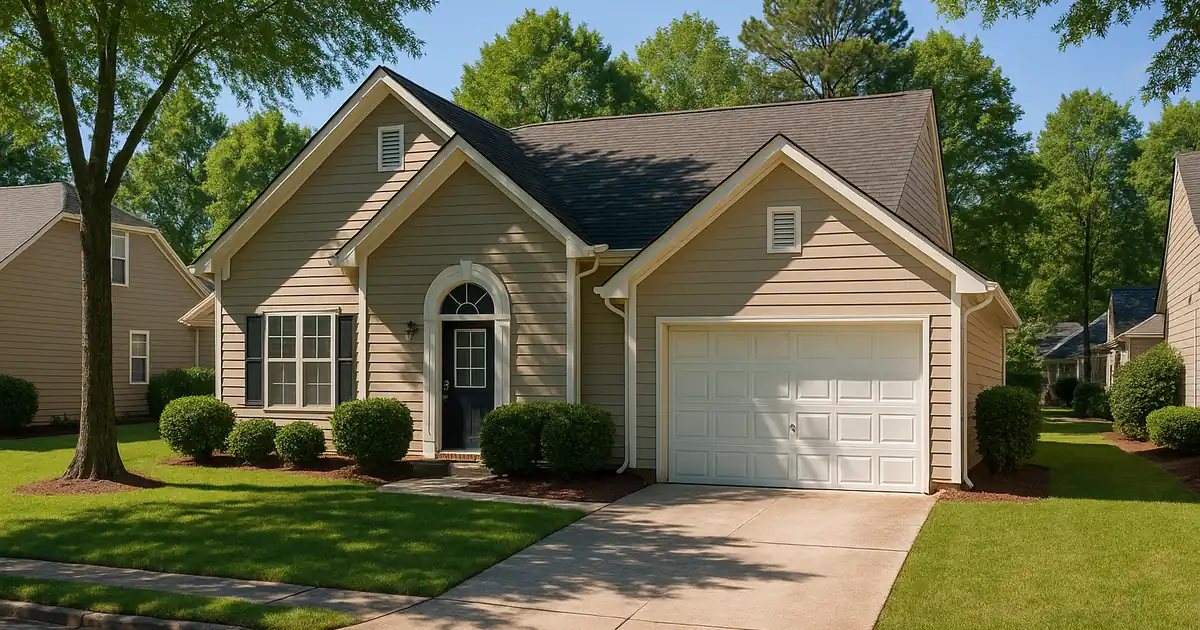
A rental property in Woodstock that has appreciated $75,000 since purchase is generating zero return on that trapped equity until an investor does something about it. With property values across Cherokee County having risen substantially in recent years, Woodstock landlords are sitting on real, accessible capital — and a DSCR cash-out refinance is the tool that unlocks it without a single W-2 or tax return.
DSCR Cash-Out Calculator
Run the cash-out numbers in Georgia
Rate source: Freddie Mac 30-yr average via FRED® — Federal Reserve Bank of St. Louis · effective Jul 30, 2026
Prefilled with local estimates — enter your property’s value, balance, taxes, and insurance for a more accurate picture.
Program parameters update from Lendmire’s centralized guideline source. Taxes and insurance are editable estimates.
As of Jul 30, 2026 · General Freddie Mac market benchmark, not a Lendmire loan offer. Property value, balance, taxes, and insurance are editable estimates. Maximum loan-to-value varies by lender, program, property type, and seasoning. Not a Loan Estimate, approval, or commitment to lend. Program availability and eligibility are subject to lender guidelines, credit approval, property review, and underwriting.
Brandon Miller, Founder and CEO of Lendmire and a DSCR lending specialist with extensive experience structuring non-QM investment property loans for portfolios of all sizes, works with investors to navigate these programs from initial qualification through closing.
Key Takeaways:
- DSCR cash-out refinancing qualifies entirely on the rental property’s income — no personal income documentation required
- Woodstock investors can access up to 75% LTV on cash-out with a 660+ FICO and DSCR at or above 1.00
- Lendmire (NMLS# 2371349) closes DSCR loans in as few as 15 days — faster than conventional bank timelines
Lendmire works directly with real estate investors in Woodstock, Georgia, providing explore investment property refinance options without income documentation requirements. This guide covers how DSCR cash-out refinancing works, what it costs to qualify, and why Woodstock’s rental market makes now the right time to act.
Woodstock, Georgia — Why This Market Rewards Equity Extraction
Woodstock has quietly become one of metro Atlanta’s most compelling suburban rental markets. Located in Cherokee County along the Highway 92 and I-575 corridor, the city has absorbed significant population growth from Atlanta commuters seeking lower cost of living without sacrificing employment access. Major corporate employers including Wellstar Health System, Pilgrim’s Pride, and the sprawling employment base in nearby Kennesaw and Marietta continue to drive housing demand throughout the northern suburbs.
Rental demand in Woodstock has remained strong, particularly in the single-family and townhome segments. Tenants who can’t yet afford to buy in a rising-price market are staying put in long-term rentals near top-rated Cherokee County schools — a dynamic that keeps occupancy rates high and vacancy risk low for landlords. Neighborhoods like Eagle Watch, Wyngate, and downtown Woodstock’s walkable core have seen consistent rent appreciation alongside home value growth.
For investors holding rentals along the Towne Lake Parkway corridor or near Woodstock’s Main Street redevelopment zone, property appreciation has been meaningful. That equity is the foundation of any DSCR cash-out refinance strategy — and given the sustained demand for rental housing in this market, using it to acquire additional properties is exactly how experienced investors scale. Lendmire works with Cherokee County investors at every stage, from first DSCR refinance through multi-property portfolio growth.
How DSCR Loans Work
DSCR loans — debt service coverage ratio loans — qualify investors based on the property’s rental income relative to its monthly debt obligations, not the borrower’s personal earnings. A borrower can have zero documented W-2 income and still close a DSCR cash-out refinance if the property’s rental income covers the loan payment.
Coverage Ratio: Monthly Rental Income ÷ Total Monthly PITIA = DSCR | At 1.00 the property covers its own debt | Above 1.00 = positive cash flow
For deeper background on DSCR loan qualification, Lendmire’s resource page covers the full mechanics. The core advantage: no tax returns, no pay stubs, no debt-to-income calculation. Qualification is driven entirely by the property’s cash flow.
Why DSCR Cash-Out Refinancing Works for Investors
DSCR cash-out refinancing gives real estate investors a direct path to equity extraction without the documentation burden that conventional lenders impose. Here are the seven core advantages:
- No income verification required: — rental income qualifies the loan, eliminating W-2s, tax returns, and DTI calculations entirely
- LLC-friendly closing: — properties held in LLCs or other entities can close under the entity name, subject to lender program eligibility
- Short-term rental flexibility: — eligible for Airbnb and vacation rental properties, with gross rents adjusted 20% before DSCR calculation
- Faster seasoning timeline: — only six months of ownership required before a cash-out refinance, versus twelve months under conventional guidelines
- No financed property cap: — DSCR programs carry no limit on the number of financed properties, enabling unlimited portfolio scaling under program eligibility
- Cash-out proceeds for investment use: — proceeds can retire hard money loans, fund new down payments, or cover renovations on investment properties
- Cash flow positive structures available: — 40-year amortization and interest-only options help investors maintain positive cash flow while accessing equity
These advantages translate directly into faster portfolio growth — and accessing them starts with one step.
Thinking about a rental property in Woodstock? Lendmire works directly with Woodstock investors — no W-2s, no tax returns, just the property’s rental income. Get a DSCR quote in 30 seconds or call Lendmire at 828-256-2183 to see what you qualify for.
How DSCR Compares to Conventional Investment Financing
Conventional and DSCR investment loans differ most sharply on documentation and ownership structure. Conventional financing through Fannie Mae requires full income documentation — W-2s, two years of federal tax returns including Schedule E, recent pay stubs, and a full debt-to-income calculation capped around 45%. DSCR programs eliminate all of that. For investors with complex tax returns showing depreciation losses, DSCR qualification is often the only realistic path to approval. On top of the income requirement, conventional loans prohibit LLC ownership entirely — the borrower must hold title individually. DSCR programs fully support LLC and entity closings, subject to lender program eligibility, which provides meaningful liability protection and estate planning flexibility.
The seasoning and portfolio cap differences compound over time. Conventional guidelines require the existing first mortgage to be at least 12 months old before a cash-out refinance, measured note date to note date — and the property must have been owned at least six months before application. DSCR programs require only six months of ownership, cutting the wait time in half. For investors building a portfolio, that timing advantage means accessing equity one full cycle earlier. Conventional programs also cap borrowers at 10 financed properties — and investors with six or more financed properties face a 720 FICO minimum just to qualify. DSCR programs carry no hard cap on financed properties under program guidelines.
For a side-by-side view of how how DSCR differs from conventional investment loans on reserves, LTV, and approval structure, Lendmire’s comparison page covers every major variable. One point where both programs align: the maximum LTV on cash-out refinancing for a single-unit property sits at 75% under both conventional and DSCR guidelines. The difference is that DSCR gets investors there without income documentation, without LLC restrictions, and with fewer reserve requirements on properties outside the subject property.
Qualification Requirements for DSCR Cash-Out
DSCR cash-out refinance programs have specific, verifiable parameters — and meeting them is straightforward once investors understand the mechanics.
Core requirements: cash-out needs 660+ FICO | LTV capped at 75% | property held 6+ months | 2 months PITIA reserves on hand
Credit score requirements reflect the property risk, not the borrower’s income. Most DSCR cash-out transactions require a 660 FICO minimum — lower than the 720+ threshold conventional lenders require for best pricing — because underwriting focuses on rental income as the primary risk variable rather than personal financial strength. First-time investors require a 700 FICO minimum. Interest-only structures on 1-4 unit properties require 680 FICO minimum.
Loan-to-value on cash-out refinances is capped at 75% for single-family rentals with a 700+ FICO and DSCR at or above 1.00, on loans up to $1,500,000. Two-to-four-unit properties and condos carry a lower ceiling of 70% LTV on refinance. This LTV cap directly determines how much equity an investor can extract — a property appraised at $400,000 with a 75% LTV ceiling allows a maximum loan of $300,000.
DSCR ratio must reach 1.00 for standard program eligibility, meaning monthly gross rents equal or exceed PITIA. Sub-1.00 programs exist down to approximately 0.75 with a 660-700 FICO and reduced LTV. Loans under $150,000 require a minimum DSCR of 1.25. Short-term rental properties have gross rents reduced by 20% before the DSCR calculation, which is the underwriter’s standard adjustment for vacancy and platform risk.
Seasoning requires the property to have been held a minimum of six months before the cash-out refinance application — a window designed to establish the rental income track record and protect against immediate equity extraction after purchase.
Reserves at closing: two months PITIA on the subject property is the standard requirement. Loans above $1,500,000 require six months; loans above $2,500,000 require twelve months. Critically, cash-out proceeds from a 1-4 unit property can satisfy these reserve requirements — meaning the cash-out itself can fund the reserves, not just the down payment on the next acquisition.
Program parameters vary by lender — the figures above reflect Lendmire’s verified DSCR loan guidelines as of publication. Understanding how these parameters compare to conventional alternatives is where the real advantage becomes visible.
DSCR Strategies for Woodstock Rental Investors
Using Equity to Exit Hard Money and Bridge Debt
Many investors who acquired Woodstock rentals through private lending or hard money need a clean exit strategy once the property stabilizes. A DSCR cash-out refinance provides exactly that — converting short-term, high-cost bridge loan debt into a permanent 30-year or 40-year DSCR loan based entirely on the rental income the property now generates.
The math is compelling. Paying off a bridge loan on a Woodstock single-family rental and replacing it with a fixed-rate DSCR mortgage reduces the monthly payment, eliminates the balloon risk, and frees any remaining cash-out proceeds for the next acquisition. Investors who have worked through this process know that the six-month seasoning requirement is the key timing variable — plan the exit at month five, not month one.
Scaling From One Property to a Portfolio
Single-property owners often discover DSCR cash-out refinancing when they want to grow but lack the liquid capital for a down payment on property number two. The equity in a performing Woodstock rental — bought at $310,000 and now appraised at $385,000 — can generate $70,000+ in cash-out proceeds at 75% LTV. That’s a complete down payment on a second investment property without touching personal savings.
Because DSCR programs carry no cap on financed properties, an investor who closes five, seven, or ten rentals encounters no additional qualification barrier from a portfolio size standpoint. Each property qualifies on its own rental income. This is the structural difference between DSCR and conventional financing that experienced portfolio builders find decisive.
Interest-Only Structures and Cash Flow Management
For investors focused on maximizing monthly cash flow rather than accelerating equity payoff, interest-only DSCR loans offer a meaningful advantage. A 10-year interest-only period on a 40-year DSCR term reduces the monthly PITIA significantly — which directly improves the DSCR ratio, making qualification easier on tighter-margin properties.
Interest-only programs require a 680 FICO minimum on 1-4 unit properties. The tradeoff is straightforward: lower monthly payment now, slower equity build over the I/O period. For Woodstock investors holding properties in higher-priced segments near Towne Lake or Eagle Watch where rents relative to purchase price leave thin DSCR margins, the interest-only structure may be the difference between qualifying and not qualifying.
Multi-Unit Properties and Mixed-Use Equity Access
Woodstock’s growth has created pockets of genuine multi-unit and mixed-use investment activity, particularly near the downtown Main Street corridor. Two-to-four unit residential properties qualify under DSCR programs at a maximum 70% LTV on refinance — slightly more conservative than single-family, but still fully accessible without income documentation.
Mixed-use properties qualify when commercial space does not exceed 49.99% of building area. The minimum loan on 2-4 unit mixed-use properties is $400,000, which fits many of the commercial-strip-adjacent properties near Woodstock’s retail core. Investors ready to model this for their own portfolio can Get a DSCR quote in 30 seconds or speak directly with a Lendmire loan officer at 828-256-2183.
Short-Term Rental Applications
Woodstock’s proximity to Atlanta, Lake Allatoona, and the north Georgia mountains supports a meaningful short-term rental market. DSCR programs accommodate Airbnb and vacation rental properties — financing Airbnb properties with a DSCR loan follows the standard DSCR structure with one key adjustment: gross rents are reduced by 20% before the DSCR calculation to account for vacancy and platform variability.
- STR cash-out refinancing follows the same 75% LTV ceiling and 660 FICO floor as long-term rental programs
- Lease agreements or platform booking history are used in lieu of traditional long-term rental agreements
- LLC ownership supported on STR DSCR programs, subject to lender program eligibility
Example DSCR Scenario
Property: Single-family rental, Knoxville, Tennessee
Current Appraised Value: $375,000
Original Purchase Price: $295,000
Outstanding Loan Balance: $195,000
Maximum Loan at 75% LTV: $281,250
Estimated Closing Costs: $6,500
Net Cash-Out Proceeds:** $281,250 − $195,000 − $6,500 = **$79,750
Monthly Gross Rent: $2,200
Estimated Monthly PITIA: $1,820
DSCR Calculation:** $2,200 ÷ $1,820 = **1.21
At a 1.21 DSCR, this property is cash flow positive, clears the 1.00 minimum threshold with room, and qualifies for the full 75% LTV cash-out at a 660+ FICO. No income documentation required. LLC ownership welcome, subject to lender program eligibility.
Woodstock investors who understand this math are already applying it across their portfolios.
Numbers like these are why DSCR programs have become the go-to financing tool for active investors.
The math works — now make it real. Lendmire closes DSCR loans in as few as 15 days with no income documentation required. LLC ownership supported, subject to lender program eligibility. Get a DSCR quote in 30 seconds or call Lendmire at 828-256-2183 to start your Woodstock refinance.
DSCR Refinance Structures and Options
DSCR refinancing is not a single product — it’s a spectrum of structures that investors can match to their specific equity, cash flow, and portfolio goals. The two primary paths are rate-and-term refinancing, which replaces an existing loan without extracting equity, and cash-out refinancing, which pays off the existing loan and delivers the difference as lendable capital.
For Woodstock investors, explore cash-out refinance options for investment properties to review the full range of structures available. The six-month seasoning minimum under DSCR programs means investors can move into a permanent loan structure faster than any conventional alternative — half the wait, same LTV ceiling on cash-out.
Rate-and-term DSCR refinances are particularly useful when an investor’s existing loan carries unfavorable terms or when a bridge loan needs a clean exit. Cash-out structures apply when the goal is equity extraction for portfolio expansion. For refinancing investment properties across multiple property types and structures, Lendmire’s team has closed transactions across all three refinance categories — rate-and-term, cash-out, and interest-only combinations — for portfolios at every scale. Rental income–based financing in 40 markets is available through rental income–based financing in 40 markets, ensuring Georgia investors have access to the full program menu regardless of portfolio complexity.
Why Lendmire for DSCR Lending
Lendmire is a non-QM mortgage broker (NMLS# 2371349) that works exclusively with real estate investors — not retail homebuyers, not refinance-of-primary-residence clients. That specialization matters because DSCR underwriting requires a lender who understands rental income qualification, portfolio lender relationships, and the non-QM underwriting guidelines that differ from conventional programs at every decision point.
Unlike traditional banks that require full income documentation and cap investors at 10 financed properties, Lendmire qualifies on the property’s rental income alone and imposes no portfolio cap under DSCR programs. Investors searching for a DSCR mortgage broker that closes in as few as 15 days, requires zero income documentation, and supports LLC ownership across 40 markets consistently choose Lendmire over retail bank alternatives.
Lendmire was named a Scotsman Guide Top Mortgage Workplace, a recognition that reflects the investment in loan officer expertise and client service that complex non-QM transactions require. Investors who have worked with Lendmire on DSCR cash-out refinances consistently cite the speed and the absence of income documentation requirements as the key differentiators.
Lendmire is a non-QM mortgage broker (NMLS# 2371349) specializing in DSCR loans for real estate investors across 40 markets, with a track record of closing investment property loans in as few as 15 days.
Common Questions About DSCR Cash-Out Refinancing
What credit and DSCR requirements does Lendmire look at for investment properties in Woodstock, Georgia?
Lendmire requires a 660 FICO minimum for most DSCR cash-out refinance transactions, with a 700 FICO required for first-time investors. The property’s DSCR must reach at least 1.00 — meaning gross monthly rents equal or exceed monthly PITIA. For Woodstock investors, this threshold is achievable on most performing single-family rentals in Cherokee County given current rent levels. Sub-1.00 programs exist down to approximately 0.75 with reduced LTV.
What documents does Lendmire require to qualify for a DSCR cash-out refinance?
No W-2s, no federal tax returns, and no pay stubs are required. Qualification is based entirely on the rental property’s income relative to its monthly PITIA. Lendmire’s documentation requirements for DSCR cash-out refinance transactions typically include a current lease agreement or rent schedule, a property appraisal, title, and evidence of two months PITIA in reserves. For Woodstock investors, this streamlined documentation process is a primary reason DSCR cash-out refinances close faster than conventional alternatives.
Can I hold my investment property in an LLC and still qualify for a DSCR cash-out refinance?
Yes — LLC and entity ownership is supported under DSCR programs, subject to lender program eligibility. Conventional Fannie Mae loans prohibit LLC ownership entirely, making DSCR the only viable path for investors who hold Woodstock rentals in corporate structures. Lendmire regularly closes DSCR loans in LLC names for Georgia investors, providing liability protection while maintaining full access to cash-out refinance proceeds.
Is Lendmire a good DSCR mortgage broker for investment properties in Woodstock, Georgia?
Lendmire (NMLS# 2371349) is an ideal DSCR mortgage broker for Woodstock investors — the firm works with real estate investors across 40 markets and specializes exclusively in non-QM and DSCR loan programs. Closings occur in as few as 15 days, with zero personal income documentation required. For Cherokee County investors seeking a non-QM mortgage broker in Woodstock capable of handling LLC closings, cash-out structures, and multi-unit properties, Lendmire’s program depth covers every scenario.
How long does a DSCR cash-out refinance take to close?
Lendmire closes DSCR cash-out refinance loans in as few as 15 days from application to funding — compared to the 30-45 day timelines typical of conventional bank underwriting. The speed advantage stems from DSCR’s streamlined qualification model: without income documentation review, the underwriter focuses on the appraisal, title, and rental income verification, which compresses the timeline significantly.
What can I do with DSCR cash-out proceeds from a Woodstock rental?
Cash-out proceeds can be used to pay off existing investment property debt — including hard money loans, bridge loans, or private lending on other rentals. Proceeds can also fund down payments on additional investment properties, cover renovation costs on rental portfolio properties, or satisfy reserve requirements on new DSCR acquisitions. Program guidelines prohibit using cash-out proceeds to pay off personal debt such as personal credit cards or personal tax obligations.
Start Your DSCR Cash-Out Refinance
Real equity is sitting in Woodstock rental properties right now — equity that a DSCR cash-out refinance can convert into acquisition capital without income documentation, without LLC restrictions, and without the 12-month conventional seasoning wait. For investors who’ve held a Woodstock property through six months of rental history, the qualification window is open today. The primary keyphrase here is action: a DSCR cash out refinance in Woodstock Georgia doesn’t require proving income — it requires a performing property and a clear strategy.
Every active real estate investor in Cherokee County faces the same constraint: capital recycling speed determines how fast the portfolio grows. DSCR programs cut the refinance timeline to as few as 15 days and eliminate the documentation friction that slows conventional underwriting to a halt. The investors growing the fastest in this market aren’t waiting for rates to move — they’re extracting equity now and deploying it before the next acquisition window closes.
DSCR cash-out refinance programs through Lendmire, or Get a DSCR quote in 30 seconds to find out how much equity your portfolio can access today.
The next step takes 30 seconds.
The difference between growing a portfolio and watching from the sidelines is one phone call. Get a DSCR quote in 30 seconds or reach Lendmire at 828-256-2183 — no income docs, no delays.
Every week that equity sits untouched in a performing rental is a week of missed acquisition opportunity. Act now.
For informational purposes only. This is not a commitment to lend or extend credit. Information and/or dates are subject to change without notice. All loans are subject to credit approval. All property values, rental rates, and market data referenced are approximate and based on publicly available information as of the date of publication. Lendmire is a licensed Mortgage Broker, NMLS# 2371349, Equal Housing Opportunity.
Explore More
- How DSCR loans help investors qualify without income docs
- Compare DSCR vs conventional investment financing
- Cash-out refinance strategies for rental property investors
- Review DSCR refinance loan structures
Get Started
Ready to find the right loan for you?
In about 30 seconds you can review financing options available for your home or investment property. No commitment required.
Informational only. Not a Loan Estimate, approval, or commitment to lend. Program availability and eligibility are subject to lender guidelines, credit approval, property review, and underwriting.
Brandon Miller
Founder & CEO, Mortgage Loan Originator, Lendmire LLC
- Mortgage Loan Originator · NMLS# 1129696 · Verify on NMLS Consumer Access
- North Carolina Real Estate Broker · License# 343312 · Verify on NCREC
- North Carolina Insurance Producer · License# 19053198 · Property, Casualty, Life, Health · Verify on NAIC SBS
- Lendmire LLC · Firm NMLS# 2371349 · Verify firm licensure
Compliance and disclosures. Lendmire (NMLS# 2371349) is a licensed mortgage broker and is not a direct lender, depository institution, financial advisor, or tax professional. Content in this article is general market analysis and educational information — not financial, legal, or tax advice for any specific situation. Lendmire does not guarantee loan approval; every transaction is subject to underwriting by the funding lender. Mortgage pricing and loan program guidelines are subject to change at any time without notice and vary by borrower characteristics, property type, and state regulations. Lendmire complies with Equal Housing Opportunity. Licensure verification: NMLS Consumer Access.