
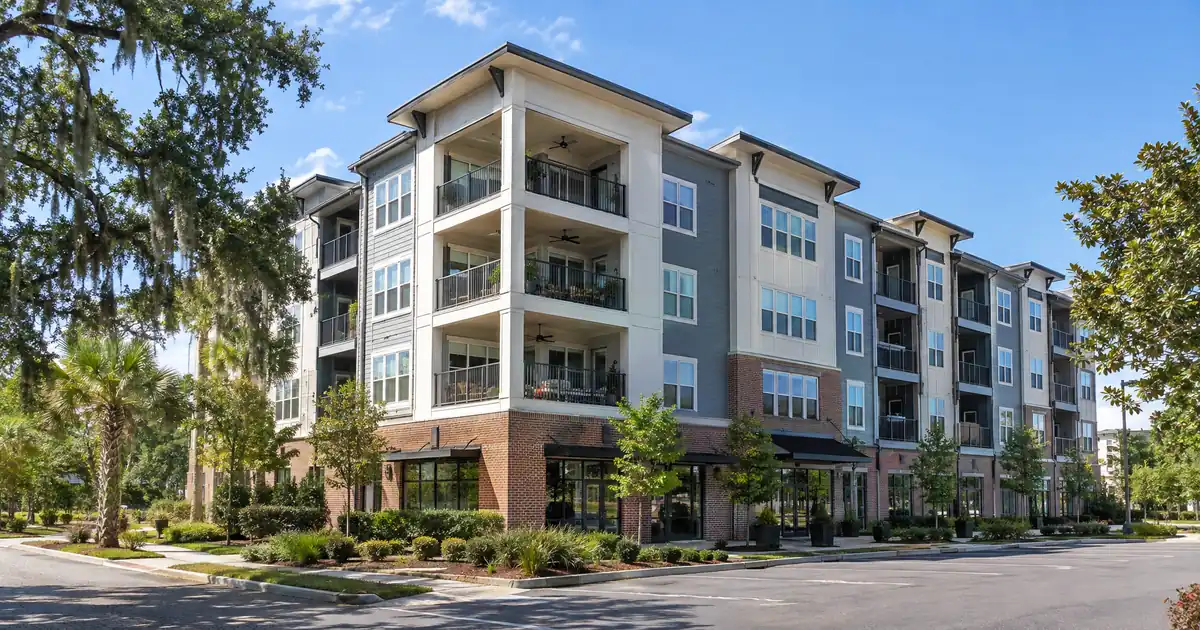
A 3-bed rental in the Granite Drive and Cypress Drive subdivisions hits the DSCR math like this. Model the house at $180,000, then run a cash-out at 75% LTV with rent at $1,250. Count principal, interest, taxes, and insurance in full, and coverage lands around 1.2x. Drop rent to the $990 area-wide median and the same file slips just under 1.00. Same house, same loan structure, and $260 a month of rent decides whether it clears. Final terms depend on lender guidelines, property type, leverage, and the borrower’s complete credit picture.
That gap is the whole story of Gaffney. Lendmire (NMLS# 2371349) works with Gaffney, South Carolina investors to place DSCR financing through wholesale lenders reaching 41 markets — 40 states plus Washington, D.C. In a market this thin, the loan program is rarely the constraint. The rent on the specific unit is.
DSCR Cash-Out Calculator
Run the cash-out numbers in Gaffney, SC
Rate source: Freddie Mac 30-yr average via FRED® — Federal Reserve Bank of St. Louis · effective Sep 24, 2026
Prefilled with starting assumptions — enter your property’s value, balance, taxes, and insurance for a more accurate picture.
Program parameters update from Lendmire’s centralized guideline source. Taxes and insurance are editable estimates.
As of Sep 24, 2026 · General Freddie Mac market benchmark, not a Lendmire loan offer. Property value, balance, taxes, and insurance are editable estimates. Maximum loan-to-value varies by lender, program, property type, and seasoning. Not a Loan Estimate, approval, or commitment to lend. Program availability and eligibility are subject to lender guidelines, credit approval, property review, and underwriting.
The Quick Read:
A cash-out refinance in Gaffney, South Carolina is underwritten primarily on the property’s rental income measured against its full monthly obligation, so the unit must show coverage at or above the 1.00 benchmark after the lender’s review. CapRateCity models a median rent of $990, which makes bedroom count and basis the deciding factors.
- Proceeds are capped at 75% LTV on cash-out, and the lender reviews the rent against PITIA.
- 3-bed houses and small multifamily carry the best rent per dollar of value.
- Values have been flat to slightly down, so equity comes from basis, not market lift.
- About 6 months of seasoning from title recording is typical before a cash-out.
- Median single-family, on modeled numbers, sits on the wrong side of the line.
Gaffney Market Snapshot
A quick read on the Gaffney investor landscape — figures come from the cited sources below. Confirm current property-level numbers before underwriting.
| Metric | Detail |
|---|---|
| University enrollment | ~1,600 students (University Herald, Limestone) |
| Population | 12,596 population (Census Reporter) |
| Employment | 600 jobs (SCBiz (Gaffney tag)) |
| Vacancy | 5.5% (CapRateCity) |
Where the Coverage Clears: Larger Houses in the Newer Subdivisions
The 3-bed house in the newer subdivisions is where Gaffney’s single-family cash-out math works best. Zillow’s rental listings show 3-bedroom houses asking $1,100 to $1,495 around Granite, Osage, and Cypress, well above the area average. Those are listing snapshots, not leases, but the spread points the same direction as the bedroom-level data.
Rentcast figures published through Prop:Metrics for ZIP 29341 put median rent at $887 for a 1-bed, $980 for a 2-bed, and $1,520 for a 3-bed. Two-bedroom and three-bedroom units make up the bulk of the rental stock, at 33.9% and 31.4% respectively. A 3-bed pulling $1,250 against a 2-bed near $980 means the larger house covers its obligation with real cushion, while the smaller one fights for 1.00.
Run the numbers on a modeled $180,000 value at 75% LTV. These are assumed inputs, not sourced comps, and coverage includes taxes and insurance at South Carolina averages. These specifics are subject to lender guidelines and a full review of property, leverage, and credit.
| Modeled rent | Approx. coverage (full PITIA) |
|---|---|
| $990 | Just under 1.00x |
| $1,100 | Around 1.05x |
| $1,250 | Around 1.2x |
Notice how little room the middle row leaves. A $1,100 rent clears the baseline only by a hair, and a vacancy month or a reappraisal a few thousand dollars lower turns it into a problem file. Most standard programs are built around a 1.00x benchmark, and files closer to 1.15x tend to be reviewed more favorably. Exact eligibility depends on lender guidelines, credit profile, reserves, and the property review.
Duplexes and Small Multifamily: Where Gaffney Stacks Income
Small multifamily is the stronger play here. Coverage improves because two rents sit against a single acquisition basis. NeighborhoodScout’s housing mix shows about 66.25% of Gaffney’s units are single-family detached, roughly 12.96% are duplexes, converted homes, or small apartment buildings, and 17.90% are large complexes. Roughly one unit in eight is small multifamily, so a duplex has real comps and tenants who understand the product. It isn’t a niche asset.
Apartment asking rents in Zillow’s local rental listings run from about $800 for a studio to $955 for a 2-bed at one small complex and $1,199 for a 2-bed at another. Say you own a duplex valued at $260,000, modeled with two 2-bed units at $950 each. At 75% LTV, with taxes and insurance in the payment, coverage comes out around 1.25x. That beats the median single-family by a wide margin, and it holds up if one unit turns over. Terms vary by lender guidelines, property type, leverage, credit profile, and full file review.
The catch is inventory. Listings for duplexes and triplexes are sparse, and this review found no reliable rent-to-value data for fourplexes. An investor who already owns one is sitting on the most useful asset in the market for this loan type. An investor hoping to buy one to refinance later will spend time waiting for the right listing (and Gaffney doesn’t produce many).
The Median Single-Family Problem
Skip the median single-family rental if the plan depends on pulling cash out. CapRateCity’s modeled numbers put the median house at $180,000 against $990 rent, a monthly rent-to-price ratio near 0.55%, and its own analysis shows a 20%-down conventional structure running negative at median prices. It’s a modeled aggregator, so treat it as directional. Directional is enough here.
Price sources also disagree, which matters when an appraiser is picking comps. Movoto shows a median list price of $268K, about $151 per square foot, while CapRateCity’s modeled median sits at $180,000. Resideline reports the middle half of sales spanning $130,000 to $262,000, at $101 to $149 per square foot, with 97% single-family. That is a wide band. Appraised value on a refinance can swing a lot depending on condition and which sales the appraiser leans on, so the cash-out figure is less predictable here than in a tight-band market.
Rent direction adds to the caution. Zumper reports an average rent of $950, down 5% year over year, and the ZIP-level data shows a decline as well. Don’t underwrite a rent bump. Underwrite the lease in place. Exact terms depend on the lender’s guidelines, property type, leverage, and a full review of the borrower’s file.
Appreciation Won’t Rescue the Deal
Equity in Gaffney comes from what you paid and what you fixed, not from market lift. Prop:Metrics shows ZIP 29341 at a median of $218,000, down 1.1% year over year, with 75 median days on market. REAIGENT7 puts the ZIP at $228,907, up 0.8% over the past year, but only 0.8% below where it stood three years ago and below its peak of $236,936 in September 2022. Flat, in other words.
CapRateCity cites roughly 3.4% annual appreciation. That conflicts with everything above, so ignore it. Any cash-out plan built on it is a plan built on hope.
Here is where the six-month seasoning window matters. An investor who bought a house below market and rehabbed it may see an appraisal well above the purchase price, and the refinance captures that forced equity at 75% LTV. An investor who paid retail and waited for the market to help will likely find the appraisal at or near the purchase price, leaving little to extract after the 25% equity cushion. Seasoning is typically measured from title recording, and the appraised value drives the number, not what you paid.
Honestly, this one cuts both ways. Flat values mean no appreciation windfall, but they also mean a lender isn’t likely to be surprised by a downward reappraisal. Stable and boring beats volatile for a file that has to clear underwriting.
Who Rents Here: Manufacturing, Distribution, and a New Solar Plant
Gaffney’s tenant base is a workforce story, and it is a durable one. Per Data USA, manufacturing is the top employment sector for residents at 909 people, ahead of educational services at 718 and health care at 566. The Post and Courier identifies Freightliner and Nestlé as the county’s top employers, each with more than 900 employees, and a Dollar Tree distribution center with about 600 workers. The county’s average hourly wage is $20.18. That supports rents in the $1,000 to $1,500 range for a household with one or two earners, though it doesn’t support much beyond that.
The pipeline adds to it. First Solar is leasing 1.3 million square feet at Cherokee Commerce Center 85 for a $330 million manufacturing plant expected to create 600 jobs. Against a city of 12,596 people, 600 new jobs is a meaningful new pool of renters, and Nestlé’s $150 million reinvestment in its Gaffney plant signals that a four-decade-old employer isn’t going anywhere. Lenders and appraisers like that. Long-lived, low-turnover employers support the rent assumptions on a long-term hold.
One demand claim to skip: student housing. Limestone University closed after its trustees voted to shut down, and the SC Commission on Higher Education confirmed the closure. The school served roughly 1,600 students, and the Post and Courier reports a $38M debt that is stalling the campus sale. A downtown restaurant owner described losing about 40% of her business. A college town without a college doesn’t carry a student-rental premium, and anyone whose underwriting assumed one should take it out.
Submarkets: What to Favor and What to Discount
The newer subdivisions on the west side lead for rent per dollar, and the Chesnee Highway and Ellis Ferry Road side of ZIP 29341 shows larger rentals as well, including a 4-bed listing at $1,800 on Zillow. Treat those as listing examples, not benchmarks. BestNeighborhood.org reports that rents run higher in western Gaffney and lower in the east, which fits the pattern.
Downtown and the historic residential streets are a harder call. Older homes there date to roughly the 1890-1930 range, per a local builder page (a weak source, so read it qualitatively). Downtown leaned on Limestone Street and the college crowd, and it hasn’t replaced that traffic. Older houses can work on a below-median basis with a real value-add gap, but they need a rehab budget, and coverage depends on how the rents actually reprice after.
The I-85 corridor around the outlets and the Peachoid, the 135-foot peach-shaped water tower, drives retail and hospitality employment. It makes Gaffney a recognizable stopover between Charlotte and Greenville, but it doesn’t change rent math on a house three miles away.
Then there is the county itself. The Post and Courier describes the county as divided by the Broad River, with the Gaffney side growing and the Blacksburg side struggling. An industrial park is planned near Blacksburg, but the rental thesis here stays on the Gaffney side. On the growth pipeline, more than 2,000 homes are planned over six years, and the city administrator has floated adding about 5,000 people. Actual population has been flat: 12,596 now against 12,764 at the last decennial count. New supply against flat population is a vacancy risk worth respecting, especially for the newer-construction houses competing with new rentals.
What the File Looks Like on the Desk
The common friction point in markets like this one is not the loan program. It’s appraisal and rent support. On files from small, thin markets, Lendmire’s deal desk tends to see that the cleaner submissions carry a signed lease, a rent schedule, and a clear repair history. The files that stall usually lean on a market-rent estimate that sits well above the area data. In a market with a modeled median around $990 and 3-bed listings above $1,100, a lease near the top of the range needs backing, and a lender will want the appraisal’s rent schedule to agree with it.
Typical parameters worth knowing, subject to lender guidelines and confirmed at the time of quote: cash-out LTV on most files tops out at 75%, credit tiers generally start at a 620 floor and improve with higher scores, reserves are typically around six months of PITIA, and loan amounts run up to $3,000,000 on standard programs, with smaller balances routed through select lenders in the network. Most Gaffney files sit at the small end, and the network can place smaller balances. Manufactured homes, log homes, and barndominiums fall outside these programs entirely, which matters in a county with plenty of rural stock.
The guide “What Is a DSCR Loan” is straightforward: monthly rent used for lender review divided by the full monthly obligation of principal, interest, taxes, insurance, and any HOA dues. If the number lands below 1.00, some lenders may review reduced-leverage or lower-ratio structures, but the file gets harder. It typically means stronger credit, lower LTV, more reserves, and more lender scrutiny.
What the Proceeds Do Next
Cash-out proceeds only make sense if the next deal pencils better than the one being refinanced. In Gaffney, that usually means one of two moves. Pull equity out of a stabilized 3-bed and put it toward a duplex, where two rents cover a single basis. Or pull equity from a rehabbed house to fund the next below-median purchase. Either way, the refinance is a recycling tool, not a windfall. A rate-and-term refinance is the alternative for owners who don’t need the cash.
The reverse case is worth flagging. An investor holding a median-priced single-family rental at $990 rent can run a cash-out and find that the new obligation pushes coverage under 1.00, leaving the proceeds with nowhere to go. Sometimes the right answer here is to keep the current loan and buy the next deal with cash from somewhere else. Where the numbers do clear, Lendmire’s DSCR cash-out refinance page walks through the structure. Investors can also review Lendmire’s South Carolina DSCR loan programs or reach the team at 828-256-2183. Before any of it, verify current local rental rules, taxes, and insurance with qualified local professionals.
DSCR vs. conventional financing
Two common ways to finance an investment property in Gaffney, SC. They qualify you differently — here’s how investors weigh them.
Why investors choose it
- Qualifies on the property’s rental income — no personal tax returns, W-2s, or pay stubs needed to document income.
- No personal debt-to-income ceiling to clear, so existing mortgages and obligations don’t cap your borrowing the same way.
- Can be closed in an LLC, keeping the property inside a business entity.
- Built for scaling — not held to the limit on number of financed properties that conventional financing applies.
- Underwriting centers on the deal: generally qualifies when the rent covers the payment, a 1.00x coverage ratio being a common baseline (confirmed in underwriting).
- Designed specifically for investment property, including long-term and, where the program allows, short-term rentals.
Where it’s strong
- Often the lowest ongoing financing cost for a buyer who fully qualifies on personal income — a fit for a first property or a cost-first purchase.
Trade-offs for investors
- Requires full personal income documentation and must fit within a debt-to-income limit — salary, existing debts, and other mortgages all count.
- Typically held in your personal name rather than a business entity.
- Caps how many financed properties you can carry, which can become a ceiling as a portfolio grows.
- Evaluates you as a borrower as much as the property, which usually means more paperwork.
How investors usually choose: a first or single property often optimizes for the lowest financing cost; portfolio builders often optimize for leverage, vesting in an LLC, and scaling past conventional caps. The right answer depends on your goals, the property, and current guidelines — both paths run through select lenders in Lendmire’s wholesale network, with eligibility and terms confirmed in underwriting.
Also worth a mention on the health side: Cherokee Medical Center, a 125-bed Spartanburg Regional facility in Gaffney, is part of a system with about 10,000 associates. It is a steady employer, though not a primary rent driver in the way manufacturing is.
Frequently Asked Questions
Can a median-priced Gaffney house support a DSCR cash-out?
Usually not on modeled numbers. At a $180,000 value and $990 rent, full-PITIA coverage lands just under 1.00x at 75% LTV. It works with a below-median basis, a 3-bed renting well above the median, or a multi-unit rent stack. Final eligibility depends on lender guidelines.
How long do I have to own a Gaffney rental before pulling cash out?
About six months from title recording is typical on most programs. After that, the appraisal sets the value, and with ZIP-level values flat to slightly down, cash-out proceeds depend on the discount you bought at or the improvements you made. Confirm current seasoning terms at quote.
Does the Limestone University closure hurt refinance appraisals?
It hurts downtown more than the subdivisions on the west side. The school’s roughly 1,600 students are gone, and downtown business has felt it. Houses near the college may draw fewer rental comps. Newer 3-beds tied to the manufacturing workforce are less exposed.
Are duplexes easier to refinance than single-family in Gaffney?
Coverage math is easier, since two rents sit against one basis. About 12.96% of units are small multifamily, so comps exist, though they are few. The trade-off is scarcity: appraisers may have limited duplex sales to draw from.
Will the First Solar plant lift my rents enough to count?
Don’t underwrite it. About 600 planned jobs helps demand, but lenders qualify on the lease and appraisal rent schedule in place, not projected growth. Treat it as a tailwind, not a number in the model.
The One Takeaway
If you only take one thing from this piece, it’s this: in Gaffney, a cash-out clears on the unit’s actual rent against a below-median basis, so favor 3-beds and duplexes and don’t count on the market to supply equity.
About Lendmire
Lendmire (NMLS# 2371349) is a mortgage brokerage focused on DSCR investor financing, helping arrange programs through wholesale and investor-lending channels in 41 markets, including Washington, D.C. DSCR loans are evaluated by the lender on property cash flow rather than personal income, subject to lender guidelines, supporting LLC closings and accommodating investors with four or more financed properties. Lendmire was named a Scotsman Guide Top Mortgage Workplace in both 2025 and 2026.
Get Started
Ready to find the right loan for you?
In about 30 seconds you can review financing options available for your investment property. No commitment required.
Informational only. Not a Loan Estimate, approval, or commitment to lend. Program availability and eligibility are subject to lender guidelines, credit approval, property review, and underwriting.
References
2. University Herald, Limestone
5. Zillow — Gaffney SC Rent Houses
7. NeighborhoodScout’s housing mix
8. Movoto
9. Resideline
10. Zumper reports an average rent of $950
11. REAIGENT7
13. Post and Courier, Cherokee County growth
14. SC Governor’s Office, Nestlé Gaffney expansion
15. SC Commission on Higher Education, Limestone closure
17. 125-bed Spartanburg Regional facility
18. 2025
19. 2026
This article is part of Lendmire’s investment property cash-out refinance program — full qualification details, guidelines, and scenarios live on the program page.
Guides: Investment Property Cash-Out Refinance in South Carolina
Brandon Miller
Founder & CEO, Mortgage Loan Originator, Lendmire LLC
- Mortgage Loan Originator · NMLS# 1129696 · Verify on NMLS Consumer Access
- North Carolina Real Estate Broker · License# 343312 · Verify on NCREC
- North Carolina Insurance Producer · License# 19053198 · Property, Casualty, Life, Health · Verify on NAIC SBS
- Lendmire LLC · Firm NMLS# 2371349 · Verify firm licensure
Required disclosures. Lendmire (NMLS# 2371349) operates as a licensed mortgage broker, not a direct lender or depository. The discussion in this article is general in nature and should not be relied upon as financial, legal, or tax advice — every investment scenario is unique and should be reviewed by a qualified professional. Any loan inquiry is subject to lender underwriting, and this article is not a commitment to lend or a guarantee of approval. Mortgage rates, loan terms, and program guidelines vary by borrower, property, and state, and may change without notice. Equal Housing Opportunity. Verify licensure at NMLS Consumer Access.