
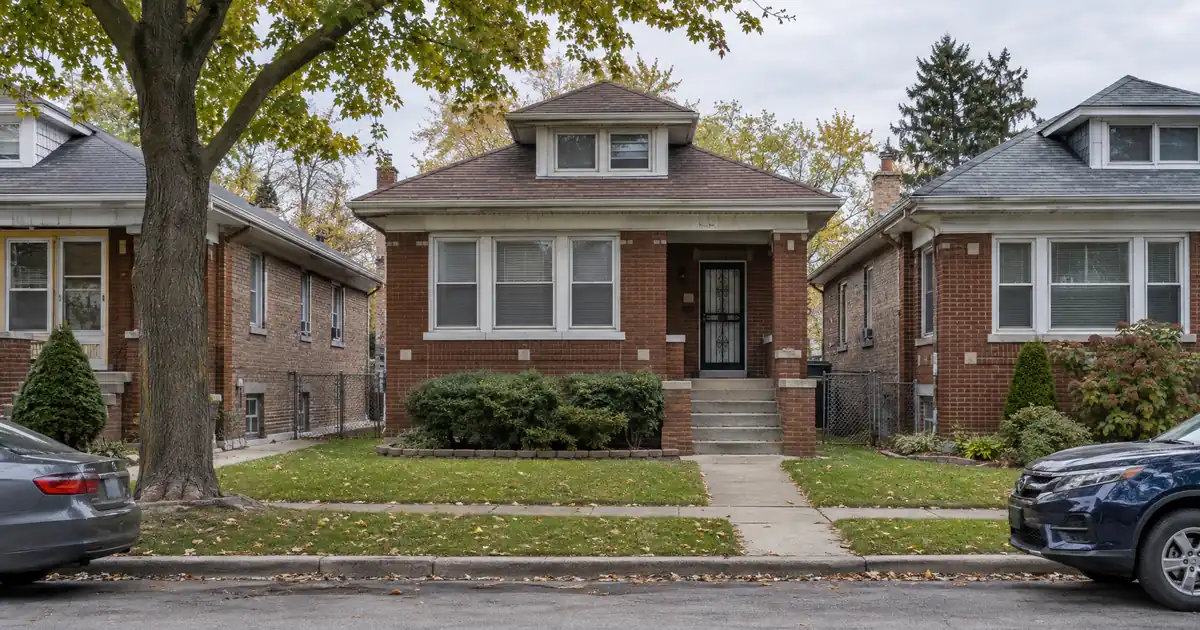
Scroll Dahlonega listings from another state and two things jump out. There’s a hospital on a 53-acre site off GA-400, per Healthcare Facilities Today, and a military college in a town of 7,299 people. That pairing makes a DSCR cash out refinance in Dahlonega, Georgia look easy on paper. It isn’t. What the out-of-state owner misses is that portal rents for the same town run from $1,220 to $2,275 depending on the source, and the appraiser picks only one of them. The first question to ask is which number the file will actually be built on.
DSCR Cash-Out Calculator
Run the cash-out numbers in Dahlonega, GA
Rate source: Freddie Mac 30-yr average via FRED® — Federal Reserve Bank of St. Louis · effective Sep 24, 2026
Prefilled with starting assumptions — enter your property’s value, balance, taxes, and insurance for a more accurate picture.
Program parameters update from Lendmire’s centralized guideline source. Taxes and insurance are editable estimates.
As of Sep 24, 2026 · General Freddie Mac market benchmark, not a Lendmire loan offer. Property value, balance, taxes, and insurance are editable estimates. Maximum loan-to-value varies by lender, program, property type, and seasoning. Not a Loan Estimate, approval, or commitment to lend. Program availability and eligibility are subject to lender guidelines, credit approval, property review, and underwriting.
Key Takeaways:
A DSCR cash-out refinance in Dahlonega, Georgia is underwritten primarily on the property’s rental income measured against its full monthly obligation, and the local tension is that median sale price rose 9.6% year over year per Redfin while price per square foot fell, so the appraised value drives how much equity is reachable.
- Whole-unit rents near the median price leave coverage tight at 75% LTV.
- Attached product fits the local tenant pool, per the city’s housing study.
- By-the-bedroom student leases can lift gross rent but draw lender scrutiny.
- Cash-out caps at 75% LTV after about 6 months of seasoning from title recording.
- A planned townhome project near GA-400 could pressure hospital-corridor rents. Every figure here varies by lender and program — guidelines, property type, leverage, and credit profile all apply.
Dahlonega Market Snapshot
A quick read on the Dahlonega investor landscape — figures come from the cited sources below. Confirm current property-level numbers before underwriting.
| Metric | Detail |
|---|---|
| Typical rents | Median contract rent $1,292 (City-Data, Dahlonega housing) |
| Employment | Manufacturing 7.5% of jobs (picklumpkincounty.org — Key Industries) |
Start at the Campus Edge
The UNG campus corridor is the best cash-out candidate in Dahlonega. Attached and multi-bedroom product is what this tenant base rents, and by-the-bedroom pricing is the clearest path to comfortable coverage on a refinance.
The City of Dahlonega’s Housing Needs Assessment puts attached for-sale and rental product at 70% of total housing demand. It describes the campus area as majority rental with some newer multifamily. Demand comes from students plus the local workforce: teachers, university staff, and hospitality employees. The same study notes that a substantial share of people who work in town live elsewhere, which is unmet in-town demand for reasonably priced units.
The University of North Georgia anchors the base. Its enrollment jumped 6.7% in one recent year. The US News total of 19,321 undergraduates covers all five campuses, not Dahlonega alone. Don’t read it as a local headcount.
Now the income upside. UNG’s off-campus listing portal shows rentals near campus priced per bedroom, at $775–$915 and $800–$1,000 (UNG Off-Campus Housing). Stack four bedrooms and the gross runs roughly $3,200–$4,000 a month. That’s a listing snapshot, not a survey. The leases run 9–11 months, so income timing may not follow a standard 12-month cycle. A lender may haircut that income or lean on the appraisal’s rent schedule instead. Get the appraiser’s rent basis before you count on the stack.
Niche reviews also flag housing availability concerns near campus. For a landlord, that’s the tenant demand story in one line.
The Math at Median (It’s Tighter Than the Portals Suggest)
At the median price and typical listing rents, whole-unit coverage in Dahlonega sits below 1.00x at the 75% LTV ceiling. Attached product, lower leverage, or bedroom-level income is what moves the number. Final terms depend on lender guidelines, property type, leverage, and the borrower’s complete credit picture.
Start with the inputs. Homes.com shows a median rent of $2,100, with single-family at $2,000, townhouses at $2,300, and condos at $1,598. Zumper shows $2,275 on limited data, up 3% year over year. Against the $418K Redfin median sale price, that’s a gross yield near 6% (modeled from two different sources, so treat it as directional).
The lower figures come from a different method. Niche’s $1,220 and City-Data’s $1,292 median contract rent are Census-style, all-tenure numbers that include older units and shared student housing. Listing rents track what a new lease achieves. Underwrite from an appraiser’s rent schedule and local comps, never a single portal.
Coverage is monthly rent divided by principal, interest, taxes, and insurance. The table below is modeled, not market data: a $418K value, a 30-year term at a high-6s assumed rate, and Georgia-average taxes and insurance folded in.
| Modeled scenario | LTV | Coverage incl. Taxes and insurance |
|---|---|---|
| Whole-unit rent of $2,100 | 75% | about 0.8x |
| Townhome rent of $2,300 | 75% | low 0.9x |
| Whole-unit rent of $2,100 | 60% | just under 1.00x |
| By-bedroom stack near $3,200 | 75% | about 1.2x |
Most standard DSCR programs are built around a 1.00x benchmark, since rent covers the payment at that level. Some lenders review lower-coverage files, but those usually mean less leverage, stronger credit, or a different structure, and eligibility depends on lender guidelines and property review. For a sub-1.00 whole-unit scenario like the first row, the paths a lender may look at are a sub-1.00 program, interest-only restructuring, or a lower LTV. All of it is subject to credit approval and lender review. Here’s how DSCR qualification works in detail.
The pattern is plain. Whole-unit rentals bought near the median are a weak fit for cash-out at the cap. Townhomes and bedroom-priced campus units carry the math.
Skip Achasta for Cash-Flow Plays
The city’s housing study gives two submarket price bands. Crown Mountain is an established single-family area with sales from $250K to $600K+. Achasta is a golf community running $400K to $1M+.
Achasta is amenity- and appreciation-led. Skip it for a DSCR cash-out, because the rent-to-value ratio won’t get there. Crown Mountain is the more plausible workforce single-family band. No rent data exists for either, so anything more precise would be invented.
Appraisal Risk: Appreciation Isn’t the Same as Value
Redfin’s $418K median sale price is up 9.6% year over year, but price per square foot is $196, down 3.0%. That gap suggests a shift in what’s selling, not clean appreciation. Homes sell about 4% below list, and the time it takes for a home to go pending varies from listing to listing. One $397K sale closed 7% under list, which shows how thin the comps are.
Size the refinance to a value below what list-price comps imply. Zillow puts the average home value at $387,387, up just 0.7%, a very different read from Redfin’s. Niche’s $531,100 median value is owner-reported and skews high. Don’t underwrite off it.
Is now the moment to pull equity, or is it better to wait for cleaner comps? It’s a genuine toss-up. If you bought well below the median and the appraisal supports a conservative value, the 75% cap still leaves room. If you bought near the top of recent trades, the 4% list discount could eat the cushion.
Seasoning, Caps, and Where the Proceeds Go
The program frame for cash-out is straightforward. The LTV ceiling is 75%, and the property needs about 6 months of ownership measured from title recording. The minimum coverage benchmark is 1.00x on rent used for lender review against full PITIA. Credit tiers run 620, 660, 680, and 700 with a 620 floor, and reserves are typically about 6 months of PITIA. Standard programs go up to $3,000,000. Available equity is never a guaranteed figure. It depends on rent used for lender review, PITIA, reserves, and the cap. Loans to LLC-titled borrowers are subject to lender program eligibility. For the mechanics, see the cash-out refinance details and the broader refinancing options. If income-doc flexibility is the appeal, DSCR versus conventional is the comparison that matters.
On files from small college towns like this one, the friction point tends to be rent support, not credit. Deal desks see the cleaner files come in with a signed lease, a rent schedule that matches the appraisal, and a value conclusion that isn’t stretched. The harder ones lean on portal averages or on student income the appraiser won’t recognize.
The proceeds are the point. Pulled equity becomes down-payment capital for the next attached or campus-adjacent purchase, which is the product the city’s own study says the market wants. Keep the next acquisition’s coverage above 1.00x on its own merits. Otherwise the refinance just moves a thin ratio from one property to two.
Investors comparing structures can compare DSCR options or call 828-256-2183. Program specifics for the state are collected under DSCR loan options for Georgia investors. Before any of it, check current local rental rules, taxes, and insurance with qualified local professionals.
The hospital corridor deserves its own look.
Watch the GA-400 Corridor
The GA-400 corridor carries the new supply risk. Northeast Georgia Medical Center Lumpkin moved out of the old Mountain Drive building to a site along Georgia 400 just south of Highway 60. It’s a 66,000-square-foot facility and the anchor of what the health system calls the Gateway Corridor. Healthcare workers and Atlanta-bound commuters are the likely tenant pool, and the Development Authority of Lumpkin County notes retail growth along SR 400.
DSCR vs. conventional financing
Two common ways to finance an investment property in Dahlonega, GA. They qualify you differently — here’s how investors weigh them.
Why investors choose it
- Qualifies on the property’s rental income — no personal tax returns, W-2s, or pay stubs needed to document income.
- No personal debt-to-income ceiling to clear, so existing mortgages and obligations don’t cap your borrowing the same way.
- Can be closed in an LLC, keeping the property inside a business entity.
- Built for scaling — not held to the limit on number of financed properties that conventional financing applies.
- Underwriting centers on the deal: generally qualifies when the rent covers the payment, a 1.00x coverage ratio being a common baseline (confirmed in underwriting).
- Designed specifically for investment property, including long-term and, where the program allows, short-term rentals.
Where it’s strong
- Often the lowest ongoing financing cost for a buyer who fully qualifies on personal income — a fit for a first property or a cost-first purchase.
Trade-offs for investors
- Requires full personal income documentation and must fit within a debt-to-income limit — salary, existing debts, and other mortgages all count.
- Typically held in your personal name rather than a business entity.
- Caps how many financed properties you can carry, which can become a ceiling as a portfolio grows.
- Evaluates you as a borrower as much as the property, which usually means more paperwork.
How investors usually choose: a first or single property often optimizes for the lowest financing cost; portfolio builders often optimize for leverage, vesting in an LLC, and scaling past conventional caps. The right answer depends on your goals, the property, and current guidelines — both paths run through select lenders in Lendmire’s wholesale network, with eligibility and terms confirmed in underwriting.
The catch is supply. A 180–190 unit rental townhome development is advancing near Highway 60 and GA 400. It shrank from an earlier 288-unit apartment plan, and final approval and construction were not confirmed. If it’s built, it’s the first large new rental product on the corridor. Expect pressure on older single-family rentals there and a comp ceiling for small landlords.
Employment beyond the hospital is broad but not deep. Data USA shows resident employment led by retail trade (753), educational services (480), and accommodation and food services (465). Manufacturing is 7.5% of county jobs. Employers hiring locally include UNG, Tyson Foods, and JTEKT. That’s a stable mix, though the modest local incomes cap how high rents can run.
Frequently Asked Questions
How do you qualify for a DSCR cash-out refinance in Dahlonega, Georgia?
The file is built on the property’s rent against its full monthly obligation, not personal income. Lenders typically look for coverage at or near 1.00x, about 6 months of seasoning, and a credit score of 620 or higher, subject to lender guidelines. In Dahlonega, the appraiser’s rent schedule and value conclusion do most of the work.
What are the requirements for an investment property loan in Dahlonega, Georgia?
Typical guidelines include a 75% LTV ceiling on cash-out, a 620 credit floor, and reserves of about 6 months of PITIA. Manufactured homes, log homes, and barndominiums fall outside these programs, which matters in the rural Lumpkin County areas around town. Exact eligibility varies by borrower, property, and lender.
Which Dahlonega rent figure will an appraiser use?
Expect a comps-based rent schedule, not a portal average. Census-style medians ($1,220 to $1,292) sit far below listing rents ($2,000 to $2,275) because they include older and shared student units. Investors should model both and assume the appraisal lands closer to what new leases actually achieve.
Does by-the-bedroom student rent count toward DSCR?
It may, but treat it cautiously. The 9–11 month leases and student-only demand can lead a lender to haircut the income or rely on the appraiser’s market-rent conclusion. Confirm the rent basis before sizing the refinance around it.
The Real Choice
Dahlonega investors sitting on equity face a fork. One path is to refinance now at a deliberately conservative value and lower LTV, clearing 1.00x on an attached or campus-adjacent asset, and accept that the proceeds are smaller than the 75% cap implies. The other is to hold and wait for the GA-400 townhome supply and the appraisal comps to settle, and accept that the price-per-square-foot slide could just as easily deepen as reverse. The town’s small comp set, with its 4% list-price discounts, means both options hinge on one appraisal.
For current guidelines and terms, see Lendmire’s DSCR loan programs page.
About Lendmire
Lendmire is a DSCR-focused mortgage brokerage, NMLS# 2371349, placing investor loans across 41 markets, including Washington, D.C. DSCR eligibility is generally reviewed by the lender on a property’s rental income rather than personal income documentation, which fits LLC-held rentals, self-employed investors, and portfolios scaling past conventional financed-property limits.
Get Started
Ready to find the right loan for you?
In about 30 seconds you can review financing options available for your investment property. No commitment required.
Informational only. Not a Loan Estimate, approval, or commitment to lend. Program availability and eligibility are subject to lender guidelines, credit approval, property review, and underwriting.
References
1. Healthcare Facilities Today
2. Census Reporter — Dahlonega GA
3. Redfin, Dahlonega housing market
4. City of Dahlonega Housing Needs Assessment
5. City-Data, Dahlonega housing
6. Development Authority of Lumpkin County
7. University of North Georgia enrollment release
9. Homes.com, Dahlonega rentals
10. Zumper
11. Zillow
12. Northeast Georgia Health System, NGMC Lumpkin
13. 180–190 unit rental townhome development
This article is part of Lendmire’s investment property cash-out refinance program — full qualification details, guidelines, and scenarios live on the program page.
Related reading: Cash Out Refinance Investment Property Dahlonega Georgia · DSCR Cash Out Refinance Warner Robins Georgia: Access Equity Without Income Docs · DSCR Cash Out Refinance Toccoa Georgia
Guides: Investment Property Cash-Out Refinance in Georgia
Brandon Miller
Founder & CEO, Mortgage Loan Originator, Lendmire LLC
- Mortgage Loan Originator · NMLS# 1129696 · Verify on NMLS Consumer Access
- North Carolina Real Estate Broker · License# 343312 · Verify on NCREC
- North Carolina Insurance Producer · License# 19053198 · Property, Casualty, Life, Health · Verify on NAIC SBS
- Lendmire LLC · Firm NMLS# 2371349 · Verify firm licensure
Important disclosures. Lendmire (NMLS# 2371349) is a licensed mortgage brokerage. Lendmire is not a direct lender, depository institution, or financial advisor. All loan inquiries are subject to lender underwriting; this article does not constitute a commitment to lend. Rates, terms, and program guidelines are subject to change without notice and vary by borrower profile, property type, and state. Information in this article is general in nature and is not financial, legal, or tax advice. Equal Housing Opportunity. NMLS Consumer Access: nmlsconsumeraccess.org.