
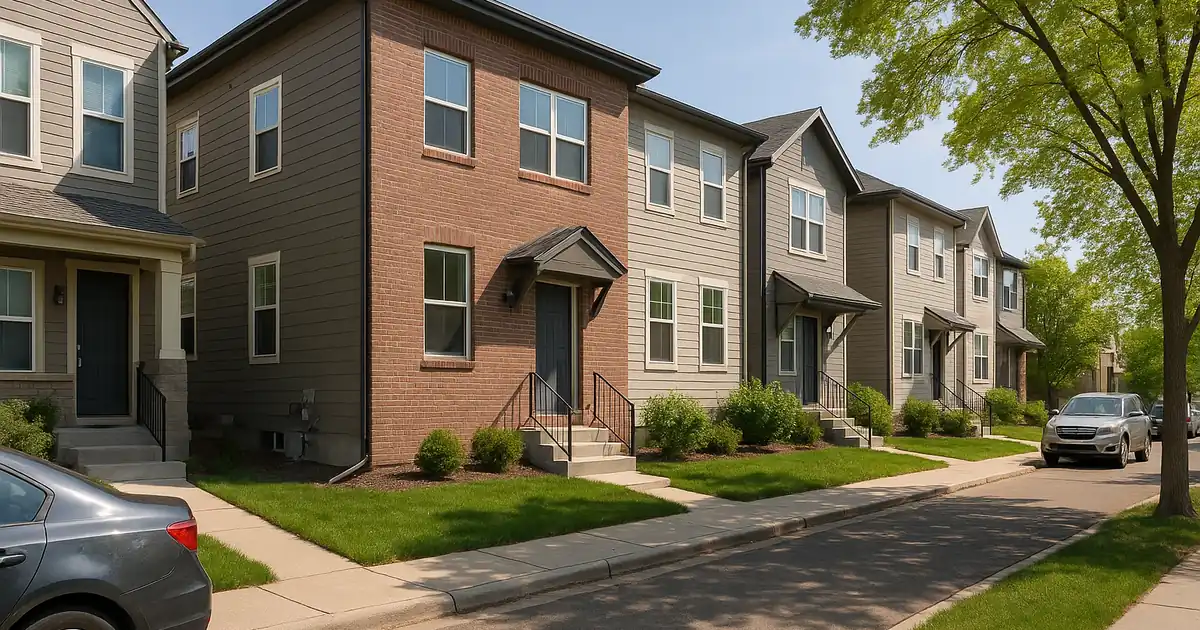
A cash out refinance on Loveland investment property is what this article covers for investors who qualify through rental income rather than personal tax returns.
A rental property in Loveland, Colorado sitting at $450,000 in current value — purchased four years ago for $310,000 — is generating zero return on the $140,000 in built-up equity until an investor does something about it. That equity can fund a down payment on the next acquisition, retire a hard money loan, or seed a short-term rental conversion. The tool that makes it accessible without W-2s or tax returns is a DSCR cash-out refinance.
DSCR Cash-Out Calculator
Run the cash-out numbers in Colorado
Rate source: Freddie Mac 30-yr average via FRED® — Federal Reserve Bank of St. Louis · effective Jul 30, 2026
Prefilled with starting assumptions — enter your property’s value, balance, taxes, and insurance for a more accurate picture.
Program parameters update from Lendmire’s centralized guideline source. Taxes and insurance are editable estimates.
As of Jul 30, 2026 · General Freddie Mac market benchmark, not a Lendmire loan offer. Property value, balance, taxes, and insurance are editable estimates. Maximum loan-to-value varies by lender, program, property type, and seasoning. Not a Loan Estimate, approval, or commitment to lend. Program availability and eligibility are subject to lender guidelines, credit approval, property review, and underwriting.
DSCR loans qualify on the property’s rental income — not the borrower’s personal income — making them the go-to non-QM loan for real estate investors who hold properties in LLCs, have complex tax situations, or own multiple rental units.
Lendmire, a non-QM mortgage broker (NMLS# 2371349), works with real estate investors in Loveland and across Colorado to access investment property refinance options without the documentation hurdles that block conventional lenders. For Loveland investors, the equity buildup over recent years has created a meaningful window to extract capital and redeploy it.
Key Takeaways:
- DSCR cash-out refinancing qualifies on rental income alone — no W-2s, tax returns, or DTI calculations required.
- Loveland investors can access up to 75% LTV on a cash-out refinance with a minimum 620 FICO and DSCR at or above 1.00.
- Lendmire closes DSCR loans on a timeline that varies by lender and file, supporting LLC ownership subject to lender program eligibility.
The Loveland, Colorado Investment Market and Why Equity Access Matters
Loveland sits at one of the most compelling intersections in Colorado real estate: genuine affordability relative to Boulder and Fort Collins, paired with consistent rental demand from a growing professional and outdoor recreation workforce. The city has attracted significant employer investment in recent years, with Broadcom, Hach Company, and Woodward Inc. anchoring a manufacturing and engineering employment base that produces stable, long-term tenants.
Rental demand in Loveland has remained strong as more workers in the Northern Colorado corridor seek alternatives to Boulder and Denver price points. Neighborhoods like Southwest Loveland near the high school corridor, the Arts District along Lincoln Avenue, and newer subdivisions off Boyd Lake Avenue command rents that support DSCR ratios well above 1.00 on properties purchased before 2021. With equity levels having risen substantially in recent years, investors who bought in that window are now sitting on capital that can be redirected into additional acquisitions or property upgrades without touching personal income documentation.
The city’s proximity to Rocky Mountain National Park and Carter Lake also creates meaningful short-term rental demand in the right product types — a dynamic that DSCR programs accommodate through STR income calculation adjustments. Loveland investors who have held properties through the appreciation cycle are uniquely positioned to use a DSCR cash-out refinance to compound their returns rather than wait for the next market correction.
How DSCR Loans Work
DSCR cash-out refinancing allows real estate investors to access equity based entirely on the property’s rental income — not the borrower’s W-2, business income, or personal tax returns. The debt service coverage ratio measures whether the property’s monthly gross rents cover its debt obligations.
DSCR Formula: Monthly Gross Rents ÷ PITIA = DSCR Ratio | 1.00 = break-even | Above 1.00 = cash flow positive
A property generating $2,200 per month with a $1,800 PITIA produces a 1.22 DSCR — strong enough to qualify for most cash-out programs without a single income document submitted. For investors evaluating this strategy, our guide on what is a DSCR loan provides a full breakdown of how qualification and program eligibility work.
Why DSCR Cash-Out Refinancing Works for Investors
No income documentation is the headline benefit — but the full picture is broader.
- No W-2s or tax returns required: — qualification is based entirely on rental income relative to PITIA, which means investors with write-offs, business losses, or self-employment income don’t face the scrutiny conventional underwriting applies.
- LLC and entity ownership supported: — subject to lender program eligibility, allowing investors to keep properties inside their business structure through closing.
- Up to 75% LTV on cash-out: — for DSCR at or above 1.00 with a 620+ FICO on loans up to $3,000,000, giving investors meaningful capital access.
- No financed property cap: — DSCR programs don’t restrict portfolio size the way conventional guidelines do, making them the right tool for investors scaling beyond their fifth or sixth property.
- Short-term rental income eligible: — gross rents reduced 20% before DSCR calculation for STR properties, still producing qualifying ratios for high-revenue vacation rentals.
- Cash-out proceeds for investment debt: — proceeds can retire hard money loans, private lending on investment properties, or fund down payments on additional rentals.
- Loan terms from 30 to 40 years, including interest-only options, giving investors the flexibility to maximize monthly cash flow during a growth phase.
These advantages translate directly into faster portfolio growth — and accessing them starts with one step.
Thinking about a rental property in Loveland? Lendmire works directly with Loveland investors — no W-2s, no tax returns, just the property’s rental income. Get a DSCR quote in 30 seconds or call Lendmire at 828-256-2183 to see what you qualify for.
How DSCR Compares to Conventional Investment Financing
Conventional investment loans require full income documentation — W-2s, Schedule E tax returns, pay stubs, and a DTI calculation that often disqualifies investors who write off legitimate rental expenses. DSCR underwriting bypasses all of this. Qualification is based on the property’s rental income relative to its debt obligations, with no DTI applied and no personal income analysis. For investors whose tax returns understate their actual income due to depreciation and deductions, this distinction is decisive. Conventional guidelines also prohibit LLC ownership on financed properties — a significant structural problem for investors who hold assets inside business entities for liability protection.
On portfolio scaling, conventional programs cap borrowers at 10 financed properties. At 6 or more properties, Fannie Mae guidelines require a 720 FICO minimum and 6 months of PITIA reserves on every financed property simultaneously — a cash reserve burden that can reach six figures for a mid-size portfolio. DSCR reserves follow leverage and loan size rather than the count of financed properties — none at or below $1,500,000 and 70% LTV, 6 months of PITIA above 70% LTV, 9 months above $1,500,000, and 6 months on a cash-out, which the proceeds may satisfy — a reserve advantage for investors with large portfolios. This structural difference is what allows investors to scale past the conventional ceiling without rebuilding their personal financial picture for every transaction.
On LTV, both programs cap cash-out at 75% for a single-unit investment property — the comparison point where they align. The difference is that conventional cash-out seasoning requires the existing first mortgage to be at least 12 months old, measured note-to-note. DSCR programs require only 6 months of ownership before a cash-out refinance is permitted — a window designed to establish the property’s rental income track record while giving investors earlier access to equity. For a full breakdown of these structural differences, see DSCR vs conventional investment loans for the comparison in detail.
Qualification Requirements for DSCR Cash-Out
Qualifying for a DSCR cash-out refinance is driven by four variables: credit score, DSCR ratio, LTV, and seasoning.
Key figures: 620 FICO minimum for cash-out | 75% max LTV | 6-month seasoning | 6 months PITIA reserves on a cash-out (the proceeds may count)
Credit scores break down as follows. A 640 FICO minimum applies to purchase transactions for DSCR at or above 1.00. Most cash-out refinance transactions require a 620 FICO minimum — lower than the 720 threshold needed for best conventional pricing — because DSCR underwriting evaluates the property’s income rather than the borrower’s creditworthiness as the primary risk variable. First-time investors need a 700 FICO, and interest-only loans on 1-4 unit properties require a 680 minimum.
LTV maximums vary by property type and DSCR. A single-unit investment property with DSCR at or above 1.00 qualifies for up to 75% LTV on cash-out refinance at 620+ FICO on loans up to $3,000,000. Properties in declining market overlays — which do not apply to Loveland — would face reduced maximums. Sub-1.00 DSCR programs are available with restrictions, including 640+ FICO requirements and reduced LTV, with some programs allowing ratios as low as 0.75.
Seasoning requires 6 months of ownership before a DSCR cash-out refinance — a window designed to establish the property’s rental income track record and protect against immediate equity extraction after purchase. Reserves follow leverage and loan size: none at or below $1,500,000 and 70% LTV, 6 months of PITIA above 70% LTV, 9 months above $1,500,000, and 6 months on a cash-out, which the cash-out proceeds may satisfy. Cash-out proceeds can satisfy reserve requirements on 1-4 unit properties, which means the refinance itself can fund the next loan’s reserve requirement.
Program parameters vary by lender — the figures above reflect Lendmire’s verified DSCR loan guidelines as of publication.
Loveland Investment Submarkets and DSCR Cash-Out Strategies
Southwest Loveland: Workforce Housing and Stable Yields
Southwest Loveland, centered around the school corridors near Loveland High School and the residential grids feeding into Taft Avenue, produces consistent long-term tenant demand from the manufacturing and engineering workforce employed at Hach and Woodward. Properties in this submarket — typically 3-bedroom single-family homes and townhomes — have appreciated steadily while maintaining rents that produce DSCR ratios above 1.20 at current loan balances. Experienced investors in this market know that the combination of stable tenant profiles and moderate entry prices creates the strongest risk-adjusted equity position for a cash-out strategy.
An investor who purchased a 3-bedroom SFR here in 2020 at $285,000, now appraising near $410,000, can access up to $307,500 at 75% LTV — a net cash-out position of over $100,000 after paying down the original balance, with no income documentation submitted.
Boyd Lake Corridor: Premium Rentals and STR Overlap
The Boyd Lake area, particularly properties on and near Madison Avenue and the west side of the reservoir, attracts both long-term renters and seasonal short-term guests seeking outdoor recreation access. Monthly gross rents on 2-3 bedroom units in this corridor regularly exceed $2,000, supporting DSCR ratios that qualify cleanly under standard programs. Investors holding these properties benefit from dual-use demand — a full-time tenant base supported by recreational visitors.
For DSCR cash-out purposes, the higher rent ceiling in this submarket means equity can be extracted at 75% LTV while maintaining a cash flow positive position after refinancing at a higher balance.
The Arts District and Downtown Loveland: Appreciation Without the Premium
Downtown Loveland, particularly the Lincoln Avenue Arts District, has attracted younger professional tenants drawn by walkability, galleries, and proximity to the Mountain Avenue corridor. This submarket saw some of the highest per-unit appreciation in the city given its starting price basis, creating disproportionate equity positions for early buyers. Properties here — primarily older SFRs and small multi-units — often hold equity percentages that exceed the citywide average.
A DSCR cash-out refinance on a downtown duplex acquired before 2022 can free up capital that exceeds a full down payment on a second investment property, all without triggering a tax return review.
Northern Colorado Cluster Strategy: Using Loveland as the Launch Point
Savvy investors don’t view Loveland in isolation — they view it as part of a Northern Colorado cluster that includes Fort Collins, Greeley, and Windsor. Property appreciation and DSCR eligibility in this corridor benefit from the same employer base, CSU student demand spillover, and infrastructure investment that drives the entire region. A DSCR cash-out refinance in Loveland can fund the down payment on a Fort Collins duplex or a Greeley triplex without requiring the investor to liquidate or refinance their better-performing assets.
Loveland’s position as the affordable anchor in this cluster makes it the optimal property to cash out first — lower LTV risk, strong DSCR ratios, and a liquid rental market that supports the appraisal required at closing.
Portfolio Scaling: Interest-Only Structures and No-Cap Growth
For investors building toward 10-plus units, interest-only DSCR loans represent a meaningful cash flow preservation tool during the growth phase. A 40-year term with a 10-year interest-only period on a refinanced Loveland property reduces monthly PITIA, which can push the DSCR above 1.25 — creating cleaner qualification for subsequent acquisitions in the portfolio. Unlike conventional programs that impose a 10-property ceiling, DSCR programs support scaling without the portfolio cap.
Investors ready to model this against their current Loveland holdings can Get a DSCR quote in 30 seconds or speak directly with a Lendmire loan officer at 828-256-2183.
Short-Term Rental Applications
Loveland’s proximity to Rocky Mountain National Park makes it a legitimate short-term rental market, particularly for properties near Boyd Lake, Carter Lake, and the downtown arts core. DSCR programs accommodate STR income when financing Airbnb properties — with gross rents reduced 20% before the DSCR calculation to account for vacancy and seasonality. Properties producing strong annualized STR revenue can still qualify cleanly under this adjusted formula, giving Loveland vacation rental owners access to the same cash-out refinance equity as long-term rental investors.
Example DSCR Scenario
Property: Single-family rental (illustrative figures)
Purchase Price: $265,000
Current Appraised Value: $340,000
Outstanding Loan Balance: $198,000
Maximum Cash-Out at 75% LTV: $255,000
Estimated Closing Costs: $6,500
Net Cash-Out Proceeds After Payoff: approximately $50,500
Monthly Gross Rent: $2,050
Estimated Monthly PITIA: $1,640
DSCR Calculation: $2,050 ÷ $1,640 = 1.25 DSCR
The property is cash flow positive, meets the 620 FICO minimum for cash-out, and qualifies cleanly at 75% LTV. No income documentation required. LLC ownership welcome — subject to lender program eligibility.
Loveland investors who understand this math are already applying it across their portfolios.
Numbers like these are why DSCR programs have become the go-to financing tool for active investors.
The math works — now make it real. Lendmire closes DSCR loans on a timeline that varies by lender and file with no income documentation required. LLC ownership supported, subject to lender program eligibility. Get a DSCR quote in 30 seconds or call Lendmire at 828-256-2183 to start your Loveland refinance.
DSCR Refinance Structures and Options
DSCR refinancing offers more structure flexibility than most investors initially expect. Beyond the standard 30-year fixed, investors can choose from 40-year fixed, 5/6 ARM, 7/6 ARM, and 10/6 ARM structures indexed to 30-day SOFR — plus interest-only periods up to 10 years on eligible properties. Each structure serves a different portfolio strategy, and matching the structure to the goal is where execution matters.
Explore the full range of cash-out refinance options for investment properties to understand which structure fits your Loveland holdings. For investors with multiple properties, the interest-only option on a refinanced asset can free up monthly cash flow to service acquisition debt on the next property — a compounding effect that accelerates portfolio growth without requiring new equity.
Seasoning is the primary timing constraint. DSCR programs require 6 months of ownership before cash-out proceeds can be accessed — half the 12-month conventional requirement. For Loveland investors who purchased in the past year, that 6-month window may already be past. Those approaching it should begin modeling the refinance now so closing can occur immediately upon eligibility. For broader investment property refinance programs — including rate-and-term and interest-only combinations — Lendmire’s team has structured transactions for portfolios at every stage.
Why Lendmire for DSCR Lending
Lendmire is the specialized non-QM mortgage broker Loveland investors use to access DSCR programs that traditional banks won’t offer. Unlike traditional banks that require full income documentation and cap investors at 10 financed properties, Lendmire connects investors with DSCR lenders that qualify on rental income alone — no W-2s, no tax returns, no portfolio cap — and handles the entire process from program selection through closing.
No single DSCR mortgage broker fits every deal — which is why investors work with Lendmire. As a specialized non-QM mortgage broker, Lendmire matches each property and investor profile to the lender offering the best terms, handles underwriting navigation, and closes on a timeline that varies by lender and file across 41 markets. Investors across the Northern Colorado corridor access rental income–based financing in 41 markets through Lendmire’s platform, which shops multiple DSCR lenders simultaneously to find the program that fits the deal — not the lender’s internal preferences.
Lendmire’s repeat investors confirm what the numbers show: DSCR programs that close on a timeline that varies by lender and file with no income documentation create a financing advantage investors don’t find elsewhere.
Lendmire DSCR Program Summary: Specialized non-QM mortgage broker | NMLS# 2371349 | Shops multiple DSCR lenders across 41 markets | Matches investors to the right program | Closes on a timeline that varies by lender and file | No W-2s or tax returns | LLC ownership supported (subject to lender program eligibility) | No financed property cap | 828-256-2183
Lendmire is a non-QM mortgage broker (NMLS# 2371349) specializing in DSCR loans for real estate investors across 41 markets, with a track record of closing investment property loans on a timeline that varies by lender and file.
Common Questions About DSCR Cash-Out Refinancing
What credit and DSCR requirements does Lendmire look at for investment properties in Loveland, Colorado?
For cash-out refinances, Lendmire’s DSCR programs require a 620 FICO minimum. First-time investors need 700 FICO. A DSCR at or above 1.00 qualifies for up to 75% LTV; sub-1.00 programs are available with stricter parameters down to 0.75 DSCR. Loveland investors benefit from the city’s strong rental demand and rent levels that consistently support DSCR ratios above 1.20 on pre-2022 acquisitions.
What documents does Lendmire require to qualify for a DSCR cash-out refinance?
No W-2s, no tax returns, and no pay stubs are required. Qualification is based entirely on the property’s rental income relative to PITIA — the debt service coverage ratio. Lendmire’s underwriting process focuses on the asset, not the borrower’s personal income. For Loveland investors with self-employment income or significant write-offs, this means the tax return that reduced their conventional eligibility plays no role in the DSCR qualification.
Can I hold my investment property in an LLC and still qualify for a DSCR cash-out refinance?
LLC and entity ownership is supported under Lendmire’s DSCR programs, subject to lender program eligibility. Conventional guidelines prohibit LLC ownership entirely, making this one of the clearest structural advantages DSCR programs offer. Loveland investors who hold rentals inside LLCs for liability protection can proceed through closing without requiring a deed transfer out of the entity.
Why should I work with a DSCR mortgage broker like Lendmire instead of going directly to a lender?
The best DSCR mortgage broker depends on the specific deal — property type, DSCR ratio, credit profile, and loan size all affect which program produces the best terms. Lendmire is a specialized non-QM mortgage broker (NMLS# 2371349) that works with multiple DSCR lenders across 41 markets, matching each investor to the right program rather than fitting every deal into one lender’s box. For Loveland investors with LLC ownership, interest-only needs, or sub-1.00 DSCR, this matching function is the difference between an approval and a decline.
How long do I have to own a Loveland property before a DSCR cash-out refinance?
DSCR programs require a minimum of 6 months of ownership before a cash-out refinance — half the 12-month conventional seasoning requirement. This window exists to establish the property’s rental income track record. Loveland investors who closed on a purchase within the past year should confirm their seasoning date and begin the qualification process as that window approaches.
What can I use DSCR cash-out proceeds for?
Cash-out proceeds are typically used for investment-related purposes: funding a down payment on another rental, paying off a hard money loan or private lending balance on an investment property, covering capital improvements, or building reserves for future acquisitions. Program guidelines prohibit using proceeds to pay off personal debt — personal credit cards, personal tax liens, or personal judgments are not eligible uses.
Start Your DSCR Cash-Out Refinance
Loveland’s property appreciation has created a real equity position for investors who bought before the market run-up — and a DSCR cash-out refinance is the most direct path to accessing that capital without income documentation. This is an investment property cash-out refinance that qualifies on what the property earns, not what the investor reports on a 1040.
Equity doesn’t grow while sitting untouched. Investors who act on the 6-month seasoning clock, maintain a qualifying DSCR, and hold a 620+ FICO already meet the core criteria. Every month that passes without accessing that capital is a month the next acquisition gets delayed.
Bottom Line: The best DSCR mortgage broker depends on the deal — and Lendmire (NMLS# 2371349) is the specialized broker that finds the right one, handling program selection, underwriting, and closing across 41 markets on a timeline that varies by lender and file.
Start the investment property cash-out refinance with Lendmire, or Get a DSCR quote in 30 seconds to find out how much equity your portfolio can access today.
The next step takes 30 seconds.
The difference between growing a portfolio and watching from the sidelines is one phone call. Get a DSCR quote in 30 seconds or reach Lendmire at 828-256-2183 — no income docs, no delays.
Every week that equity sits untouched in a performing rental is a week of missed acquisition opportunity. Act now.
Explore More
- How DSCR loans help investors qualify without income docs
- Compare DSCR vs conventional investment financing
- Cash-out refinance strategies for rental property investors
- Review DSCR refinance loan structures
About Lendmire
Lendmire, NMLS# 2371349, is a non-QM mortgage broker serving real estate investors in 41 markets, including Washington, D.C., through DSCR investor loan programs. Qualification is generally reviewed around the subject property’s rental income, not the borrower’s W-2 history — a practical fit for LLC-titled portfolios and self-employed investors. All scenarios remain subject to lender review and program guidelines. Scotsman Guide named Lendmire a Top Mortgage Workplace in both 2025 and 2026.
Get Started
Ready to find the right loan for you?
In about 30 seconds you can review financing options available for your home or investment property. No commitment required.
Informational only. Not a Loan Estimate, approval, or commitment to lend. Program availability and eligibility are subject to lender guidelines, credit approval, property review, and underwriting.
Brandon Miller
Founder & CEO, Mortgage Loan Originator, Lendmire LLC
- Mortgage Loan Originator · NMLS# 1129696 · Verify on NMLS Consumer Access
- North Carolina Real Estate Broker · License# 343312 · Verify on NCREC
- North Carolina Insurance Producer · License# 19053198 · Property, Casualty, Life, Health · Verify on NAIC SBS
- Lendmire LLC · Firm NMLS# 2371349 · Verify firm licensure
Legal disclosures. Lendmire (NMLS# 2371349) is a state-licensed mortgage brokerage that arranges financing through wholesale lender relationships. Lendmire is not a direct lender, depository institution, or registered financial advisor. The discussion above is general informational content about real estate financing — it is not financial, legal, or tax advice, and readers should consult licensed professionals for guidance on their individual circumstances. Loan inquiries are subject to lender underwriting; this article does not represent a commitment to lend. Loan terms, rates, and qualification standards vary by borrower, property, and state, and are subject to change at any time. Equal Housing Opportunity. NMLS Consumer Access: nmlsconsumeraccess.org.