
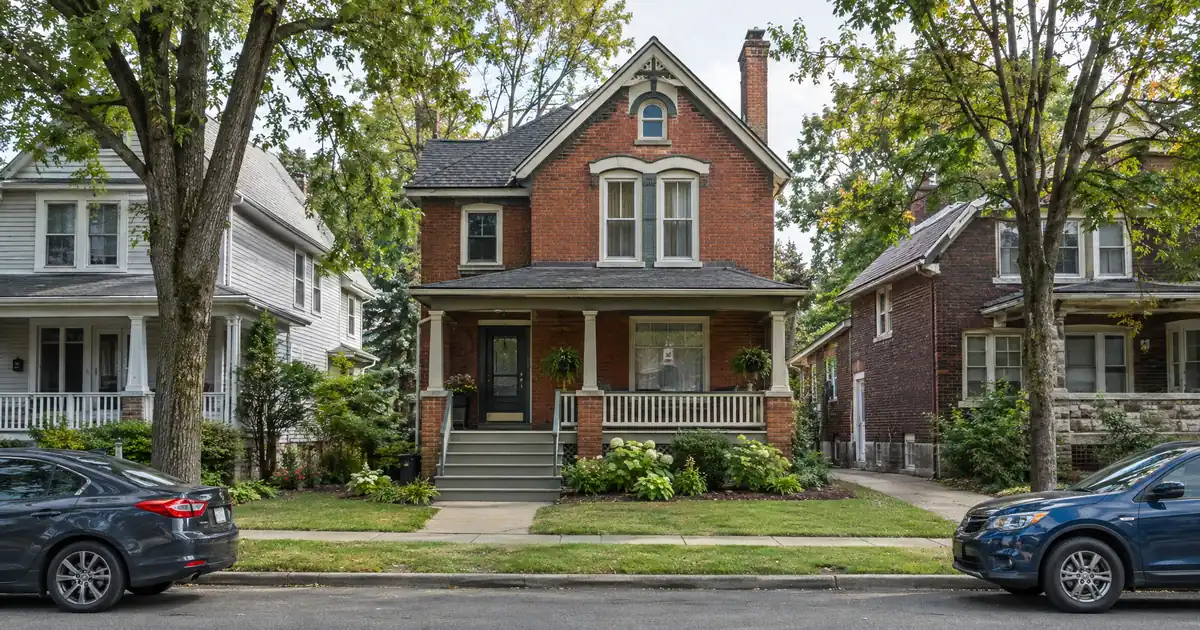
An out-of-state investor scanning Gary listings hits a headline number fast: Redfin shows a $119K median sale price, up 29.8 percent year over year. The instinct is to read that as a market taking off, and it’s the wrong read. In a small, low-priced market, a jump that size usually reflects sales mix, meaning more renovated homes closing, not every block appreciating at once. That distinction decides whether a DSCR cash out refinance in Gary, Indiana pencils or disappoints. Lendmire (NMLS# 2371349) works with Gary, Indiana investors to place DSCR financing through wholesale lenders reaching 41 markets — 40 states plus Washington, D.C. This piece is about the owner who already holds a Gary rental and wants to pull equity out of it.
At a Glance: A DSCR cash-out refinance on a Gary, Indiana rental is underwritten primarily on the property’s rental income measured against its full monthly obligation, with the cash-out amount capped by a 75 percent loan-to-value ceiling and a seasoning period of roughly six months from title recording, subject to lender guidelines and appraisal.
DSCR Cash-Out Calculator
Run the cash-out numbers in Gary, IN
Rate source: Freddie Mac 30-yr average via FRED® — Federal Reserve Bank of St. Louis · effective Sep 24, 2026
Prefilled with starting assumptions — enter your property’s value, balance, taxes, and insurance for a more accurate picture.
Program parameters update from Lendmire’s centralized guideline source. Taxes and insurance are editable estimates.
As of Sep 24, 2026 · General Freddie Mac market benchmark, not a Lendmire loan offer. Property value, balance, taxes, and insurance are editable estimates. Maximum loan-to-value varies by lender, program, property type, and seasoning. Not a Loan Estimate, approval, or commitment to lend. Program availability and eligibility are subject to lender guidelines, credit approval, property review, and underwriting.
- Glen Park’s median sale price sits near $77K per Redfin.
- Miller Beach medians run near $227K per Redfin, which thins coverage at a 75 percent LTV.
- Downtown Gary’s sample is tiny: only 19 sales in the latest Redfin read.
- Rent estimates for Gary range from $914 to $1,250 depending on the source.
Gary Market Snapshot
A quick read on the Gary investor landscape — figures come from the cited sources below. Confirm current property-level numbers before underwriting.
| Metric | Detail |
|---|---|
| Home prices | $119K median (3 months to May 2026) (Redfin) |
| Employment | 4,300+ employees (U.S. Steel) |
Start in Glen Park (and Keep Expectations Low on the Appraisal)
Glen Park is the strongest cash-flow candidate in Gary on the data found, and also the place where appraisal risk does the most damage. It’s the city’s most populous neighborhood, sitting south of the Little Calumet River and the Borman Expressway, and it’s the Indiana University Northwest area. The housing is mostly small bungalows, ranch-style homes, and some Cape Cods.
Redfin puts the median sale price at about $77K, down 10.5 percent year over year, with homes sitting 82 days. Homes.com shows a much wider band, from $75,000 for renovation-ready houses to roughly $230,000 for larger updated homes, and Movoto’s median list price sits near $135K. Those are different measures, a closed-sale median against a list-price median, so don’t blend them. The gap between $77K sold and $135K listed is itself informative: sellers are asking well above where buyers are closing.
Run the numbers on a Glen Park bungalow, using a modeled rent of $1,100 that tracks Zumper’s two-bedroom read. All of this is a modeled assumption, not a sourced Glen Park rent, because no neighborhood-level rents were found. Coverage is calculated as rent divided by full PITIA at 75 percent LTV:
- Appraised near $135K, coverage lands around 1.3 including taxes and insurance.
- Appraised near $77K, coverage clears 2.0 including taxes and insurance.
The ratio is not the constraint here. The constraints are the appraisal, the reserve requirement, and loan size. Programs generally run up to $3,000,000, and smaller balances route through select lenders in the network rather than the standard programs. A cash-out on a sub-$100K house produces a modest check. Whether that check justifies the transaction costs is a question the DSCR ratio can’t answer for you.
The demand side is real but modest. IU Northwest reported 3,260 students, up 7.2 percent, the largest percentage gain among IU campuses. It’s a commuter campus, though. Treat it as a floor under tenant demand, not a student-housing thesis.
Miller Beach: Equity-Led, Not Coverage-Led
Miller Beach is where cash-out appraisals look best and coverage looks worst. It’s the only residential area in Gary with unspoiled lake frontage, and prices reflect it. Redfin shows a $227K median sale price, down 1.3 percent year over year, with 69 days on market. Homes.com cites a $290,000 median, a different measure. Separately, Redfin’s average Miller house price is $324K, up 43.9 percent. That last number is almost certainly mix-driven, the same distortion that inflates the citywide figure, so read it as a warning about the data rather than a growth rate.
Crain’s Chicago Business reported Miller Beach’s first $1 million sale. A local broker puts inland homes below $300,000 and lakefront or near-lakefront properties from $400,000 to over $1 million. Rents don’t scale with that spread.
Model a Miller house at $227K with a $1,395 rent, in line with Zumper’s three-bedroom read (again a modeled input). Coverage hovers right around the 1.00 line including taxes and insurance. Move the value to $290,000 and it drops to roughly 0.8. At that point a standard 1.00 baseline isn’t met on long-term rent alone. Options a lender might review include a sub-1.00 program, interest-only structuring, or a lower LTV. Each carries tradeoffs in pricing, leverage, or cash required, and eligibility depends on lender guidelines, credit approval, and property review.
Miller’s case for a cash-out is appraisal support and equity growth, not monthly surplus. The South Shore Line gives it a Chicago-commuter tenant pool, and NICTD runs three stations inside Gary (Gary Metro Center, Gary/Chicago Airport, and Miller). Ridership is small, though. Wikipedia’s station pages show average weekday boardings of 339 at Miller and 426 at Metro Center. Transit supports demand. It doesn’t drive it.
Downtown Gary: Why the Comps Are Jumpy
Downtown Gary looks like a windfall in one dataset and a decline in another. Redfin reports a $125K median, up 102.8 percent year over year, on just 19 sales. Zillow shows a home value of $65,360, down 2.6 percent. Homes.com lists a $99,950 median, with multi-family listings running from $22,000 to $475,000.
Three sources, three answers. Volatile is the honest description.
That matters for a cash-out because the appraiser will lean on whatever recent sales exist, and with a sample this thin, a handful of renovated closings can pull the value up or a couple of distressed ones can drag it down. The NWI Times headline says prices have soared sevenfold over the past decade as investors revive long-abandoned properties. The article body is paywalled, so treat it as directional.
The buy-rehab-rent-refinance sequence is a familiar way to extract equity here, and other investors are running it too. Once the roughly six-month seasoning window from title recording passes, the appraisal is the pressure point. Underwrite to renovated, same-street comps, and assume the number can come in below the median you were hoping for.
What Does a Duplex Do to the Coverage Math?
A small multifamily property clears coverage more easily than a single-family house in Gary, but appraisal comps are the trade-off. RentCafe data shows Gary’s rental stock is about 50 percent single-family, 40 percent small complexes under 50 units, and 8 percent buildings over 50 units. NeighborhoodScout separately puts duplexes, converted homes, and small apartment buildings at 6.11 percent of all housing units. Those two measures cover different things (rentals versus all housing), so don’t stack them.
Rents scale with unit count, and house prices don’t scale the same way. Zumper reports $1,098 for a two-bedroom and $1,395 for a three-bedroom. Two three-bedroom units could gross roughly $2,600 to $3,400 a month, which is arithmetic on mixed sources, not a published figure.
Consider a modeled two-unit building valued at $200,000 with $2,600 in combined rent. Coverage lands above 2.0 including taxes and insurance at 75 percent LTV. A single-family house at the same value would rent for about half that.
Honestly, a duplex in Glen Park may make more sense than a single-family in Miller Beach for an investor who wants both coverage and a real cash-out check. The catch is that small 2-4 unit stock is thin. Fewer comparable sales means the appraiser has less to work with, and a low or inconsistent valuation reduces the 75 percent LTV proceeds. Skip any building where you can’t identify at least a few genuine comps.
The Rent Number Isn’t Settled (and Neither Is the Value)
Gary rent sources disagree by a wide margin. Zumper’s average sits well above RentCafe’s apartment average, and RentCafe’s neighborhood page shows a figure that falls between them, but that figure is built from Yardi Matrix data on buildings with 50 or more units, which isn’t the product most Gary investors own. U.S. News shows a median rent below all of these alongside a median home value that runs well above Redfin’s estimate. Because these aggregators use different methods and property samples, treat each figure as a rough reference point rather than a settled number, and confirm against the specific source’s published methodology before relying on it.
For a cash-out, the rent used for lender review will typically come from the appraiser’s rent schedule or the lease, not from any of these aggregators. Owners who assume $1,250 and get an appraisal supporting $950 discover that their proceeds shrink or the deal works closer to 1.00. Build the deal at the low end of the range first. If it clears there, the higher numbers are upside.
DSCR vs. conventional financing
Two common ways to finance an investment property in Gary, IN. They qualify you differently — here’s how investors weigh them.
Why investors choose it
- Qualifies on the property’s rental income — no personal tax returns, W-2s, or pay stubs needed to document income.
- No personal debt-to-income ceiling to clear, so existing mortgages and obligations don’t cap your borrowing the same way.
- Can be closed in an LLC, keeping the property inside a business entity.
- Built for scaling — not held to the limit on number of financed properties that conventional financing applies.
- Underwriting centers on the deal: generally qualifies when the rent covers the payment, a 1.00x coverage ratio being a common baseline (confirmed in underwriting).
- Designed specifically for investment property, including long-term and, where the program allows, short-term rentals.
Where it’s strong
- Often the lowest ongoing financing cost for a buyer who fully qualifies on personal income — a fit for a first property or a cost-first purchase.
Trade-offs for investors
- Requires full personal income documentation and must fit within a debt-to-income limit — salary, existing debts, and other mortgages all count.
- Typically held in your personal name rather than a business entity.
- Caps how many financed properties you can carry, which can become a ceiling as a portfolio grows.
- Evaluates you as a borrower as much as the property, which usually means more paperwork.
How investors usually choose: a first or single property often optimizes for the lowest financing cost; portfolio builders often optimize for leverage, vesting in an LLC, and scaling past conventional caps. The right answer depends on your goals, the property, and current guidelines — both paths run through select lenders in Lendmire’s wholesale network, with eligibility and terms confirmed in underwriting.
Tenant demand itself is not the weak link. RentCafe counts 13,871 renter-occupied households (51 percent) against 13,356 owner-occupied (49 percent). What’s missing is sourced vacancy and rent-growth data, and neither turned up in the research. Anyone claiming a precise Gary vacancy figure is guessing.
Steel, a Hospital, and a Campus: The Demand Anchors
Gary’s rental demand rests on a narrow base, and concentration is the risk. U.S. Steel employs more than 4,300 people at Gary Works, still the largest integrated steel mill in North America. The city was platted around it. Population per Census Bureau QuickFacts sits at 64,975, down about 61 percent from its mid-century peak, so the tenant pool has been shrinking for decades even as prices have turned up.
Methodist Hospitals’ Northlake Campus sits in the Ambridge Mann neighborhood, and the Crossroads Chamber directory describes two full-service Methodist campuses 14 miles apart. IU Northwest is the third anchor. No reliable employee counts turned up for the hospital or the university, so this article won’t invent them. Ambridge Mann’s older housing stock, originally built for Gary Works managers, is hospital-adjacent, but no current price data was found, so it stays qualitative here.
The airport and lakefront round out the pitch. The Gary/Chicago airport sits about 25 miles from downtown Chicago and has had no scheduled passenger service for over a decade, though projects to restore service and expand cargo are reportedly moving. That’s a story, not an underwriting input.
Thinking out loud: is a single-employer anchor a reason to avoid a cash-out here? Not necessarily. A 75 percent LTV ceiling leaves cushion, and tenants are drawn from hospital, school, government, and logistics work as well as steel. But an investor pulling equity should size the new debt assuming a slower rent environment than the current one.
How the Cash-Out Runs, Step by Step
For an owner who already holds the property, the mechanics follow a short chain. Program details below are typical guidance, not guarantees, and they vary by borrower, property, and lender.
- Seasoning: roughly six months of ownership, measured from title recording, before cash-out proceeds are typically available.
- LTV: capped at 75 percent on cash-out. The 80 percent figure that appears on purchases doesn’t apply.
- Coverage: most standard programs are built around a 1.00 benchmark, where rent used for lender review covers full PITIA. Some lenders review lower or no-ratio scenarios, but those usually mean stronger compensating factors, lower LTV, different pricing, or more cash in.
- Credit: tiers commonly sit at 620, 660, 680, and 700, with 620 as the floor.
- Reserves: about six months of PITIA, rising to about nine months above $1,500,000.
- Loan size: up to $3,000,000 on standard programs, with smaller balances routed through select lenders.
The equity you can access depends on appraised value, rent used for lender review, PITIA, reserves, and that 75 percent ceiling. It’s not a guaranteed cash figure. Vesting the property in an LLC is workable on many programs, subject to lender program eligibility. For the mechanics in more detail, see DSCR cash-out refi mechanics and the refinance pathway for investor properties. The guide “What Is a DSCR Loan” covers the coverage formula itself, and the program-to-program comparison lays out the difference from conventional financing. For state-level context, see Lendmire’s Indiana DSCR platform.
The proceeds’ second life matters as much as the first. In a market where a Glen Park bungalow can be found at a low basis, a cash-out from one property can plausibly fund the down-payment percentage on the next. That sequencing works only if the first property’s appraisal holds up.
One pattern from Lendmire’s deal desk, in markets structurally like this one: the common friction point on low-basis Rust Belt files is rarely the coverage ratio. It’s an appraisal that lands below the owner’s expected value, or a loan balance small enough to narrow the pool of interested lenders. The cleaner files tend to arrive with a signed lease or a rent schedule, documented ownership dates, and a realistic value expectation built from renovated comps rather than list prices. Investors who want to talk through a specific property can reach the desk at 828-256-2183.
Verify current local rental rules, taxes, and insurance with qualified local professionals before you commit to any Gary purchase or refinance.
Frequently Asked Questions
How do you qualify for a DSCR cash-out refinance in Gary, Indiana?
Qualification centers on the property’s rent relative to its full monthly obligation, plus a credit score, reserves, seasoning, and an appraisal. Typical guidance calls for about six months of ownership from title recording, a 75 percent LTV ceiling, and a 1.00 coverage benchmark. Exact eligibility depends on lender guidelines and property review.
What are the requirements for an investment property loan in Gary, Indiana?
Expect a credit floor around 620, about six months of PITIA in reserves, and a property that rents on its own merits. Loan size can run up to $3,000,000 on standard programs, with smaller balances routed through select lenders. Manufactured homes, log homes, and barndominiums fall outside these programs. Details vary by borrower and lender.
How much equity can a Gary rental actually release?
Less than most owners assume. The 75 percent LTV ceiling applies to the appraised value, and in Gary that value is the least predictable input. Downtown’s Redfin sample is 19 sales, and citywide sources disagree, so proceeds are never a guaranteed figure.
Does Glen Park or Miller Beach work better for a cash-out?
Glen Park usually clears coverage more comfortably because of its lower basis, while Miller Beach offers stronger appraisal support. On modeled rents, Miller’s coverage sits near or below 1.00 at higher values, so Glen Park is the cleaner fit for a standard program. Miller suits owners with strong compensating factors or lower leverage.
What credit score ranges may DSCR lenders review for a Gary rental property?
Lenders commonly review tiers at 620, 660, 680, and 700, with 620 as the floor, and higher scores tend to support better terms. Lendmire is a non-QM mortgage broker placing DSCR loans and its programs qualify primarily on rental income, subject to lender guidelines.
For current guidelines and terms, see Lendmire’s DSCR loan programs page.
Get Started
Ready to find the right loan for you?
In about 30 seconds you can review financing options available for your investment property. No commitment required.
Informational only. Not a Loan Estimate, approval, or commitment to lend. Program availability and eligibility are subject to lender guidelines, credit approval, property review, and underwriting.
About Lendmire
Lendmire (NMLS# 2371349) is a non-QM mortgage broker serving investors in 41 markets, including Washington, D.C. Its team helps structure DSCR scenarios that lenders commonly evaluate around a property’s rental income rather than personal income paperwork, subject to lender guidelines. Lendmire was recognized by Scotsman Guide as a 2026 Top Workplace and recognized by Scotsman Guide in 2025. It places loans through wholesale investor lenders and is not a direct lender.
If you only take one thing from this piece, it’s this: in Gary, the appraisal on a thin-comp block, not the coverage ratio, is what decides how much equity you can pull out.
This article is part of Lendmire’s investment property cash-out refinance program — full qualification details, guidelines, and scenarios live on the program page.
Related reading: Cash Out Refinance Investment Property in Gary via DSCR · Cash Out Refinance Investment Property in Dyer, Indiana · DSCR Cash Out Refinance Crown Point Indiana
Guides: Investment Property Cash-Out Refinance in Gary, IN · Investment Property Cash-Out Refinance in Indiana
Brandon Miller
Founder & CEO, Mortgage Loan Originator, Lendmire LLC
- Mortgage Loan Originator · NMLS# 1129696 · Verify on NMLS Consumer Access
- North Carolina Real Estate Broker · License# 343312 · Verify on NCREC
- North Carolina Insurance Producer · License# 19053198 · Property, Casualty, Life, Health · Verify on NAIC SBS
- Lendmire LLC · Firm NMLS# 2371349 · Verify firm licensure
Disclosures. The information presented in this article is general market commentary, not financial, legal, or tax advice. Lendmire is a mortgage brokerage (NMLS# 2371349) — not a direct lender or depository institution — and loan placement is subject to lender underwriting. Nothing in this content represents a commitment to lend. Loan terms, pricing, and program availability vary based on borrower qualifications, property characteristics, and state of subject property, and are subject to change at any time. Lendmire complies with Equal Housing Opportunity requirements. Consumer access: nmlsconsumeraccess.org.