
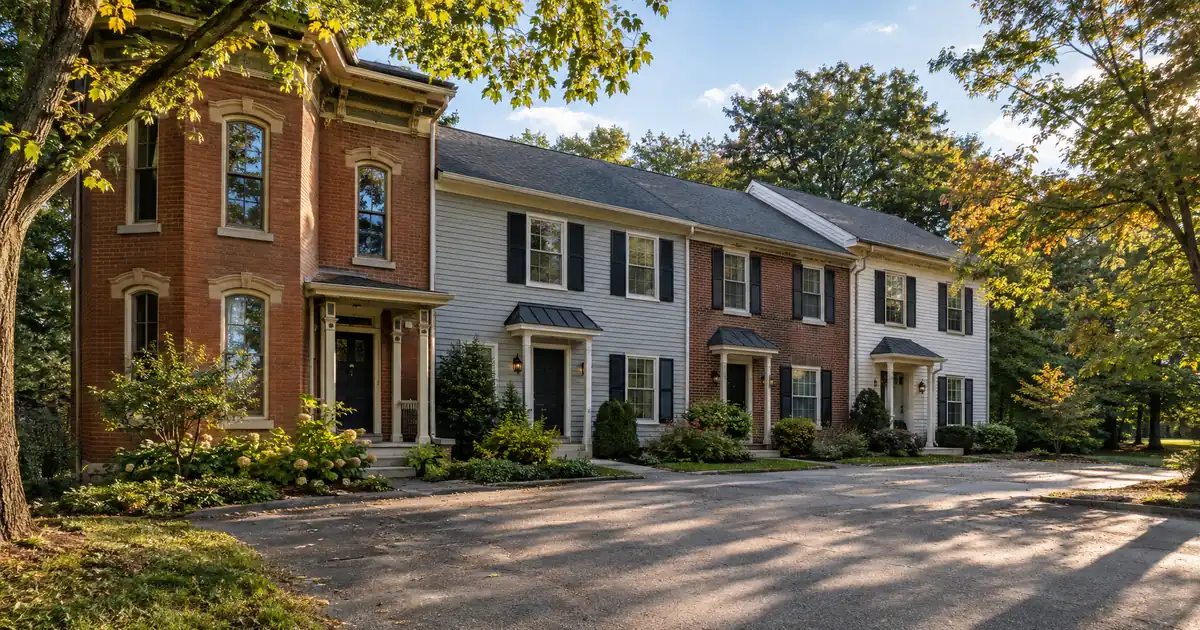
Glenwood Heights is the neighborhood where a West Lafayette cash-out refinance most plausibly clears coverage. Zumper lists it as the most affordable neighborhood in its data, with rents averaging $1,507 a month, while Zillow’s neighborhood page puts average home values near $246,120. That pairing is unusual in a market where the citywide rent-to-price relationship is thin. Investors sitting on equity elsewhere in town, especially near campus or on the north side, will find the refinance math less forgiving.
TL;DR: A cash-out refinance in West Lafayette, Indiana is underwritten primarily on the property’s rental income measured against its full monthly obligation, and the city’s thin citywide rent-to-price ratio makes coverage, not equity, the binding constraint on proceeds.
DSCR Cash-Out Calculator
Run the cash-out numbers in West Lafayette, IN
Rate source: Freddie Mac 30-yr average via FRED® — Federal Reserve Bank of St. Louis · effective Sep 24, 2026
Prefilled with starting assumptions — enter your property’s value, balance, taxes, and insurance for a more accurate picture.
Program parameters update from Lendmire’s centralized guideline source. Taxes and insurance are editable estimates.
As of Sep 24, 2026 · General Freddie Mac market benchmark, not a Lendmire loan offer. Property value, balance, taxes, and insurance are editable estimates. Maximum loan-to-value varies by lender, program, property type, and seasoning. Not a Loan Estimate, approval, or commitment to lend. Program availability and eligibility are subject to lender guidelines, credit approval, property review, and underwriting.
- Glenwood Heights rents average $1,507, the strongest coverage pocket found.
- Cash-out LTV tops out at 75%, with roughly 6 months of seasoning. Purdue reports 60% of students live off campus.
- New apartment supply is heavy: 48% of Indiana’s new units targeted this metro.
Lendmire (NMLS# 2371349) is a DSCR-focused mortgage broker, and DSCR financing for West Lafayette, Indiana investors runs through wholesale lenders that Lendmire works with across 41 markets, including D.C. That distinction matters here. The brokerage arranges the file; lenders decide eligibility, and in a college town the appraisal and the rent schedule drive both.
West Lafayette Market Snapshot
A quick read on the West Lafayette investor landscape — figures come from the cited sources below. Confirm current property-level numbers before underwriting.
| Metric | Detail |
|---|---|
| Home prices | $400K median (Redfin) |
| Typical rents | 3br rental $1,901 (Trulia rent trends) |
The Coverage Gap: Where West Lafayette Math Breaks
The citywide numbers do not support a simple cash-flow story. Redfin puts the median sale price at $400K, while Zumper’s median rent sits at $1,650. That is a monthly rent-to-price ratio of roughly 0.41%. (Homes.com shows a 12-month median of $395,000, up 5%, a different property mix and window, but the ratio barely moves.)
Run the modeled coverage on that pairing at the 75% LTV ceiling, including taxes and insurance in the full obligation: the number lands around 0.7x. At lower leverage it improves but stays under 1.00. The typical benchmark for standard DSCR programs is 1.00x, because the rent covers the payment at that level. Some lenders review lower ratios, but usually with lower leverage, different pricing, or stronger compensating factors, and eligibility depends on lender guidelines, credit, reserves, and property review.
The citywide median hides a wide spread. Modeled the same way (rent divided by full obligation at 75% LTV), the zone-level picture looks like this:
| Zone | Home value / rent marker | Modeled coverage read |
|---|---|---|
| Glenwood Heights | ~$246,120 / $1,507 | About 1.0x |
| Blackbird Farms | ~$315,615 / $1,537 | Roughly 0.8x |
| Amberleigh Village | ~$390,326 / $1,568 | Below 0.7x |
| Citywide median | $400K / $1,650 | Around 0.7x |
Treat that table as directional. Zillow values are neighborhood averages from one page, Zumper’s rents come from a small listing sample (220 rentals citywide), and the two don’t describe the same property. A specific subject property needs its own rent schedule.
The takeaway is uncomfortable but useful. West Lafayette is a coverage-tight, appreciation-supported market. Cash-out proceeds here depend more on rent coverage than on the appraisal.
Two Tenants, One Rental Market
West Lafayette runs on a student cycle layered over a corporate one, and each supports a different refinance profile.
The student base is large. A regional college lists total Purdue enrollment at 57,876 (43,633 undergraduates and 14,243 graduate students) with 60% living off campus. RentCafe reports 71% of the city’s households are renter-occupied, 10,638 households against 4,424 owner-occupied. The incoming class also grew: WBIW reports the freshman class up 13%. Demand near the campus core, Chauncey Village, and the Stadium District is persistent, and local brokerage Redlow Group says multi-unit properties near campus have held value well.
The second tenant is corporate and research-driven. Discovery Park District is a 400-acre mixed-use innovation district described as a project of more than $1 billion, and Purdue Research Park spans 725 acres. Saab has announced plans to locate U.S. manufacturing there for T-X jet trainers, and Rolls-Royce operates test facilities in the district. Broader employer rosters from the Greater Lafayette Commission include GE Aviation, Wabash, and FLIR. Indiana’s labor-market portal reports an average wage of $27.78 and a median of $22.63 across the Lafayette-West Lafayette MSA. Those are workforce wages, which helps explain why the entry-level west and south sides, with homes in the $220,000–$290,000 range, are the most plausible rental zone for non-student tenants.
One caveat on the employer story. Caterpillar, Subaru, Wabash, and the two hospital systems sit mostly in Lafayette or elsewhere in Tippecanoe County, not inside West Lafayette’s city limits. They feed the shared rental market, but they don’t guarantee demand on any particular West Lafayette block.
The Supply Overhang
New construction is the biggest threat to rent assumptions in this market, and it deserves more weight than most investors give it.
The Indiana Business Review’s housing outlook found that 48% of Indiana’s new apartment units were slated for the Lafayette-West Lafayette area, with the Indianapolis metro at another 20%. Concentration that heavy, in a metro of roughly 237,000 people, is a lot of new beds. Inside the district, Discovery Park’s own materials list 3rd & West at 984 beds (Purdue holds the master lease), and the district also includes Aspire at 830 beds and Continuum at 246 apartments.
For a small landlord near campus, those buildings are direct competitors. RentCafe’s average rent of $1,825 covers only buildings with 50 or more units, so it skews toward exactly this newer product. The direction is also mixed: RentCafe shows the average down 6.1%, Trulia down 1%, Zumper up 4.0%. An appraiser reading rents off new-build comps could overstate what a 1970s-era duplex will actually collect. Terms vary by lender guidelines, property type, leverage, credit profile, and full file review.
Underwrite conservatively. Stress-test vacancy before trusting any single rent figure. There is no reliable current rental vacancy rate published for the city, and that gap is itself a warning.
Seasoning, LTV, and the Appraisal Problem
For a cash-out, the mechanics are more rigid than the rental thesis. Programs available through Lendmire’s wholesale network generally cap cash-out at 75% LTV, versus 80% on purchases. Ownership typically needs about 6 months of seasoning measured from title recording. Pricing and available terms vary by lender, borrower profile, property type, and full underwriting review. Loan sizes go up to $3,000,000 on standard programs. Equity available depends on rent used for lender review, reserves, and the LTV ceiling, and it isn’t a guaranteed cash figure. Qualification remains subject to lender overlays.
Now the skeptical part. Redfin shows the median sale price down 4.8% year over year, homes taking about 23 days to sell versus 11 the year before, and only 69 homes sold in a recent month. Price per square foot is up 7.3% to $190. Mixed signals. An investor who bought at the top of a run-up may find the value lower than the mental number.
Working DSCR brokers see a recurring pattern in university-town markets: the property’s cash-out capacity is set by two independent numbers, the appraised value and the appraiser’s market-rent estimate, and the two often move in opposite directions. Appraisals may lean on new-construction rent comps while the actual leases reflect older, cheaper units. Files that go in with a signed lease, an in-place rent history, and a realistic vacancy assumption tend to hold up better than files leaning on a single month’s asking rents.
Timing matters more than usual. Zumper’s data shows November as the lowest-rent month, with April running about 24% higher. Submarket swings are wild on thin samples: University Farm rents fell 52.4% to $1,522 across just 17 rentals, while Blackbird Farms climbed 75.7%. Base the file on a signed lease or a multi-month average. Snapshot rents from a trough month will understate coverage; a peak-month listing will flatter it.
What About Small Multifamily?
Duplexes and small multi-unit buildings are the best-fit product for this market’s math, because stacked rents beat the thin single-family ratio. RentCafe reports 72% of West Lafayette apartments sit in buildings of under 50 units, 18% in larger complexes, and 9% are single-family rentals. Two-bedroom floorplans make up about 43% of rentals. In practical terms, comps for a 2–4 unit refinance should be plentiful, while single-family rental comps are a thinner set.
Homes.com lists West Lafayette duplex and triplex inventory, including a duplex with one side rented at $1,200 a month and the other vacant, and a triplex with two 1-bed/1-bath units and one 2-bed/1-bath unit. Small, mixed-unit stock like that is common. Vacant sides are a coverage problem until they lease.
The stronger play might be across the river, though this one’s a genuine toss-up. Homes.com shows Lafayette multifamily priced between $114,900 and $500,000, with a $224,900 median, against West Lafayette’s $395,000-$400,000. That side of the river sits outside city limits but pulls from the same tenant pool. Run the numbers on a hypothetical duplex there at the median price with two 2-bedroom units renting near Zumper’s $1,325 two-bedroom figure. These are modeled assumptions, not a specific listing. Coverage lands well above 1.5x at 75% LTV including taxes and insurance, a wide gap from the roughly 0.7x on a West Lafayette median-priced single-family. The trade-off: lower-priced older stock brings its own maintenance and appraisal considerations, and the price gap reflects location, not free money. Exact terms depend on the lender’s guidelines, property type, leverage, and a full review of the borrower’s file.
If a subject property comes in below 1.00x on long-term rent, the paths a lender may review include a sub-1.00 program, an interest-only structure, or reduced leverage. Each involves different pricing and leverage limits, and eligibility turns on lender guidelines, credit approval, and property review. Any LLC-titled property is subject to lender program eligibility.
Skip the Riverfront.
Downtown West Lafayette and the Wabash riverfront carry a flag no rent number offsets. Redfin reports 37% of properties there face severe flood risk over 30 years. Flood exposure can constrain both the appraisal and the lender’s property review, so check it before any cash-out plan depends on that block.
Happy Hollow is a different kind of skip, at least for yield. Redlow Group cites 3-bedroom listings of $300,000–$420,000 in this established northwest-of-campus neighborhood. It’s a hold-for-appreciation play, and the rent-to-price ratio is unlikely to carry a high-leverage cash-out. Similarly, Discovery Park District housing competes as purpose-built supply.
DSCR vs. conventional financing
Two common ways to finance an investment property in West Lafayette, IN. They qualify you differently — here’s how investors weigh them.
Why investors choose it
- Qualifies on the property’s rental income — no personal tax returns, W-2s, or pay stubs needed to document income.
- No personal debt-to-income ceiling to clear, so existing mortgages and obligations don’t cap your borrowing the same way.
- Can be closed in an LLC, keeping the property inside a business entity.
- Built for scaling — not held to the limit on number of financed properties that conventional financing applies.
- Underwriting centers on the deal: generally qualifies when the rent covers the payment, a 1.00x coverage ratio being a common baseline (confirmed in underwriting).
- Designed specifically for investment property, including long-term and, where the program allows, short-term rentals.
Where it’s strong
- Often the lowest ongoing financing cost for a buyer who fully qualifies on personal income — a fit for a first property or a cost-first purchase.
Trade-offs for investors
- Requires full personal income documentation and must fit within a debt-to-income limit — salary, existing debts, and other mortgages all count.
- Typically held in your personal name rather than a business entity.
- Caps how many financed properties you can carry, which can become a ceiling as a portfolio grows.
- Evaluates you as a borrower as much as the property, which usually means more paperwork.
How investors usually choose: a first or single property often optimizes for the lowest financing cost; portfolio builders often optimize for leverage, vesting in an LLC, and scaling past conventional caps. The right answer depends on your goals, the property, and current guidelines — both paths run through select lenders in Lendmire’s wholesale network, with eligibility and terms confirmed in underwriting.
Recycling the Proceeds
The point of pulling equity is to redeploy it, and West Lafayette’s own pricing argues for looking beyond the city. Investors with seasoned West Lafayette equity often find the better next acquisition in the Lafayette-side small multifamily stock discussed above, or on the south and west sides where entry prices sit near the low end of the market. Lendmire’s DSCR guide covers how rent used for lender review is calculated, and the “Where DSCR and Conventional Diverge” guide, which compares DSCR with conventional financing, is worth reading if portfolio size is pushing against conventional financed-property limits. For the mechanics of pulling equity out, or a broader look at the investment property refinance options, those pages go deeper. State-level program context sits on the Indiana DSCR financing hub.
Investors can reach the team at 828-256-2183 or connect with Lendmire to run a specific property. Confirm current local rental rules, taxes, and insurance with qualified local professionals before committing.
Frequently Asked Questions
How much equity can a West Lafayette investor realistically pull out?
Cash-out is capped at 75% LTV, and proceeds depend on the appraised value, rent used for lender review, and reserves, so there is no fixed figure. With the citywide rent-to-price ratio near 0.41%, coverage often binds before LTV does. Lower leverage may be needed to reach 1.00x, which reduces proceeds.
Does a property near Purdue’s campus refinance better than one on the west side?
Not necessarily. Campus-core properties have the strongest tenant demand, but their price points push coverage down. West and south side homes, at roughly $220,000–$290,000, tend to produce better rent-to-debt ratios. The best result usually comes from a multi-unit near campus rather than a single-family.
Will the new apartment buildings hurt my appraisal?
They can, in some cases. With a large share of Indiana’s new apartment units targeted here, appraisers may weigh new-build rent comps. Older small-plex units usually collect less, so a well-documented lease history helps support the rent figure used in underwriting.
When is the best time to apply given the student rental cycle?
Zumper’s data shows rents at their lowest in November and about 24% higher in April. Timing the rent schedule and lease-up to stronger months can help, but lenders generally look at in-place leases, so a signed lease or multi-month average carries more weight than a single month’s listing.
Is the Lafayette side of the river eligible for the same programs?
Program guidelines don’t turn on which side of the Wabash a property sits. The 6-month seasoning, the 75% cap, and the 1.00x benchmark apply on the same terms, subject to lender guidelines. The price gap is the reason investors compare the two.
The Number That Reframes It
Buyers see a college town with 57,876 students and assume demand is the low-risk part. The supply figure suggests otherwise: 48% of all new apartment units in Indiana were aimed at a metro of roughly 237,000 people, per the Indiana Business Review, and that number may help determine whether today’s appraisals hold.
About Lendmire
Lendmire, NMLS# 2371349, is a DSCR and non-QM mortgage brokerage with investor loan programs in 41 markets, including Washington, D.C. Lenders commonly review DSCR eligibility around property-level rent rather than personal income documentation, subject to lender guidelines, and the brokerage helps arrange financing for LLC-owned portfolios beyond conventional financed-property limits. Recognized by Scotsman Guide as a 2026 Scotsman Guide Top Mortgage Workplace and a top-ranked workplace in 2025.
Get Started
Ready to find the right loan for you?
In about 30 seconds you can review financing options available for your investment property. No commitment required.
Informational only. Not a Loan Estimate, approval, or commitment to lend. Program availability and eligibility are subject to lender guidelines, credit approval, property review, and underwriting.
References
1. Zumper: West Lafayette rent research
3. Redfin: West Lafayette housing market
5. RentCafe: West Lafayette rent trends
6. WBIW: Purdue enrollment report
9. Greater Lafayette Commission
10. Hoosiers by the Numbers: Region 4
11. Indiana Business Review: Housing Outlook
12. Redfin
13. a 2026 Scotsman Guide Top Mortgage Workplace
14. Scotsman Guide — Top Workplaces 2025
This article is part of Lendmire’s investment property cash-out refinance program — full qualification details, guidelines, and scenarios live on the program page.
Related reading: Cash Out Refinance Investment Property West Lafayette Indiana · DSCR Loans in Lafayette / West Lafayette, Indiana: Investor Financing for the Purdue University District, Chauncey Hill, and Happy Hollow Rental Markets · DSCR Loans in Morgantown, West Virginia: Investor Financing for Sunnyside, South Park, Cheat Lake & Real Estate Investors
Guides: Investment Property Cash-Out Refinance in West Lafayette, IN · Investment Property Cash-Out Refinance in Indiana
Brandon Miller
Founder & CEO, Mortgage Loan Originator, Lendmire LLC
- Mortgage Loan Originator · NMLS# 1129696 · Verify on NMLS Consumer Access
- North Carolina Real Estate Broker · License# 343312 · Verify on NCREC
- North Carolina Insurance Producer · License# 19053198 · Property, Casualty, Life, Health · Verify on NAIC SBS
- Lendmire LLC · Firm NMLS# 2371349 · Verify firm licensure
Important disclosures. Lendmire (NMLS# 2371349) is a licensed mortgage brokerage. Lendmire is not a direct lender, depository institution, or financial advisor. All loan inquiries are subject to lender underwriting; this article does not constitute a commitment to lend. Rates, terms, and program guidelines are subject to change without notice and vary by borrower profile, property type, and state. Information in this article is general in nature and is not financial, legal, or tax advice. Equal Housing Opportunity. NMLS Consumer Access: nmlsconsumeraccess.org.