
Current FHA guidelines, updated from one source.
The figures below are the FHA program’s own parameters, read from Lendmire’s centralized guideline source and refreshed on this page as HUD’s rules and the wholesale overlays change: the minimum investment, the decision score for maximum financing, the mortgage insurance premiums, and the qualifying ratios.
Up to 96.5% loan-to-value on a purchase
A 3.5% minimum investment opens a purchase at up to 96.5% loan-to-value; the investment can be the buyer’s own funds, a gift from a family member or other acceptable donor, or approved secondary financing.
Decision score for maximum financing
The program opens at a 580 decision score for maximum financing; borrowers without a usable score are eligible under manual underwriting on non-traditional credit, and the ratios then follow the manual ladder below.
Plus 0.50%–0.55% a year on most thirty-year loans
FHA mortgage insurance has two parts: 1.75% upfront, which is added to the loan, and an annual premium of 0.50%–0.55% on most thirty-year loans, charged monthly; the ladder below shows the schedule by loan size, leverage, and duration.
Housing and total debt, manual reference
The manual-underwriting reference ratios are 31/43 for housing and total debt; with documented compensating factors the ladder below stretches them, and automated underwriting commonly allows more than the manual reference.
| Decision score | Housing / total | Compensating factors |
|---|---|---|
| 500–579 or no credit score | 31% / 43% | not applicable — ratios may not exceed 31/43 (energy efficient homes 33/45) |
| 580 and above | 31% / 43% | no compensating factors required (energy efficient homes 33/45) |
| 580 and above | 37% / 47% | one of: verified and documented cash reserves; minimal increase in housing payment; residual income |
| 580 and above | 40% / 40% | no discretionary debt |
| 580 and above | 40% / 50% | two of: verified cash reserves; minimal increase in housing payment; significant additional income not reflected in effective income; residual income |
| Base loan | Leverage | Annual premium | Duration |
|---|---|---|---|
| Standard base loan amounts | at or below 90% LTV | 0.50% | 11 years |
| Standard base loan amounts | above 90% to 95% LTV | 0.50% | mortgage term |
| Standard base loan amounts | above 95% LTV | 0.55% | mortgage term |
| Larger base loan amounts | at or below 90% LTV | 0.70% | 11 years |
| Larger base loan amounts | above 90% to 95% LTV | 0.70% | mortgage term |
| Larger base loan amounts | above 95% LTV | 0.75% | mortgage term |
Refinances: rate-and-term to 97.75% loan-to-value on a home occupied for the past year; cash-out to 80% after twelve months of ownership and occupancy; streamline refinances of an existing FHA loan without an appraisal. Sellers and other interested parties may contribute up to 6% of the price toward closing costs; the entire minimum investment may be a gift.
Current FHA snapshot · updated October 1, 2026 · owner-occupied principal residences, one to four units · county loan limits apply — ask a Lendmire loan officer for the limit where you are buying · FHA loans are assumable · Lendmire is not affiliated with FHA or HUD.
Program guidelines only, not an offer of credit. The minimum investment, decision-score tiers, mortgage insurance premiums, qualifying ratios, and refinance leverage on this page are FHA parameters and lender overlays subject to change without notice and to full underwriting of the borrower and the property. Nothing here states a rate, a payment, a cost, or a loan limit; those are provided in writing by a licensed Lendmire loan officer. Licensed for consumer mortgage lending in sixteen states. Lendmire is not affiliated with FHA, HUD, or the federal government. Lendmire, LLC, NMLS #2371349. Equal Housing Opportunity.
What an FHA loan is — and how the file is qualified.
An FHA file in Austin is built from four pieces: the minimum required investment, the decision score, the mortgage insurance, and the qualifying ratios. Each has a rule, and each rule has a reason, which the cards below explain.
For the program overview, see Lendmire’s FHA loan program, or the statewide guide at FHA Loans in Texas.
The minimum required investment
The investment is calculated on the lesser of the purchase price and the appraised value, so an Austin home that appraises below the contract price raises the cash the buyer brings. Gifts, the buyer’s own funds, and approved secondary financing all count toward it.
The decision score sets the leverage
Credit does two jobs on an Austin FHA file: the decision score decides the leverage, and the history decides the underwriting path. A recovered credit profile with seasoned events qualifies; recent housing lates and unseasoned events are the problems the program does not forgive.
Two premiums: upfront and annual
Two numbers to know: the upfront premium added to the loan at closing, and the annual premium paid monthly. The schedule in the snapshot shows how the annual premium steps with leverage and loan size, and the calculator applies it to an Austin price.
Qualifying ratios and compensating factors
Two ratios decide the payment the file supports: the housing payment alone, and the housing payment plus every other monthly obligation, each as a share of effective income. The ladder in the snapshot shows the manual tiers; the calculator shows where an Austin scenario lands.
The result is an estimate, not a decision: the appraisal may land below the contract price, the lender sets the rate at lock, and the ratios are measured on effective income. What does not change is the program structure the calculator reproduces.
Where Austin’s first-time and moderate-income buyers shop — and how FHA fits.
The Census figures below are the Austin backdrop for an FHA loan: ownership, value, and income. They are context for sizing, not inputs to a credit decision, which rests on the appraisal and the file.
Market context only. Read these figures as the range of purchases in the market, not as a forecast of any one file. The lender appraises the specific home, documents the specific income, and applies the specific decision score.
Data sources: U.S. Census Bureau — ACS 5-Year (2024) housing and population estimates, including tenure, home values, gross rents, and household income.
Distinct Austin neighborhoods, distinct FHA files.
Six Austin neighborhoods, six FHA pictures: the cards below describe the housing stock, the price range, and the program question that comes up most in each.
Higher-value homes
The higher-value Austin file is a limit question, not an eligibility question. The county limit caps the loan amount, and the buyer either adds investment to fit under it or chooses the conventional route for the whole purchase. Austin counts a population near 980K within the Austin-Round Rock-San Marcos, TX area.
Newer infill and recent construction
On newer construction in Austin the FHA appraisal is usually uneventful; the program questions are the county limit and whether the ratios carry the price once the upfront and annual premiums are added to the payment. About 57% of Austin’s households rent — roughly 257,933 renter households on the latest Census estimate.
Condominiums and townhomes
Condominiums are often the entry point in Austin, and FHA finances them in approved projects or through single-unit approval. The lender confirms the project’s status before the appraisal, the association’s dues enter the ratios, and the minimum investment is unchanged. Median household income in Austin sits near $93,658 on the latest Census estimate.
Two-to-four-unit homes
Small multi-unit homes are an Austin specialty, and the program takes them with a higher county limit and HUD’s rules for counting the rent. The buyer’s occupancy of one unit is the condition that makes it an FHA file. The median owner-occupied home value in Austin runs near $555,300 on the latest Census estimate.
Historic districts
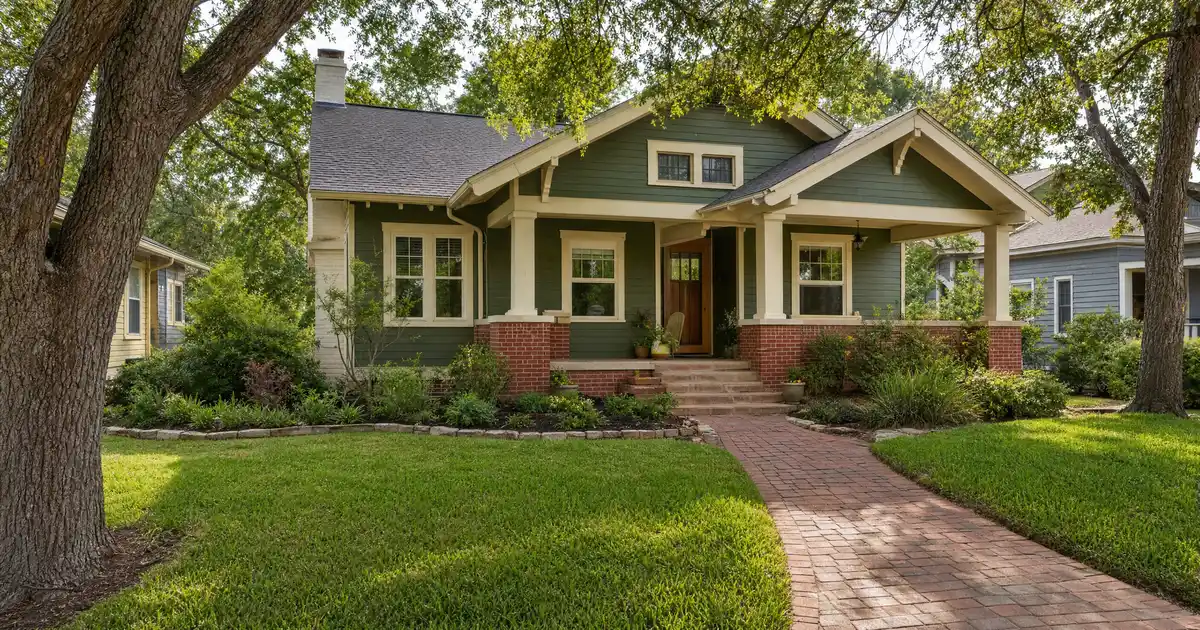
A historic Austin home is eligible like any other, with the appraiser’s condition findings as the usual detour. Buyers and sellers who expect them settle the repairs in the contract rather than at the closing table. Roughly 198,180 Austin households own their homes on the latest Census estimate — 43% of all households, the pool an FHA purchase joins.
Established close-in neighborhoods
In Austin’s established neighborhoods the appraiser’s condition findings matter as much as the value. Buyers who expect required repairs negotiate them into the contract early and keep the file moving. On a home at Austin’s median value, the FHA minimum investment comes to about $19,400 — the cash the program asks a buyer to bring before closing costs.
Each submarket has a typical property story, but the appraisal is the one that counts. HUD’s property standards, the occupancy rule, and the ratio ladder are the same on every Austin file.
Four ways Austin buyers put an FHA loan to work.
Because FHA insures the lender, it fits the Austin borrower who has the income for the payment but not the profile a conventional loan asks for. Four examples follow.
Buy a first home with the minimum investment
For a first purchase in Austin, FHA pairs a small investment with a forgiving score and a ratio ladder that stretches with compensating factors; the file closes on the appraisal, the income, and the decision score.
Take cash out of a home with equity
Cash-out on FHA is a full refinance of the first mortgage at the program’s cash-out leverage after a year of ownership and occupancy. An Austin owner weighs it against a home equity line, which keeps the existing first mortgage in place.
Refinance an existing FHA loan
An Austin homeowner with an existing FHA loan can refinance it through the streamline program without an appraisal, with a limited credit review, and with a net tangible benefit required; the existing loan’s seasoning and payment history are what the lender checks.
Buy a condominium in an approved project
Condominiums are a common first purchase in Austin, and FHA finances them in approved projects or through single-unit approval. The approval question is handled on the lender’s side; the buyer’s file is the same as for a house.
Estimate the FHA payment on an Austin price before requesting a quote.
This estimator runs the program’s own math on your Austin inputs: price less the investment, plus the financed premium, amortized at the benchmark rate, with the monthly premium and escrows added. A licensed loan officer provides the actual rate, payment, and costs in writing.
Austin FHA payment estimate
Starting assumptions reflect a typical Austin price and the FHA minimum investment. Replace them with your own figures.
Editable benchmark: 7.03% as of September 24, 2026 · Freddie Mac 30-year average via FRED®. A conventional market reference, not an FHA loan quote.
Illustrative starting assumptions: a $555,000 price near Austin’s median owner-occupied home value (kept where an FHA loan is realistic in most counties), the FHA minimum investment as the down payment, a thirty-year term at the current Freddie Mac benchmark, property taxes and insurance estimated for Texas (U.S. Census Bureau). Every field is editable.
Illustrative estimate only — not a Loan Estimate, approval, quote, or commitment to lend. The rate field carries the weekly Freddie Mac thirty-year conventional benchmark, a market reference and not an FHA loan quote; your rate is set by the lender at lock. FHA mortgage insurance follows HUD’s published schedule for the term, leverage and loan size entered; taxes, insurance and dues are editable estimates; closing costs are not included; county loan limits are not checked here. Licensed in sixteen states for consumer mortgages. Lendmire is not affiliated with or acting on behalf of FHA, HUD, or the federal government.
Same buyer, three very different closings.
Before deciding on FHA, it helps to see what it is not: not the only low-down-payment route, not the only forgiving-credit route, and not the cheapest insurance for a strong profile. The comparison below puts the three next to each other for an Austin buyer.
FHA, conventional with mortgage insurance, or VA.
A small minimum investment that a gift can cover, a forgiving decision score, ratios that stretch with compensating factors, and HUD insurance priced by schedule rather than by score. The annual premium on a full-leverage thirty-year loan lasts for the term; many borrowers refinance out of it later.
Conventional financing asks for a higher score and prices it, in exchange for insurance that can be cancelled and no upfront premium. The comparison is worth running for any Austin buyer whose score sits above the agency norms. See Lendmire’s conventional loan program.
VA undercuts FHA for the eligible borrower on the recurring costs: no investment, no monthly premium, no upfront premium, with a one-time funding fee in their place. The questions are eligibility, entitlement, and whether the home meets VA’s property standards. See Lendmire’s VA loan program.
The decision is rarely close once the profile is known. FHA tends to fit the modest score, conventional the strong score with equity to come, and VA nearly any file with eligibility. The comparison is run on the actual numbers, in writing.
What to prepare for an Austin scenario review.
An FHA file is documented more fully than a streamline refinance; the items below are what an Austin scenario review typically draws on.
This is a general preparation guide, not a universal checklist. The selected lender may request additional information based on the transaction, the property, the credit profile, and the income picture. Nothing here is legal or tax advice.
Local details that can change the loan.
Most surprises on an Austin FHA file trace back to one of these: a decision score that landed differently than expected, an appraisal with required repairs, a condominium without approval, or a county limit lower than the contract price.
Use these checks to keep the Austin file clean and fundable.
The checklist is short because the program is specific: the score, the premiums, and the property decide most Austin files before income is even reviewed.
- Confirm the score: a self-pulled score can land differently from the decision score.
- Know the premium: the exit from the premium is a refinance, not an equity threshold.
- Mind the appraisal: required repairs are settled before closing or through an escrow where permitted.
The decision score decides the leverage
The score the program uses is the lender’s, not an app’s. An Austin file lands on maximum financing at the threshold shown in the snapshot, and the threshold is also where the compensating-factor ladder opens; below it the ratios are held to the base table.
How long the annual premium runs
Unlike private mortgage insurance, the FHA annual premium does not cancel as the home gains value. On an Austin full-leverage loan the exit is a refinance; the calculator shows the premium’s rate and duration for the leverage entered.
The appraisal and HUD’s property standards
Value and condition are both at stake. An Austin home that appraises below the contract price raises the buyer’s investment, and a home that fails a property standard needs repairs before the loan can close.
Seller contributions and the minimum investment
Two sources, two rules: the minimum investment comes from the buyer or a gift, never the seller; closing costs can come from the seller up to the limit. Structured that way, an Austin purchase can close with cash to close near the investment alone.
Two- to four-unit homes and rental income
The multi-unit Austin purchase is an FHA specialty, with two things to plan: the buyer must occupy one unit, and the rental income from the others is documented and counted the way HUD allows, which is less than the full rent.
From an Austin pre-approval to keys in hand.
An FHA file moves in a set order: pre-approval on the decision score and the ratios, the contract and the appraisal with HUD’s property standards, underwriting with any compensating factors documented, and closing with the premiums applied. The steps for an Austin buyer follow.
Pre-approval
The first conversation settles the shape: where the decision score lands, what the ratios support, whether a gift will cover the investment, and whether FHA is the right program next to conventional and VA for the Austin purchase.
Contract and appraisal
With the contract signed, the lender orders an appraisal from an FHA Roster appraiser, who values the Austin home and checks it against HUD’s property standards. Seller contributions are checked against the program’s limit, and any condominium project approval is confirmed.
Underwriting
The file is scored by HUD’s automated system or underwritten manually, with income, assets, credit, and any compensating factors documented. Seasoning after a credit event is confirmed from the discharge or transfer papers, and the ratios are measured on effective income.
Closing
The Austin closing applies the program’s structure: the financed upfront premium, the monthly annual premium, and the escrow account. The buyer moves in within two months and keeps the home as a principal residence for at least a year.
A brokerage that matches the program to the buyer.
A brokerage sees several wholesale programs and all three government and agency routes; a single lender sees its own. For an Austin buyer that difference shows up in which program is recommended, because Lendmire runs them side by side and says which one costs less.
Three programs, one set of numbers
FHA, conventional, and VA are run on the same Austin price, score, and income before a recommendation is made. The buyer sees the payment, the insurance, and the cash to close on each, and the choice is made on the figures rather than on habit.
The premium explained before the offer
The insurance structure is the program’s cost, and Lendmire treats it as the first thing to explain rather than the last: how much, how long, and when a refinance would remove it for an Austin buyer.
Licensed, consumer-purpose, in writing
The parameters on this page are HUD’s and the wholesale overlays’; the terms for a specific Austin loan come from a licensed loan officer, in writing, after the review. Lendmire is a broker, never the lender, and not affiliated with the federal government.
Trusted by first-time buyers & families alike.


Austin FHA loan FAQs
Plain answers to the questions Austin buyers ask most about FHA loans, in the order they usually ask them.
What is an FHA loan, and who is it for?
A government-insured mortgage for a principal residence. The insurance is what allows the small investment and the forgiving score; the borrower pays for it through an upfront premium and an annual premium. It fits the Austin buyer with a modest down payment or a credit profile that is still being built.
How much do I need to put down on an FHA loan in Austin?
HUD sets the minimum investment as a small share of the price or value, whichever is lower; the snapshot and the calculator show it on an Austin price. The whole investment can be a gift from a family member or another acceptable donor.
What credit score do I need for an FHA loan?
Maximum financing opens at the decision score shown in the snapshot, which is the lowest of the borrowers’ middle scores on the lender’s report. HUD’s rules allow lower scores at reduced leverage, but the wholesale programs behind these pages start at the threshold, so that is the working floor in Austin.
How does FHA mortgage insurance work, and how long do I pay it?
FHA insurance is priced by schedule, not by credit score, which is why a modest score pays the same premium as a strong one. The exit from the annual premium on a full-leverage loan is a refinance once equity and credit allow; the calculator shows the premium’s rate and duration for your Austin leverage.
What is the FHA loan limit in Austin?
County limits apply, differ by unit count, and move annually; the current figure for the county is confirmed by a Lendmire loan officer at pre-approval. These pages state the program’s structure rather than a number that changes every year.
Can I get an FHA loan after a bankruptcy or foreclosure?
FHA is often the first program available after a bankruptcy or foreclosure. The seasoning rules are specific, the exceptions are real, and recent housing lates are the thing the program does not forgive.
Can I take cash out with an FHA refinance?
Yes, with a year of occupancy and the program’s cash-out leverage. The premiums apply to the new loan, which is why owners with a low-balance first mortgage often compare a home equity line first.
How does an FHA refinance work?
FHA refinances come in three shapes, and the upfront and annual premiums apply to the new loan on each. An Austin owner with an existing FHA loan usually starts with the streamline; an owner taking cash out needs a year of occupancy and the program’s cash-out leverage.
Can the down payment be a gift?
The whole investment can be a gift from an acceptable donor, with a gift letter and the transfer documented. An Austin buyer with family help and steady income is the program’s classic case.
Is an FHA loan assumable?
Yes, with the lender qualifying the assumptor. It is one of the program’s quieter advantages for an Austin owner who may sell into a higher-rate market.
From an Austin pre-approval to keys in hand.
Start with a scenario review: the price, the down payment, the decision score, and the income. A licensed Lendmire loan officer runs FHA against conventional and VA on the same numbers and provides the terms in writing.
This guide covers Austin — for the statewide guidelines, markets, and scenarios, see FHA Loans in Texas, part of Lendmire’s FHA loan program.
Nearby markets in Texas: San Antonio · Houston · Fort Worth · Dallas · El Paso
Related programs: Down Payment Assistance · FHA 203(k) Rehab Loans · Conventional Loans