
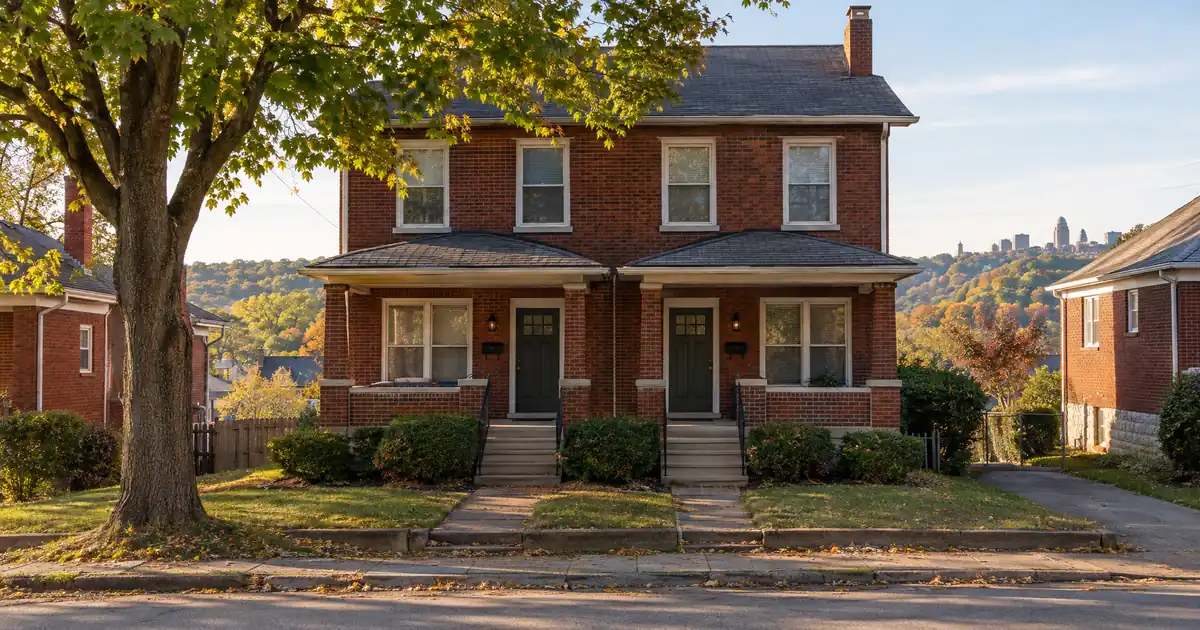
Shively is the neighborhood most Louisville investors drive through on the way to somewhere else, and it’s where the older-duplex math is easiest to see. Redfin shows seven multifamily listings in the Southwest Louisville and Shively area at a median asking price of $210K. One example is a duplex with two 2BR/1BA units of about 1,250 square feet each, on separate utility meters. Separate meters are a small detail that saves real friction in a file later. If you already own a building like that and it’s past the seasoning window, a DSCR cash out refinance is how the equity becomes your next down payment.
The Short Version: A DSCR cash-out refinance in Louisville, Kentucky is underwritten primarily on the property’s rental income measured against its full monthly obligation, and the local twist is that low-basis older duplexes near the airport and medical core tend to carry the coverage while newer, higher-basis product leans on appreciation to justify the cash-out.
DSCR Cash-Out Calculator
Run the cash-out numbers in Louisville, KY
Rate source: Freddie Mac 30-yr average via FRED® — Federal Reserve Bank of St. Louis · effective Sep 24, 2026
Prefilled with starting assumptions — enter your property’s value, balance, taxes, and insurance for a more accurate picture.
Program parameters update from Lendmire’s centralized guideline source. Taxes and insurance are editable estimates.
As of Sep 24, 2026 · General Freddie Mac market benchmark, not a Lendmire loan offer. Property value, balance, taxes, and insurance are editable estimates. Maximum loan-to-value varies by lender, program, property type, and seasoning. Not a Loan Estimate, approval, or commitment to lend. Program availability and eligibility are subject to lender guidelines, credit approval, property review, and underwriting.
- Shively multifamily listings show a median asking price near $210K, per Redfin.
- Seasoning typically runs about six months from title recording; the leverage ceiling is 75 percent.
- Louisville condos and townhouses are softening, so they make weak cash-out candidates.
- Underwrite on current rents. Apartment rent growth is roughly flat.
- Airport logistics and hospital employment anchor tenant demand in the older urban core.
Louisville Market Snapshot
A quick read on the Louisville investor landscape — figures come from the cited sources below. Confirm current property-level numbers before underwriting.
| Metric | Detail |
|---|---|
| Home prices | $300,000 median (Aug 2026) (Propcash (GLAR data)) |
| Typical rents | $1,212 (MMG Real Estate Advisors) |
| University enrollment | 25,005 total (University of Louisville) |
| Employment | Nearly 24,000 employees (Norton Healthcare About Us) |
| Vacancy | 4.0% (Institutional Property Advisors) |
How the Cash-Out Structure Works Here
A cash-out on a Louisville rental is capped at 75 percent of appraised value. It typically requires about six months of ownership measured from title recording, and the property has to clear a 1.00 coverage benchmark on full PITIA (principal, interest, taxes, insurance and any HOA dues). What lands in your account is whatever remains after the payoff and reserves. It is not a promised figure, and terms vary by lender and by file.
For Louisville, Kentucky rental property financing, Lendmire (NMLS# 2371349), a non-QM mortgage broker, helps arrange DSCR loans through lenders operating in 41 markets, including Washington, D.C. The state-level detail sits on Lendmire’s Kentucky DSCR platform, and the mechanics of the product are covered in Lendmire’s DSCR cash-out refinance page. New to the coverage math? Lendmire’s primer on DSCR loans explains the ratio.
Credit tiers step up from a 620 floor through 660, 680 and 700, and better tiers generally support better leverage and pricing. Reserves of about six months PITIA are typical, going higher on larger balances. Standard programs run up to $3,000,000. Most Louisville duplexes sit far below that, and smaller balances route through select lenders in the network.
Modest Appreciation, So Basis Does the Work
Louisville equity comes mostly from what you paid and what you’ve paid down, not from market drift. Zillow’s typical home value for the city is $233,462, up 3.5 percent year over year. That model includes every standing house, including many West End homes valued under $100,000.
The Greater Louisville Association of Realtors reports a median sale price of $300,000 for a recent month, as summarized by Propcash. It counts only homes that actually sold. The two figures measure different things and shouldn’t be averaged. Downtown is firmer, with Redfin showing a $327K median, up 5.6 percent.
The metro isn’t running hot either. The Indiana Business Research Center put unemployment near 4 percent and expects payroll gains below 10,000 jobs next year. Steady, not spectacular. That’s fine for a cash-out, because the lender cares about the appraisal and the rent, not the narrative.
Shively and the Airport Belt
Shively and the surrounding airport belt are the strongest fit for DSCR cash-outs in Louisville, because low basis and shift-work demand line up. The Louisville Muhammad Ali International Airport handled nearly 7.5 billion pounds of cargo in the most recent full year, and per LPM and AP, about 20,000 people work at the UPS hub. Sources disagree on the exact headcount at Worldport itself, with some putting it closer to 13,000. Either way, it’s the largest employer in town and the source of a recurring hourly tenant base in Shively, Okolona and the South End.
A local property manager, Northpoint, calls a monthly-rent-to-price ratio of 0.7 percent or better workable for cash flow. It says newer suburban builds often sit at only 0.4 to 0.5 percent, which makes them appreciation plays. That’s a property manager’s marketing view, so treat it as directional. It still matches what the coverage math shows: older, lower-basis stock clears at cash-out leverage and new construction struggles.
One caution. Low basis means small cash-out dollars. A house valued well under $100,000 won’t throw off much equity at 75 percent LTV, and condition variance in the lowest-priced West End stock is wide. Lower-priced doesn’t automatically mean better coverage. Appraisers flag deferred maintenance, and a file that pends on repairs doesn’t help anyone.
Germantown and Schnitzelburg: Coverage Gets Tighter
Germantown runs a neighborhood median home price of $259,000 per Homes.com, and its multifamily listings range from $340K to $509K. Two listings is a thin sample, so read that as a rough range rather than a market. The brick and shotgun stock near downtown and the breweries is popular with renters, but the basis is much higher than in Shively.
Germantown and Schnitzelburg are appreciation-led. If you bought a duplex there before the run-up, the cash-out is real, and appraised value does most of the work. If you’re buying at today’s asking prices with a cash-out in mind, expect thinner coverage. This one’s a genuine toss-up: Shively wins on coverage, Germantown wins on appreciation and exit liquidity. Investors who need the cash-out to clear cleanly should lean Shively.
Old Louisville is a middle case. The Victorian stock sits near the University of Louisville, which reports total enrollment of 25,005, and the downtown medical district. Norton Healthcare alone reports nearly 24,000 employees and six Louisville hospitals with 1,907 licensed beds. That steady clinical and student demand supports small multifamily near the campus cluster. Zumper puts Old Louisville apartment rents at $925 a month, though, and older buildings bring condition scrutiny. Portland and Smoketown look similar on rents. Portland apartments run about $928 on Zumper, and Smoketown Jackson about $975 on RentCafe, against a citywide average of $1,318. Those are apartment rents, not duplex rents, but they show where per-door income is lowest. Those areas only work at very low purchase prices.
Skip Crescent Hill, the Highlands and St. Matthews for cash-out coverage. Values are high, rents don’t rise to match, and the stackable multifamily stock is thin.
Run the Numbers on Three Louisville Duplexes
Three modeled scenarios show where the coverage math bends. The rents below are assumptions, not sourced market rents. Prices come from the listing ranges above. DSCR here is monthly rent divided by full PITIA, calculated including taxes and insurance at current financing assumptions and rounded down.
- Shively duplex, $210K appraised value, 75 percent LTV. Assume $1,000 per door, deliberately below the sourced apartment averages to reflect older stock. Coverage lands around 1.5.
- Germantown duplex, $340K appraised value, 75 percent LTV. Assume $1,300 per door. Coverage lands around 1.25, which still clears the benchmark with a cushion.
- Top of the Germantown range, $509K appraised value, 75 percent LTV. Assume $1,400 per door. Coverage drops to roughly 0.9.
That last scenario is the interesting one. A sub-1.00 file isn’t dead, but it gets harder. A lender may review a lower-leverage cash-out, an interest-only structure or a sub-1.00 program. Those options typically mean stronger credit, more reserves and different pricing. Whether any of them applies depends on lender guidelines, credit approval and property review.
DSCR files in markets like this one typically look like a split between cheap older stock that clears coverage with room to spare and pricier renovated stock that clears only barely. The strongest files usually come with a current rent roll, an appraisal that supports the rent schedule and an insurance quote that matches the actual building. Files that pend tend to have a title or documentation gap, not a coverage problem.
The Paper Trail That Decides Whether the deal works
Cash-out files pend on documentation more than on coverage. The pieces that matter:
- Leases and rent roll: Every door needs a current lease or documented market rent. A vacant unit gets underwritten off the appraiser’s rent schedule.
- Title and recording date: Seasoning is measured from title recording. If a property moved from your personal name into an LLC, confirm how the lender treats seasoning after the deed transfer.
- Entity documents: LLC-titled files need the operating agreement and vesting to match, subject to lender program eligibility.
- Insurance: The declarations page should show the right named insured and the actual unit count.
- Payoff statement: It has to match the current lien exactly, or the cash-out figure moves.
- Condition: In older shotgun and Victorian stock, deferred maintenance items can slow the appraisal review.
Separate utility meters, like that Shively duplex has, cut friction on 2-4 unit files. Shared meters aren’t a deal-killer, but they do invite more questions about how each unit’s income is documented. A side-by-side comparison of DSCR and conventional financing covers why investors choose this path.
Skip the Condos
Louisville condos and townhouses are the weakest cash-out candidates in the market. GLAR data as reported by Propcash shows the Jefferson County townhouse and condo median falling 3.1 percent to $232,500. Time on market lengthened and condo inventory rose 37.5 percent. Falling values shrink the appraisal you’re borrowing against, and condo projects add HOA and project-review layers on top. If your equity is in a condo, weigh the cash-out against waiting for the market to stabilize.
Vacancy, Supply and Current-Rent Underwriting
Underwrite Louisville on current rents. Don’t build growth into the coverage number, because growth has been slight. MMG puts stabilized apartment occupancy at 93.1 percent with effective rent of $1,212, up 0.6 percent year over year. It says new completions, not weak demand, drove the softening. Commercial Kentucky, citing Yardi Matrix, reports 3,667 units absorbed over twelve months against 2,590 the prior year, with 4,447 units under construction.
That supply competes with newer apartments, not with older 2-4 unit stock, which is another reason older doors are the safer cash-out. Also note the metro split. Institutional Property Advisors says more than two-thirds of the metro’s net absorption landed on the Southern Indiana side, where vacancy was the lowest at 4.0 percent. The Kentucky side is the softer lease-up. Build a vacancy cushion into your own underwriting rather than assuming full occupancy.
Where the Proceeds Go
The point of an equity pull is the next deal. A seasoned Shively duplex refinanced at 75 percent LTV can fund the down payment on another small multifamily, and the refinanced building keeps paying for itself on its own rent. That only works when the original building clears coverage on its own, so don’t count on the new purchase to prop it up. Before any Louisville refinance, verify current local rental rules, taxes and insurance with qualified local professionals.
To see how a specific building might pencil, investors can request a scenario quote or call 828-256-2183.
The investors who pull equity out of seasoned Shively and Germantown doors while rents are flat and older stock is still priced low will come out ahead.
Frequently Asked Questions
How long do I have to own a Louisville duplex before a cash-out?
About six months, measured from title recording, is typical. Some lenders measure differently after a deed transfer into an LLC, so confirm the clock before you apply. Requirements vary by lender and program.
DSCR vs. conventional financing
Two common ways to finance an investment property in Louisville, KY. They qualify you differently — here’s how investors weigh them.
Why investors choose it
- Qualifies on the property’s rental income — no personal tax returns, W-2s, or pay stubs needed to document income.
- No personal debt-to-income ceiling to clear, so existing mortgages and obligations don’t cap your borrowing the same way.
- Can be closed in an LLC, keeping the property inside a business entity.
- Built for scaling — not held to the limit on number of financed properties that conventional financing applies.
- Underwriting centers on the deal: generally qualifies when the rent covers the payment, a 1.00x coverage ratio being a common baseline (confirmed in underwriting).
- Designed specifically for investment property, including long-term and, where the program allows, short-term rentals.
Where it’s strong
- Often the lowest ongoing financing cost for a buyer who fully qualifies on personal income — a fit for a first property or a cost-first purchase.
Trade-offs for investors
- Requires full personal income documentation and must fit within a debt-to-income limit — salary, existing debts, and other mortgages all count.
- Typically held in your personal name rather than a business entity.
- Caps how many financed properties you can carry, which can become a ceiling as a portfolio grows.
- Evaluates you as a borrower as much as the property, which usually means more paperwork.
How investors usually choose: a first or single property often optimizes for the lowest financing cost; portfolio builders often optimize for leverage, vesting in an LLC, and scaling past conventional caps. The right answer depends on your goals, the property, and current guidelines — both paths run through select lenders in Lendmire’s wholesale network, with eligibility and terms confirmed in underwriting.
Does being near UPS Worldport help my cash-out appraisal?
It helps rental demand, not the appraisal directly. About 20,000 people work at the hub per LPM and AP, which supports hourly tenant demand in Shively and Okolona. The appraiser still values the building on comparable sales and the rent schedule.
Can I cash out if my Germantown duplex models below 1.00 coverage?
Possibly, with a different structure. A lender may review lower leverage, an interest-only option or a sub-1.00 program, typically with stronger credit and more reserves. Whether it works depends on lender guidelines, credit approval and property review.
Are Louisville condos worth cashing out on?
Usually not right now. GLAR data shows the Jefferson County townhouse and condo median falling 3.1 percent, and a lower appraisal shrinks whatever proceeds a 75 percent LTV ceiling allows. Single-family and 2-4 unit stock is a better fit.
Which Louisville submarkets are hardest for cash-out coverage?
Premium areas like Crescent Hill, the Highlands and St. Matthews, plus newer suburban builds. Northpoint puts new suburban product at only 0.4 to 0.5 percent rent-to-price, which usually leaves the coverage number thin at cash-out leverage.
For current guidelines and terms, see Lendmire’s DSCR loan programs page.
About Lendmire
Lendmire, NMLS# 2371349, is a non-QM mortgage broker serving real estate investors in 41 markets, including Washington, D.C., through DSCR investor loan programs. Qualification is generally reviewed around the subject property’s rental income rather than the borrower’s W-2 history, which suits LLC-titled portfolios and self-employed investors, and every scenario remains subject to lender review and program guidelines. Lendmire has earned two consecutive workplace honors: a 2025 Scotsman Guide Top Mortgage Workplace award, followed by being recognized by Scotsman Guide as a 2026 Top Workplace.
Get Started
Ready to find the right loan for you?
In about 30 seconds you can review financing options available for your investment property. No commitment required.
Informational only. Not a Loan Estimate, approval, or commitment to lend. Program availability and eligibility are subject to lender guidelines, credit approval, property review, and underwriting.
References
1. Redfin, Southwest Louisville and Shively multifamily listings
2. propcash.co — Kentucky Louisville Housing Market 2026
3. MMG Real Estate Advisors, Louisville forecast
4. University of Louisville Admissions
6. Institutional Property Advisors
7. Zillow Home Values, Louisville
8. Redfin
9. Indiana Business Research Center, Louisville outlook
10. Louisville Muhammad Ali International Airport
11. LPM and AP on UPS Worldport
12. Northpoint
13. Homes.com, Germantown multifamily listings
14. Zumper — Rent Research Louisville KY
15. RentCafe
16. Commercial Kentucky, citing Yardi Matrix
17. 2025 Scotsman Guide Top Mortgage Workplace
18. recognized by Scotsman Guide as a 2026 Top Workplace
This article is part of Lendmire’s investment property cash-out refinance program — full qualification details, guidelines, and scenarios live on the program page.
Related reading: DSCR Cash Out Refinance Kentucky · DSCR Loans Louisville: Investor Financing for NuLu, Germantown, Bourbon Trail, St. Matthews & Real Estate Investors · Cash Out Refinance Investment Property Versailles Kentucky
Guides: Investment Property Cash-Out Refinance in Louisville, KY · Investment Property Cash-Out Refinance in Kentucky
Brandon Miller
Founder & CEO, Mortgage Loan Originator, Lendmire LLC
- Mortgage Loan Originator · NMLS# 1129696 · Verify on NMLS Consumer Access
- North Carolina Real Estate Broker · License# 343312 · Verify on NCREC
- North Carolina Insurance Producer · License# 19053198 · Property, Casualty, Life, Health · Verify on NAIC SBS
- Lendmire LLC · Firm NMLS# 2371349 · Verify firm licensure
Legal disclosures. Lendmire (NMLS# 2371349) is a state-licensed mortgage brokerage that arranges financing through wholesale lender relationships. Lendmire is not a direct lender, depository institution, or registered financial advisor. The discussion above is general informational content about real estate financing — it is not financial, legal, or tax advice, and readers should consult licensed professionals for guidance on their individual circumstances. Loan inquiries are subject to lender underwriting; this article does not represent a commitment to lend. Loan terms, rates, and qualification standards vary by borrower, property, and state, and are subject to change at any time. Equal Housing Opportunity. NMLS Consumer Access: nmlsconsumeraccess.org.