
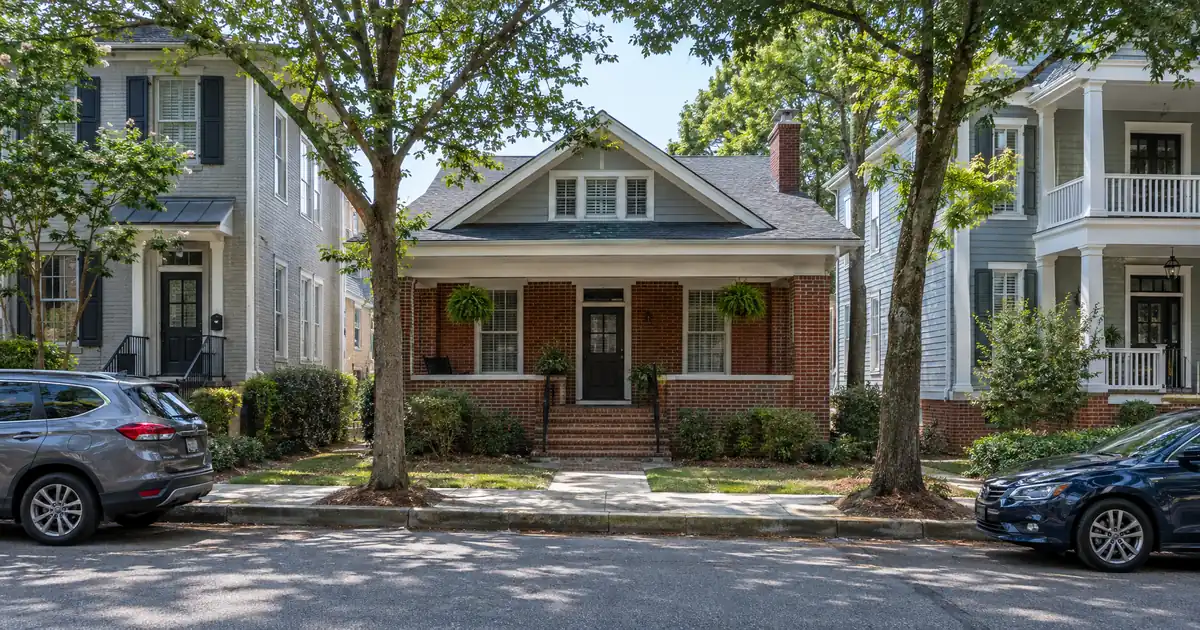
Can a market where Zillow’s county home value index averages $76,648, down 10.4% over the past year, support a cash-out refinance on an investment property? Sometimes, but the answer turns on loan size and appraised value rather than yield. Rent-to-value ratios here look generous on paper. A cash-out refinance on a Harlan investment property still lives or dies on whether an appraiser, working from thin and falling comps, supports a balance large enough to be worth recycling.
DSCR Cash-Out Calculator
Run the cash-out numbers in Harlan, KY
Rate source: Freddie Mac 30-yr average via FRED® — Federal Reserve Bank of St. Louis · effective Sep 24, 2026
Prefilled with starting assumptions — enter your property’s value, balance, taxes, and insurance for a more accurate picture.
Program parameters update from Lendmire’s centralized guideline source. Taxes and insurance are editable estimates.
As of Sep 24, 2026 · General Freddie Mac market benchmark, not a Lendmire loan offer. Property value, balance, taxes, and insurance are editable estimates. Maximum loan-to-value varies by lender, program, property type, and seasoning. Not a Loan Estimate, approval, or commitment to lend. Program availability and eligibility are subject to lender guidelines, credit approval, property review, and underwriting.
The Quick Read:
A cash-out refinance on a rental in Harlan, Kentucky is underwritten primarily on the property’s rental income measured against its full monthly obligation, then sized from an appraised value typically capped at 75% LTV, so the file generally needs roughly 1.00 coverage, adequate reserves, and an appraisal that holds up on thin comps.
- County home values average $76,648 and fell 10.4% year over year, per Zillow.
- Single-family rents cluster near a $600–$630 floor, so loan balance, not coverage, is the usual constraint.
- Cash-out generally needs about 6 months of ownership from title recording, and falling values make recent purchases weak equity candidates.
- Harlan ARH Hospital and the technical college campus anchor tenant demand in the core.
- Two-to-four-unit buildings are the most plausible way to reach a meaningful balance.
Harlan Market Snapshot
A quick read on the Harlan investor landscape — figures come from the cited sources below. Confirm current property-level numbers before underwriting.
| Metric | Detail |
|---|---|
| Home prices | $162K median list (Movoto Harlan, KY) |
| University enrollment | 3,000+ students (Harlan County EDA) |
| Employment | 6,000+ employees (ARH LinkedIn) |
| Vacancy | 5% (AffordableHousingOnline Harlan) |
The Hospital-and-College Core Is Where Cash-Out Files Make Sense
The City of Harlan core (ZIP 40831) is the strongest place to hold a cash-out candidate, mainly because it has the most durable tenant demand in the county. The county seat sits on US 119 and US 25E, and its rental demand comes from a hospital, a college campus, and local government. Those are employment and enrollment anchors, which is the kind of demand a lender can follow.
Harlan ARH Hospital is licensed for 120 acute beds and 30 behavioral beds, and it serves as an internal medicine residency site. It draws patients from Harlan County, parts of Letcher, Leslie, and Bell counties, and Lee County, Virginia. Appalachian Regional Healthcare describes itself as employing more than 6,000 people system-wide. No source gives a Harlan-only headcount, so don’t assume one. A residency program does mean rotating physicians and other short-to-mid-term professionals, which is a plausible tenant pool for well-kept units near the hospital. Plausible, though. Nobody has sourced a count.
The other anchor is Southeast Kentucky Community and Technical College. The Harlan County Economic Development Authority cites more than 3,000 students, spread across a main campus in Cumberland and a technical campus in Harlan. Per City-Data, education, health, and social services make up 34.6% of county employment, with retail trade at 13.8%. That concentration is stabilizing on the demand side and limiting on the growth side.
Here’s the skeptical read. The USDA’s Local Foods, Local Places plan describes a downtown marked by vacant buildings and a coal economy whose decline cost jobs. Census Bureau QuickFacts puts the city’s population near 2,160, with median household income of $32,408 and a 33.1% poverty rate. Household income caps how far rents can climb, no matter how good the hospital is. Anchors keep units occupied. They don’t push rents up.
Beyond the Core: Cumberland, the Tri-City Area, and Evarts
Outside the core, every submarket here has to be treated qualitatively, because no neighborhood-level rent or price data exists. That matters for underwriting: no neighborhood comp set means more appraisal discretion, and more appraisal discretion means more variance in what a cash-out can pull.
Cumberland hosts the college’s main campus and is named as the county’s largest city. Student and staff demand is real, and it is the most obvious second-ring candidate for a rental that serves the campus. Benham and Lynch, the historic coal-camp towns in the southeast of the county, carry heritage demand. Portal 31 runs underground rail tours of about 45 minutes, and the Kentucky Coal Museum in Benham draws over 6,000 visitors a year. That is a lovely local feature and a thin basis for underwriting rental income. Treat it as color, not a thesis.
The Evarts, Closplint, and Wallins corridor is where basis gets very low. Redfin’s recent sales list shows homes in Evarts and Closplint selling at roughly $30,000 to $102,000. Sub-$100,000 entry is attractive until you try to refinance: a balance sized at 75% of a $40,000 appraisal is too small for most programs. Skip it for cash-out purposes unless the building is multi-unit.
One property-type note. Manufactured homes, log homes, and barndominiums fall outside the network’s DSCR programs, and rural eastern Kentucky has plenty of that stock. Confirm the construction type before anything else.
Why the Appraisal, Not the Yield, Sets the Ceiling
In Harlan, the appraisal sets the cash-out ceiling, not the rent-to-value ratio. Rent-to-value ratios look strong, but proceeds are calculated against appraised value. In a market with falling values and few comps, that value is the variable that moves.
The sources conflict, which is itself information. Movoto’s Harlan snapshot shows a median list price of $162,000 with listings spanning $69,900 to $402,000. The county index sits near $77,000. Redfin’s recent city sales include a 2-bed/1-bath at $35,000 and a 3-bed/2-bath at $139,900. Redfin’s headline city median is a small-sample artifact, and it shouldn’t anchor anything. When list prices, index values, and closed sales span a range this wide, comp selection effectively decides the number. An appraiser pulling from the $35,000 end and one pulling from the $139,900 end produce very different refinances on the same house.
Seasoning compounds this. Cash-out typically requires about 6 months of ownership measured from title recording, and with values declining, an investor who bought near the top of a recent range may find the appraisal arriving below purchase price. Plan around conservative appraised value. Expect little or no equity extraction from a recent purchase, and a better case for rehabbed properties held well past seasoning, where basis is genuinely below market.
| Factor | Single-family | 2–4 unit building |
|---|---|---|
| Coverage ratio | Strong on paper | Strong, with more cushion |
| Balance size | Often too small | More plausible |
| Appraisal risk | Very high | High |
| Comp availability | Thin | Thinner |
Run the Numbers on Small Multifamily
The modeled math below shows why a multi-unit building is the more plausible vehicle here. All inputs are assumptions, not sourced market figures, and every coverage figure is rent divided by full PITIA, including taxes and insurance, rounded down.
Start with the single-family case. Say a modeled rental appraises at a low value, well below what a multi-unit building would, and rents at the floor of the ApartmentHomeLiving range for houses. Coverage lands well north of 1.5x. That looks wonderful until you realize the balance at 75% LTV is smaller than many programs will touch. Smaller balances route through select lenders in the network, and pricing and terms on those files differ. The ratio is great and the loan is tiny. These specifics are subject to lender guidelines and a full review of property, leverage, and credit.
Now consider a scenario where an investor owns a fourplex that appraises at $300,000, which is about $75,000 per door. That’s modeled, but it’s in line with the only small-multifamily comp in the research: a Homes.com listing of two bundled complexes totaling 10 rental units at an asking price of $660,000, roughly $66,000 per door. That is an asking price, not a closed sale, and the rents weren’t verified.
Run three modeled rent cases on that fourplex at 75% LTV. Terms vary by lender guidelines, property type, leverage, credit profile, and full file review.
- $650 per door: coverage around 1.4x.
- $600 per door: around 1.3x.
- $500 per door: around 1.1x, thin but above the standard 1.00 baseline.
Rents from $500 up to $650 per door fall within the observed range. A HotPads county median of $450 and a BestNeighborhood.org average of $631 bracket the low end, and the floor in apartment listings is about $606. The $1,835 average and $3,500 top end in some listings are outliers. Don’t underwrite to them.
If the appraisal comes in 20% lower, the coverage ratio mostly holds because the loan shrinks with the value, but proceeds shrink in step. This is the Harlan trap in one sentence: coverage is rarely the problem, proceeds are. A bundled package also raises a structural question. A lender may underwrite it as one loan or two, which changes how the 75% ceiling applies.
A 1.00 coverage baseline is common because rent covers the payment at that level. Some lenders review lower-ratio scenarios, but those usually need lower leverage, stronger credit, or more reserves, and eligibility depends on lender guidelines, credit profile, and property review. A sub-1.00 structure isn’t the fix for a thin Harlan fourplex. If the building doesn’t clear the baseline at realistic rents, the better question is whether the building is right.
What a Deal Desk Sees on Files Like This
On files from small, thin-data markets, the cleaner packages tend to arrive with a real lease and rent history, an insurance quote already in hand, and an honest read on appraised value before the loan is structured. The common friction point is the gap between the purchase price or the investor’s mental value and what the appraisal supports. Another is balance size: a file can clear coverage easily and still sit under a lender’s minimum. Getting a lender read on balance eligibility before ordering anything usually saves the most wasted effort.
The Case for Pulling Equity Anyway
The cash-out case in Harlan works for the investor who holds a multi-unit building acquired well below market value, owned past seasoning, and with documented rents. For that investor, the equity recycle pathway is straightforward: pulling equity through a DSCR cash-out and redeploying it into another small building where coverage clears at conservative rents. How DSCR qualification works is the same here as anywhere. The lender looks at the property’s rent against its full obligation, then checks credit, reserves of about 6 months of PITIA, and the appraisal.
The recycling case flips if the proceeds would go into another Harlan single-family at a sub-$100,000 basis. That means two small loans with the same appraisal risk and the same shrinking-population exposure. If the proceeds would go somewhere with deeper comps, the cash-out is easier to defend. This one’s a genuine judgment call. The yield looks better in Harlan, but the liquidity looks better elsewhere.
A Shrinking Base Changes the Exit Math
Treat population loss as the main risk to any Harlan exit value. The county’s population fell from 26,831 to an estimated 24,725, a decrease of 7.8%, and USAFacts confirms about 24,700 people. Fewer households means weaker resale demand, and that feeds directly into appraised value.
The rental picture is more balanced than the for-sale picture. AffordableHousingOnline puts the county rental vacancy rate at 5%, with 1.05 rental units per renter household, a modest cushion rather than a shortage. Per City-Data, the county has 3,663 renter-occupied units, a small pool. A 5% vacancy figure from an aggregator is a floor for modeling, not a forecast. A larger vacancy factor is more defensible, and with 1.05 units per renter household there’s little scarcity pricing power to lean on.
For a conventional-versus-DSCR comparison, the flip point is simple. A salaried borrower with one rental and clean traditional personal-income documentation may find conventional vs DSCR on investor loans favors conventional on cost. A LLC-held or multi-property investor, or one whose traditional personal-income documentation doesn’t show the rental income cleanly, usually finds DSCR is the practical lane, subject to lender program eligibility.
A reminder worth stating once: verify current local rental rules, taxes, and insurance with qualified local professionals before committing to a refinance.
Frequently Asked Questions
How do you qualify for a DSCR cash-out refinance in Harlan, Kentucky?
Qualification centers on the property’s rent versus its full PITIA, typically at a 1.00 baseline or better, along with about 6 months of title seasoning, reserves of about 6 months of PITIA, and a credit profile that fits one of the program tiers. LTV is capped at 75% on cash-out. In Harlan, the appraisal is usually the deciding step, so ask a lender for a read on realistic value and balance eligibility before ordering anything. Final eligibility is subject to lender guidelines and property review.
DSCR vs. conventional financing
There are two common ways to finance an investment property in Harlan, KY, and they qualify you differently — here’s how investors weigh them.
Why investors choose it
- Qualifies on the property’s rental income — no personal tax returns, W-2s, or pay stubs needed to document income.
- No personal debt-to-income ceiling to clear, so existing mortgages and obligations don’t cap your borrowing the same way.
- Can be closed in an LLC, keeping the property inside a business entity.
- Built for scaling — not held to the limit on number of financed properties that conventional financing applies.
- Underwriting centers on the deal: generally qualifies when the rent covers the payment, a 1.00x coverage ratio being a common baseline (confirmed in underwriting).
- Designed specifically for investment property, including long-term and, where the program allows, short-term rentals.
Where it’s strong
- Often the lowest ongoing financing cost for a buyer who fully qualifies on personal income — a fit for a first property or a cost-first purchase.
Trade-offs for investors
- Requires full personal income documentation and must fit within a debt-to-income limit — salary, existing debts, and other mortgages all count.
- Typically held in your personal name rather than a business entity.
- Caps how many financed properties you can carry, which can become a ceiling as a portfolio grows.
- Evaluates you as a borrower as much as the property, which usually means more paperwork.
How investors usually choose: a first or single property often optimizes for the lowest financing cost; portfolio builders often optimize for leverage, vesting in an LLC, and scaling past conventional caps. The right answer depends on your goals, the property, and current guidelines — both paths run through select lenders in Lendmire’s wholesale network, with eligibility and terms confirmed in underwriting.
What are the requirements for an investment property loan in Harlan, Kentucky when the balance is small?
Standard programs run up to $3,000,000, but smaller balances route through select lenders in the network, and terms on those can differ. Many Harlan sales sit well below the values most programs are built around, so check lender minimum loan amounts early. A 2–4 unit building is the most plausible way to get a balance that clears them. Manufactured homes, log homes, and barndominiums fall outside these programs entirely.
What credit score ranges may DSCR lenders review for a Harlan rental property?
Program tiers typically run 620, 660, 680, and 700, and cash-out files are generally reviewed from 660 up on most scenarios. Lendmire is a DSCR-focused broker placing investor loans. One practical feature: interest-only structures on 1–4 units are generally reviewed from 680, subject to lender guidelines.
Does Harlan’s falling population make a cash-out refinance riskier?
Yes, mostly through the appraisal. Population decline and a 10.4% drop in county values mean comps trend downward, so a lender’s appraised value may come in below what an investor expects. The risk shows up as smaller proceeds, not as weaker rental coverage. Conservative value assumptions and a longer hold past seasoning are the best protection.
Can a small multi-unit building in Harlan carry a cash-out loan that single-family can’t?
Often yes, because stacked rents support a larger balance while per-door pricing stays near single-family values. The only small-multifamily comp in the research was an asking price near $66,000 per door, unverified for rents. Multi-unit isn’t automatically easy. It has thinner comps, and a bundled package may be underwritten as one loan or two.
Where This Goes Over the Next Two Years
Over the next 6 to 24 months, expect Harlan appraisals to stay conservative while county values keep drifting and population keeps shrinking. That favors cash-out on small multi-unit buildings near the hospital and Harlan’s technical college campus, held well past seasoning and bought below market. It disfavors cash-out on freshly purchased single-family rentals where the appraisal may land under the purchase price. If values stabilize, the equity-recycling case for the core improves. If they keep falling at the recent pace, the only reliable Harlan cash-out will be the one sized on a conservative value, and the best investors here will be the ones who planned for proceeds far smaller than the rent-to-value math suggests.
For current guidelines and terms, see Lendmire’s DSCR loan programs page.
About Lendmire
Lendmire is a DSCR-focused mortgage brokerage, NMLS# 2371349, placing investor loans across 41 markets, including Washington, D.C. DSCR eligibility is generally reviewed by the lender on a property’s rental income rather than personal income documentation, which fits LLC-held rentals (subject to lender program eligibility), self-employed investors, and portfolios scaling past conventional financed-property limits. The firm has been recognized by Scotsman Guide as a 2026 Top Workplace and was a top-ranked workplace in 2025.
For broader investor-financing rules and property-type coverage across the state, see Kentucky DSCR loans.
Get Started
Ready to find the right loan for you?
In about 30 seconds you can review financing options available for your investment property. No commitment required.
Informational only. Not a Loan Estimate, approval, or commitment to lend. Program availability and eligibility are subject to lender guidelines, credit approval, property review, and underwriting.
References
1. Zillow Home Values, Harlan County
3. Harlan County Economic Development Authority
4. LinkedIn — Appalachian Regional Healthcare
7. City-Data
8. USDA Local Foods, Local Places Plan
10. Portal 31
12. Redfin, Harlan housing market
15. HotPads
17. Wikipedia — Harlan County, Kentucky
19. recognized by Scotsman Guide as a 2026 Top Workplace
20. Scotsman Guide — Top Workplaces 2025
This article is part of Lendmire’s investment property cash-out refinance program — full qualification details, guidelines, and scenarios live on the program page.
Related reading: Luxury Rental DSCR Loans In New Jersey · Jersey Shore Vacation Rental Loans: DSCR Financing In Ocean City, Cape May And Long Beach Island · DSCR Cash-out Refinance In New Jersey: Pulling Equity From A Rental
Guides: Investment Property Cash-Out Refinance in Kentucky
Brandon Miller
Founder & CEO, Mortgage Loan Originator, Lendmire LLC
- Mortgage Loan Originator · NMLS# 1129696 · Verify on NMLS Consumer Access
- North Carolina Real Estate Broker · License# 343312 · Verify on NCREC
- North Carolina Insurance Producer · License# 19053198 · Property, Casualty, Life, Health · Verify on NAIC SBS
- Lendmire LLC · Firm NMLS# 2371349 · Verify firm licensure
Important disclosures. Lendmire (NMLS# 2371349) is a licensed mortgage brokerage. Lendmire is not a direct lender, depository institution, or financial advisor. All loan inquiries are subject to lender underwriting; this article does not constitute a commitment to lend. Rates, terms, and program guidelines are subject to change without notice and vary by borrower profile, property type, and state. Information in this article is general in nature and is not financial, legal, or tax advice. Equal Housing Opportunity. NMLS Consumer Access: nmlsconsumeraccess.org.