
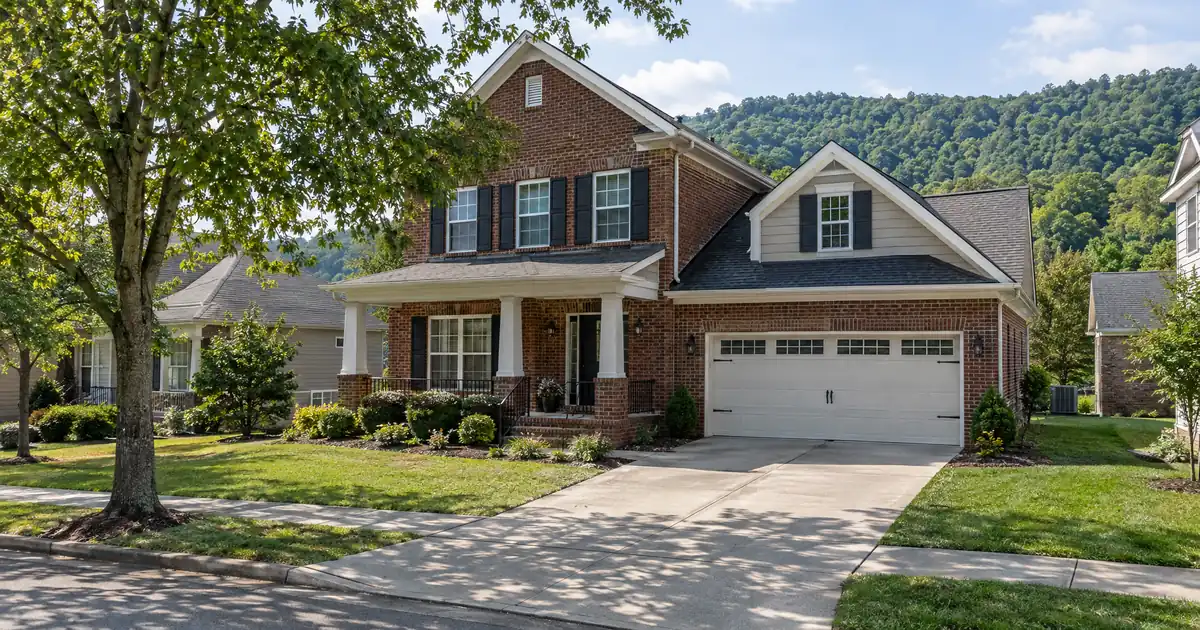
Can a rental valued around $77,000 actually produce usable cash-out proceeds? Sometimes, but the coverage math is rarely what stops the file. The appraisal and the loan size are. Zillow’s county index puts Harlan County’s average home value at $76,648, down 10.4% year over year, and a DSCR cash out refinance in Harlan, Kentucky lives or dies on whether a thin, falling set of comps can support the balance you want.
DSCR Cash-Out Calculator
Run the cash-out numbers in Harlan, KY
Rate source: Freddie Mac 30-yr average via FRED® — Federal Reserve Bank of St. Louis · effective Oct 1, 2026
Prefilled with starting assumptions — enter your property’s value, balance, taxes, and insurance for a more accurate picture.
Program parameters update from Lendmire’s centralized guideline source. Taxes and insurance are editable estimates.
As of Oct 1, 2026 · General Freddie Mac market benchmark, not a Lendmire loan offer. Property value, balance, taxes, and insurance are editable estimates. Maximum loan-to-value varies by lender, program, property type, and seasoning. Not a Loan Estimate, approval, or commitment to lend. Program availability and eligibility are subject to lender guidelines, credit approval, property review, and underwriting.
The Quick Read:
A DSCR cash-out refinance on a Harlan, Kentucky rental is underwritten primarily on the property’s rental income measured against its full monthly obligation, with leverage capped by an appraisal that must hold up on thin, declining comps, a seasoning period measured from title recording, and a loan balance large enough to meet the lender’s minimum.
- County home values average $76,648, down 10.4% year over year, per Zillow. Appraisal risk leads the hurdles.
- Listed rents are low in absolute dollars, so loan size, not coverage, usually becomes the binding constraint.
- Cash-out generally tops out at 75% LTV after about 6 months of ownership.
- A ten-unit bundle asking about $66,000 per door shows how multi-unit changes loan size (Homes.com).
- Demand clusters around one hospital and one college while the county population shrinks.
Harlan, Kentucky investors can have DSCR scenarios reviewed through lender programs that Lendmire helps place across 41 markets, including Washington, D.C. The brokerage, NMLS# 2371349, keeps a statewide entry point at Lendmire’s Kentucky DSCR platform. Everything below assumes you already own the property. This is an equity-extraction piece, not a purchase guide.
Harlan Market Snapshot
A quick read on the Harlan investor landscape — figures come from the cited sources below. Confirm current property-level numbers before underwriting.
| Metric | Detail |
|---|---|
| Home prices | $162K median list (Movoto Harlan, KY) |
| University enrollment | 3,000+ students (Harlan County EDA) |
| Employment | 6,000+ employees (ARH LinkedIn) |
| Vacancy | 5% (AffordableHousingOnline Harlan) |
The Hospital-and-College Core Is Where Cash-Out Files Make Sense
The Harlan city core, ZIP 40831, is the strongest place to hold a rental you intend to refinance. It is the county seat and the center of the two demand anchors that matter. Harlan ARH Hospital is licensed for 120 acute beds and 30 behavioral beds and serves as an internal medicine residency site. It draws patients from Harlan County and parts of neighboring counties. The Harlan County Economic Development Authority says Southeast Kentucky Community and Technical College has more than 3,000 students, with a technical campus in Harlan and the main campus in Cumberland.
Those anchors matter for a lender’s read of the file because they support steady, long-lease tenancy. Hospital staff, residents rotating through, and college employees don’t leave when a for-sale market softens. No sourced headcount exists for the residency cohort, so treat that tenant pool as plausible, not measured.
Now the skeptical part. The city itself is tiny. Census Bureau QuickFacts puts Harlan’s population at 2,160 with a median household income of $32,408, against $63,726 statewide. That income level caps what rent a tenant can carry, and no amount of renovation changes it. The USDA’s Local Foods, Local Places plan describes a downtown marked by vacant buildings after the coal economy declined. Proximity to the hospital helps a rental. It does not rescue a building on a block of empty storefronts.
What the Rent Numbers Say (and Why the Sources Disagree)
Rent data here is thin and contradictory, so the right move is to underwrite to the low end. Listing sources put county or city rents anywhere from $450 (HotPads) to $777 (Foreclosure.com), with a listed range of $420 to $1,820. ApartmentHomeLiving shows a floor around $606 for apartments and $631 for houses. Its high-end figures are skewed by outliers. Skip them.
Run the numbers on a modeled single-family rental. Assume a value near the county index of $76,648, a 75% LTV cash-out, and a 30-year fully amortizing loan. Coverage is rent divided by full PITIA, so taxes and insurance sit in the denominator at Kentucky-average assumptions. These are modeled inputs, not quotes. Every figure here varies by lender and program — guidelines, property type, leverage, and credit profile all apply.
- At a $631 rent, coverage lands around 1.3x including taxes and insurance.
- At $777, it clears 1.5x.
- At $450, it sits right at the 1.00 line, just under once you round down.
Most standard DSCR programs are built around a 1.00x benchmark because the rent covers the obligation at that level. Some lenders review lower ratios, but those files usually bring lower leverage, stronger credit, more reserves, or different pricing. Exact eligibility depends on lender guidelines, credit profile, reserves, and property review. An investor at the $450 end could ask a lender about a sub-1.00 program or an interest-only structure, subject to lender guidelines and credit approval. Whether to use one is another question. If the property only works at sub-1.00 coverage, the better move is often a different property.
Here’s the catch. Coverage looks fine on paper, and that’s exactly why it misleads. Low basis plus low rent can produce a healthy ratio on a loan that is too small to matter. The ratio isn’t the obstacle in Harlan. The balance is.
Appraisal Is the Real Gatekeeper
On a Harlan cash-out, the appraised value sets the ceiling, and that value comes from comps that barely exist. Redfin’s recent sales show a 2-bed/1-bath at $35,000 and a 3-bed/2-bath at $139,900, which tells you how wide the spread is. Movoto’s city listings run from $69,900 to $402,000, with a median list price of $162K, down 10% year over year. The county index and the city list median are different measures, and the gap between them is a warning, not a discrepancy to average away. (Redfin’s headline city median is a small-sample distortion. Ignore it.) Final terms depend on lender guidelines, property type, leverage, and the borrower’s complete credit picture.
Three program mechanics shape the proceeds, all typical of select wholesale-network guidelines and subject to lender review:
- LTV ceiling: cash-out generally caps at 75% of appraised value. The 80% figure you may see for purchases does not apply.
- Seasoning: about 6 months of ownership, measured from title recording.
- Reserves: around 6 months of PITIA on most files.
The falling-value problem compounds. Say an investor bought a house and now wants to pull equity out. If the appraisal comes in 10% below the purchase price, the maximum loan shrinks by 10% too, and the existing payoff comes off the top first. A recent purchase at a full asking price in a market with falling values may leave little or no extractable equity. Plan around the conservative appraisal, not the price you paid.
One more screen. Many Harlan sales sit between $8K and $72K. Standard programs run up to $3,000,000, and smaller balances route through select lenders in the network, which narrows the field and may change pricing and terms. Manufactured homes, log homes, and barndominiums fall outside these programs entirely, regardless of price. In a county with this much older and informal stock, that rules out more candidates than investors expect. Read the guide “What Is a DSCR Loan” before you spend money on an appraisal.
Small Multi-Unit Is the Better Structure
If the goal is a refinance balance large enough to recycle into another deal, a 2-4 unit building or a small bundle gets there more plausibly than single-family. This is inference from the numbers, not a sourced Harlan finding.
The only named small-multifamily comp in the research is a Homes.com listing: a four-unit complex (two 1-bed/1-bath units and two 4-bed/1.5-bath units) bundled with a second complex for ten rental units at $660,000 for both. That works out to about $66,000 per door, close to the county’s average single-family value. It’s an asking price, not a closed sale, and the rents weren’t verified.
Model it anyway, as an assumption: ten doors at $631 each, a 75% LTV, and full PITIA with taxes and insurance. Coverage comes out around 1.5x. With a 10% vacancy haircut, it falls to roughly 1.4x. The ratio is similar to the single-family case. The difference is that the loan balance is ten times larger, which puts it back in range for more lenders. These specifics are subject to lender guidelines and a full review of property, leverage, and credit.
The bundle also raises a structuring question. A lender may underwrite it as one loan or two, and the appraisal on each complex has to stand on its own. LLC-titled holdings are common on files like this, subject to lender program eligibility, so the entity paperwork should be in order before an application.
Lendmire’s deal desk sees a recurring pattern on files from markets this thin. The documentation is usually fine. The friction shows up in the appraisal, where a handful of dissimilar comps can pull value well below the investor’s expectation, and in loan size, where a balance lands under a lender’s floor late in the process. The cleaner files tend to confirm minimum loan amounts first, order the appraisal with realistic expectations, and have current leases and an insurance quote in hand before anyone submits anything.
Who should skip this lane? A W-2 investor with one or two rentals and clean traditional personal-income documentation may find conventional financing cheaper on a small balance, and conventional vs DSCR on investor loans is the comparison to run before committing. DSCR earns its place for entity-held portfolios, self-employed borrowers, and investors past the conventional financed-property limit. A single low-value house owned personally doesn’t fit that profile.
Cumberland, Evarts, and the Tri-City Towns
Beyond the Harlan core, the county thins out fast. No neighborhood-level rent or price sources exist, so these are qualitative reads.
Cumberland hosts the main SKCTC campus on College Road. It is named as the county’s largest city on Wikipedia, and it carries student and staff rental demand. For a cash-out candidate, it’s the closest alternative to the Harlan core.
Evarts, Closplint, and the Wallins corridor are former coal communities. Redfin’s sales list shows homes there selling at roughly $30K to $102K, and South Wallins had 838 people at the last census. Entry basis is low and the exit pool is small. Cash-out on these streets means a very small appraised value and the fewest comps in the county.
Benham and Lynch, the Tri-City heritage towns, draw visitors to Portal 31 and the Kentucky Coal Museum, which sees over 6,000 visitors a year. That is a heritage draw, not a rental engine. Don’t underwrite a long-term rental here on tourism, and there’s no data to support a stronger case.
What Happens If the Population Keeps Sliding?
The county’s population is shrinking, and that is the main long-term risk to exit values. USAFacts puts the county at about 24,700 people, and Wikipedia’s county entry cites a decline of 7.8% from the 26,831 counted at the last census. Fewer households means fewer comps, softer prices, and appraisals that trend down. The cash-out you can pull today may be smaller than the one you could have pulled a year earlier.
The rental side is quieter than the sale side. AffordableHousingOnline reports a 5% county rental vacancy rate and 1.05 rental units per renter household, a modest cushion with little scarcity pricing power. It’s an aggregator, so use a vacancy factor above 5%. City-Data counts 3,663 renter-occupied units in the county and shows education, health, and social services at 34.6% of county employment. That’s a small, institution-dependent rental pool.
This one is a genuine toss-up. The yield math favors owning at this basis, but the shrinking tenant base and the falling values argue for taking modest proceeds and keeping the existing property. An investor who needs maximum cash out from a single Harlan asset is probably asking the market for something it can’t give. An investor who wants a few modest, well-covered units and plans to hold is working with the market. Terms vary by lender guidelines, property type, leverage, credit profile, and full file review.
Where the Proceeds Should Go
Recycled equity works best when it goes into another deal where the coverage and the appraisal both hold. Pulling cash out of a Harlan building to buy a second building in the same hospital-and-college core, where the anchors are known, is a defensible plan. Deploying that cash into an unrelated market where the math doesn’t pencil at current pricing is a different decision, and one to stress-test first. The equity recycle pathway walks through the mechanics, and the investment property refinance options cover the rate-and-term alternative if cash-out proceeds turn out too small to justify the exercise.
Before you commit, verify current local rental rules, taxes, and insurance with qualified local professionals. For questions on how a specific Harlan file would be reviewed, the team is at 828-256-2183.
DSCR vs. conventional financing
There are two common ways to finance an investment property in Harlan, KY, and they qualify you differently — here’s how investors weigh them.
Why investors choose it
- Qualifies on the property’s rental income — no personal tax returns, W-2s, or pay stubs needed to document income.
- No personal debt-to-income ceiling to clear, so existing mortgages and obligations don’t cap your borrowing the same way.
- Can be closed in an LLC, keeping the property inside a business entity.
- Built for scaling — not held to the limit on number of financed properties that conventional financing applies.
- Underwriting centers on the deal: generally qualifies when the rent covers the payment, a 1.00x coverage ratio being a common baseline (confirmed in underwriting).
- Designed specifically for investment property, including long-term and, where the program allows, short-term rentals.
Where it’s strong
- Often the lowest ongoing financing cost for a buyer who fully qualifies on personal income — a fit for a first property or a cost-first purchase.
Trade-offs for investors
- Requires full personal income documentation and must fit within a debt-to-income limit — salary, existing debts, and other mortgages all count.
- Typically held in your personal name rather than a business entity.
- Caps how many financed properties you can carry, which can become a ceiling as a portfolio grows.
- Evaluates you as a borrower as much as the property, which usually means more paperwork.
How investors usually choose: a first or single property often optimizes for the lowest financing cost; portfolio builders often optimize for leverage, vesting in an LLC, and scaling past conventional caps. The right answer depends on your goals, the property, and current guidelines — both paths run through select lenders in Lendmire’s wholesale network, with eligibility and terms confirmed in underwriting.
Frequently Asked Questions
How do you qualify for a DSCR cash-out refinance in Harlan, Kentucky?
The property’s rent has to cover its full obligation (principal, interest, taxes, insurance, and any HOA dues) at about the 1.00 benchmark. You also need roughly 6 months of ownership from title recording, a credit score within the program tiers, and around 6 months of PITIA in reserves. Proceeds are limited to a 75% LTV ceiling on the appraised value. All of this is subject to lender guidelines, credit approval, and property review.
What are the requirements for an investment property loan in Harlan, Kentucky?
Typical files need a rentable 1-4 unit property that isn’t a manufactured home, log home, or barndominium, plus a lease or market-rent opinion and a qualifying credit score. Entity ownership is common, depending on program guidelines. In Harlan the practical requirement is loan size. With many values well under $100K, the balance has to clear the minimum of whichever lender in the network reviews the file.
What credit score ranges may DSCR lenders review for a Harlan rental property?
Credit tiers generally run 620, 660, 680, and 700, with a floor of 620. Higher scores typically improve leverage and pricing options. Lendmire places DSCR investor loans and the program reviews eligibility primarily on the property’s rental income. Final eligibility is set by the lender.
Will an appraisal support cash-out after a recent Harlan purchase?
Often not much. County values are falling 10.4% year over year, and comps are few and dissimilar, so an appraisal can land below the price you paid. At a 75% LTV, any shortfall in value flows straight through to a smaller loan. Expect little or no equity extraction from a very recent purchase.
Why do multi-unit buildings work better than single-family for cash-out in Harlan?
Rents on single homes are small in absolute dollars, and values are small too, so the loan balance can fall below lender minimums. A 2-4 unit building stacks rents against a larger balance. The one sourced example is a ten-unit bundle asking about $66,000 per door. That is an asking price and the rents are unverified.
Where This Goes From Here
For the next 6-24 months, the likeliest outcome in Harlan is more of the same: a shrinking county, values still drifting lower, and tenant demand concentrated around the hospital and the college. Single-family cash-out will stay appraisal-limited, and the best-structured files will probably be small multi-unit buildings near those anchors, held for income rather than refinanced for maximum proceeds. If values stabilize, the sales spread between $35,000 and $139,900 will narrow and appraisals become more predictable. If they don’t, the investors who bought on a recent price will find that the equity they were counting on was never there.
For current guidelines and terms, see Lendmire’s DSCR loan programs page.
About Lendmire
Lendmire is a DSCR-focused mortgage brokerage, NMLS# 2371349, placing investor loans across 41 markets, including Washington, D.C. DSCR eligibility is generally reviewed by the lender on a property’s rental income rather than personal income documentation, which fits LLC-held rentals, self-employed investors, and portfolios scaling past conventional financed-property limits. The brokerage has been recognized by Scotsman Guide as a 2026 Top Workplace and was a top-ranked workplace in 2025.
Get Started
Ready to find the right loan for you?
In about 30 seconds you can review financing options available for your investment property. No commitment required.
Informational only. Not a Loan Estimate, approval, or commitment to lend. Program availability and eligibility are subject to lender guidelines, credit approval, property review, and underwriting.
References
1. Zillow, Harlan County home values
4. Harlan County Economic Development Authority
5. ARH LinkedIn
6. AffordableHousingOnline, Harlan County
7. Harlan ARH Hospital provider page
8. Census Reporter, Harlan, KY profile
9. USDA’s Local Foods, Local Places plan
10. HotPads
11. Foreclosure.com
16. City-Data
17. recognized by Scotsman Guide as a 2026 Top Workplace
18. Scotsman Guide — Top Workplaces 2025
This article is part of Lendmire’s investment property cash-out refinance program — full qualification details, guidelines, and scenarios live on the program page.
Related reading: Luxury Rental DSCR Loans In New Jersey · Jersey Shore Vacation Rental Loans: DSCR Financing In Ocean City, Cape May And Long Beach Island · DSCR Cash-out Refinance In New Jersey: Pulling Equity From A Rental
Guides: Investment Property Cash-Out Refinance in Kentucky
Brandon Miller
Founder & CEO, Mortgage Loan Originator, Lendmire LLC
- Mortgage Loan Originator · NMLS# 1129696 · Verify on NMLS Consumer Access
- North Carolina Real Estate Broker · License# 343312 · Verify on NCREC
- North Carolina Insurance Producer · License# 19053198 · Property, Casualty, Life, Health · Verify on NAIC SBS
- Lendmire LLC · Firm NMLS# 2371349 · Verify firm licensure
Important disclosures. Lendmire (NMLS# 2371349) is a licensed mortgage brokerage. Lendmire is not a direct lender, depository institution, or financial advisor. All loan inquiries are subject to lender underwriting; this article does not constitute a commitment to lend. Rates, terms, and program guidelines are subject to change without notice and vary by borrower profile, property type, and state. Information in this article is general in nature and is not financial, legal, or tax advice. Equal Housing Opportunity. NMLS Consumer Access: nmlsconsumeraccess.org.