
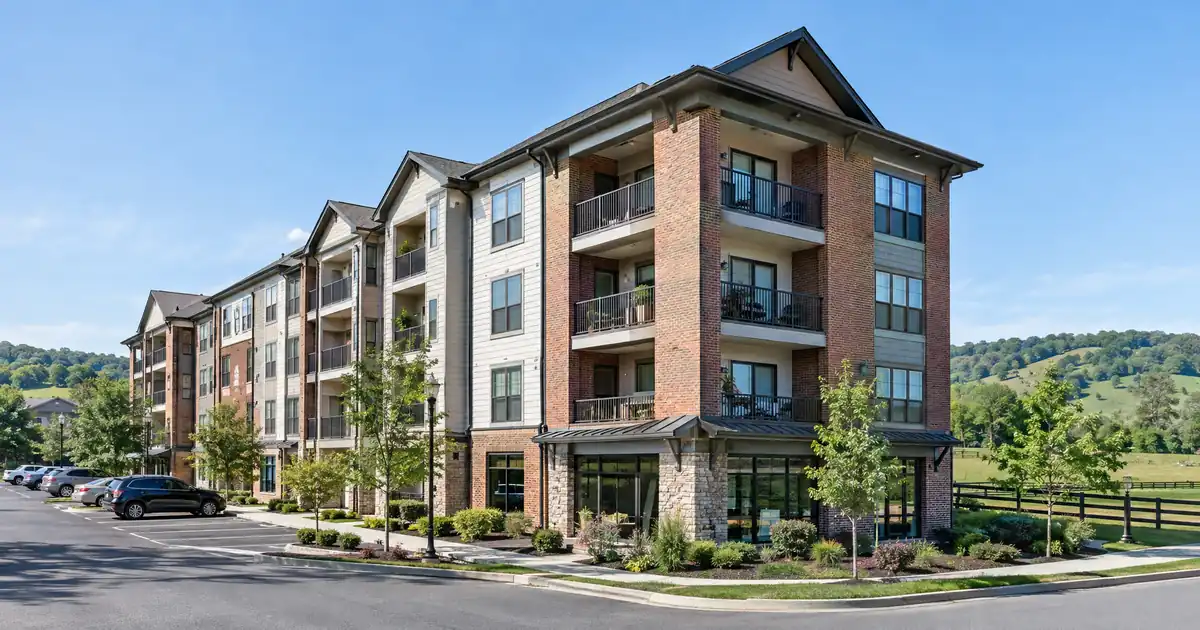
A median-priced single-family rental in Berea does not clear 1.00x on its own rent, and that fact shapes every cash-out decision in this market. Redfin puts the median sale price at $259,359, down 3.7% year over year. Zumper puts average apartment rent at $995. Divide that rent by a full monthly obligation on a 75% loan-to-value refinance and the ratio lands well under the standard baseline. The equity is there. The coverage often is not.
Lendmire (NMLS# 2371349) is a multi-state mortgage brokerage that helps Berea, Kentucky investors arrange DSCR financing across 41 markets, including Washington, D.C. This analysis covers the equity-extraction side of the market: what limits proceeds here, which property types get past the coverage test, and what to watch over the next 6-24 months.
DSCR Cash-Out Calculator
Run the cash-out numbers in Berea, KY
Rate source: Freddie Mac 30-yr average via FRED® — Federal Reserve Bank of St. Louis · effective Sep 24, 2026
Prefilled with starting assumptions — enter your property’s value, balance, taxes, and insurance for a more accurate picture.
Program parameters update from Lendmire’s centralized guideline source. Taxes and insurance are editable estimates.
As of Sep 24, 2026 · General Freddie Mac market benchmark, not a Lendmire loan offer. Property value, balance, taxes, and insurance are editable estimates. Maximum loan-to-value varies by lender, program, property type, and seasoning. Not a Loan Estimate, approval, or commitment to lend. Program availability and eligibility are subject to lender guidelines, credit approval, property review, and underwriting.
The Quick Read: A DSCR cash-out refinance in Berea, Kentucky is underwritten primarily on the property’s rental income measured against its full monthly obligation, so the workflow starts with a rent and appraisal check, then moves to lender review of coverage, seasoning, and reserves.
- Small multifamily is the structure most likely to clear 1.00x; median single-family rentals mostly fall short.
- Berea’s employer base leans on Astemo and other auto-sector manufacturers, not students.
- Expect thin appraisal comps: recent monthly sales counts have been in the low teens.
- Cash-out typically caps at 75% LTV with roughly 6 months of seasoning.
- Public rent sources conflict, so underwrite to the low end.
Berea Market Snapshot
A quick read on the Berea investor landscape — figures come from the cited sources below. Confirm current property-level numbers before underwriting.
| Metric | Detail |
|---|---|
| Home prices | 13 sales (Redfin Berea) |
| University enrollment | 1,500+ students (Berea College homepage) |
| Population | 15,786 population (Census Reporter (ACS 2024 5-yr)) |
| Employment | Up to $379M and 282 jobs (The Lane Report, Astemo) |
Why Coverage, Not Equity, Is the Binding Constraint
Most investors expect the loan-to-value cap to limit their cash-out proceeds. In Berea the debt coverage test usually binds first. The standard cash-out ceiling is 75% of appraised value, but the rent used for lender review has to cover principal, interest, taxes, insurance, and any HOA dues. When rent is low relative to value, a lender may size the loan below the LTV cap to reach 1.00x. That reduces proceeds.
The rent-to-value spread in Berea is thin. Public rent sources disagree with each other, which itself tells you something about a market this small:
| Source | Reported rent |
|---|---|
| Zumper | $995 average apartment |
| RentCafe | $887 average |
| City-Stats | $806 median gross rent (Census-based) |
Other portals show single-family rents higher, but those figures rest on very few active listings. Underwrite to the lower cluster and treat anything above it as upside. Against a median sale price near $259,359, gross monthly rent runs a fraction of one percent of value, well below the 1% benchmark that makes coverage easy.
Here is the modeled version. These are assumptions, not sourced market data: a $250,000 appraised value, a 75% LTV refinance, 30-year amortization, and a full obligation that includes taxes and insurance. Exact terms depend on the lender’s guidelines, property type, leverage, and a full review of the borrower’s file.
| Modeled property | Modeled rent | Coverage band |
|---|---|---|
| Single-family, one unit | $995 | roughly 0.65-0.70x |
| Duplex, two units | $887 each | about 1.2x |
| Duplex, two units | $995 each | about 1.3x |
The single-family case sits far below the baseline. The duplex clears it with room to spare on the same value. One caveat on 1.00x: it is the common baseline for standard programs, but some lenders review lower ratios with stronger compensating factors, lower leverage, or different pricing. Eligibility depends on lender guidelines, credit profile, reserves, and property review. An investor holding a single-family rental at 0.7x could look at a sub-1.00 program or a lower-leverage structure, and either route trades away proceeds. Get the coverage picture before assuming the cash-out figure. Both paths are subject to lender guidelines and credit approval, and none is guaranteed.
Investors who want the mechanics behind these ratios can read Lendmire’s guide to how DSCR qualification works, which covers the full calculation.
What Holds Up Rents Here: Payrolls, Not Dorms
Berea’s rental demand rests on manufacturing and institutional employers. That is a steadier base than a college-town cycle. Census Reporter’s ACS profile shows a population of 15,786. RentCafe pegs the renter share near 43%, while other aggregators run closer to 48%, so call it a little under half of households.
The anchor is Astemo Americas, formerly Hitachi Automotive. The Lane Report reports that a city official calls it Berea’s largest employer. The company plans a $112 million expansion creating 114 jobs, with a full build-out reaching $379 million and up to 282 jobs. The project is EV motor production. Separately, the City of Berea’s industrial page describes a 1,000,000-square-foot manufacturer employing 1,500 people, second-largest in Madison County behind Eastern Kentucky University. The page does not name the company, so this analysis does not either. It also lists a $25.7 million Hyster-Yale expansion and Novelis, with about 138 employees at one of the world’s largest aluminum can recycling plants.
Invest in Berea cites an automotive location quotient of 3.10. Few cities of roughly 16,000 people carry that concentration. It cuts both ways: payroll stability today, sector concentration tomorrow. More on that risk below.
Healthcare adds a second layer. Saint Joseph Berea is a 25-bed critical access hospital founded on the grounds of Berea College more than a century ago. Baptist Health Richmond, about 11 miles north, has 105 beds per Select Richmond. Neither is a mass employer at Berea’s scale, but together with the college they give tenant demand a non-cyclical floor.
The College Is an Anchor, Not a Student-Rental Play
Berea College enrolls 1,500+ students, per its homepage, and requires each to work at least 10 hours a week. It has charged no tuition for well over a century. Its Financial Freedom Pledge extends that to a fully funded degree covering housing and food, without loans, starting in a coming fall term.
For a landlord, the implication runs opposite to the usual college-town story. Students live in campus housing, and the pledge reinforces that. Off-campus student demand is not a growth driver. What the college does provide is a stable base of faculty, staff, and community households that renters draw from. Underwrite for workforce and household tenants: manufacturing, healthcare, commuters. Skip any pro forma that assumes a student rent premium.
Where the Numbers Work (and Where They Don’t)
The public data offers no neighborhood-level prices or rents for Berea, so the submarket read below is qualitative, built on named demand drivers. Three ZIP codes cover the city: 40403, 40404, and 40461. Treat those as the organizing frame.
The college-adjacent core is a walkable historic district around the Chestnut Street corridor and downtown. Tenants tie to the college and the hospital. Older housing stock is likely here, and older stock brings capital expenditure questions that show up in appraisals and lender property review. Rent-to-value data is absent, so run each property individually.
Old Town and the Artisan Village district along North Broadway are commercial and gallery-oriented. Visit Berea notes Berea has been named the Folk Arts and Crafts Capital of Kentucky. Some mixed-use potential exists, but this is not a residential rent story. Mixed-use files also get different treatment from lenders than straight residential.
The I-75 Exit 77 corridor hosts the Kentucky Artisan Center, hotels, and highway retail. Madison County’s economic development page describes I-75 as a primary north-south freight corridor, with CSX rail service as well. Lexington commuters are a plausible tenant pool. Whether newer apartments dominate the corridor is unverified, so this analysis does not assume it.
Industrial-adjacent workforce housing near Astemo, Hyster-Yale, Novelis, and KI (USA) is the strongest employer-driven rent story. No address-level data shows where those workers live. Homes within a short commute of the plants are the natural target, and they are the ones to test hardest for coverage.
The Pinnacles and Big Hill Road edge is primarily an amenity area on roughly 9,000 acres of forest that Berea College manages. It is more owner-occupied and rural. Skip it as a rental submarket.
Small Multifamily: Scarce, but It Solves the Math
The property type that gets past the coverage test is the one Berea has least of. Homes.com shows only 7 multi-family homes for sale, priced from $250,000 upward. Per NeighborhoodScout, single-family detached homes make up 61.52% of housing units.
Two consequences follow. First, a duplex through fourplex is a niche product with few comps, which complicates appraisal. Second, entry pricing near $250,000 is roughly the same as a median single-family home, so the edge comes only when added units lift total rent well above the price. Look back at the modeled table: the duplex at about 1.2x versus the single-family at roughly 0.7x on identical value is the whole argument.
Picture an investor holding a paid-down duplex in the industrial-adjacent corridor. Two units renting near the low-to-mid range of the public sources give a coverage ratio that clears the baseline at 75% LTV, and the cash-out proceeds become a down payment on the next small multifamily. That is the equity recycle in its cleanest form. The equity recycle pathway covers the sequencing in more detail. Every figure here varies by lender and program — guidelines, property type, leverage, and credit profile all apply.
Working DSCR brokers see a recurring pattern in small manufacturing-anchored markets: borrowers arrive with an appraisal expectation built on the highest automated valuation they can find, then the coverage test and a conservative appraisal trim the proceeds. The files that hold together are the ones sized to the low end of rent and value from the start. The gap between the expected cash-out figure and the final one is almost always a comps problem or a coverage problem, and in Berea it is often both.
The Appraisal Problem
Berea’s transaction volume is thin, and that matters more than any headline price. Redfin showed just 13 sales in a recent month at a $235K median. Price signals from different aggregators conflict: Zillow puts the home value near $252,888, up 0.1% over the past year, while Redfin shows the median sale price down 3.7%. Movoto shows days on market lengthening from 39 to 48 year over year.
Read together, these describe a stable, flat market, not an appreciating one. An appraiser working with few comps will lean conservative. An investor planning a cash-out refinance should not underwrite proceeds off the highest valuation model. Base the plan on a value 5-10% below the most optimistic estimate and see whether coverage still clears at that lower value. If it does, any upside is a bonus.
Seasoning matters too. Most cash-out programs look for about 6 months of ownership measured from title recording, and some lenders will consider a value beyond purchase price only after that window. Investors who bought below market and renovated should document the scope of work, since the appraiser needs to see what changed.
Vacancy data is stale and conflicting across public sources. What can be said is that the market reads tight, not oversupplied, though not tight enough to justify aggressive vacancy assumptions. Lenders apply their own vacancy and expense factors regardless.
What Changes Over the Next 6-24 Months?
Three variables decide whether Berea’s cash-out math improves or deteriorates: employment, comps, and rent.
Employment. The Astemo expansion is the single biggest swing factor. If the 114 announced jobs materialize and the larger build-out follows, workforce housing demand near the plants strengthens. If the EV motor program slips or shrinks, an automotive location quotient of 3.10 becomes a concentration risk. Watch hiring announcements and construction milestones. This is a genuine toss-up on timing: the announced numbers are large for a city this size, but announcements and payroll are different things.
Comps. Every closed duplex or small multifamily sale improves the appraisal evidence for the next one. Watch whether the count of small multifamily listings changes and whether days on market keeps stretching past 48. A market that lengthens further before stabilizing gives appraisers less confidence.
DSCR vs. conventional financing
Two common ways to finance an investment property in Berea, KY. They qualify you differently — here’s how investors weigh them.
Why investors choose it
- Qualifies on the property’s rental income — no personal tax returns, W-2s, or pay stubs needed to document income.
- No personal debt-to-income ceiling to clear, so existing mortgages and obligations don’t cap your borrowing the same way.
- Can be closed in an LLC, keeping the property inside a business entity.
- Built for scaling — not held to the limit on number of financed properties that conventional financing applies.
- Underwriting centers on the deal: generally qualifies when the rent covers the payment, a 1.00x coverage ratio being a common baseline (confirmed in underwriting).
- Designed specifically for investment property, including long-term and, where the program allows, short-term rentals.
Where it’s strong
- Often the lowest ongoing financing cost for a buyer who fully qualifies on personal income — a fit for a first property or a cost-first purchase.
Trade-offs for investors
- Requires full personal income documentation and must fit within a debt-to-income limit — salary, existing debts, and other mortgages all count.
- Typically held in your personal name rather than a business entity.
- Caps how many financed properties you can carry, which can become a ceiling as a portfolio grows.
- Evaluates you as a borrower as much as the property, which usually means more paperwork.
How investors usually choose: a first or single property often optimizes for the lowest financing cost; portfolio builders often optimize for leverage, vesting in an LLC, and scaling past conventional caps. The right answer depends on your goals, the property, and current guidelines — both paths run through select lenders in Lendmire’s wholesale network, with eligibility and terms confirmed in underwriting.
Rent. Zumper shows apartment rent up 13% year over year, while another source shows no change. These sources conflict, so no trend can be claimed. If rents do move toward the higher public figures, single-family coverage improves meaningfully. Every $100 of added monthly rent shifts a single-family ratio by several points. But underwriting to a projected rent increase is how files fall apart at review.
Scenario planning helps here. Run the file three ways: the low-end rent, the midpoint, and a downside where the loan is sized down to reach 1.00x. If the deal still makes sense as a recycled down payment in the downside case, it works. If it only works at the top of the range, wait. For a broader view of how the refinance categories compare, see Lendmire’s guide “Where DSCR and Conventional Diverge”, which sets DSCR financing against conventional financing.
Investors should also verify current local rental rules, taxes, and insurance with qualified local professionals.
Frequently Asked Questions
How do you qualify for a DSCR cash-out refinance in Berea, Kentucky?
The file is reviewed on the property’s rental income against its full monthly obligation, with a baseline coverage of 1.00x on standard programs. Typical guidance also includes a credit floor around 620, about 6 months of ownership, and reserves near 6 months of the full obligation. In Berea, coverage is usually the hurdle for single-family rentals, so small multifamily tends to review better. All of it is subject to lender guidelines and credit approval.
What are the requirements for a cash-out refinance on an investment property in Berea, Kentucky?
On most files, the cash-out ceiling is 75% of appraised value, ownership seasoning is about 6 months, and reserves run about 6 months of the full obligation. Pricing and available terms vary by lender, borrower profile, property type, and full underwriting review. Loan amounts up to $3,000,000 fit standard programs, with smaller balances routed through select lenders. The available proceeds depend on rent, the obligation, reserves, and the LTV cap. They are never a guaranteed figure.
How do DSCR lenders review rental income instead of traditional tax-return income in Kentucky?
The lender looks at the property’s rent used for lender review against its full monthly obligation instead of the borrower’s personal income documents, subject to lender guidelines. Lendmire arranges these programs and works with investors holding LLC-titled properties, depending on program guidelines. The state page on DSCR loan options for Kentucky investors covers the Kentucky specifics.
Does Berea College create student rental demand for investors?
Very little. Students live in campus housing, and the college’s Financial Freedom Pledge reinforces that by covering housing and food for enrolled students. The college matters as an institutional anchor, with faculty, staff, and community households renting nearby, but a student premium should not appear in an underwriting model.
Why do appraisals matter so much for Berea cash-out files?
Berea has very few closed sales in a typical month, so an appraiser has limited comps, especially for duplexes and small multifamily. That raises the risk of a conservative value, which directly reduces proceeds at a 75% LTV cap. Underwriting to a value below the highest automated estimate protects the plan. To talk through a specific property, call 828-256-2183 or talk through the numbers online. Final terms depend on lender guidelines, property type, leverage, and the borrower’s complete credit picture.
Where the Asymmetry Sits
Berea’s mispriced corner is small multifamily near the plant corridor. Duplexes trade at roughly the same entry price as a median single-family home, yet two rent rolls can clear coverage that one cannot, and the buyer pool for them is small because the product is scarce. With payroll demand from Astemo, Hyster-Yale, and Novelis behind the tenants and thin-comps appraisal risk keeping speculative buyers away, a well-documented duplex in this market is priced closer to its single-family cousin than its rent-earning capacity justifies.
About Lendmire
Lendmire (NMLS# 2371349) is a mortgage brokerage focused on DSCR investor financing, helping arrange programs through wholesale and investor-lending channels in 41 markets, including Washington, D.C. DSCR loans are evaluated by the lender on property cash flow rather than personal income, subject to lender guidelines, supporting LLC closings and accommodating investors with four or more financed properties. Scotsman Guide named Lendmire a Top Mortgage Workplace in both 2025 and 2026.
Get Started
Ready to find the right loan for you?
In about 30 seconds you can review financing options available for your investment property. No commitment required.
Informational only. Not a Loan Estimate, approval, or commitment to lend. Program availability and eligibility are subject to lender guidelines, credit approval, property review, and underwriting.
References
1. Redfin
2. Zumper
3. Redfin Berea
5. Census Reporter (ACS 2024 5-yr)
6. The Lane Report, Astemo expansion
7. RentCafe
8. City-Stats
9. Census Reporter, Berea ACS profile
10. Invest in Berea
11. CommonSpirit, Saint Joseph Berea
12. Select Richmond
13. Visit Berea
14. madisoncountyky.gov — Economic Development
15. Homes.com, Berea multi-family listings
16. Movoto
17. 2025
18. 2026
This article is part of Lendmire’s investment property cash-out refinance program — full qualification details, guidelines, and scenarios live on the program page.
Related reading: Luxury Rental DSCR Loans In New Jersey · Jersey Shore Vacation Rental Loans: DSCR Financing In Ocean City, Cape May And Long Beach Island · DSCR Cash-out Refinance In New Jersey: Pulling Equity From A Rental
Guides: Investment Property Cash-Out Refinance in Kentucky
Brandon Miller
Founder & CEO, Mortgage Loan Originator, Lendmire LLC
- Mortgage Loan Originator · NMLS# 1129696 · Verify on NMLS Consumer Access
- North Carolina Real Estate Broker · License# 343312 · Verify on NCREC
- North Carolina Insurance Producer · License# 19053198 · Property, Casualty, Life, Health · Verify on NAIC SBS
- Lendmire LLC · Firm NMLS# 2371349 · Verify firm licensure
Required disclosures. Lendmire (NMLS# 2371349) operates as a licensed mortgage broker, not a direct lender or depository. The discussion in this article is general in nature and should not be relied upon as financial, legal, or tax advice — every investment scenario is unique and should be reviewed by a qualified professional. Any loan inquiry is subject to lender underwriting, and this article is not a commitment to lend or a guarantee of approval. Mortgage rates, loan terms, and program guidelines vary by borrower, property, and state, and may change without notice. Equal Housing Opportunity. Verify licensure at NMLS Consumer Access.