
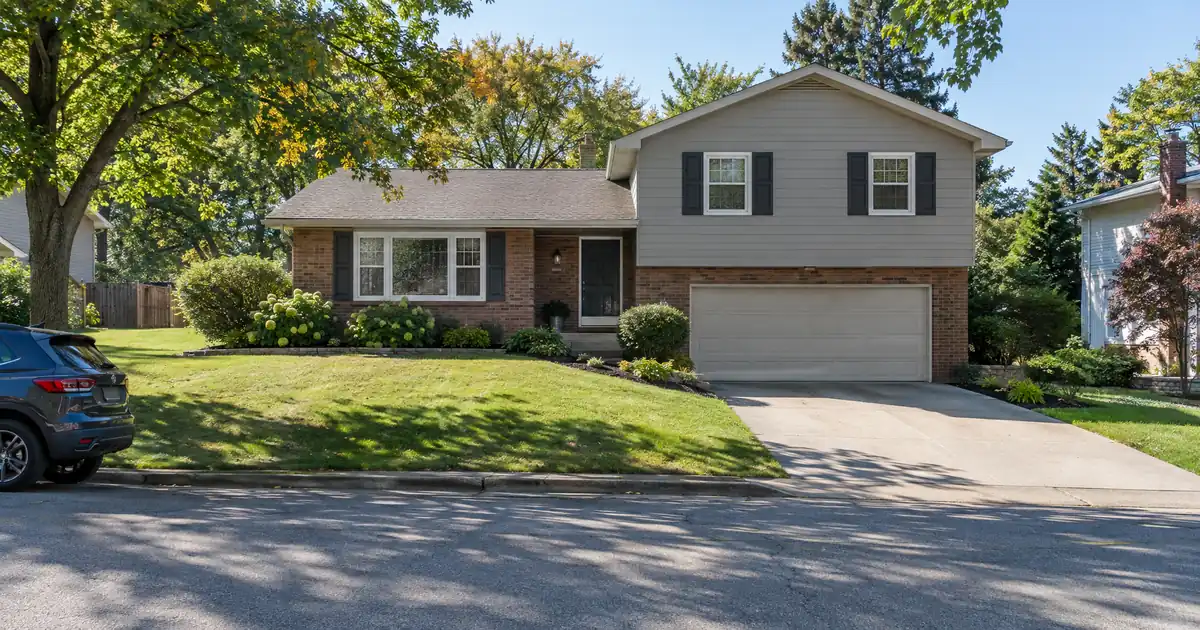
DSCR Cash-out Refinance In New Jersey — The Quick Read: Pulling equity from a rental in New Jersey through a DSCR cash-out refinance works like any other DSCR file: the property’s rent, not your traditional personal-income documentation, carries the qualification. Most files land at a 75% loan-to-value ceiling on the new appraised value, after roughly six months of ownership seasoning. New Jersey adds a wrinkle most states skip — no mortgage recording tax and no Realty Transfer Fee on a refinance — which keeps the closing-cost stack lighter than in neighboring states.
What A DSCR Cash-Out Refinance Actually Is
A DSCR cash-out refinance replaces your current mortgage with a bigger one, and you keep the difference in cash after payoff and closing costs. It’s a different animal from a rate-and-term refinance, where the loan amount stays close to the existing payoff and no cash lands in your pocket. On a DSCR file, the lender doesn’t look at your W-2 or personal tax return. It qualifies primarily on property-level rental income covering the payment, subject to lender guidelines. The rent has to clear the new loan’s monthly obligation — principal, interest, taxes, insurance, and HOA dues where they apply — at whatever coverage floor the specific program sets.
DSCR Cash-Out Calculator
Run the cash-out numbers in New Jersey
Rate source: Freddie Mac 30-yr average via FRED® — Federal Reserve Bank of St. Louis · effective Sep 24, 2026
Prefilled with local estimates — enter your property’s value, balance, taxes, and insurance for a more accurate picture.
Program parameters update from Lendmire’s centralized guideline source. Taxes and insurance are editable estimates.
As of Sep 24, 2026 · General Freddie Mac market benchmark, not a Lendmire loan offer. Property value, balance, taxes, and insurance are editable estimates. Maximum loan-to-value varies by lender, program, property type, and seasoning. Not a Loan Estimate, approval, or commitment to lend. Program availability and eligibility are subject to lender guidelines, credit approval, property review, and underwriting.
DSCR loans are designed for non-owner-occupied investment properties. Because they are business-purpose investor loans, they are reviewed differently from a standard owner-occupied mortgage.
For a fuller walkthrough of how the ratio gets built and priced, Lendmire’s complete DSCR loans guide covers the mechanics in more depth than fits here.
Key Terms Defined
DSCR (Debt Service Coverage Ratio): rent divided by the full monthly housing payment (PITIA). A 1.00 reading means rent and payment are equal.
Seasoning: the minimum time a borrower has to hold title before a lender will treat the file as a standard cash-out refinance rather than something more restrictive.
LTV (Loan-to-Value): the new loan amount as a percentage of the property’s current appraised value — the number that caps how much cash you can pull.
PITIA: principal, interest, taxes, insurance, and association dues, where they apply — the full monthly obligation the rent has to cover.
Delayed financing: a separate refinance path for properties bought in cash, capped by documented purchase cost rather than the newly appraised value.
How Underwriting Actually Treats The File, Step By Step
The process runs in a set order, and skipping ahead in your head is where investors misjudge what a file can actually do.
1. Classify the transaction. Any refinance that puts cash in your hands beyond payoff and costs gets classified as cash-out — a lower leverage ceiling than a purchase or rate-and-term file.
2. Order a fresh appraisal. Current value replaces your original purchase price as the LTV basis. On a rental, appraisers commonly use the same rent-schedule forms the broader mortgage industry relies on — the Single-Family Comparable Rent Schedule (Form 1007) for single-family rentals, and the Small Residential Income Property Appraisal Report (Form 1025) for small multifamily. Form 1025 specifically asks whether the property is subject to rent control, which matters in parts of New Jersey (more on that below).
3. Build the DSCR. The appraiser’s market-rent conclusion, or an in-place lease depending on the program, becomes the income side. The new loan’s estimated monthly payment is the expense side. Most programs in the network want that ratio at 1.00 or better, though select lenders will work with lower coverage — see below.
4. Confirm ownership seasoning. Cash-out files typically need about six months of ownership before the note date, counted from when title recorded. This matches a benchmark used widely across mortgage lending. Fannie Mae’s own Selling Guide, for comparison, sets a six-month title-seasoning requirement before disbursement on its cash-out transactions. A related 2023 announcement added a 12-month minimum age for any first mortgage being paid off. DSCR loans sit outside that agency framework entirely — they’re never sold to Fannie or Freddie. But the six-month rule shows up across much of the non-QM market anyway, simply because it’s a familiar reference point.
5. Confirm leverage tier. The strongest coverage ratios and credit profiles open the most leverage. Weaker files get capped lower or asked for more reserves.
6. Underwrite credit, reserves, and property type. Even a property with plenty of equity and strong rent can get capped or declined here if the credit file is thin, reserves fall short, or the property type isn’t one the program finances.
7. Close and disburse. The new loan pays off the old mortgage and any subordinate liens, covers closing costs, and the remaining proceeds go to you.
What Leverage And Coverage Actually Look Like
Across the wholesale network Lendmire places files with, cash-out refinances on standard rentals top out around 75% loan-to-value on most programs — never 80%, that ceiling belongs to purchase transactions only. Ownership seasoning of about six months is the common expectation before a file even reaches that leverage conversation.
Coverage is program-dependent, not a single fixed number. A handful of programs in the network set their DSCR floor at 1.00 — a starting point for those specific programs, not an industry standard — and stronger ratios open better leverage. Credit matters just as much: a 620 floor exists on parts of the network, most programs want something closer to 660, and 700 or better tends to unlock the strongest leverage tiers available. Reserve requirements vary by lender, leverage, and loan size — commonly landing around six months of PITIA, with some conservative rate-and-term files at modest leverage under $1,500,000 seeing reserves waived entirely, and files above that threshold typically stepping up toward nine months. Loan sizes on standard programs generally run up to $3,000,000, with anything above $2,500,000 usually structured as 30-year fixed rather than an adjustable option.
A bigger down payment (or in a refinance, more retained equity) lowers the monthly payment and can lift the coverage ratio — but it doesn’t erase a leverage cap, a credit floor, or a reserve requirement. The strongest cash-out files clear both tests at once: enough equity left in the deal after the 75% LTV ceiling, and rent that comfortably covers the payment. These specifics are subject to lender guidelines and a full review of property, leverage, and credit.
One clarification worth sitting with: clearing 1.00 DSCR is not the same as positive cash flow. The ratio only compares rent to PITIA. Repairs, vacancy, property management, utilities, and capital expenditures sit entirely outside that math. A property clearing 1.05 on paper can still run thin once real operating costs get factored in.
Where Sub-1.00 And No-Ratio Options Fit
Coverage below 1.00 isn’t an automatic dead end. Select lenders in the network still offer it, but they adjust leverage and terms to match the weaker ratio — typically with a lower LTV cap than a strong-coverage file would get. No-ratio structures exist too, but only through select lenders, and they’re generally reserved for borrowers who already own a primary residence. Neither path gets the same pricing or leverage as a standard 1.00-plus file. Both are reviewed case-by-case, subject to lender guidelines.
Where The General Rule Breaks: Named Edge Cases
Delayed financing. If you bought the property outright in cash, you don’t wait out the standard seasoning clock the same way. It’s a separate underwriting path, not a shortcut version of a normal cash-out — the loan amount gets capped at the lower of appraised value or your documented purchase cost, and you’ll need paperwork showing the cash purchase and source of funds.
DSCR vs. conventional financing
Two common ways to finance an investment property in this market. They qualify you differently — here’s how investors weigh them.
Why investors choose it
- Qualifies on the property’s rental income — no personal tax returns, W-2s, or pay stubs needed to document income.
- No personal debt-to-income ceiling to clear, so existing mortgages and obligations don’t cap your borrowing the same way.
- Can be closed in an LLC, keeping the property inside a business entity.
- Built for scaling — not held to the limit on number of financed properties that conventional financing applies.
- Underwriting centers on the deal: generally qualifies when the rent covers the payment, a 1.00x coverage ratio being a common baseline (confirmed in underwriting).
- Designed specifically for investment property, including long-term and, where the program allows, short-term rentals.
Where it’s strong
- Often the lowest ongoing financing cost for a buyer who fully qualifies on personal income — a fit for a first property or a cost-first purchase.
Trade-offs for investors
- Requires full personal income documentation and must fit within a debt-to-income limit — salary, existing debts, and other mortgages all count.
- Typically held in your personal name rather than a business entity.
- Caps how many financed properties you can carry, which can become a ceiling as a portfolio grows.
- Evaluates you as a borrower as much as the property, which usually means more paperwork.
How investors usually choose: a first or single property often optimizes for the lowest financing cost; portfolio builders often optimize for leverage, vesting in an LLC, and scaling past conventional caps. The right answer depends on your goals, the property, and current guidelines — both paths run through select lenders in Lendmire’s wholesale network, with eligibility and terms confirmed in underwriting.
Inherited or legally awarded property. Seasoning requirements generally don’t apply if the property came through inheritance or was legally awarded in a divorce or separation. Current appraised value gets used for the LTV calculation without a holding-period test standing in the way.
Title seasoning and value seasoning are separate gates. A property can clear the ownership-holding-period test and still land a conservative valuation if the appraiser or lender isn’t comfortable leaning fully on a newly-forced-up number. Strong coverage doesn’t shorten the seasoning clock — they’re independent checks, and a high-DSCR file that’s only a few months into ownership is still an under-seasoned file.
LLC-held title. If an LLC you majority-own or control held the property before you took title personally, some lenders will count that LLC holding period toward the seasoning requirement — but this varies across the network, and it’s worth confirming upfront on any entity-vested New Jersey rental (subject to program eligibility).
Rent-controlled municipalities. New Jersey has no statewide rent control statute. Instead, the state lets municipalities adopt their own ordinances under state law, and over 100 municipalities have done so, including Jersey City, Hoboken, Newark, Union City, West New York, North Bergen, and Fort Lee. This matters directly for a cash-out file because Form 1025’s comparable-rent analysis asks whether the property is subject to rent control — if it is, the appraiser’s market-rent conclusion may be pinned to the ordinance’s allowed increase rather than open-market comparables, which caps the income side of your DSCR calculation. The good news for most single-family investors: newly built rental housing is usually exempt for up to 30 years after occupancy, and standalone single-family homes and duplexes are usually not covered by rent control at all. The overlay mostly bites on older multi-unit buildings in the specific covered cities.
Short-term rentals. Form 1007 wasn’t built for short-term rental analysis, and it skips vacancy rates and platform-specific business expenses entirely. Programs that finance STRs in the network lean on alternative income documentation — platform statements or market-rate data — rather than a straight rent-schedule conclusion. On the leverage side, STR purchases run up to 75% LTV, while STR cash-out refinances cap closer to 70% — a lower ceiling than the 75% standard-rental cash-out figure in the same breath, because short-term income carries more variability than a signed lease. Terms vary by lender guidelines, property type, leverage, credit profile, and full file review.
What This Means For A New Jersey Investor
New Jersey rents run higher than the national median — roughly 20% higher, according to Rutgers New Jersey State Policy Lab analysis of Census data. Higher rent on a similarly priced property means stronger coverage ratios. That’s the real reason cash-out proceeds in New Jersey can beat what you’d get in a lower-rent state with a similar-value property. But this cuts both ways. Underwriters will check whether the appraiser’s rent number is realistic and sustainable — especially in rent-controlled towns, where increases are capped by local ordinance, not the open market.
New Jersey’s closing-cost stack gives investors a real cost advantage. The state has no mortgage recording tax — only per-page county recording fees that vary by jurisdiction, as documented in practitioner guidance on New Jersey real estate finance. And since the Realty Transfer Fee only applies when a deed is recorded on a sale, a refinance doesn’t trigger it at all — no deed changes hands. Compare that to a state like New York, where a percentage-of-loan-amount mortgage recording tax applies on top of appraisal, title, and underwriting fees. A New Jersey investor pulling equity through a DSCR cash-out pays appraisal costs, title insurance, and modest county recording charges — and skips those two extra state-level fees entirely.
For BRRRR-style investors, one mix-up causes most refinance delays: seasoning versus value that’s just been created. Renovating a distressed New Jersey rental can boost its appraised value fast. But if the lender isn’t comfortable lending fully against a number that new, they may cap your loan at a lower LTV — even if the math looks right on paper.
Files in markets with dense rent-control coverage often come in tighter on the appraiser’s rent conclusion than the borrower expects — the covered unit’s rent history and the ordinance’s allowed increase matter more than nearby market comparables once the box gets checked on Form 1025. Confirming a property’s rent-control status before ordering the appraisal saves a round of back-and-forth later.
If you’re weighing how much of your rental’s equity is actually reachable given today’s rent and payment, how much equity is required for a cash-out refinance on a rental property breaks that math down further.
Frequently Asked Questions
Does New Jersey charge a mortgage recording tax on a cash-out refinance? No. New Jersey doesn’t impose a mortgage recording tax at all — only per-page county recording fees that vary by jurisdiction. That’s a real cost difference compared to states that tax the loan amount directly at recording.
Will the Realty Transfer Fee apply to my refinance? No. The Realty Transfer Fee only applies when a deed is recorded on a sale. A refinance doesn’t transfer title, so no deed records, and the fee never triggers.
How long do I need to own a New Jersey rental before a cash-out refinance? Most programs in the network expect around six months of ownership, measured from when title recorded, before treating a refinance as standard cash-out. Delayed-financing and inherited-property paths can bypass that seasoning clock entirely, but they follow their own separate rules.
Does rent control in cities like Jersey City or Hoboken affect my DSCR calculation? It can, if the property is a covered multi-unit building. The appraiser’s rent conclusion may be capped by the local ordinance’s allowed increase rather than open-market comparables. Standalone single-family homes and duplexes are usually exempt from these ordinances entirely.
Can I still refinance if my coverage ratio is under 1.00? Sub-1.00 coverage is available through select lenders in the network, with leverage and terms adjusted accordingly — it’s a real path, not an automatic decline. No-ratio structures exist too, generally for borrowers who already own a primary residence, subject to lender guidelines and individual file review.
If you’re holding a New Jersey rental and want to see what a DSCR cash-out refinance could look like against your property’s rent and current equity position, Lendmire can help compare options based on the property’s income, your credit profile, available leverage, and your goals as an investor. Reach the team at 828-256-2183 or request a scenario review through Lendmire’s quote request page.
A deeper walk-through of investment-property equity extraction lives in cash-out refinance on an investment property.
About Lendmire
Lendmire, NMLS# 2371349, is a non-QM mortgage broker serving real estate investors in 41 markets, including Washington, D.C., through DSCR investor loan programs. Qualification is generally reviewed around the subject property’s rental income, not the borrower’s W-2 history — a practical fit for LLC-titled portfolios and self-employed investors. All scenarios remain subject to lender review and program guidelines. Two consecutive Scotsman Guide Top Mortgage Workplace recognitions (2025, 2026).
For how equity extraction works on an investment property, see cash-out refinance on an investment property.
Lendmire’s Top Mortgage Workplace recognition is documented by Scotsman Guide 2025 Top Mortgage Workplace and Scotsman Guide 2026 Top Mortgage Workplace.
Get Started
Ready to find the right loan for you?
In about 30 seconds you can review financing options available for your home or investment property. No commitment required.
Informational only. Not a Loan Estimate, approval, or commitment to lend. Program availability and eligibility are subject to lender guidelines, credit approval, property review, and underwriting.
References
1. Fannie Mae Selling Guide B2-1.3-03, Cash-Out Refinance Transactions
2. Fannie Mae SEL-2023-01 Announcement
3. property-perfected.com – New Jersey Rent Control Guide
4. leaserunner.com – New Jersey Rent Control Laws
This article is part of Lendmire’s investment property cash-out refinance program — full qualification details, guidelines, and scenarios live on the program page.
Related reading: Luxury Rental DSCR Loans In New Jersey · Jersey Shore Vacation Rental Loans: DSCR Financing In Ocean City, Cape May And Long Beach Island · DSCR Portfolio Loans In New Jersey: Several Rentals, One Note
Guides: Investment Property Cash-Out Refinance in New Jersey
Brandon Miller
Founder & CEO, Mortgage Loan Originator, Lendmire LLC
- Mortgage Loan Originator · NMLS# 1129696 · Verify on NMLS Consumer Access
- North Carolina Real Estate Broker · License# 343312 · Verify on NCREC
- North Carolina Insurance Producer · License# 19053198 · Property, Casualty, Life, Health · Verify on NAIC SBS
- Lendmire LLC · Firm NMLS# 2371349 · Verify firm licensure
Required disclosures. Lendmire (NMLS# 2371349) operates as a licensed mortgage broker, not a direct lender or depository. The discussion in this article is general in nature and should not be relied upon as financial, legal, or tax advice — every investment scenario is unique and should be reviewed by a qualified professional. Any loan inquiry is subject to lender underwriting, and this article is not a commitment to lend or a guarantee of approval. Mortgage rates, loan terms, and program guidelines vary by borrower, property, and state, and may change without notice. Equal Housing Opportunity. Verify licensure at NMLS Consumer Access.