
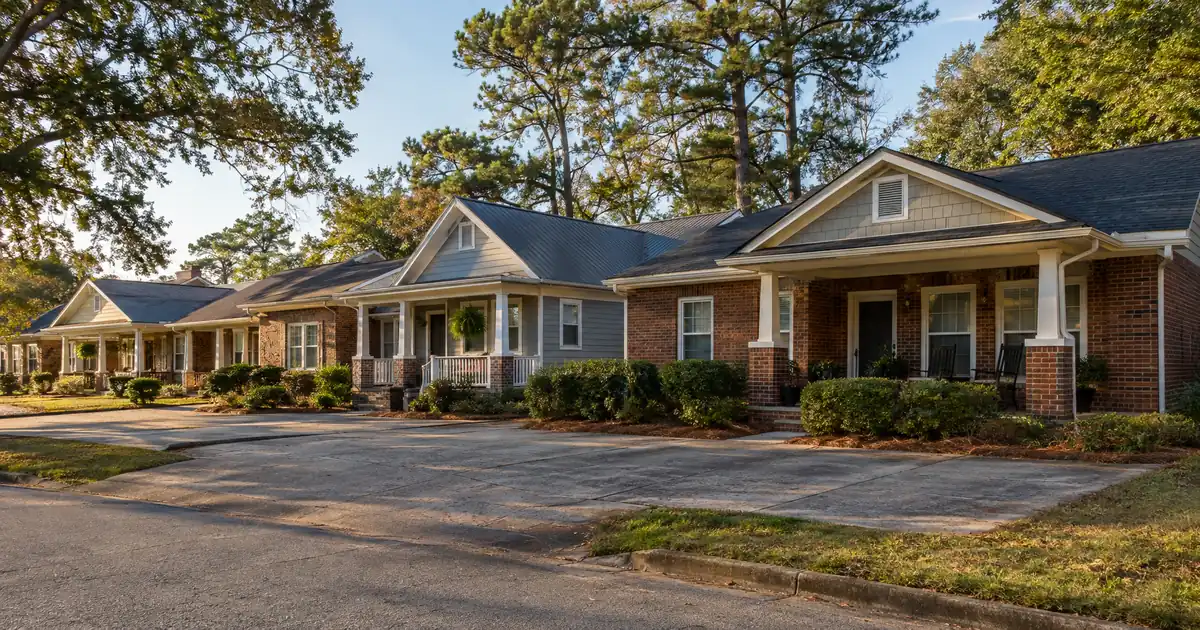
A cash-out file in Berea usually turns on one number: rent against value. Redfin puts the median sale price at $259,359, while Zumper’s average apartment rent is $995. Run a full obligation of principal, interest, taxes, and insurance against that rent at 75% loan-to-value and a median-priced house sits well under the 1.00x benchmark. The equity may be real, but the coverage often isn’t. That gap decides which Berea properties can be refinanced and which ones need restructuring first.
The Quick Read: A DSCR cash-out refinance in Berea, Kentucky is underwritten primarily on the property’s rental income measured against its full monthly obligation, so the sequence is seasoning, appraisal, coverage test, then reserves. Coverage and appraised value decide how much equity, if any, can be pulled.
DSCR Cash-Out Calculator
Run the cash-out numbers in Berea, KY
Rate source: Freddie Mac 30-yr average via FRED® — Federal Reserve Bank of St. Louis · effective Sep 24, 2026
Prefilled with starting assumptions — enter your property’s value, balance, taxes, and insurance for a more accurate picture.
Program parameters update from Lendmire’s centralized guideline source. Taxes and insurance are editable estimates.
As of Sep 24, 2026 · General Freddie Mac market benchmark, not a Lendmire loan offer. Property value, balance, taxes, and insurance are editable estimates. Maximum loan-to-value varies by lender, program, property type, and seasoning. Not a Loan Estimate, approval, or commitment to lend. Program availability and eligibility are subject to lender guidelines, credit approval, property review, and underwriting.
- Cash-out leverage typically caps at 75% loan-to-value, below the purchase ceiling.
- Ownership seasoning of about 6 months from title recording is the usual entry point.
- Median single-family rent-to-value is thin, so coverage often sits below 1.00x.
- Small multifamily, though scarce, is where the coverage math improves.
- Manufacturing and healthcare employers, not students, anchor tenant demand.
Berea Market Snapshot
A quick read on the Berea investor landscape — figures come from the cited sources below. Confirm current property-level numbers before underwriting.
| Metric | Detail |
|---|---|
| Home prices | 13 sales (Redfin Berea) |
| University enrollment | 1,500+ students (Berea College homepage) |
| Population | 15,786 population (Census Reporter (ACS 2024 5-yr)) |
| Employment | Up to $379M and 282 jobs (The Lane Report, Astemo) |
The Coverage Math at Median Pricing
At median pricing, a single-family rental in Berea does not clear 1.00x on rent alone. That is the constraint every cash-out plan here has to start from.
The rent evidence is messy. Zumper shows $995 for the average apartment, RentCafe shows $887, and City-Stats reports a Census-based median gross rent of $806. Zillow’s rental data shows a higher $1,395 median, but it rests on roughly four listings, so treat it as an outlier. Berea is a small city, and no source publishes clean submarket rent data. That is a data gap, and the article does not paper over it.
Now run the numbers using modeled assumptions, not sourced facts. Take a house at roughly the citywide median value and assume rent of $1,000. Use 30-year amortization, 75% loan-to-value, and full taxes and insurance in the obligation. Coverage lands in the mid-0.6x range. Push the modeled rent to the top of the observed range, near $1,395, and coverage improves to roughly 0.9x. Cutting leverage to about 65% would mean less cash out, which defeats the point of the refinance.
Below 1.00x, there are paths a lender may review: a sub-1.00 program at reduced leverage, an interest-only structure, or a lower cash-out request. Each carries tradeoffs in pricing, leverage, or reserves, and eligibility stays subject to lender guidelines, credit approval, and property review. The DSCR qualification mechanics explain how the ratio is built, and the calculator handles the dollar conversions.
Why Multi-Unit Changes the Answer
Small multifamily is where Berea’s coverage math improves, but supply is the problem. Homes.com lists only seven multifamily properties for sale, priced from $250,000 upward, with an average of 48 days on market. Single-family detached homes make up about 62% of housing units, per NeighborhoodScout. So the entry price for multi-unit is close to the price of a median house, which means the second rent stream is nearly free coverage.
Consider a scenario. A two-unit property at about $250,000, with each side modeled at $995 in rent. That is $1,990 in gross rent against an obligation sized at 75% loan-to-value including taxes and insurance. Coverage comes out around 1.3x, versus the mid-0.6x for a single-family at similar pricing. That spread is the whole thesis for a cash-out investor here. Same price point, roughly double the coverage.
Two cautions apply. Comps are thin, so an appraiser may lean on out-of-city sales. And the modeled rents assume both units lease at the average, which the data doesn’t guarantee. A duplex with one unit vacant drops back into sub-1.00 territory.
Housing stock also matters. City-Stats puts the median year built at 1988, so expect capital expenditure needs on older buildings. Log homes, barndominiums, and manufactured homes fall outside the network’s DSCR programs, and that matters at Berea’s rural edges.
Where the Tenants Come From
Berea’s tenant base is workers, not students. Berea College enrolls more than 1,500 students, and they live in campus housing, so this is not a typical college-town rental play. The college does anchor the community, though. Students work a minimum of 10 hours a week on campus, and Saint Joseph Berea, a 25-bed critical access hospital established in 1898, serves five surrounding counties. Baptist Health Richmond, a 105-bed regional flagship about 11 miles away per Select Richmond, adds more healthcare employment within commuting range.
Industry carries most of the weight. The City of Berea’s industrial page describes a 1,000,000-square-foot manufacturer employing about 1,500 people, second in Madison County only to Eastern Kentucky University. It also notes a Hyster-Yale expansion of $25.7 million and a Novelis aluminum-recycling plant with about 138 employees. Invest in Berea cites an automotive location quotient of 3.10, meaning the city’s auto concentration runs more than three times the national norm. The Madison County economic development office points to I-75 as a primary freight corridor and CSX rail service.
Then there’s the forward-looking piece. The Lane Report reports a planned $112 million Astemo Americas expansion for EV motor production that would create 114 jobs, with a full build-out reaching $379 million and up to 282 jobs. A city official calls Astemo Berea’s largest employer. New jobs over the next several quarters would add rental demand, and that demand would not depend on the college calendar.
Renting is common but not dominant. RentCafe puts 43% of households as renters, roughly 2,400 households. A small tenant pool suggests each vacancy hurts more, which lenders price into their own vacancy and expense factors.
Working the Submarkets Without Submarket Data
No source publishes neighborhood-level prices or rents for Berea, so the map below is qualitative. It describes demand drivers and does not rank by dollar figures.
College-adjacent core. The walkable historic area around campus and downtown draws employees of the college and hospital. Demand here comes from staff and workers, and student turnover is limited. For a cash-out, older homes in this pocket may carry appraisal support from character and location, though the comps remain few.
Industrial-adjacent workforce housing. Housing that serves the Astemo, Hyster-Yale, Novelis, and KI workforces is the strongest employer-linked rent story. There is no address-level data on where those employees live, so this is a demand thesis rather than a measured one. It is also the pocket most exposed to a plant-specific shock.
The I-75 Exit 77 corridor. Interstate access, the Kentucky Artisan Center, hotels, and retail define this area. It serves commuters heading toward Lexington. The research could not verify newer apartment stock here, so that remains an open question.
Old Town and the Artisan Village. Shops and galleries dominate. Visit Berea notes Berea has been named the Folk Arts and Crafts Capital of Kentucky. It’s mostly commercial, with some mixed-use potential, and residential cash-out plays here are limited.
The Pinnacles and Big Hill Road edge. Skip it for rental underwriting. It is owner-occupied and rural, and the amenity value is real but the rental value is not.
Berea also spans three ZIP codes: 40403, 40404, and 40461. Ask the appraiser and the lender which comps fall in which ZIP before committing to a valuation target.
What Working Brokers See in Small-City Files
Working DSCR brokers see a recurring pattern in small-city markets like this one: the equity looks generous on paper and the coverage constrains the proceeds. Investors often plan from an automated valuation or a listing-price estimate, then find the appraisal comes in lower because only a handful of sales support it. The stronger files start from the conservative appraised value, size the loan to coverage first, and treat leftover equity as a bonus rather than the plan. Files with a second income stream, such as a second unit or a documented lease at market rent, tend to hold together better through review.
Reading the Price Signals
Berea’s price signals conflict, and that matters for cash-out sizing. Redfin shows the median sale price down 3.7% year over year, while Zillow’s home value index sits slightly lower at $252,888, up 0.1%. Zillow also shows about 29 days to pending. Movoto shows days on market rising to 48 from 39 a year earlier. Redfin’s separate housing-market page shows only 13 sales in a single month. A market this thin swings on small counts.
The read is stable, not appreciating. Investors who bought recently should not assume a large gain, and the 6-month seasoning clock measured from title recording only opens the door. It does not add equity. Cash-out proceeds depend on the appraised value, the 75% loan-to-value ceiling, rent used for lender review, and reserves of roughly 6 months of the full obligation. Credit tiers commonly start at a 620 floor and improve pricing and leverage at higher scores. LLC vesting is typical for these files, subject to lender program eligibility. For smaller Berea balances, the network routes files through select lenders rather than standard programs. All of it is guidance, not a commitment to lend.
For a look at the mechanics beyond Berea, the equity recycle pathway covers the general structure, and refinancing options compares rate-and-term against cash-out. How DSCR stacks up against conventional financing is worth a look for investors weighing a debt-to-income path.
What Could Change Over the Next 6-24 Months
Four indicators will shape Berea cash-out math. Track them rather than guessing.
1. Astemo hiring. If the announced jobs materialize, workforce rental demand tightens. If the expansion stalls, the thesis loses its forward edge.
2. Days on market. Movoto’s move from 39 to 48 days is a mild softening. A continued climb would pressure appraisals.
3. Multifamily inventory. Seven listings is a thin pool. A few more sales create comps that help every duplex owner’s appraisal.
4. Rent data convergence. Sources currently span from $806 to $1,395. When two or three agree, underwriting gets easier.
The honest toss-up is single-family versus multi-unit for a recycling strategy. Single-family is easier to find and liquid enough, but the coverage math forces low leverage. Multi-unit has the coverage but few comps, and appraisal variance could cut the proceeds. Investors who prefer certainty may accept smaller cash-out on single-family. Those willing to hold a scarce asset may find multi-unit better, even with the comp risk.
DSCR vs. conventional financing
Two common ways to finance an investment property in Berea, KY. They qualify you differently — here’s how investors weigh them.
Why investors choose it
- Qualifies on the property’s rental income — no personal tax returns, W-2s, or pay stubs needed to document income.
- No personal debt-to-income ceiling to clear, so existing mortgages and obligations don’t cap your borrowing the same way.
- Can be closed in an LLC, keeping the property inside a business entity.
- Built for scaling — not held to the limit on number of financed properties that conventional financing applies.
- Underwriting centers on the deal: generally qualifies when the rent covers the payment, a 1.00x coverage ratio being a common baseline (confirmed in underwriting).
- Designed specifically for investment property, including long-term and, where the program allows, short-term rentals.
Where it’s strong
- Often the lowest ongoing financing cost for a buyer who fully qualifies on personal income — a fit for a first property or a cost-first purchase.
Trade-offs for investors
- Requires full personal income documentation and must fit within a debt-to-income limit — salary, existing debts, and other mortgages all count.
- Typically held in your personal name rather than a business entity.
- Caps how many financed properties you can carry, which can become a ceiling as a portfolio grows.
- Evaluates you as a borrower as much as the property, which usually means more paperwork.
How investors usually choose: a first or single property often optimizes for the lowest financing cost; portfolio builders often optimize for leverage, vesting in an LLC, and scaling past conventional caps. The right answer depends on your goals, the property, and current guidelines — both paths run through select lenders in Lendmire’s wholesale network, with eligibility and terms confirmed in underwriting.
(For any of this, confirm current local rental rules, taxes, and insurance with qualified local professionals. They vary by county and property.)
Where the Asymmetry Sits
The mispriced piece of Berea is small multifamily near the employer base. Regional rents are low, and Look at Lex puts two-bedroom rent in Madison County 45.5% below the U.S. average, yet entry prices for a duplex or fourplex sit near the price of a single house. That combination, plus an auto-manufacturing base with a location quotient of 3.10 and a possible expansion, points to duplexes and small buildings serving plant workers. An investor who already owns one and can wait out the 6-month seasoning clock holds the most useful collateral in the city.
Frequently Asked Questions
How do you qualify for a DSCR cash-out refinance in Berea, Kentucky?
Qualification centers on the property’s rent against its full monthly obligation, with 1.00x as a common baseline, plus about 6 months of ownership, a credit score at or above the 620 floor, and roughly 6 months of reserves. Cash-out leverage typically tops out at 75%. Final eligibility depends on lender guidelines, credit review, and the appraisal.
What are the requirements for an investment property loan in Berea, Kentucky?
Expect an appraisal, a lease or rent estimate, proof of reserves, and entity documents if the property is in an LLC. Loan amounts run up to $3,000,000 on standard programs, and smaller Berea balances route through select lenders in the network. See DSCR loan options for Kentucky investors for the statewide picture.
Does Berea College create student rental demand for a cash-out strategy?
Not much. Students live in campus housing, and the college is moving toward covering housing costs for enrolled students, so it is not an off-campus growth driver. Underwrite to workers and households tied to manufacturing, healthcare, and commuting instead.
Why do Berea appraisals matter more than in bigger metros?
Sales volume is small, so a few comps set the value. One month showed only 13 sales in Redfin’s data. Plan around a conservative appraised value rather than an automated estimate, and expect variance.
For current guidelines and terms, see Lendmire’s DSCR loan programs page.
About Lendmire
Lendmire (NMLS# 2371349) is a mortgage brokerage focused on DSCR investor financing, helping arrange programs through wholesale and investor-lending channels in 41 markets, including Washington, D.C. DSCR loans are evaluated by the lender on property cash flow rather than personal income, subject to lender guidelines, supporting LLC closings and accommodating investors with four or more financed properties. Scotsman Guide named Lendmire a Top Mortgage Workplace in both 2025 and 2026.
Get Started
Ready to find the right loan for you?
In about 30 seconds you can review financing options available for your investment property. No commitment required.
Informational only. Not a Loan Estimate, approval, or commitment to lend. Program availability and eligibility are subject to lender guidelines, credit approval, property review, and underwriting.
References
2. Zumper, Berea rent research
3. Redfin Berea
5. Census Reporter (ACS 2024 5-yr)
6. The Lane Report, Astemo expansion
8. City-Stats
9. Homes.com
11. CommonSpirit, Saint Joseph Berea
12. Select Richmond
13. Invest in Berea
14. Madison County economic development office
15. Visit Berea
17. Movoto
18. Look at Lex
19. 2025
20. 2026
This article is part of Lendmire’s investment property cash-out refinance program — full qualification details, guidelines, and scenarios live on the program page.
Related reading: Luxury Rental DSCR Loans In New Jersey · Jersey Shore Vacation Rental Loans: DSCR Financing In Ocean City, Cape May And Long Beach Island · DSCR Cash-out Refinance In New Jersey: Pulling Equity From A Rental
Guides: Investment Property Cash-Out Refinance in Kentucky
Brandon Miller
Founder & CEO, Mortgage Loan Originator, Lendmire LLC
- Mortgage Loan Originator · NMLS# 1129696 · Verify on NMLS Consumer Access
- North Carolina Real Estate Broker · License# 343312 · Verify on NCREC
- North Carolina Insurance Producer · License# 19053198 · Property, Casualty, Life, Health · Verify on NAIC SBS
- Lendmire LLC · Firm NMLS# 2371349 · Verify firm licensure
Compliance and disclosures. Lendmire (NMLS# 2371349) is a licensed mortgage broker and is not a direct lender, depository institution, financial advisor, or tax professional. Content in this article is general market analysis and educational information — not financial, legal, or tax advice for any specific situation. Lendmire does not guarantee loan approval; every transaction is subject to underwriting by the funding lender. Mortgage pricing and loan program guidelines are subject to change at any time without notice and vary by borrower characteristics, property type, and state regulations. Lendmire complies with Equal Housing Opportunity. Licensure verification: NMLS Consumer Access.