
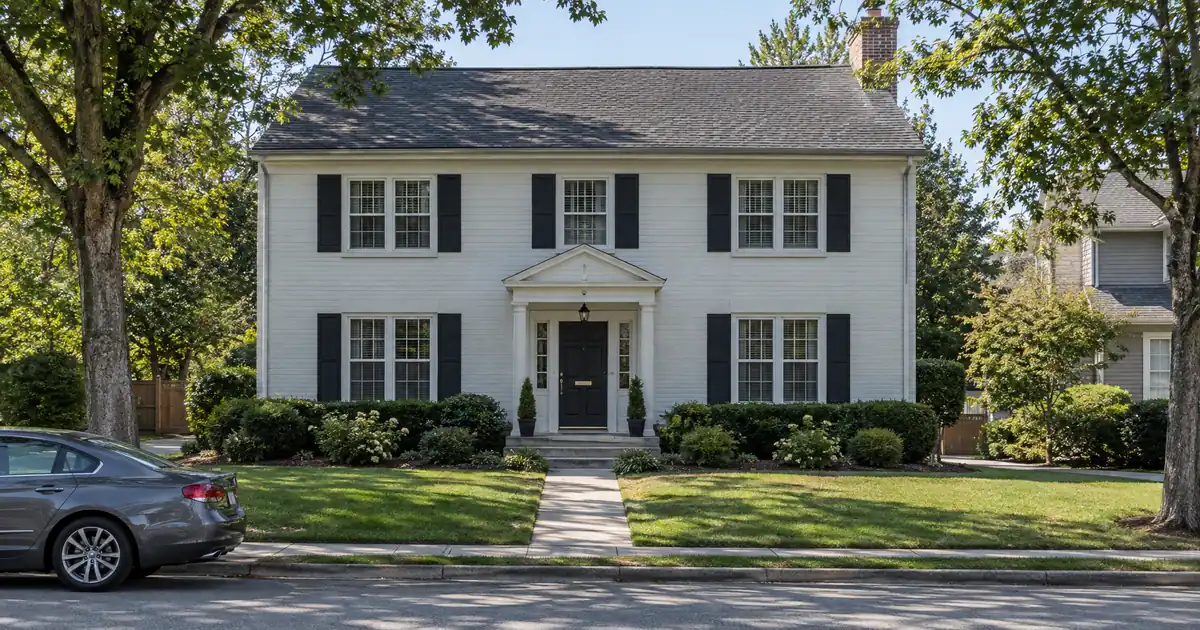
The Quick Read: Usually not: while probate is open, the court-appointed personal representative, not the heir, generally holds the authority to pledge the house, and a lender needs clean title and that signing authority before it will fund a bank statement HELOC in your name. Your bank statements are rarely the sticking point. Title and signing authority are.
- A bank statement HELOC changes how your income is documented. It does not change who must own and sign for the property.
- A house in a living trust, or one that passed by survivorship or a transfer-on-death deed, often skips probate, so the wait may not apply.
- An estate-level loan signed by the personal representative is a different product from a HELOC, and it comes from specialty lenders.
- Once title is in your name, a self-employed heir can be reviewed on bank statements, subject to credit, equity, and property rules.
- If the inherited house will be a rental, a DSCR cash-out refinance may fit better than a HELOC.
Why Probate Blocks a New Line
Probate blocks a new line because an heir’s ownership during administration is real but limited. In many states, title vests in the heirs at death, but that interest stays subject to debts, expenses, and the personal representative’s powers. Washington’s statute on descent and distribution shows the pattern: title vests immediately in heirs or devisees, “subject to” debts and administration expenses.
How large a line the equity supports.
An equity line is sized by combined loan-to-value, occupancy, and credit — not by rental coverage. Switch the occupancy or the credit band and the ceiling moves with it.
Investment-property lines require a 700 minimum credit score; second-home lines start at a 640 minimum and primary-residence lines at 600, and the combined-LTV ceiling steps down as the credit band drops on primary-residence and second-home lines and holds on investment-property lines; the line cap steps down on primary-residence lines and holds at every tier on investment-property and second-home lines.
A debt-to-income ratio above 45% requires 680+ credit. Profiles under 640 are limited to single-family homes. At least 75% of the approved line is drawn at closing. Ceilings, floors, and caps update from Lendmire’s centralized guideline source.
Line estimate
Illustrative estimate only — not a quote, Loan Estimate, approval, or commitment to lend. The rate is an editable assumption; equity-line pricing is variable through both the draw and repayment periods and never converts to fixed. Occupancy and credit drive the ceiling together: an investment property tops out at 70% combined LTV (minimum credit 700, line cap $500,000); a second home tops out at 90% combined LTV (minimum credit 640, line cap $500,000), with the ceiling stepping down as the credit band drops (the cap holds at every tier); a primary residence tops out at 90% combined LTV (minimum credit 600), and its $750,000 maximum line is available only at 75% combined LTV or below with a 700-or-better credit profile (720 on the longer-runway program) and a full appraisal. Lines above $500,000 require a full appraisal. Credit, debt-to-income, property type, and full underwriting review all affect the final line.
A lender making a home equity loan wants a first or second lien it can insure and enforce. An open estate makes that hard. Creditor claims can reach the property, the interest can be divested, and every co-heir and the personal representative have to be accounted for.
Louisiana works differently. Heirs there generally lack clear legal title until a judgment of possession is recorded, so the question of owning the house comes up even earlier.
If no probate happens at all, the problem gets worse. Iowa State’s Center for Agricultural Law and Taxation explains that heirs without probate lack the clear title needed to prove ownership, and they may be unable to use the property as collateral.
So the common belief that you inherited it and can borrow against it today is usually wrong. You may own something, but you may not own something a lender can take as collateral.
Who Can Sign for the House?
Only someone with legal authority can sign a deed of trust or mortgage. During probate, that is normally the personal representative, who gets authority through court-issued letters.
Being named executor in a will is not enough. Until the court appoints you and issues letters, you have no power over the property.
Letters also authorize action for the estate, not for individual heirs. Some states require a separate court order for major transactions. Whether a personal representative may borrow against real estate at all depends on the state and on the will.
Here is the catch for HELOC shoppers. The home equity lines Lendmire arranges through its wholesale partners are written to an individual borrower or a revocable living trust. An estate is not a permitted vesting, and neither are LLCs, corporations, partnerships, or irrevocable and land trusts. So an estate-level loan is a different animal.
It is usually a lump-sum loan from a specialty lender, with the personal representative signing, rather than a revolving line. If that is your situation, a probate attorney in the right state should set the plan.
How Bank Statement Underwriting Works Once Title Clears
After distribution, a self-employed heir is reviewed like any other self-employed borrower. The lender takes 12 or 24 months of deposits, strips out transfers and non-income deposits, applies an expense factor to business accounts, and averages the result. The borrower is reviewed on documented income under the applicable program, subject to lender guidelines.
Bank statements replace income paperwork only. Credit, equity, debt load, and the property itself still get reviewed.
Here are the program ranges for the home equity lines Lendmire brokers. They are guidance, not promises, and every file is reviewed individually:
- Investment property: up to 70% CLTV (combined loan-to-value, meaning all liens added together against the home’s value) at a 700 or better credit profile. Lines run up to $500,000 on a 5-year interest-only draw with a 25-year repayment period.
- Primary residence: ceilings climb in tiers, reaching 90% CLTV only at a 720-or-better profile on lines up to $500,000. Lower scores get lower ceilings.
- Second home: the same top tier of 90% CLTV applies at 720 or better, and the minimum credit score is 640.
- Structure: the line can sit in first or second lien position, and at least 75% of it is drawn at closing. That makes it less of a flexible revolving line than the name suggests.
- Valuation: lines at or below $500,000 ordinarily use an automated valuation, and a full appraisal is required above that.
- Availability: home equity lines are offered in 16 states, a narrower footprint than Lendmire’s 41-market DSCR platform.
A second lien keeps your parent’s first mortgage in place, while a cash-out refinance replaces it. Lendmire’s piece on how a bank statement line compares with a cash-out refinance for a self-employed owner walks through that choice.
Where Is the Property?
The wait is real in some situations and not in others. This table sorts the common cases.
| Situation | Who can borrow | Outlook |
|---|---|---|
| Living trust | Successor trustee acts for the trust | Often workable; heir’s name only after distribution |
| Survivorship or TOD deed | Surviving owner or named beneficiary | Often no probate; recording and state rules matter |
| Probate open, letters issued | Personal representative for the estate | Estate-level loan possible; no standard HELOC |
| Probate open, no letters yet | Nobody has signing authority | Wait for court appointment |
| No probate, heirs’ property | Heirs hold possession, not clear title | Collateral problem until title is cleaned up |
Multiple heirs add another layer. Co-heirs typically hold as tenants in common, and one heir cannot encumber the whole house alone. Expect every owner on title to have to agree to a lien.
Probate length varies widely by state and estate. Contested estates and estates without a will usually run longer.
The Self-Employed Heir’s Extra Traps
Self-employed heirs run into problems that W-2 heirs never see. Most of them show up in the statements themselves.
Inherited cash in the business account. An estate distribution that lands in the account you use for business can look like revenue. Underwriters remove non-income deposits, but they have to be able to tell which is which. Keep distributions in a separate personal account.
Caregiving dips. If your income dropped while you cared for a parent or ran the estate, those months sit in your statement window. A written explanation helps.
Running the decedent’s business. If you are operating a parent’s business too, document whose revenue is whose.
Rental income from the inherited house. Rent collected before title is in your name may not count the way you expect, so ask how it will be treated before you apply.
Keep one tax point in mind. Tax treatment can depend on how the funds are used and how the property is held; investors should keep clear records and speak with a qualified tax professional before relying on any deduction.
One more practitioner note. The income test comes after the title test, so use the wait to assemble your statements, a profit-and-loss statement, and a CPA letter before distribution happens. A prepared file shortens the gap between the two.
What to Do While You Wait
The probate gap is dead time unless you use it. A short list:
1. Confirm how the house passes. Trust, survivorship, TOD deed, or probate each lead to a different path.
2. Get letters if you are the named executor. Your attorney files the petition and the court issues them.
3. Find any existing mortgage or HELOC. Tell the servicer you inherited the home. The CFPB’s guidance on inherited homes says to expect to show proof of your right to it, such as a will, death certificate, or letters.
4. Keep clean, separate deposit records for business and personal money.
5. Line up the paperwork a lender will want: a payoff statement for any existing lien, a valuation, and the probate documents.
6. Build the self-employed file early. Lendmire’s program checklist for self-employed homeowners covers what to have ready.
An existing HELOC on the decedent’s house becomes an estate obligation secured by the lien. Heirs are generally not personally liable, but the debt has to be resolved before clean title transfers.
Successor-in-interest status is a servicing right on the existing loan. It does not create a right to new credit. A federal law protects certain transfers from triggering a due-on-sale demand on the existing loan, but it does not make a new lender fund you.
When a DSCR Loan Is the Better Tool
Say you inherit a house and plan to rent it. A home equity line may be the wrong fit. Investment lines top out at 70% CLTV and $500,000, and the title can’t sit in an LLC.
A DSCR loan is the alternative. It qualifies primarily on property-level rental income covering the payment, subject to lender guidelines, and it replaces the bank statement path rather than stacking onto it. DSCR is a ratio: the monthly rent divided by the full monthly housing obligation, meaning principal, interest, taxes, insurance, and any HOA dues. The numbers below describe select lenders in the network:
- Cash-out refinance: tops out around 75% LTV on standard rentals across most of the network, with about 6 months of seasoning as the common expectation. How a lender counts that clock after an inheritance is a file-level question.
- Coverage: 1.00 is where many select programs start. A separate select-lender path goes below 1.00, with leverage and terms adjusted. Stronger ratios open better leverage.
- Credit: a 620 floor exists in parts of the network, most programs want around 660, and 700 or better unlocks the strongest tiers.
- Reserves: commonly around 6 months of PITIA (principal, interest, taxes, insurance, and association dues), though they vary by lender, leverage, and loan size.
- Entity ownership: after distribution, title can be held in an LLC, subject to lender program eligibility.
Clearing 1.00 does not mean the property cash-flows. Repairs, vacancy, management, and utilities sit outside the calculation.
DSCR still needs a borrower holding title, or an estate or trust acting through its fiduciary, so the probate gate applies here too. For the full picture, see Lendmire’s complete DSCR loans guide.
Key Terms Defined
Probate: the court process that confirms a will, pays debts, and distributes a deceased person’s property.
Personal representative: the person the court appoints to manage the estate, called an executor when named in a will.
Letters testamentary: the court document proving the personal representative’s authority to act.
CLTV: combined loan-to-value, the total of all liens divided by the property’s value.
Vesting: how title is held, such as by an individual or a revocable living trust.
Successor in interest: someone who receives a home from a borrower through death or a protected transfer and gains servicing rights on the existing loan.
Frequently Asked Questions
Can I get a bank statement HELOC if I am the named executor but have no letters yet?
No. A will names you, but only the court’s letters give you authority over the property. Until then, no lender has anyone who can sign the lien. Your probate attorney can tell you what the filing steps look like in your state.
Does a living trust let me skip the wait?
Often, but title still is not in your name until the trust distributes it. The successor trustee can act without probate. A loan to a trust or a revocable-trust vesting may be possible, depending on the program, so confirm the vesting early.
Do all co-heirs have to agree before a lien goes on the house?
Typically yes. Co-heirs usually hold as tenants in common, and one heir cannot pledge the whole property alone. Expect every owner on title to sign.
Does the inherited house count as an investment property?
It does if you rent it out, and that matters because investment lines carry a lower ceiling of 70% CLTV at a 700 or better credit profile. If you move in, primary-residence tiers apply. Say how you will use the house when you ask for options.
Should I wait for probate or look at another route?
It depends on the state, the estate, and your timeline. If the house will be a rental and your income is hard to document, a DSCR cash-out after distribution is worth modeling. Subject to lender guidelines, it can replace personal income documentation with rental coverage.
If you are considering a home equity line and want to see how the numbers work, Lendmire can help you compare HELOC options based on the property, the equity available, credit profile, combined leverage, and your goals. Reach out at 828-256-2183.
Get Started
Ready to find the right loan for you?
In about 30 seconds you can review financing options available for your home or investment property. No commitment required.
Informational only. Not a Loan Estimate, approval, or commitment to lend. Program availability and eligibility are subject to lender guidelines, credit approval, property review, and underwriting.
About Lendmire
Lendmire (NMLS# 2371349) is a mortgage brokerage serving homeowners and real estate investors in its 16 full-service states. Home equity lines of credit are arranged through wholesale lending channels; Lendmire brokers the line and the lender underwrites each application under its occupancy-based guidelines. Scotsman Guide named Lendmire a Top Mortgage Workplace in both 2025 and 2026.
This article is part of Lendmire’s bank statement HELOC program — full qualification details, guidelines, and scenarios live on the program page.
Related reading: How to Get a Bank Statement HELOC Under Texas Homestead Rules · How to Close a Bank Statement HELOC on a Home in a Living Trust · Can a Bank Statement HELOC Tap Equity and Keep Your First Mortgage?
Brandon Miller
Founder & CEO, Mortgage Loan Originator, Lendmire LLC
- Mortgage Loan Originator · NMLS# 1129696 · Verify on NMLS Consumer Access
- North Carolina Real Estate Broker · License# 343312 · Verify on NCREC
- North Carolina Insurance Producer · License# 19053198 · Property, Casualty, Life, Health · Verify on NAIC SBS
- Lendmire LLC · Firm NMLS# 2371349 · Verify firm licensure
Compliance and disclosures. Lendmire (NMLS# 2371349) is a licensed mortgage broker and is not a direct lender, depository institution, financial advisor, or tax professional. Content in this article is general market analysis and educational information — not financial, legal, or tax advice for any specific situation. Lendmire does not guarantee loan approval; every transaction is subject to underwriting by the funding lender. Mortgage pricing and loan program guidelines are subject to change at any time without notice and vary by borrower characteristics, property type, and state regulations. Lendmire complies with Equal Housing Opportunity. Licensure verification: NMLS Consumer Access.