
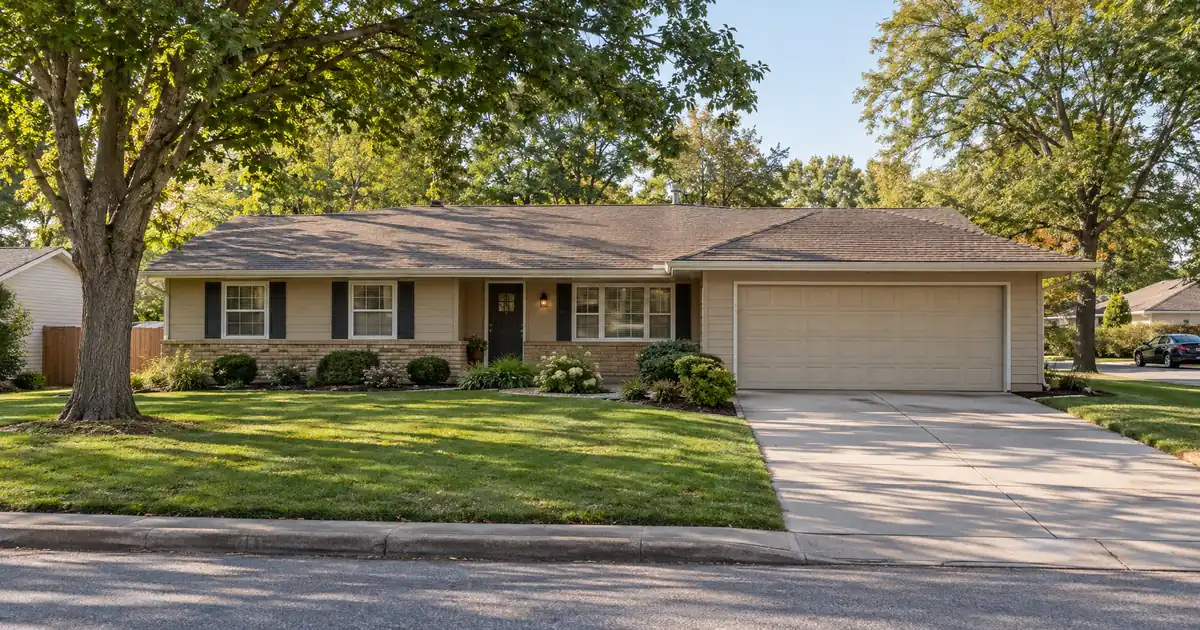
The Quick Read: Yes, a self-employed borrower can cash out on a bank statement loan, because the program reviews your file on documented deposits under the applicable program, subject to lender guidelines, instead of on traditional personal-income documentation. Lenders size the new loan against the property’s value, pay off the old mortgage, and hand you the leftover equity. How much you can take depends on occupancy, credit, and the leverage cap for that property type.
- Owner-occupied cash-out (primary residence or second home) tops out at 80% LTV on select programs, or 75% with an accountant-prepared expense ratio.
- Investment-property cash-out tops out around 75% LTV.
- Documentation is typically 12 months of business or personal bank statements.
- Loan sizes generally run from $125,000 to $3,500,000, with reserves commonly near six months of the housing payment.
- Occupancy decides the paperwork, so a rental and a home you live in are treated differently.
Plenty of self-employed owners hear “no” from big banks and assume the door is shut. Often it is just the wrong door. A bank’s underwriter reads your tax return, sees the write-offs, and concludes you earn far less than you do. Bank statement programs read the deposits instead.
How Does a Bank Statement Cash-Out Actually Work?
A bank statement cash-out is an ordinary cash-out refinance with one difference: how you prove income. The lender writes a new, larger loan, pays off your existing mortgage, and you keep the remainder. Nothing about the cash-out mechanic changes. Only the income evidence does.
Here is the sequence across most programs in Lendmire’s wholesale network:
1. Choose the statement window. Twelve months is the usual starting point. Statements can be business or personal.
2. Convert deposits to income. The lender totals qualifying deposits, removes transfers and non-income items, applies an expense factor, and divides by the number of months.
3. Review the rest of the file. Credit score, debt-to-income, reserves, and the property all get a look.
4. Size the loan against value. The new balance can’t exceed the program’s maximum LTV for your occupancy type.
5. Pay off, then pay you. The old mortgage is retired first. What remains is your cash.
Is this “no-doc”? No. It is alternative-documentation lending, and it is fully underwritten. The federal repayment-capacity rule still applies to owner-occupied consumer loans, and the federal consumer-finance regulator’s published rule text requires a reasonable, good-faith determination that you can repay. A deposit history is simply a different way to show it.
Who Qualifies for a Self-Employed Cash-Out?
The best-fit borrower is a business owner, contractor, consultant, or freelancer whose deposits are steady and whose traditional personal-income documentation understates cash flow. Programs generally want an established self-employment history, though the minimum varies by lender. A few things decide most files:
- Deposit consistency. Steady or rising deposits help. Sharp drops raise questions.
- Ownership share. If you use business statements, lenders want proof you own the business and by how much.
- Credit profile. Stronger credit earns better leverage and more flexibility.
- Equity. The cash-out is capped by LTV, no matter how strong your income looks.
- Reserves. Roughly six months of the housing payment is common.
One practical note: occasional large cash deposits you can’t document may be excluded. Money moving between your own accounts doesn’t count as income either. Clean statements make for a cleaner file.
How Is Income Calculated From Deposits?
Income comes from averaging your qualifying deposits and then applying an expense factor, which stands in for business costs. Each lender sets its own factor, so two programs can reach different income numbers from the same statements. Never count on a universal formula.
Picture a consultant whose statements show steady client payments, a few transfers from a savings account, and one loan deposit. The lender strips the transfers and the loan, keeps the client payments, and applies its expense factor to what’s left. The result is the monthly income that goes into the debt-to-income ratio.
Some programs use a fixed expense ratio. When an accountant prepares the ratio, owner-occupied cash-out on select programs tops out at 75% LTV, versus the fixed-ratio route’s 80% cap, a tradeoff worth running both ways. In practice, the file with the stronger deposit story and the cleaner statements usually wins.
Personal or Business Statements?
Either can work, and the choice changes your qualifying income. Personal statements capture everything you deposit. Business statements show the company’s revenue but need ownership documentation, and the expense factor does more work. If you’re a sole proprietor mixing personal and business money, personal statements are often simpler. If you own a company with its own account, business statements may show a fuller picture.
Pick the window and account type that tell the most accurate story, then let a broker compare how several lenders would treat each one. That is where seeing many lenders’ guidelines at once helps. The same statements can produce different income depending on whose expense factor is applied.
What Limits How Much Cash You Can Take?
Three things cap your cash-out: equity, income, and occupancy. Whichever is tightest wins. Equity sets the ceiling through LTV. Income sets it through DTI. Occupancy sets it through the leverage cap for that property type.
| Property use | Typical cash-out ceiling | Notes |
|---|---|---|
| Primary residence or second home | Up to 80% LTV | 75% with accountant-prepared ratio |
| Investment property | Around 75% LTV | Business-purpose treatment |
| Primary residence (purchase / rate-term) | Up to 90% LTV | Not a cash-out figure |
That last row is a purchase and rate-and-term ceiling. Don’t mistake it for cash-out leverage. Loan amounts generally run from $125,000 to $3,500,000, and every file is underwritten individually, subject to lender guidelines.
Primary Home, Second Home, or Rental?
Occupancy changes both leverage and paperwork. An owner-occupied cash-out, whether a primary residence or second home, is a consumer mortgage. It carries the full set of consumer disclosures and the ability-to-repay review.
A bank statement loan on a non-owner-occupied rental, including a short-term rental, is a business-purpose loan. Business-purpose credit can sit outside those consumer rules, as the OCC’s truth-in-lending handbook notes. The test turns on the purpose of the proceeds, not just the property type. Using rental cash-out to pay personal bills can change the analysis, so the lender’s compliance review looks at how you’ll use the funds.
If you’re weighing a second home, Lendmire’s piece Can a Self-Employed Borrower Cash Out a Second Home on Bank Statements? goes deeper on that occupancy.
Bank Statements or DSCR on a Rental?
Which loan fits depends on where your strength is. A bank statement loan is reviewed against deposits. A DSCR loan (debt service coverage ratio, which compares a property’s rent to its monthly obligation) qualifies the property on its own income. On a DSCR file, your statements prove assets and source of funds. On a bank statement file, they are the income.
| Factor | Bank statement cash-out | DSCR cash-out |
|---|---|---|
| What qualifies | Your documented deposits | The property’s rent vs. its payment |
| Role of statements | They are the income | Assets and reserves |
| Investment cash-out leverage | Around 75% LTV | Set by DSCR program |
| Best when | Deposits strong, rent thin | Rent comfortably covers the payment |
A self-employed investor with heavy write-offs but strong deposits may do better on bank statements, even when rent barely covers the loan. If the rent covers the new obligation with room to spare, a DSCR file keeps your personal income out of the review. Remember that cash-out raises the balance. That lowers DSCR coverage on a rental and pushes up your personal DTI on a bank statement loan. Our complete DSCR loans guide covers the property-income side in full.
Title can differ too. Bank statement loans often close in your personal name, while DSCR loans commonly allow LLC vesting, subject to program terms.
When a Cash-Out Is Not Worth It
A cash-out is not free money. Alternative-documentation loans usually cost more than conventional ones, and cash-out raises your balance for the life of the loan. Skip it when:
- Your deposits are falling and the file would be tight on DTI.
- The cash has no clear job, such as paying off a business line you could handle another way.
- You plan to sell or refinance again soon and the costs wouldn’t pay back.
- A smaller second lien would give you the cash without touching your first mortgage.
The regulatory framework warns against loans that only work if you refinance or sell later, and sound underwriting does too. Cash-out should fit your income on its own terms.
What Can You Do With the Cash?
Common uses include business investment, debt payoff, home improvements, and buying another rental. On an owner-occupied loan, the lender generally doesn’t restrict use, though programs differ. On a rental, the business or real estate purpose matters for how the loan is treated, as above. Tax treatment can depend on how the funds are used and how the property is held; investors should keep clear records and speak with a qualified tax professional before relying on any deduction.
Edge Cases That Trip People Up
- Newly self-employed. Programs usually want an established history. The minimum varies.
- Declining income. A downward trend in deposits can cut qualifying income or end the file.
- Seasonal earners. Twelve months of statements captures the full cycle, which helps.
- Multiple businesses. Each needs ownership proof, and the expense factor applies to each account.
- Co-borrowers. A second borrower’s income can help, but both go through review.
Anecdotally, investors who cash out a rental on DSCR are sometimes asked for personal statements. In one BiggerPockets thread, responders tied that request to guarantor review and tracing rent deposits, not income qualification. That is one thread, not a rule, so treat it as a heads-up.
Key Terms Defined
Non-QM loan: A mortgage that doesn’t follow standard qualified-mortgage documentation rules. NerdWallet’s non-QM explainer notes these loans suit nontraditional income and carry no government backing.
Expense factor: The percentage a lender subtracts from your deposits to account for business costs.
LTV (loan-to-value): The loan balance divided by the property’s value.
DTI (debt-to-income): Your monthly debts divided by your qualifying monthly income.
Cash-out refinance: A new, larger loan that pays off the old one and gives you the difference.
DSCR: Debt service coverage ratio, the property’s rent compared with its monthly obligation.
Frequently Asked Questions
Can I cash out with no traditional personal-income documentation?
Yes, on a bank statement program. The loan is reviewed on documented income under the applicable program, subject to lender guidelines. It is still fully underwritten, with credit, DTI, reserves, and property all reviewed.
Can I use business statements instead of personal ones?
Often, yes. Lenders will ask for proof of your ownership in the business, and the expense factor applied to business deposits does a lot of the work. Many borrowers compare both routes before choosing.
Can I cash out an investment property on bank statements?
Yes, with leverage that tops out around 75% LTV on a cash-out. If rent covers the payment comfortably, a DSCR cash-out may be the better fit because it keeps your personal income out of the review.
Does a bank statement loan mean unregulated?
No. Non-QM loans must still satisfy the ability-to-repay requirement. Business-purpose rental loans may fall under a different framework.
Why would a bank decline me but a broker find a loan?
A decline may only mean that lender has no non-QM shelf. A broker can compare programs across several lenders, each with its own expense factors and leverage limits.
Consumer mortgage licensing for this lane covers 16 states, and availability is subject to lender guidelines. This is not a commitment to lend.
For the mechanics of pulling equity out of a rental property, see Lendmire’s guide to cash-out refinance on an investment property.
About Lendmire
Lendmire, NMLS# 2371349, is a mortgage brokerage focused on investor financing, arranging DSCR loans in 40 states plus Washington, D.C. — 41 markets total. Qualification is based on the property’s income rather than personal income documentation, subject to lender guidelines, making it a fit for LLC-held rentals and scaling portfolios. Scotsman Guide named Lendmire a Top Mortgage Workplace in both 2025 and 2026.
Get Started
Ready to find the right loan for you?
In about 30 seconds you can review financing options available for your home or investment property. No commitment required.
Informational only. Not a Loan Estimate, approval, or commitment to lend. Program availability and eligibility are subject to lender guidelines, credit approval, property review, and underwriting.
References
2. OCC Truth in Lending Act handbook
3. BiggerPockets forum thread on DSCR loan documents
Brandon Miller
Founder & CEO, Mortgage Loan Originator, Lendmire LLC
- Mortgage Loan Originator · NMLS# 1129696 · Verify on NMLS Consumer Access
- North Carolina Real Estate Broker · License# 343312 · Verify on NCREC
- North Carolina Insurance Producer · License# 19053198 · Property, Casualty, Life, Health · Verify on NAIC SBS
- Lendmire LLC · Firm NMLS# 2371349 · Verify firm licensure
Disclosures. The information presented in this article is general market commentary, not financial, legal, or tax advice. Lendmire is a mortgage brokerage (NMLS# 2371349) — not a direct lender or depository institution — and loan placement is subject to lender underwriting. Nothing in this content represents a commitment to lend. Loan terms, pricing, and program availability vary based on borrower qualifications, property characteristics, and state of subject property, and are subject to change at any time. Lendmire complies with Equal Housing Opportunity requirements. Consumer access: nmlsconsumeraccess.org.