
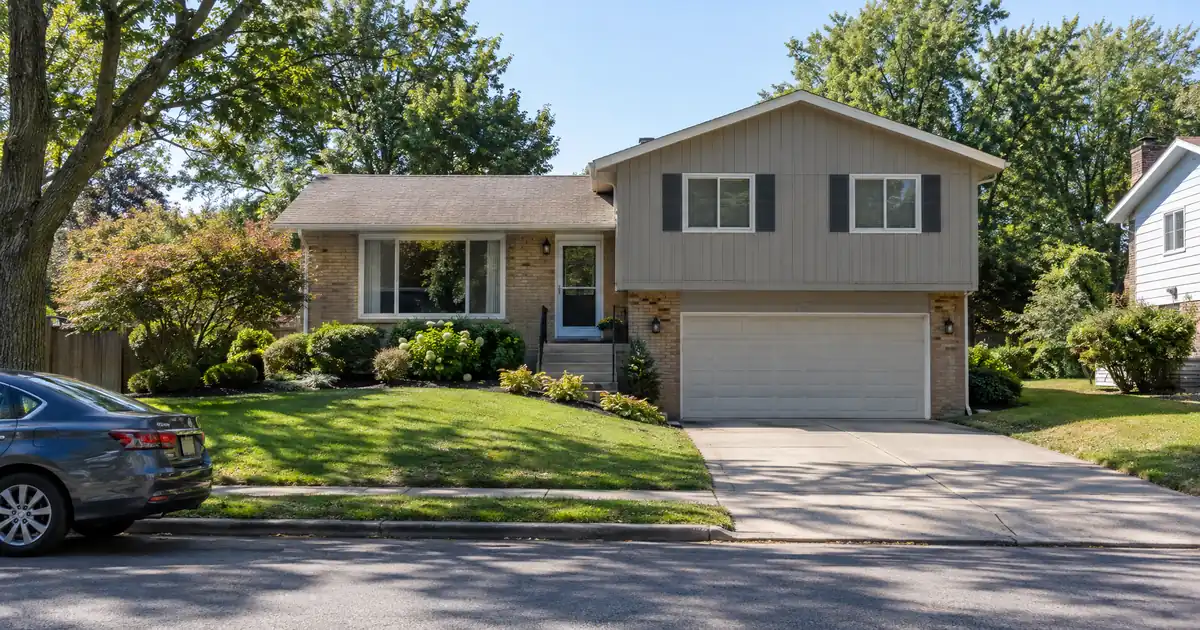
The Quick Read: A home with no mortgage can be refinanced for cash through a brand-new first-lien loan, and a self-employed owner usually documents income with twelve months of bank statements instead of traditional personal-income documentation, which often shows heavily reduced profit. The lender then sizes the loan by the lower of two limits: a leverage cap on appraised value, and the income your deposits can support.
- The new loan sits in first position because nothing is ahead of it. Nearly all of it becomes cash, less closing costs.
- Occupancy sets the rules. Owner-occupied homes go through a consumer mortgage path, and non-owner-occupied rentals go through a business-purpose path.
- On an owner-occupied cash-out, leverage typically tops out at up to 80% LTV. On an investment property cash-out, it tops out around 75% LTV.
- Large equity does not override thin documented income. The smaller of the two limits wins.
- Everything is subject to lender guidelines, credit review, and an appraisal. This is not a commitment to lend.
Key Terms Defined
Cash-out refinance: a new mortgage larger than what you currently owe. It pays off any old loan and hands you the difference. On a paid-off home, there is no old loan, so the difference is nearly the whole amount.
First lien: the lender’s claim on the property that gets paid first if the loan fails. A new loan on a home with no mortgage is the first lien by default.
LTV (loan-to-value): the loan amount divided by the appraised value. A lower LTV means more equity stays in the home.
Expense factor: the percentage a lender subtracts from your business deposits to estimate what you actually keep. It varies by lender and program.
Seasoning: the waiting period a lender wants between buying a property and refinancing it.
Reserves: liquid savings you hold after closing. Programs commonly look for about six months of the housing payment.
DSCR (debt service coverage ratio): monthly rent divided by the full monthly payment on a rental property, including principal, interest, taxes, insurance, and HOA dues.
Delayed financing: a way to refinance soon after a cash purchase. It usually sizes the loan near what you documented paying, not the appraised value.
What Happens When You Cash-Out Refinance a Home With No Mortgage?
You apply for a new loan secured by a property that has no lien on it. The lender pays off nothing, so after closing costs the rest comes to you. Some people think this is not a true refinance. The label is still correct, because the new loan replaces your free-and-clear ownership with a mortgage.
That changes the file in two ways. It gets simpler, because there is no payoff balance to verify and no existing loan terms to match. It also gets stricter in one spot, because the whole loan amount is new debt. You carry a brand-new payment, and the lender must be satisfied you can carry it.
For a W-2 employee, that is a pay stub exercise. For you, it is a harder question.
Why Does Self-Employed Income Look So Small on Paper?
Legal deductions shrink your taxable profit. HousingWire’s non-QM guide lists depreciation, payroll, contractor costs, equipment, vehicle expenses, and home office costs as items that reduce taxable income on paper. A conventional lender reads the return and sees only what is left.
Here is an illustration, not a program figure. Picture a consultant whose business deposits over twelve months index to 100. After write-offs, the tax return shows taxable profit near 35 on that same scale. A conventional file is reviewed on the 35. A bank statement file starts from the 100, subtracts an expense factor, and typically lands well above 35.
The same business, the same year, a very different coverage figure. That gap is the reason alternative documentation exists. Trade press reports that bank statement review commonly covers 12 to 24 months of deposits. Across the wholesale network Lendmire works with, the typical program uses 12 months of business or personal statements.
An owner-occupied file that is reviewed on documented income under the applicable program, subject to lender guidelines, still gets a full review. Lenders look at credit, reserves, the appraisal, and your other debts. Bank statement loans simply read the income differently.
Which Documentation Path Fits You?
Most self-employed owners have a few routes. The right one depends on how your money moves and what the property is.
| Path | Best fit | What you provide |
|---|---|---|
| Business bank statements | Owners with a clean business account | 12 months of statements |
| Personal bank statements | Sole proprietors and 1099 earners | 12 months of statements |
| Asset depletion | Owners with large liquid savings | Asset statements |
| Rental income (DSCR) | Non-owner-occupied rental only | Appraisal rent and lease |
| Traditional personal-income documentation | Owners with strong net profit | Returns and standard documents |
A few notes on the table. On bank statement files, the lender converts deposits into income using an expense factor. Factors differ across lenders, so the same statements can produce different qualifying income at different shops. That is one reason to compare.
Asset depletion is reviewed against liquid assets instead of deposits. On a primary residence, it reaches about 80% LTV. Whether a particular asset-based program allows cash-out varies by lender program sheet, so confirm before you plan around it.
The rental path belongs to a different lane. It qualifies primarily on property-level rental income covering the payment, subject to lender guidelines, and your personal write-offs stop mattering. The complete DSCR loans guide covers that lane in full.
Two Limits: Income and Equity
The loan amount is the lower of two ceilings. The first is leverage. The second is the income your documentation supports.
On the leverage side, here is how the typical ranges stack up across select lenders in the network:
- Owner-occupied cash-out (primary residence or second home): up to 80% LTV with a fixed expense ratio, and 75% when the lender uses an accountant-prepared expense ratio. Loan size and credit shape where you land inside that range.
- Investment property cash-out: tops out around 75% LTV.
- Primary residence purchase or rate-and-term refinance: up to 90% LTV. That ceiling does not apply to cash-out, so do not plan around it. Final terms depend on the lender’s guidelines, the property type, and the borrower’s complete credit picture.
Loan amounts generally run from $125,000 to $3,500,000, and reserves commonly sit around six months of the housing payment.
Now run an example. Say a primary residence with no mortgage appraises at $800,000. The leverage ceiling on an owner-occupied cash-out is up to 80% of that value, or 75% on the accountant-prepared path. That is the equity side only.
The income side asks whether your deposit-based income, after the expense factor, supports the new full housing payment plus your other monthly debts. If income supports less than the leverage ceiling allows, income wins. A high-value home with modest documented income releases less cash than its equity suggests.
The reverse also happens. Strong deposits do not help if the equity cap is the tighter limit. Both numbers have to work.
Primary Home, Second Home, or Rental?
Occupancy decides which rulebook your file follows, and it often decides the product.
| Occupancy | Loan type | Reviewed on | Cash-out leverage |
|---|---|---|---|
| Primary residence | Consumer mortgage | Documented income | Up to 80% LTV |
| Second home | Consumer mortgage | Documented income | Up to 80% LTV |
| Rental (non-owner-occupied) | Business-purpose | Documented income or rent | Around 75% LTV |
DSCR loans are designed for non-owner-occupied investment properties. Because they are business-purpose investor loans, they are reviewed differently from a standard owner-occupied mortgage. Owner-occupied files are consumer mortgages, so the standard consumer disclosure rules (TRID) apply. A bank statement loan on a non-owner-occupied rental, including a short-term rental, is business-purpose and exempt from those rules.
The line is not always clean. The CFPB’s Regulation Z commentary says the lender must decide in each case whether a transaction is primarily for an exempt purpose. It points to factors such as the borrower’s statement of purpose and how much of the borrower’s income comes from the acquisition.
Two edge cases come up for self-employed owners:
- You live in a duplex. A compliance training summary from Compliance Alliance says an owner-occupied property can still qualify for business-purpose treatment on acquisition credit when it has more than two units. A law-firm guide on the business-purpose exemption adds that an owner who expects to occupy a property more than 14 days in the coming year gets consumer treatment unless it has more than two units. Do not assume the rental path is automatic if you live in the building.
- You use the cash for personal expenses. The same guide gives an example where a cash-out on a rental used to pay personal obligations counts as consumer-purpose. The use of proceeds matters, not just the property.
The lender makes this call, not you. Tell your broker the plan before the file is built.
Long-Held Home or Recent Cash Purchase?
A home you have owned for years rarely hits a waiting period. A home you bought with cash recently might.
On rental and investor files, seasoning is each lender’s policy, not a legal rule. Some lenders allow a cash-out soon after a cash purchase, and others want a longer holding period. On owner-occupied alt-doc files, seasoning follows individual lender program sheets. Because policies vary so widely across the network, the practical move is to ask before you buy, not after.
Delayed financing is the main exception. It is not a separate loan. It is a way around the waiting period for a recent cash buyer, and it usually sizes the loan near your documented purchase cost rather than appraised value. Coverage and reserve tests still apply. It is not available if you financed the purchase with a lien on the subject property.
So a recent cash buyer should not expect to pull out appraised value right away. Plan the refinance before you close on the purchase, and you will have fewer surprises.
How Do You Refinance a Paid-Off Home as a Self-Employed Owner Step by Step?
Here is the sequence a typical file follows.
1. Decide the property’s role. Primary residence, second home, or rental. This sets the loan type and leverage ceiling.
2. Pick the documentation path. Business or personal bank statements, asset depletion, or rental income if the property qualifies.
3. Clean up your deposits. Start well before you apply (see the checklist below).
4. Gather statements and basics. Twelve months of statements, ID, proof of ownership, and homeowners insurance details.
5. Get a program comparison. Different lenders use different expense factors and overlays, so the same statements can produce different results.
6. Order the appraisal. The appraiser confirms value. On rentals, the appraisal also supports market rent.
7. Clear title and reserves. Title review confirms the property is truly free and clear. The lender checks reserves, commonly around six months of the housing payment.
8. Close and receive proceeds. Closing costs come out of the loan amount.
What Should You Clean Up Before You Apply?
Deposits are your income on this loan, so they need to read clearly.
- Separate business and personal money. Commingled accounts make deposits hard to classify. If you use personal statements, keep business receipts flowing into one account.
- Explain large or unusual deposits. A lender will ask about anything that looks like a transfer, loan, or one-time windfall. Have paperwork ready.
- Avoid shuffling money between your own accounts. Transfers can inflate the deposit totals and invite questions.
- Know your entity type. A sole proprietor, an LLC owner, an S-corp shareholder, a partner, and a 1099 contractor each document income a little differently. Lenders may ask for ownership percentage or business license proof.
- Handle seasonal income by averaging. Twelve months of statements smooths out slow and busy stretches, so a strong season does not need to be hidden.
- Keep your credit tidy. Credit and leverage tier together. Stronger files earn the top of each range.
- Hold your reserves in accessible accounts. Savings parked in places that are hard to document do not help.
Many self-employed investors find the deposit cleanup is the real work. The loan structure is the easy part.
Cash-Out Refinance vs HELOC vs Home Equity Loan
On a home with no mortgage, any new loan on the property is effectively a first lien. That levels the comparison more than people expect.
| Feature | Cash-out refinance | HELOC | Home equity loan |
|---|---|---|---|
| Structure | One new mortgage | Revolving line | One lump sum |
| Lien position | First lien | Often first here | Often first here |
| Self-employed docs | Alt-doc paths exist | Varies by lender | Varies by lender |
| Best for | Large, one-time need | Ongoing or uncertain need | Fixed amount, fixed use |
The income wall applies to all three. A self-employed borrower with heavy write-offs can hit the same problem on a HELOC that they would on a conventional refinance.
A cash-out refinance is usually the cleaner fit when you want a defined lump sum for a specific purchase. A line of credit makes more sense when the need is open-ended. Compare the structures side by side, because terms differ by lender.
Is It a Good Idea? Risks and Smart Uses of the Cash
The honest answer depends on what you do with the money. Putting a lien on a debt-free home turns an asset with no payment into one that carries a payment every month. If the cash is spent on something that does not produce value or income, you have made your cash flow worse.
Several things deserve weight:
- Cost. Alt-doc loans generally cost more than conventional loans because the documentation is nonstandard. Investors who can qualify conventionally often do not choose alternative programs for that reason.
- The payment is new. A cash-out raises the property’s payment and lowers its cash flow. The cash needs to earn its keep.
- Prepayment terms. Investor loans commonly carry prepayment penalties. Read the note before you sign.
- Closing costs shrink proceeds. You will not net the full loan amount.
- Equity stays in the home. Leverage caps leave part of the value untouched, and rent coverage on a rental file may cap the loan first.
A common smart use is buying another rental property with the proceeds, where the new income can offset the added carry. Another is paying off higher-cost business debt. A broker’s pattern from this kind of file: the owners who do best treat the cash as a tool with a purpose, decide the purpose first, and size the loan to match, not to the maximum.
Tax treatment can depend on how the funds are used and how the property is held; investors should keep clear records and speak with a qualified tax professional before relying on any deduction.
Common Mistakes
- Assuming no mortgage means no income test. The new loan is a new payment, and the lender must be satisfied you can repay it. The CFPB’s ability-to-repay compliance guide says lenders consider current debts, monthly debt-to-income or residual income, and credit history, and that applies to alternative documentation too.
- Counting on 100% of equity. Leverage caps, closing costs, and income limits all reduce what you receive.
- Using the purchase ceiling in a cash-out plan. The 90% figure belongs to primary residence purchase and rate-and-term refinances, not cash-out.
- Waiting until after a cash purchase to ask about seasoning. Policies vary by lender, so ask first.
- Mixing accounts. Muddy deposits make the income harder to read.
- Assuming the rental path is automatic when you live in the property. Occupancy and unit count change the classification.
Frequently Asked Questions
Can I take cash out of a house I own outright?
Yes, in most cases. The new loan is a first-lien mortgage, and the lender sizes it by the appraised value, a leverage cap, and your documented income. Closing costs come out of the proceeds. Eligibility depends on lender guidelines, credit, and the property.
How many months of bank statements do I need?
Twelve months is the typical documentation across the programs Lendmire places files with. Statements can be business or personal, and the lender averages deposits and applies an expense factor. Some lenders in the wider market ask for up to 24 months, so confirm the requirement for the program you choose.
How much of my home’s value can I borrow?
On an owner-occupied cash-out, up to 80% LTV, or 75% when the lender uses an accountant-prepared expense ratio. Documented income can cap the loan below those percentages. Each figure is subject to lender guidelines and a complete review of property type, leverage, and credit.
Can I qualify based on savings instead of income?
Sometimes. An asset-depletion alternative is reviewed against liquid assets and reaches about 80% LTV on a primary residence. Whether a specific asset-based program permits cash-out varies by lender, so check the program sheet first.
Does it matter whether the home is my residence or a rental?
Yes, a great deal. Owner-occupied files are consumer mortgages, and non-owner-occupied rentals are business-purpose loans. That choice affects documentation, leverage, and how the file is disclosed. A rental can use property income, while an owner-occupied home is reviewed on documented income under the applicable program, subject to lender guidelines.
Next Step
Lendmire is a mortgage broker that arranges these loans through select lenders in its wholesale network, and its consumer mortgage lane covers 16 states. You can reach the team at 828-256-2183. For a self-employed owner, the strongest first move is usually a clear look at twelve months of deposits, because they set the income limit before the equity limit ever comes into play.
Investors weighing their equity options can start with Lendmire’s guide to cash-out refinance on an investment property.
About Lendmire
Lendmire is a DSCR-focused mortgage brokerage, NMLS# 2371349, placing investor loans across 41 markets, including Washington, D.C. DSCR eligibility is generally reviewed by the lender around a property’s rental income rather than personal income documentation, which fits LLC-held rentals, self-employed investors, and portfolios scaling past conventional financed-property limits. Scotsman Guide named Lendmire a Top Mortgage Workplace in both 2025 and 2026.
Get Started
Ready to find the right loan for you?
In about 30 seconds you can review financing options available for your home or investment property. No commitment required.
Informational only. Not a Loan Estimate, approval, or commitment to lend. Program availability and eligibility are subject to lender guidelines, credit approval, property review, and underwriting.
References
1. HousingWire non-QM loans guide
2. CFPB Regulation Z §1026.3 commentary
3. Compliance Alliance: Regulation Z and investment properties
4. Doss Law business purpose exemption guide
5. CFPB Ability-to-Repay and Qualified Mortgage Small Entity Compliance Guide
This article is part of Lendmire’s bank statement loan program — full qualification details, guidelines, and scenarios live on the program page.
Related reading: Can a Duplex Owner Keep Their Low Mortgage With a Bank Statement HELOC? · Bank Statement HELOC Florida Closing Costs for High-Cost State Owners · How to Get a Bank Statement HELOC as a Dentist or Practice Owner
Brandon Miller
Founder & CEO, Mortgage Loan Originator, Lendmire LLC
- Mortgage Loan Originator · NMLS# 1129696 · Verify on NMLS Consumer Access
- North Carolina Real Estate Broker · License# 343312 · Verify on NCREC
- North Carolina Insurance Producer · License# 19053198 · Property, Casualty, Life, Health · Verify on NAIC SBS
- Lendmire LLC · Firm NMLS# 2371349 · Verify firm licensure
Compliance and disclosures. Lendmire (NMLS# 2371349) is a licensed mortgage broker and is not a direct lender, depository institution, financial advisor, or tax professional. Content in this article is general market analysis and educational information — not financial, legal, or tax advice for any specific situation. Lendmire does not guarantee loan approval; every transaction is subject to underwriting by the funding lender. Mortgage pricing and loan program guidelines are subject to change at any time without notice and vary by borrower characteristics, property type, and state regulations. Lendmire complies with Equal Housing Opportunity. Licensure verification: NMLS Consumer Access.