
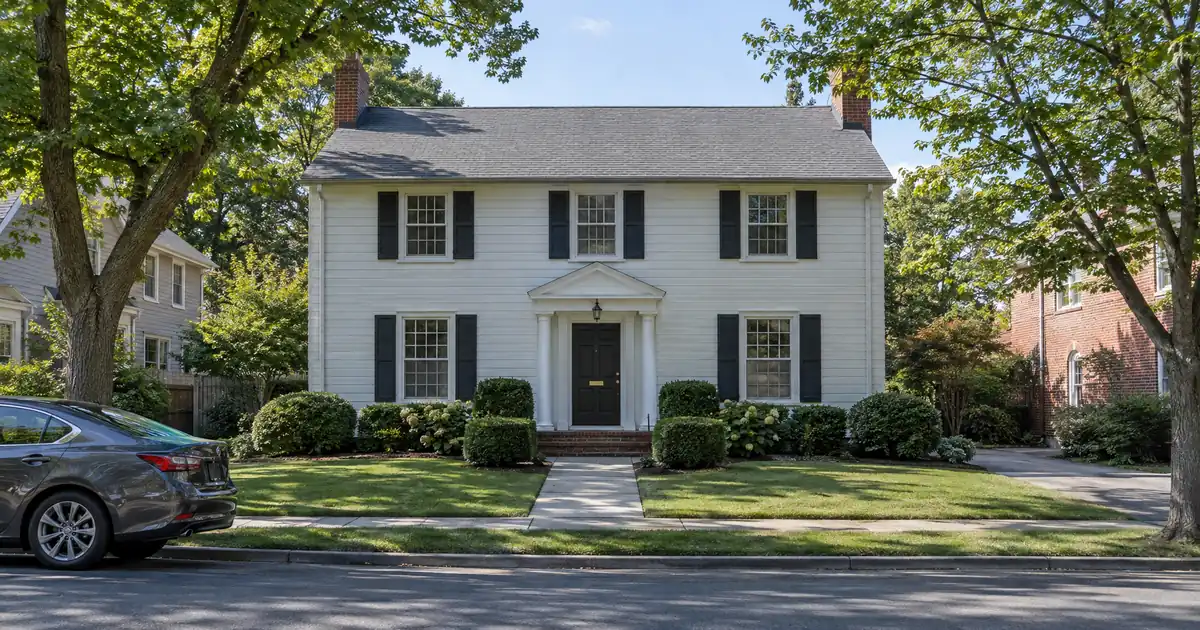
The Quick Read: A home bought before marriage is usually separate property, but that status does not always remove a spouse from the closing table. A bank statement HELOC changes how the borrower’s income is documented, not who owns the home or who must sign the lien. Ownership, state law, and title decide the signature question.
- Bank statements prove income. They do not change ownership or the signing rules.
- A spouse who signs only the lien is not a borrower and is not on the note.
- Marital money paid toward the mortgage, a refinance, or a deed change can give the community a stake in a premarital home.
- On an investment property, lines in Lendmire’s network cap at 70% CLTV and $500,000.
- Title companies often raise the spouse question late, so settle it before applying.
Picture a self-employed landlord who bought a duplex years before marrying. Traditional personal-income documentation shows heavy write-offs, so personal income looks thin. Deposits tell the truer story. The loan type fits. The open question is whether the spouse has to sign. This article walks through how classification, signatures, and underwriting fit together.
How large a line the equity supports.
An equity line is sized by combined loan-to-value, occupancy, and credit — not by rental coverage. Switch the occupancy or the credit band and the ceiling moves with it.
Investment-property lines require a 700 minimum credit score; second-home lines start at a 640 minimum and primary-residence lines at 600, and the combined-LTV ceiling steps down as the credit band drops on primary-residence and second-home lines and holds on investment-property lines; the line cap steps down on primary-residence lines and holds at every tier on investment-property and second-home lines.
A debt-to-income ratio above 45% requires 680+ credit. Profiles under 640 are limited to single-family homes. At least 75% of the approved line is drawn at closing. Ceilings, floors, and caps update from Lendmire’s centralized guideline source.
Line estimate
Illustrative estimate only — not a quote, Loan Estimate, approval, or commitment to lend. The rate is an editable assumption; equity-line pricing is variable through both the draw and repayment periods and never converts to fixed. Occupancy and credit drive the ceiling together: an investment property tops out at 70% combined LTV (minimum credit 700, line cap $500,000); a second home tops out at 90% combined LTV (minimum credit 640, line cap $500,000), with the ceiling stepping down as the credit band drops (the cap holds at every tier); a primary residence tops out at 90% combined LTV (minimum credit 600), and its $750,000 maximum line is available only at 75% combined LTV or below with a 700-or-better credit profile (720 on the longer-runway program) and a full appraisal. Lines above $500,000 require a full appraisal. Credit, debt-to-income, property type, and full underwriting review all affect the final line.
Key Terms Defined
Separate property is generally property a spouse owned before the marriage, with state law deciding the final classification.
Community property is generally property acquired during the marriage in a community-property state, plus property that cannot be traced as separate.
Transmutation is a change in a property’s character, usually by written agreement, from separate to community or back.
Non-borrowing spouse is a spouse who is not an applicant and has no personal liability on the note.
Security instrument is the mortgage or deed of trust that creates the lien; the note is the separate promise to repay.
Bank statement HELOC is a home equity line in which the borrower’s bank deposits, rather than traditional personal-income documentation alone, are used to support qualifying income, subject to the applicable program and lender guidelines.
How Do Community-Property States Treat a Home Bought Before Marriage?
A premarital home is presumptively separate property in community-property states. IRS Publication 555 lists nine such states: Arizona, California, Idaho, Louisiana, Nevada, New Mexico, Texas, Washington, and Wisconsin. It also notes that registered domestic partners in California, Nevada, and Washington generally follow the same rules.
The publication describes separate property as property owned before marriage. Community property is property acquired during marriage, property the spouses agreed to convert, and property that cannot be identified as separate. State law, not federal law, controls the classification.
Alaska is an opt-in state, so treat it as a case-by-case question. Common-law states can create signature demands too, through homestead rights, dower-type rights, or tenancy by the entirety.
Presumptively separate is the key phrase. It is a starting point, not a guarantee.
How Does a Premarital Home Become Partly Community Property?
Four events commonly give the community a stake in a premarital home: marital earnings paying down principal, a refinance during the marriage, a deed change, and commingled funds. Each one can leave the title in your name alone while the ownership picture shifts underneath it.
Take California as an example. A family-law practitioner explains in a Moore/Marsden overview that when marital earnings pay down the principal on the loan used to buy the home, the community acquires a proportionate interest. The same source notes that refinancing the original mortgage with a community-property loan can have a similar effect.
A property-characterization firm describes the standard defense: tracing. Bank records that show separate funds paid the obligations help prove the home stayed separate. Those same statements often double as income evidence for the loan, though the two jobs differ.
A Texas firm notes that spouses can also change a property’s character by agreement, as this transmutation explainer describes. A California legal-aid explainer on transmutation standards points to a written, express declaration requirement. Details vary by state.
The practical point: a spouse’s claim and a spouse’s signature are related but different questions. A claim is about ownership. A signature is about whether the lender can reach the collateral cleanly.
Who Has to Sign, and Why?
A spouse may be required to sign the lien even when they are not a borrower. Federal law limits when a lender can demand it. Under Regulation B at 12 CFR 1002.7(d), a lender generally cannot require a spouse’s signature on a credit instrument if the applicant qualifies alone for the amount and terms requested.
There is a secured-credit exception. A lender may ask for a signature on instruments that state law makes necessary, or reasonably believed necessary, to make the collateral available on default. Examples include creating a valid lien and passing clear title.
The CFPB’s official interpretation adds two useful points. A joint applicant is someone who applies for shared credit, not someone the lender demands as a condition. And a signature that only makes collateral available is generally needed only on the security agreement, not the note.
In practice, the title company often makes the call. It looks at purchase date versus marriage date, the vesting deed, any interspousal transfer, any prenuptial or postnuptial agreement, and whether the home is a homestead. A Texas homestead, for example, can require both spouses’ signatures even when it is purely separate property. Rental property is usually not homestead, but state definitions vary.
A lien-only spouse has no personal liability on the note when the documents are drawn correctly, and their credit is not pulled unless they apply. The Federal Reserve’s Consumer Compliance Outlook lists improper spousal signature demands among common marital-status fair-lending problems, and it summarizes the same two exceptions: state law needing the signature to reach collateral, and a borrower who does not qualify alone.
If the borrower does not qualify alone, the lender may ask for a cosigner. It cannot require that the cosigner be the spouse.
What Does a Bank Statement HELOC Change?
Bank statements change how income is proven. They do not change ownership, vesting, or signature rules. The underwriting step is simple to describe: the lender reviews months of personal or business statements, strips out non-income deposits, and applies an expense factor where business accounts are used. The program sets the lookback and the details.
For a self-employed landlord, this matters. Depreciation and write-offs can shrink taxable income while deposits stay healthy. The line is reviewed on documented income under the applicable program, subject to lender guidelines.
Here is where community property touches the income side. If deposits come from a business funded by marital earnings, the income is still the borrower’s to document. The lender underwrites the borrower alone. The spouse’s income and credit are not needed, and under Regulation B they cannot be demanded just to qualify.
A bank statement HELOC is also not a DSCR loan. A DSCR loan is reviewed primarily on property-level rental income covering the payment, subject to lender guidelines. A HELOC qualifies the borrower. DSCR compares rent to PITIA only, and clearing 1.00 is not the same as positive cash flow. Readers weighing both can start with Lendmire’s complete DSCR loans guide.
What Are the Program Limits on an Investment Property?
On an investment property, the line caps at 70% CLTV and $500,000, with a 700 minimum credit score. Primary residences and second homes follow separate tiers, so check which occupancy applies before comparing numbers.
Across Lendmire’s wholesale network, the investment structure has a 5-year interest-only draw followed by a 25-year repayment. At least 75% of the line is drawn at closing, and lines at or below $500,000 ordinarily use an automated valuation, though a borrower may request a full appraisal. DTI tops out at 50%, and 45% applies to profiles from 600 to 679.
Title is a sharp structural point. The property must be held by the individual borrower or an inter vivos revocable living trust. LLCs, corporations, partnerships, and irrevocable, blind, or land trusts cannot hold title. A property already in an LLC needs a vesting change or a DSCR cash-out instead.
Availability is limited to Lendmire’s 16 full-service states: AL, CA, CO, FL, GA, IN, MI, MT, NM, NC, OH, PA, TN, TX, VA, and WA. That is narrower than the 41-market DSCR footprint. Manufactured homes, co-ops, condotels, log homes, and commercial or mixed-use property are not offered. Every figure is subject to lender guidelines and full file review, and Lendmire brokers these loans rather than lending.
Which Legal Family Is Your Property In?
Signature triggers fall into legal families, not just state lines. This table is a starting map. It is not a substitute for a title officer or attorney.
| Legal mechanism | Typical trigger | Who decides |
|---|---|---|
| Community property | Spouse may hold an interest | Title company, counsel |
| Homestead consent | Both spouses sign on a homestead | State law, title |
| Dower-type rights | Spouse’s statutory interest | State law, title |
| Tenancy by the entirety | Both spouses own as one unit | Vesting deed |
| Equitable distribution | Usually no automatic claim | Title company |
Rules differ even inside one family. Nine states do not work identically, and a lender or title company may still ask for a signature out of caution when a spouse’s claim is uncertain.
Five Scenarios and What Title Will Likely Want
Sole premarital title, no marital payments. This is the cleanest case. The spouse may not need to sign, though a homestead or a cautious title company can change that.
Premarital title, mortgage paid with marital earnings. Here the community may have gained a proportionate interest. Expect the title company to ask for the spouse’s signature on the lien. It is the scenario most investors underestimate.
Spouse added to the deed after marriage. Adding a spouse can be treated as a transmutation. Get counsel before signing anything, because the home’s character may change.
Out-of-state resident with a property in a community-property state. The property’s location and the owner’s domicile can both matter. Expect a title review specific to that state.
Quitclaim or interspousal deed request. Once both spouses are owners of record, lenders usually want every owner on title to sign the new lien. A recent transfer between spouses can also raise seasoning questions.
In each case, a rule of thumb helps: the more marital money or paperwork has touched the home, the more likely the signature is needed.
What Does the Spouse Actually Sign?
Several documents can appear at closing, and each does a different job. A lien signature is not a promise to repay.
| Document | What it does | Makes spouse a borrower? |
|---|---|---|
| Deed of trust or mortgage | Creates the lien on the home | No |
| Spousal consent or acknowledgment | Confirms awareness of the lien | No |
| Homestead waiver | Releases homestead rights for the lien | No |
| Promissory note | Promise to repay | Yes |
Under the Cornell LII copy of the official interpretations, if a single integrated instrument combines the note and the security agreement, the spouse generally cannot be asked to sign it just to grant a security interest unless a legend makes clear that the signature creates no personal liability. Read the legend before signing.
What Are the Divorce and Equity Risks?
A one-spouse line can still land in a divorce. A court may treat repayment differently depending on whether draws served family purposes or personal ones. A lien-only signature does not make the spouse liable on the debt, but it can leave them with a stake in how the line is repaid.
There is a second risk for the investor. A cash-out refinance of the original first mortgage may restart the clock in a way that touches the community interest. Pulling equity through a standalone second-lien line can keep a low first mortgage in place and avoid that issue. A line can sit in first or second lien position in Lendmire’s network, subject to lender guidelines.
If a divorce is pending, the spouse may have rights even in a premarital home. Expect them to be asked to acknowledge the lien.
Keep clean records. Statements showing which account paid the mortgage are the standard way to prove separate character, and they help the income file too.
Pre-Application Checklist
Settle these questions before the application:
1. Confirm the purchase date, marriage date, and current vesting deed.
2. Gather any prenuptial, postnuptial, or interspousal transfer documents.
3. Review who paid the mortgage and from which accounts.
4. Ask the title company, early, whether the spouse must sign the lien.
5. Ask an attorney before agreeing to any deed change.
6. Confirm the property is held individually or in a revocable living trust.
Lendmire’s piece Community-Property Bank Statement HELOC Rules for a Non-Borrowing Spouse goes deeper on that specific signer question.
Tax treatment can depend on how the funds are used and how the property is held; investors should keep clear records and speak with a qualified tax professional before relying on any deduction.
If you are considering a home equity line and want to see how the numbers work, Lendmire can help you compare HELOC options based on the property, the equity available, credit profile, combined leverage, and your goals. Reach the team at 828-256-2183.
Frequently Asked Questions
Can I borrow against a home I owned before marriage without my spouse?
Often, but not always. If you qualify alone, federal rules generally bar a lender from demanding your spouse as a co-borrower. State law and the title company can still require a spouse’s signature on the lien, especially if marital funds paid the mortgage or the home is a homestead.
Does signing the lien make my spouse responsible for the debt?
No, when the documents are drawn correctly. The lien and the note are separate instruments. A spouse who signs only to make the collateral available has no personal liability on the note, and their credit is not pulled unless they apply.
Do bank statements change whether my spouse must sign?
No. Statements change how income is documented. Signature requirements come from state property law, title, and vesting. The program underwrites you as the borrower alone.
Can I add my spouse to the deed to make the lender comfortable?
Be careful. Adding a spouse can change the home’s character from separate to community in some states. Talk with a family-law attorney first.
Can an LLC hold the property for a bank statement HELOC?
Not in Lendmire’s network. The property must be held by the individual or a revocable living trust. A property in an LLC needs a vesting change or a DSCR cash-out instead.
A premarital rental is only as clean as its paper trail, so the investor who documents which dollars paid it down usually spends the least time at the closing table arguing over signatures.
About Lendmire
As a mortgage broker (NMLS# 2371349), Lendmire helps homeowners and real estate investors in its 16 full-service states open home equity lines of credit arranged through wholesale lenders. Lendmire is never the lender; line amounts, ceilings and terms are set by the lender under its guidelines. Scotsman Guide named Lendmire a Top Mortgage Workplace in both 2025 and 2026.
Get Started
Ready to find the right loan for you?
In about 30 seconds you can review financing options available for your home or investment property. No commitment required.
Informational only. Not a Loan Estimate, approval, or commitment to lend. Program availability and eligibility are subject to lender guidelines, credit approval, property review, and underwriting.
References
2. Helene L. Taylor (CA family-law practitioner)
3. wf-lawyers (Orange County firm)
4. Coker Legal
5. BayLegal
7. Federal Reserve, Consumer Compliance Outlook
8. Cornell LII, 12 CFR Supplement I to Part 1002
This article is part of Lendmire’s bank statement HELOC program — full qualification details, guidelines, and scenarios live on the program page.
Related reading: Can a Founder Use a Super Jumbo Bank Statement Cash-Out to Invest? · Bank Statement HELOC for a 2-4 Unit Home and Your Low First Mortgage · How to Time a Super Jumbo Cash-Out as a Loan-Out Company Entertainer
Brandon Miller
Founder & CEO, Mortgage Loan Originator, Lendmire LLC
- Mortgage Loan Originator · NMLS# 1129696 · Verify on NMLS Consumer Access
- North Carolina Real Estate Broker · License# 343312 · Verify on NCREC
- North Carolina Insurance Producer · License# 19053198 · Property, Casualty, Life, Health · Verify on NAIC SBS
- Lendmire LLC · Firm NMLS# 2371349 · Verify firm licensure
Disclosures. The information presented in this article is general market commentary, not financial, legal, or tax advice. Lendmire is a mortgage brokerage (NMLS# 2371349) — not a direct lender or depository institution — and loan placement is subject to lender underwriting. Nothing in this content represents a commitment to lend. Loan terms, pricing, and program availability vary based on borrower qualifications, property characteristics, and state of subject property, and are subject to change at any time. Lendmire complies with Equal Housing Opportunity requirements. Consumer access: nmlsconsumeraccess.org.