
The Quick Read: Getting this line means proving the property is not your Texas homestead, then qualifying on documented income from twelve to twenty-four months of bank deposits instead of traditional personal-income documentation, with credit, combined leverage, and title still reviewed under the applicable program and subject to lender guidelines. Lendmire brokers these lines through select wholesale partners and is never the lender.
- A Texas second home is a non-homestead property, so the homestead-only limits on a primary residence do not apply to it.
- The bank statements settle only the income test. Credit, equity, property type, and how title is held are still tested.
- Across the network, a second-home line tops out at 90% combined loan-to-value (CLTV), and only with a credit profile of 720 or better.
- Lines run $25,000 to $500,000 on a second home, in first or second lien position.
- Title must sit with you or your revocable living trust. An LLC cannot hold it.
What Is a Bank Statement HELOC on a Second Home?
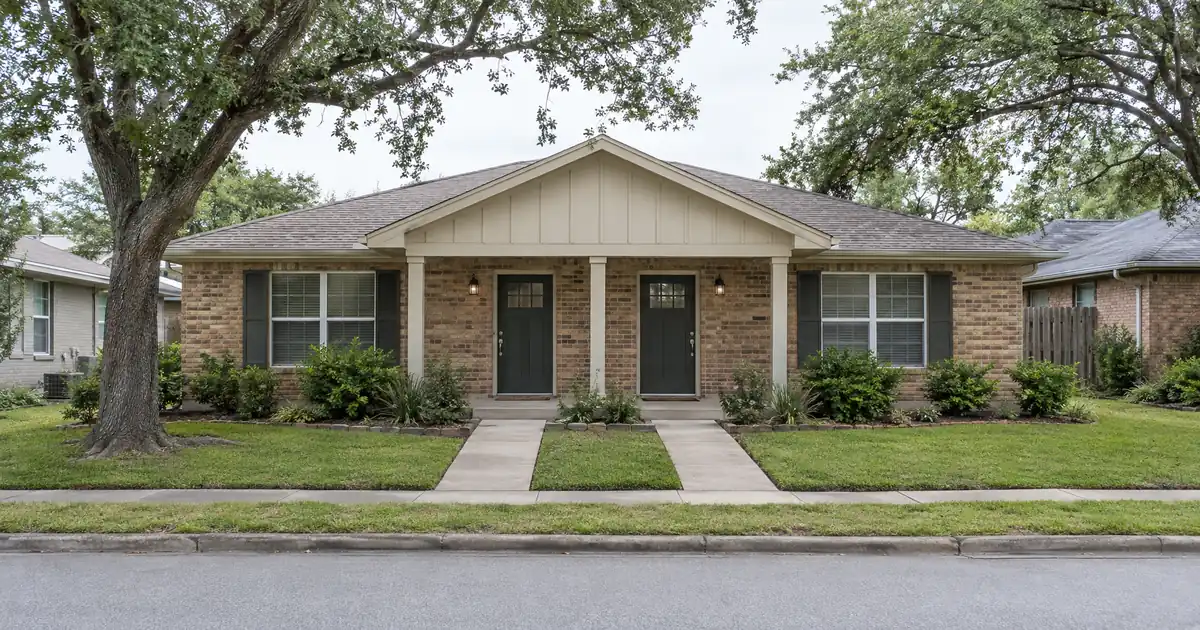
A bank statement HELOC is a home equity line of credit where the lender reads your deposits instead of your traditional personal-income documentation to measure income. A second home is a property you own and use personally, not your main residence. Put the two together and you get a revolving line secured by the vacation house, lake cabin, or weekend place.
How large a line the equity supports in Texas.
An equity line is sized by combined loan-to-value, occupancy, and credit — not by rental coverage. Switch the occupancy or the credit band and the ceiling moves with it.
Investment-property lines require a 700 minimum credit score; second-home lines start at a 640 minimum and primary-residence lines at 600, and the combined-LTV ceiling steps down as the credit band drops on primary-residence and second-home lines and holds on investment-property lines; the line cap steps down on primary-residence lines and holds at every tier on investment-property and second-home lines.
A debt-to-income ratio above 45% requires 680+ credit. Profiles under 640 are limited to single-family homes. At least 75% of the approved line is drawn at closing. Ceilings, floors, and caps update from Lendmire’s centralized guideline source.
Line estimate
Illustrative estimate only — not a quote, Loan Estimate, approval, or commitment to lend. The rate is an editable assumption; equity-line pricing is variable through both the draw and repayment periods and never converts to fixed. Occupancy and credit drive the ceiling together: an investment property tops out at 70% combined LTV (minimum credit 700, line cap $500,000); a second home tops out at 90% combined LTV (minimum credit 640, line cap $500,000), with the ceiling stepping down as the credit band drops (the cap holds at every tier); a primary residence tops out at 80% combined LTV (minimum credit 600), and its $750,000 maximum line is available only at 75% combined LTV or below with a 700-or-better credit profile (720 on the longer-runway program) and a full appraisal. Lines above $500,000 require a full appraisal. Credit, debt-to-income, property type, and full underwriting review all affect the final line.
Self-employed owners usually want this route. Depreciation and write-offs can push taxable income far below real cash flow. Deposits tell the fuller story.
A home equity line of credit lets you draw against equity as you need it, up to a set limit. The line here is a standalone loan. It sits in first or second lien position and does not require you to refinance an existing mortgage.
Key Terms Defined
- CLTV (combined loan-to-value): Your existing mortgage balance plus the new line, divided by the property’s value.
- Homestead: The home you live in as your main residence, which Texas protects with special lending rules.
- Non-homestead: Any Texas property that is not your main residence, such as a second home or a rental.
- Draw period: The early years when you borrow against the line and pay interest only.
- Repayment period: The later years when the balance amortizes, meaning each payment also pays down principal.
- Expense factor: The percentage a lender subtracts from deposits to estimate what you actually keep as income.
- DTI (debt-to-income): Your monthly debts divided by your qualifying monthly income.
Why Texas Is Different (and Where the Confusion Starts)
Texas protects the homestead more fiercely than almost any state. The Texas A&M Real Estate Research Center explains that the state’s constitution governs home equity lending and forced-sale protection on the homestead. Those rules are strict because the home is what the state is protecting.
You will see a common belief online that Texas does not allow home equity lines on second homes. That belief usually describes the homestead product. A second home is not your homestead, so those limits do not attach to it. Leverage and terms come from the lender’s program instead.
The constitutional text itself says liens on a homestead are invalid unless they secure a listed type of debt. It also sets the 12-day waiting period before closing and the one-loan-at-a-time rule for homestead equity loans, as reprinted by FindLaw’s copy of the Texas Constitution. In our network, those homestead conditions bind primary residences only. A Texas second home is eligible as a non-homestead transaction.
| Occupancy | Texas homestead rules | Network CLTV ceiling |
|---|---|---|
| Primary residence | Apply (12-day wait, one lien, 12-month seasoning) | 80% in Texas |
| Second home | Do not apply | Up to 90% at 720+ |
| Investment property | Do not apply | 70% |
The 90% second-home figure is a ceiling for the strongest credit profile, not a typical outcome. The next section covers how the tiers step down.
The Two Tests Every File Must Pass
Every bank statement line is judged on two separate tests: whether you earn enough, and whether the property can carry the loan. Bank statements only help with the first one.
The income test. The lender turns your deposits into qualifying income, then checks your DTI. The network’s maximum DTI is 50%, with 45% for credit profiles from 600 to 679. Anything above 45% needs a 680 minimum. The lender reviews your file on the interest-only payment calculated on the maximum draw, not on what you plan to borrow.
The property test. The lender checks occupancy, property type, value, CLTV, lien position, and how title is held. A strong deposit history cannot rescue a property that is ineligible.
Trade press confirms the first piece. Scotsman Guide reports that non-QM lenders may accept DTI up to 50% where government-sponsored programs often want 43% or less. That is a market-wide observation, and the network figure above is the one that applies to your file.
How Bank Statements Become Qualifying Income
The lender takes twelve to twenty-four months of statements and keeps only deposits that look like real business or earned income. It then subtracts an expense factor and averages what remains.
Here is the sequence underwriters follow:
1. Pick the account type. Personal or business statements, over twelve or twenty-four months. Business accounts usually get an expense factor, while personal accounts are treated differently.
2. Screen the deposits. Transfers between your own accounts, loan proceeds, refunds, and one-time windfalls come out.
3. Apply the expense factor. The lender sets it. Scotsman Guide uses 50% as an example, and a profit-and-loss statement prepared by a third-party tax professional can substitute for a flat factor.
4. Average the result. Eligible deposits after the haircut, divided by the months reviewed, give monthly qualifying income.
5. Run the DTI test. That income gets measured against your debts plus the new line.
A simple picture: with a 50% factor, half of your eligible average counts as income. Higher factors cut income further. This is why clean books matter more than big deposits.
| Deposit type | Typically counts? |
|---|---|
| Customer payments into the business | Yes |
| Transfers between your own accounts | No |
| Loan proceeds or advances | No |
| Refunds and reimbursements | No |
| Large one-time deposits | Only with documentation |
Heavy pass-through deposits distort the average. A contractor who receives a client payment and then pays subcontractors may show strong deposits but thin income. A P&L or a CPA letter helps support a lighter factor, though the lender decides.
Operator note: unexplained large deposits and commingled personal and business activity can slow a bank statement review. Separate accounts for business and personal spending make the review cleaner for any lender.
Whether a given lender in the network accepts a bank statement income path on a particular line is confirmed at file review. Documentation options differ by lender, so treat the above as the typical method rather than a promise.
What the Network Programs Look Like on a Second Home
Lendmire’s wholesale network offers two HELOC programs. They differ mainly in draw structure. One uses a 3-year interest-only draw followed by a 17-year amortizing repayment. The other, called the 5-year-draw structure from here on, uses a 5-year draw followed by a 25-year repayment. At least 75% of the line is drawn at closing on both, and neither converts to a fixed structure.
On a second home, the CLTV ceiling depends on credit:
| Credit score | Max CLTV | Max line |
|---|---|---|
| 720+ | 90% | $500,000 |
| 700+ | 85% | $500,000 |
| 680+ | 85% | $500,000 |
| 660+ | 80% | $500,000 |
| 640+ | 75% | $500,000 |
The second-home credit floor is 640. A score below that does not qualify on a second home, even though the programs’ overall floor is lower. Lines above $500,000 are available on primary residences only, so a second home stays at or under that cap.
Valuation is usually light. Lines at or below $500,000 ordinarily use an automated valuation with no traditional appraisal, though a higher CLTV can trigger a secondary valuation, and you can request a full appraisal.
Property eligibility matters too. Single-family homes, 2-4 unit properties, PUDs, townhomes, and condominiums, including non-warrantable condos, are eligible. Manufactured homes, co-ops, condotels, log homes, commercial and mixed-use properties, and agricultural zoning are not offered. In Texas, the property is limited to 10 acres, and a property listed for sale within the past 60 days is ineligible.
For a Texas second home, after closing the minimum additional draw under the 5-year-draw structure is $4,000. The other structure does not state a subsequent-draw minimum.
The Payment Step-Up Nobody Mentions
During the draw period you pay interest only. When the draw ends, the balance begins to amortize over the repayment term. Your required payment rises because principal now gets paid down too. Plan for that change before you borrow, not after. If your income is seasonal, test the step-up against your lowest months.
Where the General Rule Breaks
Most of the trouble sits in a handful of edge cases. Here is how each one tends to play out.
A former homestead. If the property was your primary residence recently, lenders look hard at its homestead character. Expect a lender and title company to want clear evidence of how you have used it. A property you have lived in as your main home is a homestead, and the stricter rules apply.
A second home that gets rented. Occupancy classification drives the program. A property you rent out most of the year may be classed as an investment property, where the network ceiling drops to 70% CLTV, credit needs to be 700 or better, and only the 5-year draw with 25-year repayment structure applies. Tax treatment can depend on how the funds are used and how the property is held; investors should keep clear records and speak with a qualified tax professional before relying on any deduction.
An LLC on title. Individuals and inter vivos revocable living trusts can hold title. LLCs, corporations, partnerships, and irrevocable, blind, or land trusts cannot. A property already deeded to an LLC needs a vesting change, or a DSCR cash-out instead.
Open-end versus closed-end. A true open-end line sits outside the federal ability-to-repay rule, according to the CFPB’s ATR/QM compliance guide. That does not mean the lender skips underwriting. The same guide lists the factors a lender weighs on closed-end loans, such as income, debts, and credit history, and prudent lenders look at the same things here.
Too many properties or lines. A borrower is limited to three lines. Combined exposure caps at $2,000,000 on the higher-leverage program and $750,000 on the 5-year-draw structure. Owning more than 15 financed properties makes you ineligible.
Past credit events. A bankruptcy needs four years of seasoning from discharge or dismissal. On a second home, one program declines foreclosure history entirely, while the other seasons a foreclosure at seven years and a deed-in-lieu, pre-foreclosure, or short sale at four.
HELOC, Cash-Out, or DSCR? Choosing the Right Tool
A bank statement HELOC is built around you: your deposits, your DTI, your credit. A DSCR loan is built around the property: it qualifies primarily on property-level rental income covering the payment, subject to lender guidelines. DSCR loans are designed for non-owner-occupied investment properties, and because they are business-purpose loans, they are reviewed differently from a standard owner-occupied mortgage.
| Factor | Bank statement HELOC | DSCR cash-out refinance |
|---|---|---|
| Income basis | Your deposits and DTI | Property rent vs. payment |
| Property use | Second home (or investment at 70%) | Rental property |
| Typical leverage | Up to 90% CLTV at 720+ on a second home | Around 75% on a cash-out |
| Structure | Revolving line | Replaces your first mortgage |
If the Texas property is truly a rental and you want to pull equity from it, a DSCR cash-out refinance may be the cleaner path. Most programs in the network want around six months of seasoning on a cash-out. Credit floors vary: a 620 floor exists in parts of the network, most programs want around 660, and 700 or better opens the strongest leverage tiers.
On coverage, 1.00 is where many select programs start. A separate select-lender path takes coverage below 1.00 with leverage and terms adjusted. Clearing 1.00 does not mean positive cash flow, because repairs, vacancy, management, and utilities sit outside the calculation.
A HELOC also adds a payment to your own DTI, which can limit a later purchase. Taking equity from one property to fund another changes how the next lender sees your debts and the source of your funds. If you plan to buy a rental next, map that sequence before you open the line. For more on how the two products stack, see the complete DSCR loans guide for the rental side.
Common Reasons These Files Stall
- Unsourced large deposits. Underwriters strip them or ask for a paper trail.
- Commingled accounts. Mixed personal and business spending makes the average hard to trust.
- Stale credit. The credit report cannot be more than 90 days old at closing, and no rescores are allowed.
- Wrong vesting. An LLC on title ends the file until title is fixed.
- Recent listing. A Texas property listed for sale within the past 60 days is ineligible.
- Score below tier. Falling a notch below a credit tier drops the CLTV ceiling, sometimes by five or ten points.
- Acreage. A Texas property over 10 acres is outside the programs.
Lendmire’s requirements guide for bank statement HELOCs on a Texas second home walks through the documents in more detail.
Frequently Asked Questions
Does Texas allow a HELOC on a second home at all?
Yes, when the second home is not your homestead. The home equity rules that cap leverage, require a waiting period, and allow only one lien at a time are homestead-specific. A second home is a non-homestead transaction. Eligibility then depends on the lender’s program, your credit, and the property.
How many months of bank statements do lenders want?
Twelve to twenty-four months is the typical window, per Scotsman Guide. The exact window and whether personal or business statements apply depend on the lender and your income type. Expect an expense factor to be applied to business deposits.
What credit score do I need on a second home?
The second-home minimum is 640, which limits you to a 75% CLTV ceiling. Scores of 660 and up raise it to 80%, 680 and 700 reach 85%, and 720 or better unlocks 90%. All figures are subject to lender guidelines and full file review.
Can I put the property in an LLC and still get the line?
No, the LLC cannot hold title on this kind of line. Title must be held by you personally or by a revocable living trust. If the property is already in an LLC, either change the vesting or look at a DSCR cash-out instead.
Will a bank statement HELOC hurt my next rental purchase?
Yes, it can. The new line adds a payment to your own debt-to-income ratio, and the lender on your next deal will see where the funds came from. Sequence the borrowing, and compare the line against other options before you draw.
If you are considering a home equity line and want to see how the numbers work, Lendmire can help you compare HELOC options based on the property, the equity available, credit profile, combined leverage, and your goals. HELOC availability through Lendmire’s wholesale network covers 16 full-service states, Texas among them.
About Lendmire
Lendmire (NMLS# 2371349) is a mortgage brokerage serving homeowners and real estate investors in its 16 full-service states. Home equity lines of credit are arranged through wholesale lending channels; Lendmire brokers the line and the lender underwrites each application under its occupancy-based guidelines. Scotsman Guide named Lendmire a Top Mortgage Workplace in both 2025 and 2026.
Get Started
Ready to find the right loan for you?
In about 30 seconds you can review financing options available for your home or investment property. No commitment required.
Informational only. Not a Loan Estimate, approval, or commitment to lend. Program availability and eligibility are subject to lender guidelines, credit approval, property review, and underwriting.
References
1. Texas A&M Real Estate Research Center: What to Know About Home Equity Loans in Texas
2. FindLaw: Texas Constitution, Article XVI, Section 50
3. Scotsman Guide: Rev Up the Engine for Non-QM Lending
4. CFPB ATR/QM Small Entity Compliance Guide
This article is part of Lendmire’s bank statement HELOC program — full qualification details, guidelines, and scenarios live on the program page.
Related reading: Bank Statement Loan vs HELOC Rules for Texas Properties · Bank Statement HELOC Eligible Uses on a Primary Home vs. a Rental · How to Document 1099-K Rideshare Deposits for a Bank Statement HELOC
Guides: Bank Statement HELOC in Texas
Brandon Miller
Founder & CEO, Mortgage Loan Originator, Lendmire LLC
- Mortgage Loan Originator · NMLS# 1129696 · Verify on NMLS Consumer Access
- North Carolina Real Estate Broker · License# 343312 · Verify on NCREC
- North Carolina Insurance Producer · License# 19053198 · Property, Casualty, Life, Health · Verify on NAIC SBS
- Lendmire LLC · Firm NMLS# 2371349 · Verify firm licensure
Disclosures. The information presented in this article is general market commentary, not financial, legal, or tax advice. Lendmire is a mortgage brokerage (NMLS# 2371349) — not a direct lender or depository institution — and loan placement is subject to lender underwriting. Nothing in this content represents a commitment to lend. Loan terms, pricing, and program availability vary based on borrower qualifications, property characteristics, and state of subject property, and are subject to change at any time. Lendmire complies with Equal Housing Opportunity requirements. Consumer access: nmlsconsumeraccess.org.