
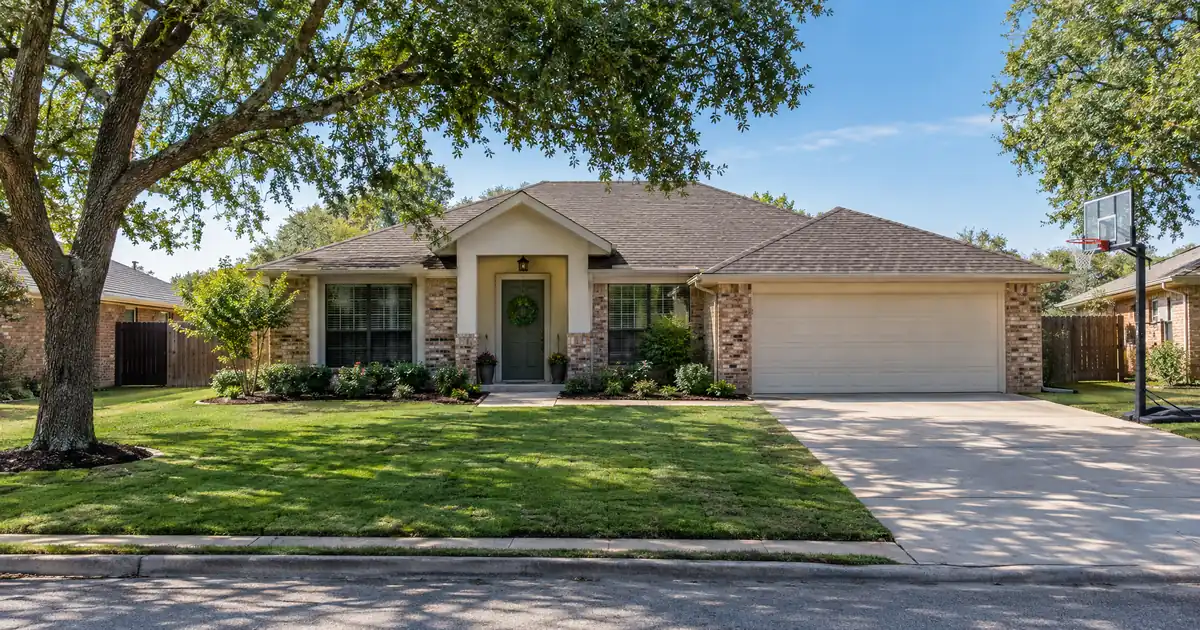
The Quick Read: An FHA cash-out refinance on a Texas homestead is generally unavailable in practice, and the block is more practical than statutory. Two rulebooks apply at once. HUD limits FHA cash-out to 80% of the home’s value, and the Texas Constitution sets its own 80% ceiling on all liens combined, with fee and process rules attached. The lower ceiling controls, and the Texas fee layer collides with how FHA mortgage insurance works. Homeowners who need cash from a Texas home usually end up looking at other paths.
Key Takeaways
- HUD caps FHA cash-out at 80% loan-to-value. Texas caps a homestead equity loan at 80% of fair market value across every lien. The percentages match. The rules do not.
- The Texas rule treats any cash-out refinance of a homestead as a home equity loan, whatever the lender calls the program.
- FHA mortgage insurance counts toward the Texas fee cap. That is the practical problem, not a flat legal ban.
- A no-cash-out FHA refinance is generally outside the Texas equity-loan rules.
- Texas adds a waiting period, an in-office closing and a one-per-year limit that FHA does not.
What Is an FHA Cash-Out Refinance?
An FHA cash-out refinance replaces your current mortgage with a larger FHA-insured one and pays you the difference. Across the wholesale programs Lendmire places files with, the FHA cash-out reaches 80% LTV on a home you have owned and occupied for the 12 months before the case number is assigned. That is a program figure, subject to lender guidelines and full file review.
HUD did not always set the limit there. HUD Mortgagee Letter 2019-11 cut the maximum LTV and combined LTV on cash-out refinances from 85% to 80% of adjusted value. HUD said the change addressed risk to the FHA insurance fund from rising insured loan balances. HUD’s rulebook for all of this is Handbook 4000.1.
For the full program overview, see Lendmire’s FHA cash-out refinance program page.
Basic FHA cash-out screening looks at four things:
- Twelve months of ownership and occupancy as your primary residence.
- A clean payment history on the existing mortgage over the same stretch.
- Credit and income that support the new payment.
- An appraisal that sets the value used for the 80% test.
On a file with no state overlay, that is the whole path. Texas adds more.
Where Does the Texas Cap Come From?
The Texas cap comes from the state constitution, not from lenders or agencies. Article XVI, Section 50 allows a loan against a homestead only under set conditions, and the combined debt cannot exceed 80% of the home’s fair market value. No program, investor or lender can waive it. See the text of Article XVI, Section 50 of the Texas Constitution.
Two points trip people up.
The cap counts every lien. Texas A&M’s Texas Real Estate Research Center explains that the 80% limit covers the new loan plus all other debt secured against the home. A second mortgage or an existing equity loan eats into the room before the new loan starts.
Any cash-out is an equity loan. Texas law decides whether a refinance is a homestead equity loan. The lender’s program label does not. If you take cash out of a Texas homestead, the transaction falls under the equity-loan rules. A no-cash-out refinance, where proceeds only pay off the existing debt and costs, is generally outside them.
So the percentages line up on paper: 80% from HUD, 80% from Texas. If that were the whole story, FHA would work fine. It is not the whole story.
How the Two Rulebooks Stack
Every layer applies at once, and the lowest ceiling controls. The Texas layer adds conditions on top of the FHA ones.
| Rule | FHA program | Texas homestead |
|---|---|---|
| Value ceiling | 80% LTV and combined LTV | 80% of fair market value, all liens |
| Ownership and occupancy | 12 months as primary residence | One-unit homestead only |
| Payment history | 12 months documented | Not a Texas rule |
| Fee limit | Not a cap on fees | 2% cap, includes insurance charges |
| Wait before closing | None | 12-day notice and wait |
| Frequency | None | One equity loan per 12 months |
| Closing location | Any | Lender, attorney or title office |
The last column is where files stall. Each Texas rule is manageable alone. Together with FHA’s insurance structure, they leave little room.
Why FHA Cash-Out Runs Into the 2% Fee Cap
The crux is fees. FHA mortgage insurance has an upfront premium and an annual premium. On the wholesale programs Lendmire works with, the upfront premium is 1.75% of the base loan and is typically financed. Texas caps the fees on a homestead equity loan at 2%, and its rules count charges to insure the loan inside that cap. The state’s rule at 7 TAC Chapter 153 is the reference for how those charges are treated.
Do the arithmetic in percentages. A 1.75% upfront premium alone uses most of a 2% cap. Origination charges, title charges and anything else the rules count have to fit in what remains. That is the squeeze.
Many lender pages say FHA will not insure these loans at all. A Texas mortgage-law analysis reads it more narrowly: FHA insurance is probably not prohibited additional collateral, so an FHA-insured Texas equity loan is legally possible, but the premium inside the fee cap makes it uneconomic without a large lender credit. No HUD handbook text addresses Texas equity loans directly.
That gap is why the accurate phrasing is “generally unavailable in practice,” not “illegal.” It is a practical block more than a statutory one. In the files Lendmire sees, Texas cash-out requests that start as FHA end up on a different structure for exactly this reason. Your own file should be checked against current program guidelines before you assume either answer.
VA loans are different. The same legal analysis treats a VA guaranty as prohibited additional collateral under Texas rules, since the home is supposed to be the only security. FHA insurance is not read the same way.
The Cap Math, Step by Step
Run the test in four steps. Use round numbers and keep them labeled as illustrative.
1. Start with the appraised value. The appraisal drives both the FHA test and the Texas test. Texas also requires an acknowledgment of fair market value at closing, so a low appraisal shrinks both ceilings at once.
2. Multiply by 80%. That is the ceiling on all liens combined.
3. Subtract every existing lien. The first mortgage, any second mortgage and any existing equity loan all count.
4. Subtract the costs. What remains is the most cash you could take, before the fee cap shrinks it further.
Picture a home appraised at a round 100 units, with a first mortgage of 50 units and no other liens. The ceiling is 80 units. Subtract the 50-unit payoff and you have 30 units of room, less costs. Now add a second lien of 10 units and the room drops to 20 before costs. Those are illustrative units, not dollars.
Two things shrink the number that people forget. A financed premium raises the loan balance, so it uses ceiling room. And a lower-than-expected appraisal cuts the ceiling itself. If the appraisal comes in light, a documented request for reconsideration with recent nearby sales is the normal step, but it does not always recover the value.
FHA Requirements Checked Against Texas Rules
Here is each requirement, marked by where it comes from.
| Requirement | Source | What to do |
|---|---|---|
| 12 months owned and occupied | FHA | Gather closing records and utility history |
| 12 months of on-time payments | FHA | Pull your mortgage statements |
| Credit, income, new payment | FHA | Full underwriting applies |
| 80% LTV and combined LTV | Both | The lower appraisal-based figure controls |
| 2% fee cap including insurance | Texas | Ask early whether the structure fits |
| 12-day notice before closing | Texas | Plan the calendar around it |
| One equity loan per 12 months | Texas | Check any recent equity loan |
| Closing at an office | Texas | Not at your kitchen table |
| Single-unit primary residence | Texas | Two-to-four unit homes do not fit |
On seasoning, HUD’s rulebook is the document to check. Older HUD guidance shows ownership under 12 months limits the loan by the purchase price, and an inherited home can qualify within 12 months if you have lived there since the inheritance. Confirm the current text in the handbook before relying on either.
On the one-year rule, 7 TAC Section 153.14 bars closing a new equity loan before the first anniversary of another one on the same homestead. The only exception is an oath-based request tied to a declared state of emergency.
Timing: Two Clocks, Not One
Texas has its own wait, and the federal cancel window sits on top of it. People often assume one replaces the other. It does not.
The first clock is the Texas 12-day rule. Under Section 50(g), the loan cannot close before the 12th day after the lender gives the required written notice.
The second clock starts after you sign. A refinance carries a federal right to cancel. The CFPB explains that the right runs until midnight of the third business day, and that no such right exists on a purchase loan. Funds generally are not disbursed during that window. If required notices are never delivered, Regulation Z can extend the right for up to three years.
Plan the sequence in order: application, appraisal, the 12-day notice, an in-office closing, then the cancel window before funds move. This is a consumer mortgage, so the Loan Estimate and Closing Disclosure rules apply as usual.
What If You Already Have a Texas Equity Loan?
An existing Texas equity loan does not lock you in forever. Under Section 50(f)(2), in place since a 2018 constitutional change, you can refinance an equity loan into a regular mortgage if four conditions are met:
- At least one year has passed since the equity loan closed.
- No new money is advanced beyond the payoff and actual costs.
- The 80% limit is met at that refinance.
- A required notice is delivered at the right time.
The emergency waiver for the one-year rule does not apply here. Whether FHA will insure that kind of exit loan is a lender-by-lender question, and no HUD text addresses it. The point is that the conversion exists. “Once an equity loan, always an equity loan” is no longer true.
Other Cases Where the Rule Bends
No-cash-out FHA refinance. If proceeds only pay off the debt and transaction costs, the transaction is generally outside the equity-loan rules. Across the wholesale programs Lendmire places, the FHA Streamline refinances an existing FHA loan with no appraisal, a limited credit review and a net tangible benefit. The FHA rate-and-term with an appraisal reaches 97.75% on a principal residence occupied for the previous twelve months.
Multi-unit homes. Texas equity loans are limited to one-unit primary residences. A two-to-four unit property does not fit the homestead equity structure, even though FHA purchase loans allow up to four units. If the property is not your homestead, Texas homestead rules do not apply, and occupancy decides the leverage under the FHA parameters.
Condominiums. The FHA side requires the project to be on the approved list. Texas equity guidance on condos varies by investor, so confirm early.
Non-compliance. A loan that violates the Texas rules can face forfeiture of principal or interest, or an invalid lien. That risk is why careful lenders do not improvise.
When the Cap Leaves Too Little Cash
If the 80% ceiling and the fee cap leave less than you need, you have a few paths. They are listed here as options, not recommendations.
| Option | What it does | Main limit |
|---|---|---|
| Conventional Texas equity loan | Takes cash at up to 80% of value | Same fee cap and process rules |
| No-cash-out refinance | Changes term or loan type only | No cash to you |
| Section 50(f)(2) conversion | Exits an existing equity loan | One year, no new money |
| Keep the current loan | No change | No access to equity |
Weigh them against what you hold now. If your current FHA loan has a favorable structure, giving it up for cash can cost more than it returns. If you need cash and have little equity above the 80% line, the cap itself may be the answer: the money is not there to take.
Common Misconceptions
“FHA’s limit overrides the state cap.” It does not. The Texas cap is constitutional, so no program overrides it. HUD’s own limit has matched at 80% since 2019. The real conflict is the process and fee layer.
“Texas bans FHA cash-out by law.” This is inaccurate. The better reading is that it is a practical block tied to the fee cap, not a statute that names FHA.
“The 80% only counts the new loan.” It counts all liens of record.
“Any refinance in Texas is an equity loan.” Only cash-out refinances are. A no-cash-out refinance is generally exempt.
“80% LTV means I’m approved for that amount.” Ownership, payment history, credit, income and appraisal still have to line up. Final terms depend on the lender’s guidelines, the property type, and the borrower’s complete credit picture.
Tax treatment can depend on your situation; borrowers should speak with a qualified tax professional before relying on any deduction or credit.
Key Terms Defined
Homestead: the home you live in as your primary residence, which Texas law protects with special lending limits.
Section 50(a)(6) loan: the Texas constitutional name for a home equity loan, which includes any cash-out refinance of a homestead.
Combined loan-to-value (CLTV): all loans secured by the home added together, divided by its appraised value.
Adjusted value: the appraised value HUD uses for its LTV test.
Upfront mortgage insurance premium: the one-time FHA premium, 1.75% of the base loan, usually financed into the balance.
Right of rescission: the federal right to cancel a refinance until midnight of the third business day.
Frequently Asked Questions
Can I get an FHA cash-out refinance on my Texas home?
Generally not in practice. The Texas 2% fee cap counts charges to insure the loan, and FHA’s upfront premium uses most of that room. Some analyses call it legally possible but uneconomic. Confirm against current lender guidelines before planning around it.
Does the Texas 80% limit apply if I only refinance the first mortgage?
Only if cash comes out. A no-cash-out refinance that pays off the debt and costs is generally outside the equity-loan rules. Once you take cash, the 80% limit applies to all liens combined.
What happens if my appraisal comes in low?
Both ceilings shrink, because both run off the appraised value. You can ask for an appraisal reconsideration with recent comparable sales. If the value stands, the available cash drops with it.
Can I refinance if I took a Texas equity loan last year?
Possibly, but not for cash. Under the one-year rule, a new equity loan cannot close before the first anniversary of the last one. A Section 50(f)(2) conversion can move you out of the equity-loan structure after a year if no new money is advanced and the 80% test is met.
Do the Texas 12-day wait and the 3-day cancel window overlap?
No. The Texas waiting period runs before closing and the federal cancel window runs after you sign. Both can apply to the same loan.
If You Are Weighing Your Options
If you are weighing a cash-out refinance against keeping the loan you have, Lendmire can help you compare the programs and the equity each one reaches. Program figures are subject to lender guidelines and full file review, and nothing here is a commitment to lend.
For your own numbers, request a scenario review with Lendmire.
About Lendmire
Lendmire — NMLS# 2371349 — is a mortgage broker that arranges FHA, VA, conventional and jumbo home purchase and refinance financing in 16 states through wholesale lenders. Every option is subject to the lender’s guidelines and full underwriting. Scotsman Guide named Lendmire a Top Mortgage Workplace in both 2025 and 2026.
Get Started
Ready to find the right loan for you?
In about 30 seconds you can review financing options available for your home or investment property. No commitment required.
Informational only. Not a Loan Estimate, approval, or commitment to lend. Program availability and eligibility are subject to lender guidelines, credit approval, property review, and underwriting.
References
1. HUD Mortgagee Letter 2019-11
2. HUD Single Family Housing Policy Handbook 4000.1
3. Texas Constitution, Article XVI, Section 50
4. Texas A&M Real Estate Research Center: home equity loans in Texas
8. Regulation Z
This article is part of Lendmire’s FHA Loan series — every loan program’s qualification details, guidelines, and scenarios live on the loan options page.
Related reading: FHA Cash-Out Upfront Mortgage Insurance and Refund Rules · FHA Cash-Out Annual MIP Duration by LTV, Term and Loan Tier · FHA Cash-out Refinance Rules: Occupancy, Loan-to-value, And Credit
Brandon Miller
Founder & CEO, Mortgage Loan Originator, Lendmire LLC
- Mortgage Loan Originator · NMLS# 1129696 · Verify on NMLS Consumer Access
- North Carolina Real Estate Broker · License# 343312 · Verify on NCREC
- North Carolina Insurance Producer · License# 19053198 · Property, Casualty, Life, Health · Verify on NAIC SBS
- Lendmire LLC · Firm NMLS# 2371349 · Verify firm licensure
Legal disclosures. Lendmire (NMLS# 2371349) is a state-licensed mortgage brokerage that arranges financing through wholesale lender relationships. Lendmire is not a direct lender, depository institution, or registered financial advisor. The discussion above is general informational content about real estate financing — it is not financial, legal, or tax advice, and readers should consult licensed professionals for guidance on their individual circumstances. Loan inquiries are subject to lender underwriting; this article does not represent a commitment to lend. Loan terms, rates, and qualification standards vary by borrower, property, and state, and are subject to change at any time. Equal Housing Opportunity. NMLS Consumer Access: nmlsconsumeraccess.org.