
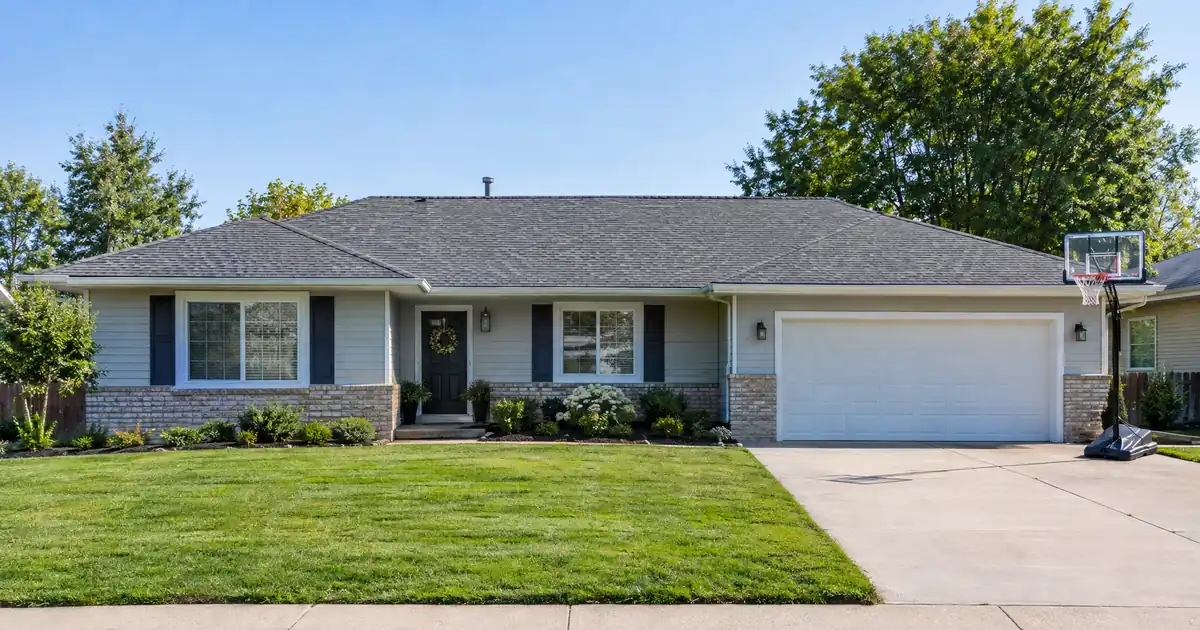
The Quick Read: Sometimes, but a plain cash-out refinance is often not the best tool for the job. It can fund construction, because the cash may be used for any purpose, but it sizes the loan on what the home is worth today, not what it will be worth once the space is built. A renovation refinance sizes on the finished value, and that difference often decides which route fits.
What Does a Cash-Out Refinance Actually Do?
A cash-out refinance replaces your entire first mortgage with a new, larger one. The difference, after payoff and closing costs, comes to you in cash. Fannie Mae’s Selling Guide lists taking equity out of the property “for any purpose” as an acceptable use, and that is the rule that lets the money pay for an addition or an ADU (accessory dwelling unit).
The part people skip: you do not refinance “just the cash.” The whole first mortgage goes away. Its rate, its remaining term, and its payoff schedule all go with it. If the loan you have is a good one, that is the biggest cost of this route, and it never shows up on a closing statement.
Across the wholesale programs Lendmire places files with, the conventional cash-out lane reaches 80% loan-to-value on a one-unit primary residence. Two- to four-unit homes drop to 75%. Those figures are subject to lender guidelines and full file review. They apply to the home’s current appraised value, which brings up the central problem.
Why Is “Today’s Value” the Sizing Problem?
A standard cash-out appraisal values the home as it stands. Your ADU does not exist yet, so it adds nothing to the number. If the project budget is larger than the equity available at 80% of current value, the loan cannot reach it, however good the plan is.
A simple way to see it: the lender looks at the house you have. You are asking to borrow for the house you want.
Renovation products flip that. Fannie Mae’s HomeStyle Renovation is built for additions, and it covers accessory units such as in-law suites and basement apartments. Its limited cash-out version uses the as-completed appraised value for loan-to-value, per Selling Guide Announcement SEL-2025-10.
Here is the catch. Not every lender offers these, and some that do restrict how they are used for ADUs. Renovation loans also add steps: a contractor bid, a scope of work, an appraisal “subject to completion,” held funds, and inspections before money is released. If a lender tells you no on the renovation product, that is a lender overlay, not the agency rule.
Addition vs. ADU: Does the Project Type Change the Answer?
Yes. An addition expands the living space of the home you already have. An ADU is a separate or semi-separate dwelling with its own entrance, kitchen, or both. Lenders and appraisers treat them differently.
| Factor | Addition | ADU |
|---|---|---|
| What it is | More space in the main home | Separate living unit |
| Zoning question | Usually setbacks and permits | Must be legal or allowed |
| Appraisal | Added square footage | Added unit, harder to compare |
| Rental income | Not applicable | May help, under narrow rules |
A narrow exception exists for an illegally zoned ADU on a one-unit property. Manufactured-home ADUs must be treated as real property under state law, per Fannie Mae’s HomeStyle FAQ. Get the permit and zoning answer before you pick a loan. A great loan cannot rescue a unit that cannot be legally built.
A word on rental income. Under Fannie Mae’s SEL-2025-08, income from one ADU can count toward qualifying, but only in a limited setup: a one-unit primary residence on a purchase or limited cash-out refinance, with other conditions. A standard cash-out may not get that help. Ask a loan officer before you count on it.
Which Refinance Routes Can and Can’t Fund Construction?
Four common routes come up. Only some do the job.
| Route | Can it fund construction? | Sized on |
|---|---|---|
| Standard cash-out | Yes, lump sum | Current value |
| Renovation refinance | Yes, funds held, released in stages | Finished value |
| Limited cash-out | No, only incidental cash | Current value |
| FHA Streamline / VA IRRRL | No | Not applicable |
Limited cash-out (what many call a rate-and-term refinance) pays off the old loan and closing costs with only incidental cash back. Under SEL-2025-08, Fannie Mae caps that cash at the lesser of 2% of the new loan balance or $2,000. That will not build a room. On its own, it is the wrong tool for this question.
FHA Streamline and VA IRRRL are for existing government loans. They exist to lower a payment, with a net tangible benefit test and no appraisal in most cases. HUD’s archived reference guide describes the FHA Streamline as allowing no meaningful cash back. The VA IRRRL is similar, with a narrow exception for energy-efficiency improvements, per the FDIC’s summary. A veteran who wants construction cash needs a full VA cash-out loan, with full underwriting.
FHA borrowers have one more option. The FHA 203(k) lets a homeowner refinance and fold renovation costs into one loan. HUD says it supports structural additions, and the Standard version requires a HUD consultant. It involves more paperwork and a staged draw process.
When Does a Standard Cash-Out Make Sense?
It tends to fit when three things line up.
- Your current loan is not worth protecting. If the existing loan is not one you would miss, replacing it costs you less.
- Equity covers the whole budget today. The cash-out limit of 80% of current value leaves room for the full project, with some cushion.
- You want one loan and one payment. A lump sum at closing keeps things simple, and there is no lender-controlled draw schedule.
Picture a homeowner with a long-held home, substantial equity, and a moderate project, such as a bedroom-and-bath addition. Here the lump sum is plausible. Now picture a homeowner with a very good existing loan and a large ADU budget that exceeds today’s equity at 80%. A cash-out is the wrong lane there, in two ways at once.
Honestly, the first scenario is the exception. Many ADU budgets are large compared with equity at current value, which is why renovation products exist.
When Should You Look at Something Else?
The flip points are specific.
- If the loan you have is better than anything you could get today, keep it. Look at a home equity line or loan, which leaves the first mortgage alone. Compare total cost across both loans, not just the new loan’s terms.
- If the budget exceeds today’s equity, a renovation refinance or a construction-to-permanent loan may reach further, because they use finished value.
- If you have already built with a bridge loan or savings, a refinance after completion puts the finished space into the appraisal. The tradeoff is carrying the bridge debt and betting on the appraisal.
- If your first mortgage is less than 12 months old, a conventional cash-out may not be available. Fannie Mae wants the loan being paid off to be at least 12 months old, measured note date to note date, and a borrower on title for six months, with exceptions for inheritance, legal awards and delayed financing.
Think it through this way: the equity pays for the project in one case, and the future value pays for it in another. Know which one your numbers need.
What Does It Cost Beyond the Loan Itself?
Three costs matter, and none is a rate.
Closing costs. They come out of the cash you receive or get rolled into the balance. Either way, they shrink net funds. Your Loan Estimate shows them.
A reset term. A new loan starts a fresh schedule. Even at a similar rate, a larger balance over a new term can mean a higher payment and more total interest. The CFPB notes that paying non-mortgage debts with mortgage debt can raise foreclosure risk, and that home repairs or new construction was the second most common reason for cash-out refinancing, after paying off debts.
Mortgage insurance. Conventional loans above 80% loan-to-value carry it. The standard cash-out lane stops at 80%, so it normally does not apply there. Renovation and some other lanes can run higher, and then it does. You can ask to cancel it at 80% of the original value with good payment history, and the servicer must end it automatically at 78%.
Put a break-even on it. Ask how long you plan to stay, and compare the savings or benefit against the closing costs and reset term. If you expect to move in a few years, the cost may never pay back.
How Should You Handle Timing, Overruns, and Contingency?
A cash-out pays out as a lump sum at closing. Construction bills arrive in stages, and overruns are common. Two practical points follow.
First, get bids before you apply. The loan amount should rest on a real budget, not an estimate. Build in a contingency, since a cash-out has no mechanism to top up midstream.
Second, understand how a renovation loan differs. Funds are held and released as work is completed, usually after an inspection. HUD’s 203(k) process has the contractor pull permits before work starts and releases draws after consultant inspection. It is more controlled and more paperwork. For a first-time builder, that structure can protect you. For an experienced one, it may feel slow.
One more thing to size honestly: idle cash. A lump sum sitting in an account while permits clear is not free money. It is debt you are already paying on.
What Do Lenders Look At?
Whichever path you choose, expect full underwriting. Across the wholesale conventional programs, files typically start at a 620 decision score, with a total ratio ceiling of 50% where the automated finding supports it. Manually underwritten files run tighter, at 36% or 45%. One wholesale lane reaches 89.99% loan-to-value with no mortgage insurance at a 680 score and a 50% ratio, on a thirty-year fixed, conforming balance, primary residence, with its own six months of seasoning. In Texas, the state constitution caps a cash-out on the homestead at the agency figure, and that wholesale lane is not written there. Some states have their own special home-equity rules.
Every figure here is subject to lender guidelines and full file review. A larger payment affects your ratios, so run the new payment against your income before you commit. The CFPB says lenders typically want you to keep at least 10% to 20% of your home’s value as equity, and it warns that failure to repay puts the home at risk.
Key Terms Defined
ADU (accessory dwelling unit): A secondary living space on the same lot as the main home, such as a garage conversion, backyard cottage, or in-law suite.
As-completed value: The appraised value of the home assuming the planned work is finished.
Limited cash-out refinance: A refinance that pays off the old loan and costs, with only a small amount of cash back.
Seasoning: The minimum time a loan or ownership has existed before it can be refinanced in a given program.
Net tangible benefit: A test that a streamline refinance must show a real gain for the borrower, such as a lower payment.
What Are the Risks of Borrowing Against Your Home?
The risks are real and mostly quiet. A bigger balance leaves less cushion if prices soften. A payment that starts immediately must be carried through construction delays. If rental income from the ADU falls short, the payment does not shrink to match. Stress-test the project on the assumption that rent arrives late, or at a lower level than you hoped.
Foreclosure is the worst case, and it is the reason to keep an equity buffer. Tax treatment can depend on your situation; borrowers should speak with a qualified tax professional before relying on any deduction or credit.
A Short Decision Path
1. Is the project legal and permitted? If not, stop and fix that first.
2. Does equity at 80% of today’s value cover the full budget? If yes, a standard cash-out is on the table. If no, look at a renovation refinance.
3. Is your current first mortgage worth keeping? If yes, compare a second loan.
4. Are you on an FHA or VA loan? Streamlines will not fund construction. Look at a 203(k) or a VA cash-out.
5. Are your numbers still comfortable after a larger payment? If not, shrink the project.
For related reading, Lendmire’s piece Should a Homeowner Use a Cash-Out Refinance for a Renovation? covers the broader project question. Lendmire’s cash-out refinance programs page lays out the conventional lanes in one place.
Frequently Asked Questions
Can a cash-out refinance be used for an ADU?
Yes, on the program rules. Fannie Mae allows cash-out proceeds for any purpose, which includes an ADU. The practical limit is sizing: the loan is based on today’s appraised value, so the equity has to cover the whole budget without the finished unit counting.
Do I have to refinance my first mortgage to build an addition?
No. A home equity loan or line leaves your first mortgage alone, and that matters if its terms are better than what is available now. A cash-out refinance always replaces the whole first loan, so compare total cost across both options.
Can I build first and refinance afterward?
Often, yes. The tradeoff is carrying bridge debt during construction and depending on the final appraisal.
Will rental income from an ADU help me qualify?
Only in limited cases. Fannie Mae counts income from one ADU on a one-unit primary residence for a purchase or limited cash-out refinance, subject to conditions. A standard cash-out may not qualify for that treatment, so ask your loan officer before relying on it.
Can an FHA Streamline or VA IRRRL pull cash out for construction?
No. Both are designed to lower the payment on an existing government loan and do not provide meaningful cash back. A VA IRRRL has only a narrow exception for energy-efficiency improvements. Homeowners with those loans can look at an FHA 203(k) or a full VA cash-out.
If you are weighing a cash-out refinance against keeping the loan you have, Lendmire can help you compare the programs and the equity each one reaches.
For your own numbers, request a scenario review with Lendmire.
For current guidelines and terms, see Lendmire’s refinance programs page.
About Lendmire
Lendmire (NMLS# 2371349) is a mortgage broker licensed for consumer lending in 16 states. Lendmire arranges FHA, VA, conventional and jumbo purchase and refinance loans through wholesale lenders; every file is underwritten by the lender under the applicable program guidelines. Scotsman Guide named Lendmire a Top Mortgage Workplace in both 2025 and 2026.
Get Started
Ready to find the right loan for you?
In about 30 seconds you can review financing options available for your home or investment property. No commitment required.
Informational only. Not a Loan Estimate, approval, or commitment to lend. Program availability and eligibility are subject to lender guidelines, credit approval, property review, and underwriting.
References
1. Fannie Mae Selling Guide B2-1.3-03, Cash-Out Refinance Transactions
2. Fannie Mae HomeStyle Renovation
3. Selling Guide Announcement SEL-2025-10
5. Fannie Mae Selling Guide Announcement SEL-2025-08
6. HUD’s archived reference guide
8. HUD FHA 203(k) Program Types
9. CFPB
This article is part of Lendmire’s Refinance series — every loan program’s qualification details, guidelines, and scenarios live on the loan options page.
Related reading: Should a Homeowner Use a Cash-Out Refinance for a Renovation? · How to Fund a Business Purchase With a Cash-Out Refinance · Is Now a Bad Time for a Cash-Out Refinance?
Brandon Miller
Founder & CEO, Mortgage Loan Originator, Lendmire LLC
- Mortgage Loan Originator · NMLS# 1129696 · Verify on NMLS Consumer Access
- North Carolina Real Estate Broker · License# 343312 · Verify on NCREC
- North Carolina Insurance Producer · License# 19053198 · Property, Casualty, Life, Health · Verify on NAIC SBS
- Lendmire LLC · Firm NMLS# 2371349 · Verify firm licensure
Required disclosures. Lendmire (NMLS# 2371349) operates as a licensed mortgage broker, not a direct lender or depository. The discussion in this article is general in nature and should not be relied upon as financial, legal, or tax advice — every investment scenario is unique and should be reviewed by a qualified professional. Any loan inquiry is subject to lender underwriting, and this article is not a commitment to lend or a guarantee of approval. Mortgage rates, loan terms, and program guidelines vary by borrower, property, and state, and may change without notice. Equal Housing Opportunity. Verify licensure at NMLS Consumer Access.