
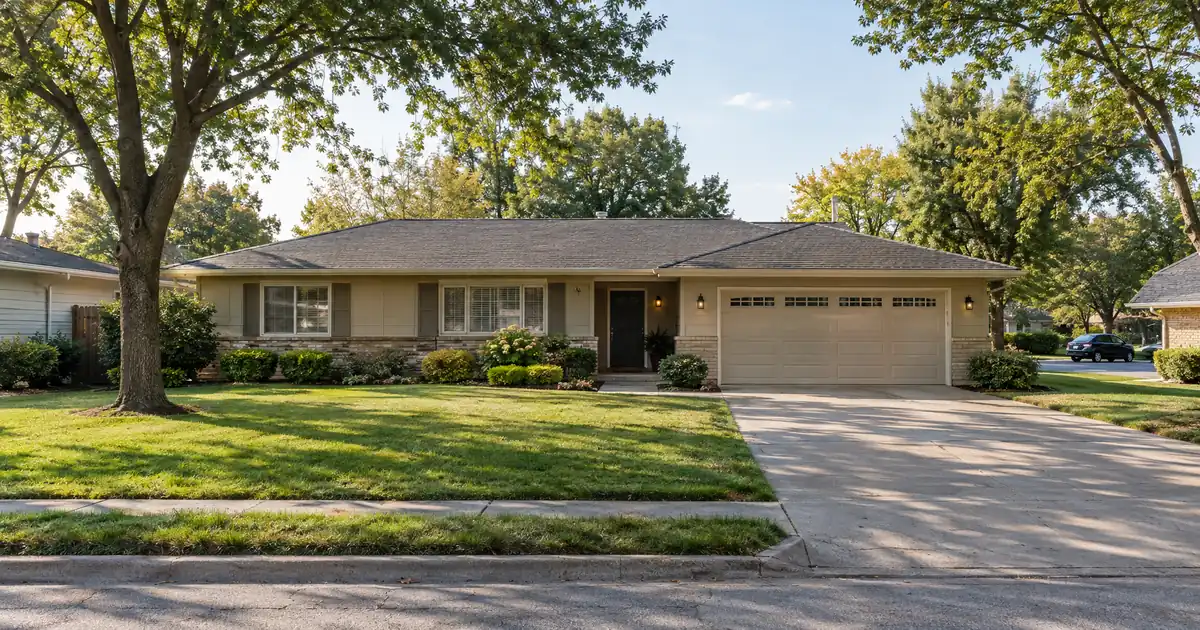
The Quick Read: Yes, cash-out refinance proceeds are ordinary loan money, so you can spend them on a down payment, closing costs, or even a full purchase price, but only the equity that lender leverage caps, rental coverage, and reserves allow becomes cash, and the next property is a separate loan that has to qualify on its own. Think of it as two files, not one. The first file produces cash. The second file spends it.
- On an investment property, cash-out refinances top out around 75% LTV across most of the network, subject to lender guidelines.
- Lenders typically want about 6 months of ownership, measured from title recording, before they will cash out a property.
- Rental purchases usually land at 75%-80% LTV on an investment property, so the cash has to cover that down payment plus costs.
- DSCR coverage of 1.00 is where select programs start, and a bigger new loan on the source property pulls coverage down.
- A second home you will use yourself is underwritten differently from a rental. Know which one you are buying before you apply.
How Does Equity Get From One Property to the Next?
Equity moves in two steps. A new, larger mortgage pays off the old one, and the difference lands in your account at closing. Then you use that cash as the down payment on the next purchase, which is a second loan with its own underwriting.
DSCR Cash-Out Calculator
Run the cash-out numbers in your market
Rate source: Freddie Mac 30-yr average via FRED® — Federal Reserve Bank of St. Louis · effective Oct 8, 2026
Prefilled with starting assumptions — enter your property’s value, balance, taxes, and insurance for a more accurate picture.
Program parameters update from Lendmire’s centralized guideline source. Taxes and insurance are editable estimates.
As of Oct 8, 2026 · General Freddie Mac market benchmark, not a Lendmire loan offer. Property value, balance, taxes, and insurance are editable estimates. Maximum loan-to-value varies by lender, program, property type, and seasoning. Not a Loan Estimate, approval, or commitment to lend. Program availability and eligibility are subject to lender guidelines, credit approval, property review, and underwriting.
Here is the sequence most investors follow:
1. Pick the source property. For a DSCR cash-out, that is a rental you already own. Cash-out on a primary residence runs through a standard owner-occupied loan instead, with personal income underwriting.
2. Size the new loan. It has to cover the old payoff, closing costs, and the cash you want. Closing costs come out of your proceeds, so the check is smaller than the equity math suggests.
3. Clear the source-property tests. Three gates apply: the leverage cap, rent coverage on the larger payment, and reserves.
4. Close and receive the cash. The title company pays off the old lender and sends you the remainder.
5. Keep the proceeds traceable. Park them in a separate account. Clean records help at tax time and with lender source-of-funds questions.
6. Buy the next property. Now the purchase loan is reviewed on its own terms.
One detail matters here. The refinance does not finance the new rental. It only creates the cash. If the proceeds fall short, you need other funds, a partner, or a smaller purchase.
What Can the Cash Pay For?
Almost anything. Cash-out proceeds are not restricted to home improvements. Investors typically use them for four things:
- The down payment on the next property
- Closing costs on that purchase
- Reserves, which lenders want to see on the new file
- Repairs or furnishing after closing
Some investors buy the next property outright with the proceeds. That works only when the equity is deep enough. Given the 75% cash-out ceiling, it rarely works unless the source property carries a very low balance. Each figure is subject to lender guidelines and a complete review of property type, leverage, and credit.
(Buying outright also drains your liquidity, which is exactly what reserves rules are meant to prevent.)
Second Home or Rental: How Do the Rules Differ?
A second home and a rental are different loan categories, and lenders treat them differently. A second home is a place you will use yourself, and it is reviewed mainly on your personal income and debts. A rental is judged mainly on whether its rent covers its payment.
DSCR loans are designed for non-owner-occupied investment properties. Because they are business-purpose investor loans, they are reviewed differently from a standard owner-occupied mortgage.
| Factor | Second home | Rental (DSCR) |
|---|---|---|
| Who lives there | You, part of the year | Tenants |
| Review basis | Personal income and debts | Property rent versus payment |
| Key ratio | Debt-to-income | DSCR coverage |
| Leverage | Varies by lender | 75%-80% LTV on purchase |
| Lender focus | Your overall finances | The property’s income |
Occupancy is a promise you make to the lender. Calling a rental a second home to get easier terms is a misclassification, and it carries consequences. Pick the category that matches how you will really use the property.
A DSCR loan is reviewed primarily on property-level rental income covering the payment, subject to lender guidelines. Our complete DSCR loans guide walks through the full qualification picture.
Run the Numbers: Two Modeled Scenarios
These examples use percentages and ratios only. They are modeled assumptions, not market data.
Scenario one: the cash covers the purchase. Say you own a rental with a balance equal to 40% of its value. A cash-out at the 75% LTV ceiling puts the new loan at 75% of value. That leaves 35% of the value as proceeds before closing costs. Leverage, reserves, and pricing vary by lender and program; the final terms follow the full file review.
Now picture buying a rental priced about the same as the one you refinanced. Purchase LTV of 75% means a 25% down payment. The 35% of proceeds covers that down payment and still leaves a cushion for closing costs and reserves. It works, with room to spare. Terms vary by lender guidelines, property type, leverage, credit profile, and full file review.
Scenario two: the source property stops covering itself. Coverage scales roughly with the loan balance, all else equal. Suppose the source rental covered its payment at 2.0x on the old loan. Taking the balance from 40% to 75% of value lands coverage near 1.07x. Still above 1.00, but thin.
Start at 1.5x instead, and the same math lands near 0.8x. Now the refinance runs into a coverage problem. Your options include taking less cash, choosing a different source property, or asking a select lender in the network about coverage below 1.00, with leverage and terms adjusted. A separate select-lender path exists for no-ratio files. It is generally for borrowers who already own a primary residence.
Clearing 1.00 is not the same as positive cash flow. DSCR compares rent to the full monthly obligation (principal, interest, taxes, insurance, and any HOA dues) and nothing else. Repairs, vacancy, management, utilities, and capital expenses sit outside the ratio.
Across our wholesale network, files that pencil on paper often get tight once real operating costs enter the picture. The stronger investors stress-test the source property after the cash-out, not before. A thin cushion is the usual reason a good idea turns into a stressful one.
What Do Both Loans Need?
Both loans have to qualify, and the checklists overlap. Here is how they typically differ.
For the cash-out refinance on the source rental:
- About 6 months of ownership, measured from title recording
- Leverage up to about 75% LTV on an investment property
- Rent coverage that clears the program’s floor on the larger payment
- Reserves, commonly around 6 months of PITIA, and about 9 months on loans above $1,500,000, though this varies by lender, leverage, and loan size
- Credit that fits the tier: a 620 floor exists in parts of the network, most programs want around 660, and 700+ opens the strongest leverage
For the purchase loan on the next rental:
- A down payment that fits 75%-80% LTV on an investment property, with select high-leverage programs reaching 85% LTV at roughly a 700+ score
- Property rent that covers its own payment at the program’s coverage floor
- Reserves again, because lenders look at your liquidity after you spend the cash
- A property type the programs accept. Manufactured homes, log homes, and barndominiums are not offered in the network’s DSCR programs. Exact terms depend on the lender’s guidelines, property type, leverage, and a full review of the borrower’s file.
Loan sizes run up to $3,000,000 on standard programs. Above $2,500,000, the network generally holds to 30-year fixed structures. Longer terms and interest-only periods are available through select lenders.
Here is the catch most people miss. Reserves are counted per file. Spending all the proceeds up front can leave you short on the second loan.
If you are weighing whether to tap your first rental for the next one, Lendmire’s piece Should You Cash-Out Refinance Your First Rental to Buy a Second? covers that decision in more depth.
How Does a Cash-Out Compare With a HELOC or Savings?
A cash-out refinance replaces your existing mortgage entirely. A HELOC or home equity loan leaves the first mortgage in place and adds a second lien, as the CFPB’s research team explains. That difference drives the choice.
| Option | What happens to the first loan | Best fit |
|---|---|---|
| Cash-out refinance | Replaced by a larger loan | Investors fine resetting the whole loan |
| HELOC / home equity loan | Stays in place | Low-cost first loan you want to keep |
| Savings | Untouched | Smaller down payments |
| Waiting | Untouched | Thin margins or weak reserves |
The cost of a cash-out hits the whole balance, not just the cash you pull. If your current first mortgage is a loan you love, a second lien may cost less overall. If you want one clean loan, or the existing loan has a poor structure, the refinance can make more sense. HELOC lines on investment property are also more limited in size, which matters if you need a large down payment.
Waiting is a legitimate choice. It is not exciting, but it costs nothing.
For a different angle on the same strategy, Lendmire’s piece Cash-Out Refinance to Buy a Second Home: Using Your Primary Residence’s Value for the Down Payment covers the owner-occupied path.
When Is This a Bad Idea?
It is a bad idea whenever the extra debt puts the source property or your liquidity at risk. Turning equity into mortgage debt can threaten the home if payments become unsustainable, as a CFPB research report notes in its look at converting other debt into mortgage debt. The same logic applies to rentals.
Skip the strategy if:
- Reserves would drop below what the next lender wants
- The source property already runs near 1.00 coverage
- Rent on the new property is a guess, not a documented number
- You are leaning on appreciation to make the math work
- You would be giving up a loan structure you cannot replace
The thin-margin trap is real. A bigger payment on the old rental plus a new payment on the new one can leave both properties running close to break-even. If the market dips or a unit sits vacant, there is no cushion. Honestly, this one can go either way: aggressive investors recycle equity repeatedly, while cautious ones wait. Neither is wrong. The right answer depends on your reserves and your tolerance for thin margins.
Tax treatment can depend on how the funds are used and how the property is held. Cash-out proceeds are generally not treated as taxable income, according to one CPA-authored explainer, but investors should keep clear records and speak with a qualified tax professional before relying on any deduction.
Common Mistakes and Timing Pitfalls
- Spending the equity before the refinance closes. Appraisals can land lower than expected, which shrinks the cash.
- Skipping the seasoning check. Recently purchased or rehabbed properties may be sized to the lower of cost or value until the waiting period passes.
- Chaining cash-outs without stress-testing. Each round shrinks the cushion.
- Forgetting closing costs. They come out of proceeds, so the cash you receive is smaller than the equity you counted.
- Treating one property’s file as the other’s. The two loans are separate. Qualifying for one does not qualify you for the other.
- Mixing proceeds with other money. Commingled funds make records messy for everyone.
Sequencing deserves one more thought. If the refinance closes but the purchase falls through, you are carrying a larger loan with no new asset. Line up the purchase contract and the refinance timing so you are not stuck holding cash and debt together.
Key Terms Defined
DSCR (debt service coverage ratio): A measure of whether a property’s rent covers its monthly mortgage obligation.
LTV (loan-to-value): The loan balance divided by the property’s value, shown as a percentage.
PITIA: Principal, interest, taxes, insurance, and association dues. It is the full monthly obligation on a property.
Seasoning: The waiting period a lender wants between buying a property and refinancing it.
Reserves: Liquid funds you hold after closing, usually counted in months of PITIA.
Cash-out refinance: A new, larger mortgage that pays off the old one and returns the difference to you as cash.
Frequently Asked Questions
Can I buy a rental property outright with cash-out proceeds?
Sometimes, but it is uncommon. A 75% LTV cap on investment-property cash-out limits how much equity becomes cash. Buying outright works only when the source property has deep equity and the purchase price is modest. Even then, reserves rules may leave you needing liquidity beyond the purchase price. Every figure here varies by lender and program — guidelines, property type, leverage, and credit profile all apply.
Should I buy the next property before or after the refinance closes?
Line up the cash first, when you can. Closing the refinance before you commit to a purchase gives you a known cash figure. If you must write an offer first, build the timing carefully so you are not exposed if the refinance falls short.
Will the new loan on the source property lower my DSCR?
Yes, in most cases. A larger balance means a larger payment against the same rent, so coverage drops. If it falls under 1.00, select lenders in the network may review coverage below 1.00 with leverage and terms adjusted.
Does it matter whether the next property is a second home or a rental?
Yes. A second home you will use yourself is reviewed on personal income and debts. A rental is reviewed mainly on whether the property’s rent covers its payment. Choose the category that matches your real plan for the property.
Can I pull equity from my primary residence to buy a rental?
You can, but that is an owner-occupied cash-out, which is a different loan from a DSCR cash-out. It is reviewed on personal income and debts, and leverage rules differ. DSCR cash-out applies to investment property you already own.
If You Are Weighing This Move
If you are buying or refinancing a rental property and want to see how the numbers work, Lendmire can help you compare DSCR loan options based on the property income, credit profile, leverage, and investor goals. As a broker, Lendmire arranges financing through select lenders in its wholesale network across 41 markets, including Washington, D.C. Program terms vary and every file is reviewed individually, so nothing here is a commitment to lend.
Equity is only useful if the next property can carry its own weight after the cash changes hands.
Investors weighing their equity options can start with Lendmire’s guide to cash-out refinance on an investment property.
About Lendmire
Lendmire — NMLS# 2371349 — is a DSCR and non-QM mortgage brokerage with investor loan programs in 41 markets, including Washington, D.C. DSCR eligibility is commonly reviewed by the lender around property-level rent rather than personal income documentation, subject to lender guidelines, and the brokerage helps arrange financing for LLC-owned portfolios beyond conventional financed-property limits. Recognized by Scotsman Guide as a Top Mortgage Workplace in 2025 and 2026.
Get Started
Ready to find the right loan for you?
In about 30 seconds you can review financing options available for your investment property. No commitment required.
Informational only. Not a Loan Estimate, approval, or commitment to lend. Program availability and eligibility are subject to lender guidelines, credit approval, property review, and underwriting.
References
1. CFPB Office of Research blog: cash-out refinance mortgages and their borrowers
2. The Real Estate CPA: cash-out refinance tax implications for rental property investors
This article is part of Lendmire’s investment property cash-out refinance program — full qualification details, guidelines, and scenarios live on the program page.
Related reading: Texas Cash-Out Refinance vs HELOC for the Same Home Equity · Should You Take the Maximum Cash-Out Refinance on a Paid-Off Rental? · How to Cash Out on a Short-Term Rental Using Booking History
Brandon Miller
Founder & CEO, Mortgage Loan Originator, Lendmire LLC
- Mortgage Loan Originator · NMLS# 1129696 · Verify on NMLS Consumer Access
- North Carolina Real Estate Broker · License# 343312 · Verify on NCREC
- North Carolina Insurance Producer · License# 19053198 · Property, Casualty, Life, Health · Verify on NAIC SBS
- Lendmire LLC · Firm NMLS# 2371349 · Verify firm licensure
Disclosures. The information presented in this article is general market commentary, not financial, legal, or tax advice. Lendmire is a mortgage brokerage (NMLS# 2371349) — not a direct lender or depository institution — and loan placement is subject to lender underwriting. Nothing in this content represents a commitment to lend. Loan terms, pricing, and program availability vary based on borrower qualifications, property characteristics, and state of subject property, and are subject to change at any time. Lendmire complies with Equal Housing Opportunity requirements. Consumer access: nmlsconsumeraccess.org.