
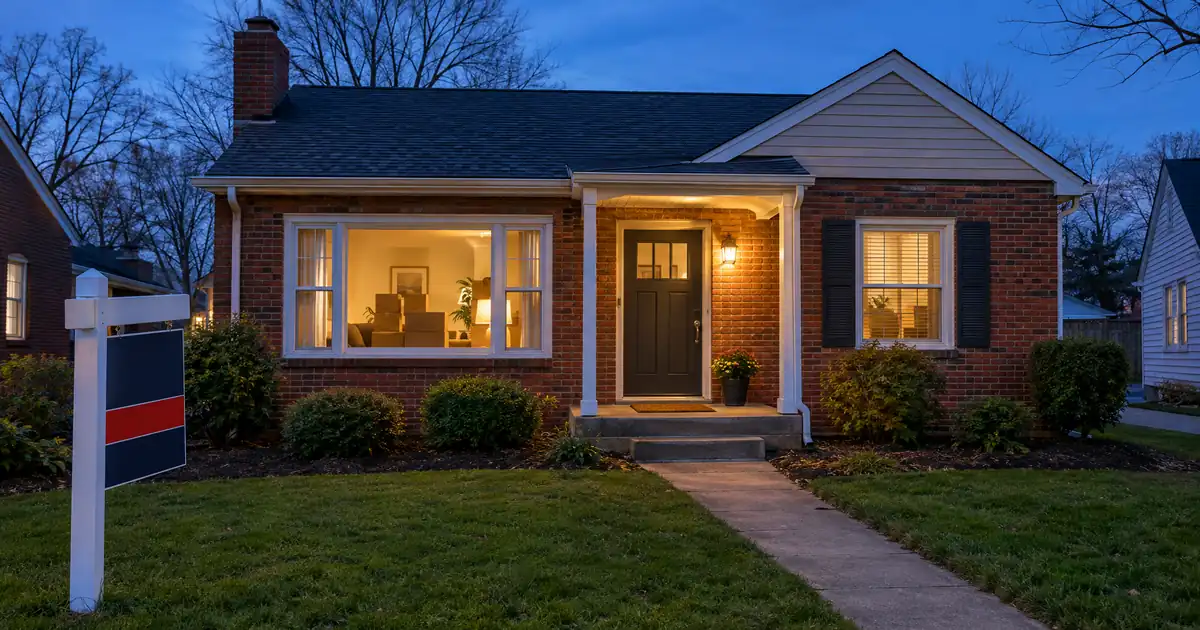
The Quick Read: A cash-out refinance replaces your current first mortgage with a larger one, and the extra amount pays off your cards at closing. The card balances stop existing as separate debts. They become part of the new loan’s principal, secured by your home. Your monthly obligations usually shrink, but the debt now follows a mortgage term, and the home is the collateral.
What Does “Blending” Actually Mean?
Blending means three old obligations collapse into one new loan. Your existing first mortgage, your card balances, and any financed closing costs all get paid from a single new loan amount.
Picture the balance sheet before and after.
| Item | Before | After |
|---|---|---|
| First mortgage | Existing loan | Paid off |
| Credit cards | Several balances | Paid off at closing |
| New mortgage | None | One loan, one payment |
| Collateral | Home backs the mortgage only | Home backs everything |
That last row matters most. Card debt is unsecured. If you fall behind, the card company can pursue collection, but it can’t take your house. Once those balances live inside the mortgage, they do carry that risk.
Lenders classify this as a full cash-out refinance. Cards aren’t a purchase-money lien, so the loan can’t be treated as a rate-and-term (limited cash-out) refinance. Freddie Mac’s Guide defines a cash-out refinance as a mortgage with no specific restrictions on how the proceeds are used. Debt consolidation fits squarely inside that definition.
For an overview of the loan type itself, see Lendmire’s cash-out refinance programs.
How Is the Loan Underwritten, Step by Step?
Underwriting follows a predictable path. Across the wholesale programs Lendmire places files with, the sequence looks like this:
1. You state the purpose. Paying off cards makes it a cash-out loan from the start.
2. Application, credit and income review. The automated underwriting system pulls your credit and identifies each card account.
3. The appraisal sets the ceiling. The new loan can’t exceed a set percentage of appraised value (more on that below).
4. Payoff documentation. The lender collects current statements or payoff figures for each card it will pay.
5. Ratios get recalculated. The new, larger mortgage payment replaces your card minimums in the debt-to-income math.
6. Closing. The closing agent pays the old mortgage and the cards directly from the loan funds. Anything left over goes to you.
7. After closing. You make one mortgage payment. The paid-off cards typically stay open unless you close them.
Step 5 is where many borrowers find relief. Fannie Mae’s Selling Guide treats a revolving balance that is paid off at or before closing as a debt whose payment doesn’t need to be counted. A 2015 Fannie Mae announcement also removed the old requirement that paid-off accounts be closed. An individual lender may still add its own rule, so ask.
How Much Can You Actually Borrow?
The cap applies to the whole new loan, not just the cash. On a conventional cash-out refinance of a one-unit primary residence, the maximum loan-to-value is 80%. Two- to four-unit principal residences, second homes and investment properties top out at 75%. All figures are subject to lender guidelines and full file review.
Here’s the catch. Your equity isn’t your cash. The new loan must first cover the payoff of your old first mortgage and any financed closing costs. Card payoffs come out of what remains.
Say your home is appraised and you owe a modest balance. At 80% leverage, the loan ceiling is four-fifths of value. Subtract the old mortgage payoff and costs, and what’s left is available for cards. If your cards total more than that remainder, the loan won’t fully clear them. Some borrowers pay off the largest balances and carry the rest. Terms vary by lender guidelines, property type, leverage, credit profile, and full file review.
One wholesale lane reaches 89.99% LTV with no mortgage insurance. It requires a 680 score and a 50% ratio ceiling, applies to a thirty-year fixed on a primary residence at a conforming balance, and carries its own six months of seasoning. Texas homestead cash-outs follow a constitutional cap, and that lane isn’t written there. Exact terms depend on the lender’s guidelines, property type, leverage, and a full review of the borrower’s file.
What Credit and Timing Rules Apply?
Seasoning and credit rules decide eligibility before the numbers matter.
- Loan age. The first mortgage being paid off must be at least 12 months old, measured note date to note date, per the Fannie Mae Selling FAQ. Exceptions exist for subordinate liens and co-owner buyouts.
- Time on title. At least one borrower generally must have been on title for six months. Inheritance, delayed financing and legal awards carry exceptions. Freddie Mac’s Guide also requires borrowers to occupy the home as a principal residence on a cash-out loan.
- Credit score. The wholesale conventional programs start at a 620 decision score. The automated finding governs most files, with a total ratio ceiling of 50%.
- Prior credit events. The agencies set waiting periods: four years from a chapter 7 discharge, seven from a foreclosure, four from a short sale or deed-in-lieu. Documented extenuating circumstances can shorten them.
A common mistake is assuming collections and judgments behave like ordinary cards. They don’t. Lenders typically require them paid off at or before closing, and the rules differ from standard revolving accounts.
Which Refinance Types Can’t Blend Debt?
Only a true cash-out refinance can fold cards into your mortgage. The streamlines and the rate-and-term lane can’t.
| Program | Can it pay off cards? | Why |
|---|---|---|
| Conventional cash-out | Yes | No use-of-proceeds restriction |
| Conventional rate-and-term | No | Only incidental cash back |
| FHA Streamline | No | Lowers payment on an existing FHA loan; no cash back |
| VA IRRRL | No | Rate-reduction loan on an existing VA loan |
| FHA or VA cash-out | Yes | Separate cash-out products with their own rules |
The rate-and-term lane pays off the existing first mortgage, closing costs and a purchase-money second lien, with only incidental cash back. It reaches 95% LTV on a one-unit principal residence. That generous leverage is exactly why it can’t carry card payoffs. Cash-out gets lower caps because it carries more risk. Every figure here varies by lender and program — guidelines, property type, leverage, and credit profile all apply.
If you hold an FHA or VA loan today, the streamlines are simple but won’t touch your cards. A cash-out version of each exists, with different equity and occupancy rules, so check which fits.
One related trap: Fannie Mae’s prohibited refinancing practices rule bars a plan where a cash-out is arranged and then followed by a limited cash-out refinance. You can’t disguise a cash-out loan as a rate-and-term one.
Where Does the General Rule Break?
Most files follow the standard path. These edge cases don’t.
- Free-and-clear homes. A new loan on a home with no mortgage counts as a cash-out refinance.
- HELOCs and second mortgages. Paying off one that wasn’t purchase-money converts the new loan to cash-out.
- Inherited or divorce-awarded homes. Named exceptions soften the title-timing rules.
- LLC or trust title. Title typically must move into your personal name first, though trusts have their own treatment.
- Occupancy. A principal residence gets the best leverage. A second home or rental carries the lower 75% cap, and that’s the whole answer on that point.
- Thirty-day charge accounts. Fannie Mae doesn’t require open charge accounts that must be paid in full each month to be counted in your ratio.
Does Blending Debt Actually Save Money?
It lowers your monthly obligation almost every time. Whether it lowers your total cost is a separate question.
Card balances usually run on short, revolving terms. Move them into a thirty-year mortgage and each dollar gets repaid more slowly. A lower payment can still mean more total interest, because you pay on that balance for decades. Closing costs, which can be financed into the loan, add to the balance too.
The break-even depends on three things: the gap between your card pricing and your mortgage pricing, the costs you roll in, and how long you keep the loan. If you plan to sell in a few years, the math shifts. If you’ll pay the extra cash flow toward principal, it shifts again.
There’s a practical safeguard worth knowing. Keep paying the mortgage as if the card debt were still on its old schedule. That captures the cash-flow relief without stretching the payoff.
Honestly, this is a close call for many households. Cheaper monthly cash flow is real. So is the trade of unsecured debt for secured debt. The CFPB notes that converting non-mortgage debt into mortgage debt can put the home at risk of foreclosure if payments become unsustainable, while defaulting on a card is unlikely to cost you the house.
What Happens to Your Credit?
Paying off revolving balances cuts your utilization, the share of available credit you’re using, and that often lifts scores. A CFPB review of cash-out borrowers found credit scores rose sharply at first, then slowly eroded, though they stayed above pre-refinance levels. The erosion is the telling part. Many borrowers rebuilt card balances.
Whether to keep the paid-off cards open is a real tradeoff. Open accounts preserve available credit and score history. They also preserve temptation. If the spending that created the balances hasn’t changed, consolidation probably won’t solve the problem, as the CFPB’s consumer guidance points out.
Who Should Skip This?
Skip it, or at least pause, if any of these fit:
- Your card balances are small relative to closing costs.
- You can clear the debt on its current schedule within a couple of years.
- The spending pattern behind the balances is unresolved.
- Your income is uncertain.
- You expect to move soon.
- You’d be draining equity you may need for repairs or emergencies.
Equity spent on cards isn’t available later. If values fall, a bigger loan balance raises the risk of owing more than the home is worth.
For comparison against other options, Lendmire’s piece on cash-out refinance versus a HELOC or personal loan for card debt lays out the tradeoffs. The key structural difference: a HELOC or home equity loan leaves your first mortgage in place, while a cash-out replaces it and reprices the whole balance.
Tax treatment can depend on your situation; borrowers should speak with a qualified tax professional before relying on any deduction or credit.
Key Terms Defined
Cash-out refinance: A new mortgage larger than the one it replaces, with the difference paid out for any purpose, including debt payoff.
Loan-to-value (LTV): The new loan amount divided by the home’s appraised value.
Seasoning: The minimum time you must have owned the home or held the loan being replaced.
Debt-to-income ratio: Your monthly debt obligations divided by your gross monthly income.
Utilization: The share of your available revolving credit that you’re currently using.
Limited cash-out (rate-and-term) refinance: A refinance that pays off the existing mortgage and costs, with only incidental cash back.
Frequently Asked Questions
Do I have to close my credit cards when they’re paid off?
Not under current Fannie Mae policy. Paid-off revolving accounts can stay open, and their payments are excluded from your ratio when paid at or before closing. A specific lender may add its own rule, so confirm before you apply. Keeping them open helps your available credit but makes re-borrowing easy.
Can I use an FHA Streamline or VA IRRRL to pay off cards?
No. Both are designed to lower the cost of an existing government-backed loan and involve no meaningful cash back. To fold in card debt, you’d need a cash-out refinance, including FHA or VA versions with their own equity and occupancy rules.
Will paying cards off with a cash-out refinance lower my total interest?
Sometimes, but not automatically. The monthly payment usually drops, yet stretching a short-term balance across a mortgage term can raise total interest. Financed closing costs add to the balance. Extra principal payments toward the new loan narrow that gap.
How much of my equity can I reach?
On a conventional one-unit primary residence, up to 80% loan-to-value, with the old mortgage payoff and costs coming out first. Two- to four-unit homes, second homes and rentals top out at 75%.
Can I do this right after buying my home?
Generally no. The existing first mortgage typically must be at least 12 months old, and a borrower must have been on title for six months. Delayed financing, inheritance and legal-award exceptions exist for specific situations.
If you are weighing a cash-out refinance against keeping the loan you have, Lendmire can help you compare the programs and the equity each one reaches.
For your own numbers, request a scenario review with Lendmire.
For current guidelines and terms, see Lendmire’s refinance programs page.
About Lendmire
Lendmire (NMLS# 2371349) is a mortgage brokerage serving homeowners and home buyers in 16 states. FHA, VA, conventional and jumbo purchase and refinance loans are arranged through wholesale lending channels; Lendmire brokers the financing and the lender underwrites each application. Scotsman Guide named Lendmire a Top Mortgage Workplace in both 2025 and 2026.
Get Started
Ready to find the right loan for you?
In about 30 seconds you can review financing options available for your home or investment property. No commitment required.
Informational only. Not a Loan Estimate, approval, or commitment to lend. Program availability and eligibility are subject to lender guidelines, credit approval, property review, and underwriting.
References
1. Freddie Mac Guide 4301.5 (Cash-out refinance)
4. Fannie Mae Selling Guide B2-1.3-04: Prohibited Refinancing Practices
5. CFPB: Cash-Out Refinances and Paydown of Non-Mortgage Debt
6. CFPB: CFPB Report Finds Cash Out Mortgage Refinance Borrowers Improve Credit Scores
This article is part of Lendmire’s Refinance series — every loan program’s qualification details, guidelines, and scenarios live on the loan options page.
Related reading: Cash Out Refinance Duplex · Should a Homeowner With a Low First Mortgage Skip the Cash-Out Refinance? · Should You Give Up a Low First Mortgage for a Cash-Out Refinance?
Brandon Miller
Founder & CEO, Mortgage Loan Originator, Lendmire LLC
- Mortgage Loan Originator · NMLS# 1129696 · Verify on NMLS Consumer Access
- North Carolina Real Estate Broker · License# 343312 · Verify on NCREC
- North Carolina Insurance Producer · License# 19053198 · Property, Casualty, Life, Health · Verify on NAIC SBS
- Lendmire LLC · Firm NMLS# 2371349 · Verify firm licensure
Disclosures. The information presented in this article is general market commentary, not financial, legal, or tax advice. Lendmire is a mortgage brokerage (NMLS# 2371349) — not a direct lender or depository institution — and loan placement is subject to lender underwriting. Nothing in this content represents a commitment to lend. Loan terms, pricing, and program availability vary based on borrower qualifications, property characteristics, and state of subject property, and are subject to change at any time. Lendmire complies with Equal Housing Opportunity requirements. Consumer access: nmlsconsumeraccess.org.