
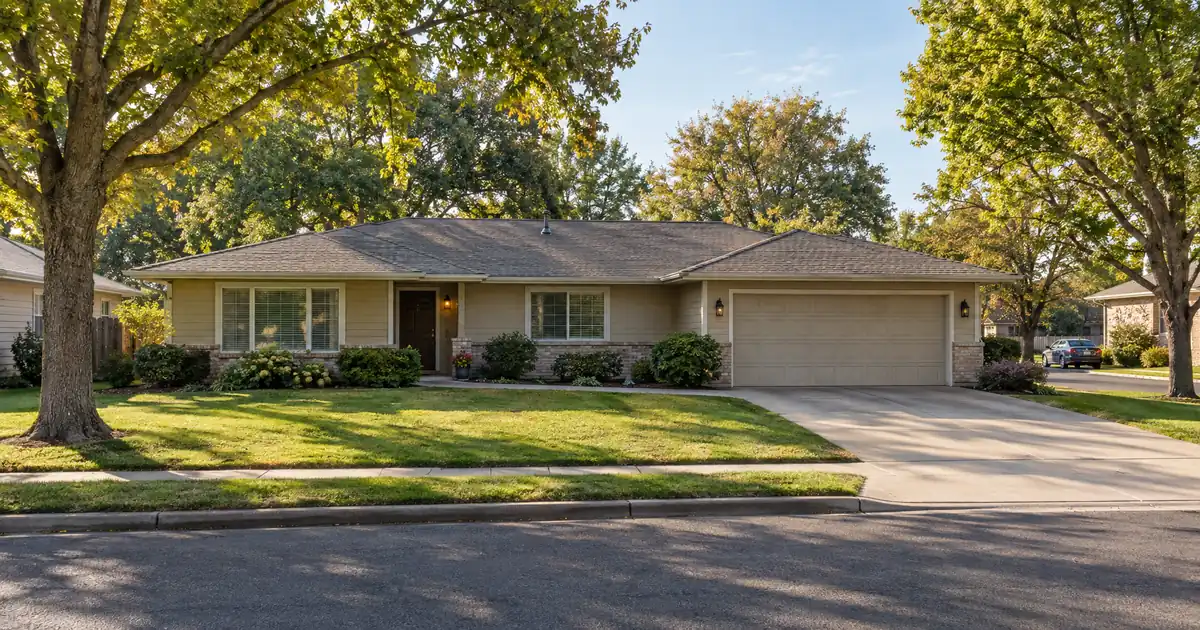
The Quick Read: A self-employed owner can get a VA cash-out refinance, but the file is verified on net taxable income after write-offs, not on deposits or gross revenue. The home must be the borrower’s own residence, because VA requires occupancy on a cash-out. Underwriters read two years of returns, a year-to-date profit and loss statement, and a balance sheet, then test residual income and debt ratios.
- Net income on the returns drives the file, so heavy write-offs shrink qualifying income.
- Occupancy is required. A home that has become a rental does not fit VA cash-out.
- The document stack is two years of signed returns, a year-to-date P&L, and a balance sheet.
- A bank-statement loan is reviewed on documented income under the applicable program, subject to lender guidelines. It is the usual alternative when net income is too low.
- Owner-occupied bank-statement cash-out runs up to 80% LTV on most files. Investment-property cash-out tops out around 75% LTV.
Most failed self-employed VA files do not fail on credit. They fail on the gap between what the business earns and what the tax return says it earns. This piece walks through how the verification works, where it breaks, and what the decision looks like for an owner who also holds rentals. Lendmire is a broker that arranges financing through select lenders in its wholesale network, so the view here comes from seeing many files, not one lender’s sheet.
What Does VA Cash-Out Actually Require?
VA.gov lists three conditions for a cash-out refinance: a Certificate of Eligibility, credit and income that meet VA and lender standards, and the borrower living in the home being refinanced. The new loan replaces the current one. It can pull cash from equity or move a non-VA loan into a VA-backed loan.
Two things follow for a self-employed owner.
First, this is a fully underwritten loan. The VA Home Loans overview describes eligibility as satisfactory credit, enough income for the expected monthly obligations, and a valid certificate. Self-employment does not exempt anyone from the income test. It changes how income is proven.
Second, occupancy is not a formality. The borrower certifies the home is, or will be, their residence. A file that carries that certification while the house is leased to a tenant is a bad file.
How Underwriting Treats Self-Employed Income, Step by Step
The governing document is VA Pamphlet 26-7, Chapter 4 on credit underwriting. Its self-employment guidelines call for a year-to-date profit and loss statement, a current balance sheet, and signed, dated individual returns with all schedules for the previous two years. More years can be requested if needed to show a satisfactory earnings record. If the latest return is not yet prepared, a P&L for that year is provided instead.
Here is the sequence a file follows.
1. Eligibility. The borrower obtains a Certificate of Eligibility through a lender, VA.gov, or by mail.
2. Occupancy certification. The borrower certifies the home is their residence.
3. Income classification. An ownership stake of 25% or more generally makes the borrower self-employed for underwriting. Treat that threshold as a general guide and confirm it with the lender.
4. Document package. Two years of signed personal returns, the year-to-date P&L, and the balance sheet. Many files also add business returns and K-1s. Lenders commonly ask for a signed IRS transcript request so the returns can be checked against what was filed.
5. Income calculation. The lender starts from net profit. Depreciation claimed on the returns may be added back. A year-over-year decline usually triggers a written explanation.
6. Repayment test. Underwriters look at residual income, which is what remains after the mortgage, debts, shelter costs, taxes, and job-related expenses. They also look at total debt-to-income. VA does not cap how much a borrower can borrow but does require enough income left after obligations.
7. Valuation and funding. A VA appraisal, occupancy re-certified at the closing table, then funding.
What decides the outcome: net taxable income after write-offs, the trend of that income, residual income, and a truthful occupancy certification.
Why the Write-Off Problem Sinks Files
A business can deposit a lot and report very little. Mileage, home office, equipment purchases, and depreciation all lower net income on the return. That is good tax planning and bad qualifying math.
Picture an owner whose business clears healthy deposits every month but whose two most recent returns show a modest net profit after heavy deductions. The VA underwriter works from the returns. The deposits do not enter the calculation. Add-backs for depreciation help a little. They rarely close the full gap.
Trend matters too. A second year lower than the first draws questions, and the explanation needs to be in writing and consistent with the P&L. A strong year-to-date P&L can help, but it has to reconcile with the returns and the balance sheet. When the three documents tell different stories, the file stalls.
Documents by Business Structure
The stack changes with the entity. Here is the general pattern.
| Structure | Typical documents | What they prove |
|---|---|---|
| Sole proprietor | Personal returns with Schedule C, P&L, balance sheet | Net profit from the business |
| Single-member LLC | Same as sole proprietor, plus entity papers | Business exists and is active |
| S-corp | Personal and business returns, K-1s, P&L, balance sheet | Salary plus distributions |
| Partnership | Personal returns, K-1s, business returns, P&L | Share of partnership income |
Lenders differ on how many extra items they add. Across a wholesale network the pattern is consistent: the more entities touch the income, the more the file needs to show how money moves between them.
Where the General Rule Breaks
Under two years of self-employment. Two years is the stable-income marker. A shorter history can be considered with prior work or training in the same field, but under one year is a very hard path. Treat it as a case-by-case review.
Alternate verification. Chapter 4 allows alternative documentation in place of a standard verification of employment when income is stable and likely to continue. It also says two years with the same employer is not required.
Rental income on the returns. Established rentals can be documented with two years of history on the returns, and depreciation may be added back. Cash-out proceeds from a regular VA cash-out cannot count as the required reserves on a rental. Reserve funds must be in the borrower’s account before the new VA loan closes.
Moved out and rented the home. The occupancy certification fails, so VA cash-out does not fit that property.
Multi-unit house-hack. A 2-4 unit property where the borrower lives in one unit can fit VA. Fit depends on the lender.
Variable or seasonal income. The lender averages. A weak month is not fatal, but a weak trend is.
When VA Is the Wrong Tool
A self-employed investor often hits a wall here. VA cash-out is an owner-occupant product. If the borrower has moved out and kept the house as a rental, the property no longer fits, and returns that understate cash flow make the file weaker still.
The alternative is a bank-statement loan. Across the wholesale network, these programs use 12 months of business or personal bank statements, with qualifying income from deposit averages and lender-specific expense factors. No lender promises a universal formula, so the expense factor is the variable to compare.
Typical ranges on select programs, subject to lender guidelines:
| Scenario | Typical ceiling |
|---|---|
| Primary residence purchase or rate-term | Up to 90% LTV |
| Owner-occupied cash-out (primary or second home) | Up to 80% LTV |
| Investment-property cash-out | Around 75% LTV |
| Asset-depletion on a primary residence | Up to about 80% LTV |
Loan sizes generally run from $125,000 to $3,500,000, with reserves commonly near six months of the housing payment. Owner-occupied cash-out is generally reviewed under the same 80% cash-out ceiling, with the expense ratio set by the documentation type, whether a fixed ratio or one prepared by an accountant, and the final limit depends on loan size and credit. Investment purchase leverage on bank-statement documentation varies by lender.
Occupancy decides the paperwork regime. An owner-occupied bank-statement file is a consumer mortgage. A non-owner-occupied rental, including a short-term rental, is business-purpose and handled differently. Know which one the property is before the file goes in.
Bank-statement lending for owner-occupied property is a consumer-lane product that Lendmire arranges in 16 states. Availability is not the same as the investor DSCR footprint, so confirm the state early.
The broader complete DSCR loans guide covers the rental-income side of the same decision.
Troubleshooting a Stalled File
Most stalls trace to one of five things.
- Return and P&L mismatch. The P&L shows income the returns do not support. Reconcile before submitting.
- Commingled accounts. Personal and business money mixed together makes deposit and expense review harder.
- Declining income. Prepare the written explanation with the file, not after the request.
- Late-year timing. If the newest return is not filed, the P&L has to carry that year and must be complete.
- Occupancy doubts. A lease on the property, or a different mailing address, raises the question and delays everything else.
Tax treatment can depend on how the funds are used and how the property is held; investors should keep clear records and speak with a qualified tax professional before relying on any deduction.
Key Terms Defined
Certificate of Eligibility: The VA document that confirms a borrower’s entitlement to a VA-backed loan.
Residual income: The money left each month after the mortgage, debts, shelter costs, taxes, and job-related expenses.
Net taxable income: Business profit after deductions, the figure VA underwriting starts from.
Add-back: A non-cash expense, such as depreciation, that an underwriter may add back to qualifying income.
Bank-statement loan: A mortgage that is reviewed on documented income from deposit averages over a set period, subject to lender guidelines.
Year-to-date P&L: A profit and loss statement covering the current year so far.
Pre-Application Checklist
Gather these in order:
1. Certificate of Eligibility.
2. Two years of signed personal returns with all schedules.
3. Business returns and K-1s if the entity files them.
4. Year-to-date P&L and current balance sheet.
5. Written explanation of any income decline.
6. Proof of occupancy: address on licenses, utilities, and mail.
7. Twelve months of business and personal bank statements, in case the file shifts to a bank-statement program.
Reach the team at 828-256-2183 or request a quote.
Frequently Asked Questions
Can a self-employed borrower get a VA cash-out refinance?
Yes. VA has specific self-employment guidelines in Chapter 4 of its underwriting pamphlet. The borrower documents income with two years of returns, a year-to-date P&L, and a balance sheet, and still has to meet the occupancy, credit, and residual income standards.
Do business deposits count as income on a VA file?
No. Net taxable income after write-offs is what counts, with depreciation add-backs possible. Deposits drive qualifying income on a bank-statement program instead, using lender-specific expense factors, subject to lender guidelines.
Can I use VA cash-out on a house I now rent out?
No. VA requires the borrower to live in the home being refinanced. A property that has become a rental fits an investor program better, such as a DSCR loan or a bank-statement cash-out on investment property at around 75% LTV. Each figure is subject to lender guidelines and a complete review of property type, leverage, and credit.
What if I have been self-employed for less than two years?
It may still be considered if you have prior work or training in the same field, but the review is harder. Under one year is generally a very difficult path on a VA file.
Does VA set a minimum credit score?
VA does not set one itself, but individual lenders apply their own credit standards, and those vary. Credit still has to be satisfactory under the lender’s overlays.
Can cash-out proceeds count as reserves on a rental?
No. Under Chapter 4, proceeds from a regular VA cash-out cannot be counted as required reserves on a rental property. Reserves must be in the borrower’s account before the new loan closes.
For current guidelines and terms, see Lendmire’s DSCR loan programs page.
About Lendmire
A non-QM mortgage broker (NMLS# 2371349), Lendmire arranges DSCR financing for real estate investors in 41 markets, 40 states plus Washington, D.C. Because deals are underwritten primarily on property cash flow rather than personal income documentation, the structure suits self-employed buyers and entity-owned portfolios. Lendmire places loans through wholesale investor lenders; it is not a direct lender. Scotsman Guide named Lendmire a Top Mortgage Workplace in both 2025 and 2026.
For how equity extraction works on an investment property, see Lendmire’s guide to cash-out refinance on an investment property.
Get Started
Ready to find the right loan for you?
In about 30 seconds you can review financing options available for your home or investment property. No commitment required.
Informational only. Not a Loan Estimate, approval, or commitment to lend. Program availability and eligibility are subject to lender guidelines, credit approval, property review, and underwriting.
References
1. VA.gov: Cash-out refinance loan
This article is part of Lendmire’s bank statement loan program — full qualification details, guidelines, and scenarios live on the program page.
Related reading: Is a Self-Employed Divorce Buyout a Limited Cash-Out Refinance? · Cash-Out Refinance Documentation for a Free-and-Clear Self-Employed Owner · VA Cash-Out Refinance Income Verification for a 1099 Contractor
Brandon Miller
Founder & CEO, Mortgage Loan Originator, Lendmire LLC
- Mortgage Loan Originator · NMLS# 1129696 · Verify on NMLS Consumer Access
- North Carolina Real Estate Broker · License# 343312 · Verify on NCREC
- North Carolina Insurance Producer · License# 19053198 · Property, Casualty, Life, Health · Verify on NAIC SBS
- Lendmire LLC · Firm NMLS# 2371349 · Verify firm licensure
Disclosure information. Lendmire is a state-licensed mortgage brokerage under NMLS# 2371349. Lendmire is not a depository institution, direct lender, or financial advisor — all loans referenced are placed through wholesale lender partners and are subject to each lender's underwriting standards. This article is provided for general informational purposes and is not a commitment to lend, nor does it constitute financial, legal, or tax advice. Loan programs, terms, rates, and qualification standards change without notice and depend on borrower profile, property type, and the state in which the subject property is located. Equal Housing Opportunity provider. NMLS Consumer Access: nmlsconsumeraccess.org.