
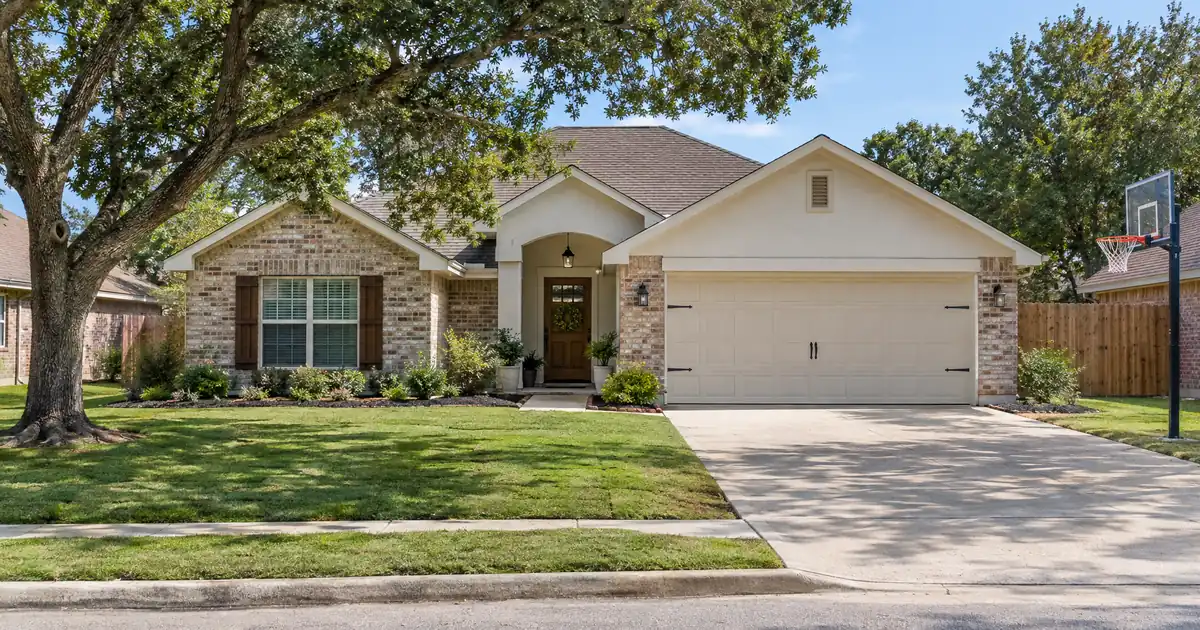
The Quick Read: A VA cash-out refinance is generally not available on a Texas primary residence, because the Texas Attorney General has read the state constitution to bar it, as of the sources reviewed. The VA guaranty counts as extra collateral beyond the homestead, and Texas homestead equity loans can’t carry that. If your first mortgage is low, the better move is usually to leave it alone and look at a separate Texas equity product. Confirm the details with a licensed Texas lender and a title company before you rely on any of this.
Why the Title Question Has a Short Answer
The VA program itself allows a cash-out. The Texas constitution is what stops it. Many web pages disagree on this point: some say flatly no, some say yes with conditions. The primary source settles it.
Texas Attorney General Opinion KP-0183 concluded that the VA guaranty is collateral other than the homestead, and that this precludes a VA cash-out refinance in Texas. The opinion also records that the state’s savings and mortgage lending regulator had reached the same view. Nothing in the sources reviewed shows the opinion has been overturned. The opinion is several years old, so treat it as the current position, not a permanent one, and verify before you commit.
That makes the rest of this article less a how-to and more a routing guide. Here is what a VA cash-out is, why Texas blocks it, and what a veteran with a low first mortgage can do instead.
Key Terms Defined
VA cash-out refinance: A new VA-backed loan that replaces your current mortgage and hands you part of your equity as cash.
Homestead: The home you live in, which Texas protects with its own constitutional lending rules.
Section 50(a)(6) loan: Texas’ name for a home equity loan or cash-out refinance on a homestead.
Net tangible benefit: A VA pass/fail test showing the new loan actually helps the borrower.
Funding fee: A one-time VA charge that can be financed into the loan unless you’re exempt.
The VA streamline refinance: A VA streamline refinance of an existing VA loan, with no cash back.
How a VA Cash-Out Works Where It’s Allowed
Across the wholesale programs Lendmire places VA files with, the structure is consistent. The loan can reach 100% of the appraised value, including the financed funding fee. It can refinance any loan type into VA. Residual income is the controlling underwriting test, and the 41% debt-to-income figure is a guideline, not a cap. A ratio above it needs residual income well above the table. The wholesale programs start at a 580 decision score, and VA itself sets no minimum.
The federal rule is 38 CFR 36.4306. It caps the new loan at 100 percent of reasonable value and requires a net tangible benefit. Meeting the cap alone doesn’t win approval. A loan can sit under 100% and still fail the benefit test.
The borrower must hold a certificate of eligibility from VA and live in the home. Service requirements are VA’s rules. The funding fee on a cash-out is 2.15% on first use and 3.3% after, per VA News. Veterans who receive compensation for a service-connected disability, and the other exempt groups, don’t pay it. Seasoning applies too: the later of 210 days from the first payment and the sixth payment.
That is the national picture. You can read more on how Lendmire’s team approaches the VA cash-out refinance program in states where it applies. Texas is the exception that matters here.
Why Does Texas Block It?
Texas treats a cash-out on a homestead as a Section 50(a)(6) loan. The constitution requires that such a loan not be secured by any additional real or personal property other than the homestead. Article XVI, Section 50 spells this out. A VA guaranty is a federal promise backing the loan. The Attorney General read it as additional collateral, so the two sets of rules collide.
Texas adds its own limits to any homestead equity loan. Your total debt against the home, all liens combined, can’t exceed 80 percent of fair market value. That works as a built-in equity cushion, whatever program you use. Texas also requires a notice period before closing, and only one such loan can sit on the home at a time. Texas A&M’s Real Estate Research Center notes these loans fall into three groups: cash-out refinances, home equity loans, and HELOCs. It also notes they can’t be taken on a second home or rental.
The same opinion records that Section 50(a)(6) does not apply to a traditional VA purchase-money mortgage or a regular refinance. So the problem is cash back, not VA itself.
What a Low First Mortgage Changes
A low first mortgage helps and hurts at once. It helps because you hold a lot of equity. It hurts because a cash-out refinance replaces the whole loan, not just the new money. Your old terms go away. If that first loan is one you’d rather keep, a full refinance is the wrong tool.
The CFPB makes the general point in its guide on using home equity: a cash-out refinance can extend how long you take to pay off the mortgage, and the new loan changes your terms. For a low balance, that trade can be steep, because you are giving up a good loan to borrow a little more.
Run the sizing logic without dollars. Say your first mortgage is a small share of the home’s value. Texas lets total liens reach 80%. The gap between your current balance and that line is the room available for new borrowing. The lower your balance, the more room you have. The question is how to use that room without touching the first loan.
Your Options Instead
| Option | What it does to your first loan | Watch-outs |
|---|---|---|
| Separate home equity loan | Leaves it in place | Still a Texas 50(a)(6) loan; 80% combined cap |
| HELOC | Leaves it in place | May need that lender’s approval to refinance later |
| Conventional cash-out refinance | Replaces it entirely | Gives up your existing terms |
| VA IRRRL | Replaces it, no cash | Only for existing VA loans; no cash out |
A separate equity product is the usual answer for a low first mortgage. The CFPB describes a home equity loan as borrowing against equity, typically all up front. Whether a lender will place a second lien behind an existing VA first loan depends on the lender and investor. Ask before you assume it works.
A HELOC is an open line you can borrow from repeatedly. The CFPB warns it only makes sense if you’re confident you can keep up with payments, since falling behind risks the home. It also notes that a HELOC lender may need to approve a later refinance of your first mortgage.
A conventional cash-out works when the first loan is not worth keeping. It is a full replacement, with the lender’s own credit and equity requirements.
An IRRRL is not cash-out at all. It refinances an existing VA loan, including moving from an adjustable to a fixed structure, with no VA appraisal, a 0.5% fee unless exempt, a net tangible benefit, and the same seasoning. It fits a veteran who wants a better loan, not cash.
For a deeper look, Lendmire’s piece VA Cash-Out vs HELOC for Debt When the First Mortgage Is Worth Keeping covers the tradeoff when the first loan is worth keeping.
Where the General Rule Breaks
VA purchase loans. Texas veterans can still buy with VA. The homestead cash-out rules don’t govern purchase-money VA loans.
Non-VA loan into VA, no cash. VA lets you refinance a non-VA loan into a VA-backed loan. In Texas, cash back is the sticking point. Narrow exceptions for refinance funds covering only reasonable costs may exist, but no primary source confirmed them. Check with a Texas lender or counsel.
An existing Texas equity loan. Texas allows one at a time, with spacing between homestead equity closings. Read the constitution text before planning a second.
Second homes and rentals. Section 50 loans can’t be taken on them, and VA cash-out requires that you live in the home. Occupancy decides the leverage, and neither route fits a rental.
Your entitlement. Being unable to cash out doesn’t use up your VA benefit. You can still use it for a purchase, an IRRRL, or a no-cash refinance.
What Your Decision Looks Like in Practice
1. Decide what the money is for. A one-time need and an ongoing credit line point to different products.
2. Check your first loan. If it’s a VA loan with terms you like, protect it. A full refinance is the costly path.
3. Measure your room. Compare your balance to 80% of the home’s value. That gap is the ceiling for new borrowing.
4. Ask whether a second lien can sit behind your first. The answer depends on the lender and investor.
5. Compare the Loan Estimates. Because this is a consumer mortgage, the Loan Estimate and Closing Disclosure apply. Read the costs side by side.
6. Watch red flags. A lender who says a VA cash-out works on a Texas homestead should explain the structure in writing and point to the legal basis.
Tax treatment can depend on your situation; borrowers should speak with a qualified tax professional before relying on any deduction or credit.
Frequently Asked Questions
Can I get a VA cash-out refinance on my Texas home?
Generally no, as of the sources reviewed. The Texas Attorney General read the constitution to bar it, because the VA guaranty is added collateral. Confirm with a licensed Texas lender, since lenders interpret edge cases differently.
Does the VA 100% limit apply in Texas?
It doesn’t matter for cash-out there. Texas caps total liens on a homestead equity loan at 80% of fair market value. VA’s 100% of reasonable value is a national rule, and the state limit is stricter.
Can I keep my low-rate VA first mortgage and still borrow?
Often that is the best route. A separate home equity loan or HELOC leaves the first loan in place. Whether a lender will place a second lien behind a VA first depends on the lender, so ask early.
Will being denied a cash-out cost me my VA entitlement?
No. Entitlement isn’t used up by an inability to cash out. You can still use VA for a purchase, an IRRRL, or a refinance without cash back.
Does a VA IRRRL let me take cash?
No. An IRRRL only refinances an existing VA loan to a lower rate or from adjustable to fixed. It carries a 0.5% fee unless you’re exempt and requires a net tangible benefit.
If you are weighing a cash-out refinance against keeping the loan you have, Lendmire can help you compare the programs and the equity each one reaches.
For your own numbers, request a scenario review with Lendmire.
About Lendmire
Lendmire (NMLS# 2371349) is a mortgage broker licensed for consumer lending in 16 states. Lendmire arranges FHA, VA, conventional and jumbo purchase and refinance loans through wholesale lenders; every file is underwritten by the lender under the applicable program guidelines. Scotsman Guide named Lendmire a Top Mortgage Workplace in both 2025 and 2026.
For the program’s current guidelines, see VA loan programs.
Get Started
Ready to find the right loan for you?
In about 30 seconds you can review financing options available for your home or investment property. No commitment required.
Informational only. Not a Loan Estimate, approval, or commitment to lend. Program availability and eligibility are subject to lender guidelines, credit approval, property review, and underwriting.
References
1. Texas Attorney General Opinion KP-0183
3. VA News: Funding fee, who pays, who is exempt
4. Texas Constitution Art. XVI, Section 50
5. Texas A&M Real Estate Research Center
6. CFPB “Using home equity to meet financial needs”
7. CFPB: What other loans are similar to a HELOC?
9. CFPB: Does a HELOC affect my ability to refinance?
10. VA.gov cash-out refinance page
This article is part of Lendmire’s VA Loans series — every loan program’s qualification details, guidelines, and scenarios live on the loan options page.
Related reading: Is a VA Cash-Out Worth It for a Veteran With an Existing VA Loan? · How to Handle a Low VA Cash-Out Appraisal on an Existing VA Loan · Can You Do a VA Cash-Out in Year One of an Existing VA Loan?
Brandon Miller
Founder & CEO, Mortgage Loan Originator, Lendmire LLC
- Mortgage Loan Originator · NMLS# 1129696 · Verify on NMLS Consumer Access
- North Carolina Real Estate Broker · License# 343312 · Verify on NCREC
- North Carolina Insurance Producer · License# 19053198 · Property, Casualty, Life, Health · Verify on NAIC SBS
- Lendmire LLC · Firm NMLS# 2371349 · Verify firm licensure
Legal disclosures. Lendmire (NMLS# 2371349) is a state-licensed mortgage brokerage that arranges financing through wholesale lender relationships. Lendmire is not a direct lender, depository institution, or registered financial advisor. The discussion above is general informational content about real estate financing — it is not financial, legal, or tax advice, and readers should consult licensed professionals for guidance on their individual circumstances. Loan inquiries are subject to lender underwriting; this article does not represent a commitment to lend. Loan terms, rates, and qualification standards vary by borrower, property, and state, and are subject to change at any time. Equal Housing Opportunity. NMLS Consumer Access: nmlsconsumeraccess.org.