
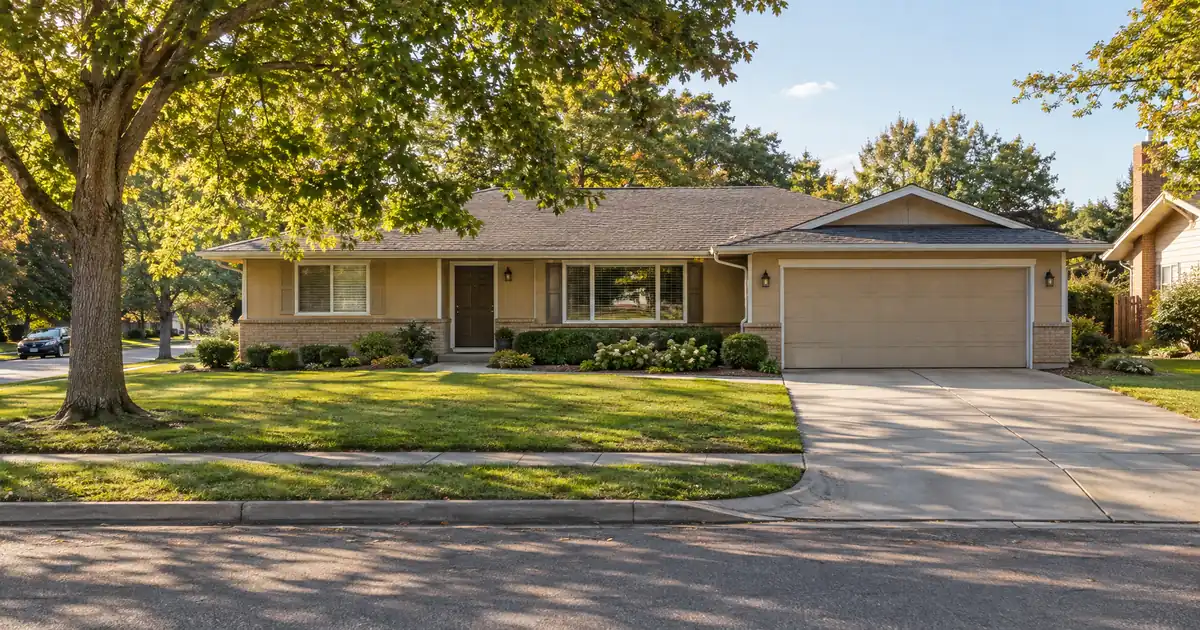
The Quick Read: Usually yes, when your traditional personal-income documentation understates what the business really earns and you are refinancing the home you live in, because FHA cash-out counts only the net income on your returns while a bank statement loan is reviewed on documented income from your deposits, subject to lender guidelines. For a rental property, FHA cash-out is not available at all, so the real choice becomes DSCR cash-out versus bank statement cash-out.
- FHA cash-out is for owner-occupied primary residences only.
- FHA reads income after your write-offs, so heavy deductions shrink what it can count.
- Bank statement programs average 12 months of deposits and apply an expense factor.
- Owner-occupied bank statement cash-out typically tops out around 80% LTV; investment cash-out runs closer to 75%.
- Rentals usually belong on a DSCR loan, which qualifies primarily on property-level rental income covering the payment, subject to lender guidelines.
Why Low Tax Returns Hurt an FHA Cash-Out
FHA treats your tax return as the final word on income. If you are self-employed, the lender looks at what is left after deductions, not at what came through the business.
That is fair for a borrower who takes few write-offs. It is punishing for an owner who legitimately reduces taxable income through depreciation, equipment purchases, home-office costs and vehicle expenses. The business can deposit well every month while the return shows a modest bottom line.
FHA also wants history. Self-employed borrowers generally need two years of complete individual returns with all schedules. A shorter history only counts when you have prior work in the same or a related field.
Then there is the leverage side. A cash-out refinance replaces your current mortgage with a larger one and hands you the difference. FHA caps that new loan at 80% of the home’s value on a primary-residence cash-out, according to Consumer Finance Monitor’s summary of the rule change. The old ceiling was 85%. If you still see 85% quoted anywhere, it is out of date.
FHA cash-out also carries mortgage insurance. The exact premium schedule is set by FHA, so check it before you compare total cost.
How a Bank Statement Cash-Out Measures Your Income
A bank statement loan swaps the tax return for your deposits. It is a non-QM product, meaning it sits outside the standard agency rulebook and is reviewed on documented income under the applicable program, subject to lender guidelines.
Market overviews describe 12 to 24 months of statements. Most programs we place files with use 12 months, either personal or business statements.
The underwriter does not take deposits at face value. Transfers between your own accounts, loan proceeds, refunds and one-time windfalls are generally stripped out. What remains is averaged, and an expense factor is applied to business deposits to stand in for the cost of running the company. Scotsman Guide’s non-QM overview describes the same basic mechanics, including the option to use a profit-and-loss statement prepared by a third-party tax professional.
Across the wholesale network, the expense factor varies by lender and by program. Do not assume one universal formula.
Key Terms Defined
Cash-out refinance: a new, larger mortgage that pays off your current one and gives you the difference in cash.
LTV (loan-to-value): the loan balance as a percentage of the home’s appraised value.
Expense factor: the share of business deposits a lender assumes goes to operating costs before it counts the rest as income.
Deposit averaging: adding up eligible deposits over the statement period and dividing by the number of months.
Non-QM: a loan that uses its own underwriting rules instead of the standard agency documentation rules.
DSCR (debt service coverage ratio): a rental property’s income divided by its monthly housing obligation; a ratio above 1.0 means the rent covers the payment.
Side by Side: Bank Statement vs FHA Cash-Out
| Factor | Bank statement cash-out | FHA cash-out |
|---|---|---|
| Income basis | Averaged deposits, less expense factor | Net income on traditional personal-income documentation |
| Documents | Typically 12 months of statements | Two years of full returns |
| Occupancy | Owner-occupied or investment, by program | Primary residence only |
| Cash-out LTV | Up to 80% owner-occupied; ~75% investment | 80% maximum |
| Mortgage insurance | Pricing built into the loan terms | FHA premiums apply |
| Where it breaks | Messy or commingled deposits | Heavy write-offs, falling income |
A Worked Example
Picture a self-employed contractor who owns and lives in her home. Her business accounts show steady monthly deposits all year. After depreciation and equipment write-offs, her returns show income far below what those deposits suggest.
Under FHA rules, the lender qualifies her on the lower return figure. The payment on a larger loan may simply not fit that number, so the file stalls.
Under a bank statement program, the underwriter removes transfers and one-offs, averages what is left and applies an expense factor. The resulting income can sit well above the return figure. The same cash-out request may now fit, up to the program’s owner-occupied cash-out ceiling of roughly 80% LTV, depending on loan size and credit. The exact numbers vary by lender and program and follow a full review of property, leverage, and credit.
The gap does the work here. If your returns and your deposit-based income land close together, bank statement documentation gains you little. If they sit far apart, it can decide the file.
How Low Is Low Enough?
Run a quick self-test before you pick a path.
1. Add up your last 12 months of business deposits, then remove transfers, loan draws and refunds. 2. Apply a conservative expense assumption for your type of business. 3. Compare the result to the net income on your most recent returns. 4. If deposit-based income is meaningfully higher, bank statement documentation likely helps. 5. If the two figures are close and your returns are strong, full documentation may cost less.
A CPA-prepared expense ratio is another lever. On some owner-occupied cash-out files, an accountant-prepared ratio changes the leverage tier, with 75% appearing in the guidelines for that route. It is worth asking about early.
Does the Property Change the Answer?
Yes, and it is the most important question here. FHA cash-out is only permitted on an owner-occupied principal residence, and the home generally must have been your primary residence for 12 months first, according to FHA News and Views. A rental never qualifies.
So if the equity you want sits in a property you rent out, skip the FHA comparison. Your options are DSCR cash-out or a bank statement cash-out on the investment property. Investment cash-out through bank statement programs tops out around 75% LTV, and loan size and credit move that number. Final terms depend on the lender’s guidelines, the property type, and the borrower’s complete credit picture.
The occupancy also decides the paperwork. An owner-occupied cash-out is a consumer mortgage with consumer-style disclosures. A non-owner-occupied rental loan, including a short-term rental, is a business-purpose loan and follows different rules.
DSCR loans are designed for non-owner-occupied investment properties. Because they are business-purpose investor loans, they are reviewed differently from a standard owner-occupied mortgage.
Here is the practical split most self-employed investors end up with:
- Equity in a rental: DSCR cash-out, because the loan is reviewed primarily on property-level rental income covering the payment, subject to lender guidelines. Your traditional personal-income documentation matters far less.
- Equity in your own home, with returns that understate income: bank statement cash-out.
- Equity in your own home, with strong returns: FHA or conventional full documentation, which may cost less.
Bank statements still show up in a DSCR file, but as proof of assets, reserves and source of funds. They do not replace the lease or the appraiser’s rent estimate. Sub-1.00 coverage programs are available through select lenders in the network, though leverage and terms adjust. For the full picture, see Lendmire’s complete DSCR loans guide.
A related question is whether a bank statement loan or a home equity line is the better tool. Lendmire’s piece Should Understated Income Mean DSCR Cash-Out Over a Bank Statement HELOC? covers that angle.
When FHA Cash-Out Still Wins
FHA is not the villain here. It can be the better tool in a few cases.
- Strong returns. If your net income on paper already supports the loan, you gain nothing from deposit averaging and may pay more for it.
- Credit tolerance. FHA can accept credit profiles that some alt-doc programs will not. If your score is the real obstacle, income documentation is not the fix.
- Cost structure. Mortgage insurance is an added cost, but the overall pricing on a clean FHA file can still land below a non-QM alternative.
Self-employment history cuts the other way for FHA. With under two years in business, FHA requires related prior work to count the income. Bank statement programs also generally want a track record, so a brand-new business usually struggles on both paths.
Declining Income and Uneven Deposits
FHA handles a down year bluntly. HUD’s mortgagee letter on self-employment income says a business income decline of more than 20 percent over the analysis period means the lender must downgrade the file and underwrite it manually. Smaller dips generally mean the lender uses the lower figure.
Deposit averaging smooths lumpy months, which helps seasonal businesses. It does not rescue chaotic accounts. If personal and business money are mixed together, the underwriter has to sort out what is income. Many files stall at that step, not at the expense factor.
The Real Tradeoffs of Going Bank Statement
Going bank statement does not make the loan easier. It changes the evidence you provide.
- Cost direction. Pricing on alt-doc loans generally runs higher than on a clean full-documentation file, though FHA’s insurance narrows the gap. Compare total terms, not one line.
- Reserves. Most programs expect around 6 months of the housing payment in reserves.
- Loan size. Programs we place files with generally run from about $125,000 to $3,500,000.
- Term and prepayment. Terms follow each lender’s program sheet. Ask about prepayment terms before you commit, and do not assume extended terms are offered on alt-doc loans.
- The home is the collateral. Cash from your primary residence is borrowed against the roof over your head. Know what the money is for, whether that is paying down debt, reinvesting in the business or buying a rental.
Tax treatment can depend on how the funds are used and how the property is held; investors should keep clear records and speak with a qualified tax professional before relying on any deduction.
Prepare Your File
A cleaner file is the best lever you have, whichever path you choose.
- Pick personal or business statements and stay consistent for the full period.
- Keep business and personal money separate for the months you will submit.
- Note large or unusual deposits ahead of time so you can explain them.
- Talk to your CPA before you apply, especially about a prepared expense ratio.
- Gather a recent credit picture and your reserve balances.
If you are leaving an existing FHA loan, the sequence is the same as any refinance. Confirm your equity, gather the statements, and compare the new terms against the cost of what you are leaving.
Owner-occupied bank statement files are arranged in the 16 states where Lendmire holds consumer mortgage licensing.
Frequently Asked Questions
Can I refinance out of an FHA loan into a bank statement loan?
Yes, if the new loan’s occupancy, credit, equity and income documentation fit a program. There is no rule that locks an FHA borrower into FHA. Compare the cost of leaving, including any mortgage insurance you stop paying, against the new terms.
Is a bank statement loan less regulated than FHA?
No. Bank statement loans on owner-occupied homes still require the lender to make a reasonable determination that you can repay. The CFPB’s ability-to-repay compliance guide lists bank account statements and traditional income documentation among acceptable income-verification records. The documents differ, but the obligation does not.
How much can I take out on a bank statement cash-out?
On an owner-occupied primary or second home, typically up to 80% LTV, with a fixed expense ratio, and 75% where an accountant-prepared ratio is used. On an investment property, cash-out tops out around 75% LTV. Loan size and credit shift both figures.
Do deposits count as income automatically?
No. The underwriter strips transfers, loan proceeds and one-time items, then applies an expense factor to business deposits. Only what remains counts as qualifying income, and the factor varies by lender.
Which is better for a rental: bank statement or DSCR?
DSCR usually fits a rental better because it qualifies the property, not your conventional personal-income paperwork. Bank statement loans qualify the borrower. Many investors use DSCR for the rental portfolio and bank statement or full documentation for their own home.
Next Step
A deeper walk-through of investment-property equity extraction lives in Lendmire’s guide to cash-out refinance on an investment property.
About Lendmire
Lendmire, NMLS# 2371349, is a mortgage brokerage focused on investor financing, arranging DSCR loans in 40 states plus Washington, D.C. — 41 markets total. Qualification is based on the property’s income rather than personal income documentation, subject to lender guidelines, making it a fit for LLC-held rentals and scaling portfolios. Scotsman Guide named Lendmire a Top Mortgage Workplace in both 2025 and 2026.
Get Started
Ready to find the right loan for you?
In about 30 seconds you can review financing options available for your home or investment property. No commitment required.
Informational only. Not a Loan Estimate, approval, or commitment to lend. Program availability and eligibility are subject to lender guidelines, credit approval, property review, and underwriting.
References
1. Consumer Finance Monitor on the FHA cash-out LTV reduction
2. Scotsman Guide’s overview of non-QM lending
3. FHA News and Views on FHA cash-out occupancy
4. HUD mortgagee letter on self-employment income
5. CFPB ATR/QM Small Entity Compliance Guide
This article is part of Lendmire’s bank statement loan program — full qualification details, guidelines, and scenarios live on the program page.
Related reading: DSCR vs Bank Statement Cash-Out When Tax Returns Understate Income · FHA Cash-Out vs Bank Statement Cash-Out for a Self-Employed Owner · Conventional vs Bank Statement Cash-Out When Tax Returns Qualify You
Brandon Miller
Founder & CEO, Mortgage Loan Originator, Lendmire LLC
- Mortgage Loan Originator · NMLS# 1129696 · Verify on NMLS Consumer Access
- North Carolina Real Estate Broker · License# 343312 · Verify on NCREC
- North Carolina Insurance Producer · License# 19053198 · Property, Casualty, Life, Health · Verify on NAIC SBS
- Lendmire LLC · Firm NMLS# 2371349 · Verify firm licensure
Compliance and disclosures. Lendmire (NMLS# 2371349) is a licensed mortgage broker and is not a direct lender, depository institution, financial advisor, or tax professional. Content in this article is general market analysis and educational information — not financial, legal, or tax advice for any specific situation. Lendmire does not guarantee loan approval; every transaction is subject to underwriting by the funding lender. Mortgage pricing and loan program guidelines are subject to change at any time without notice and vary by borrower characteristics, property type, and state regulations. Lendmire complies with Equal Housing Opportunity. Licensure verification: NMLS Consumer Access.