
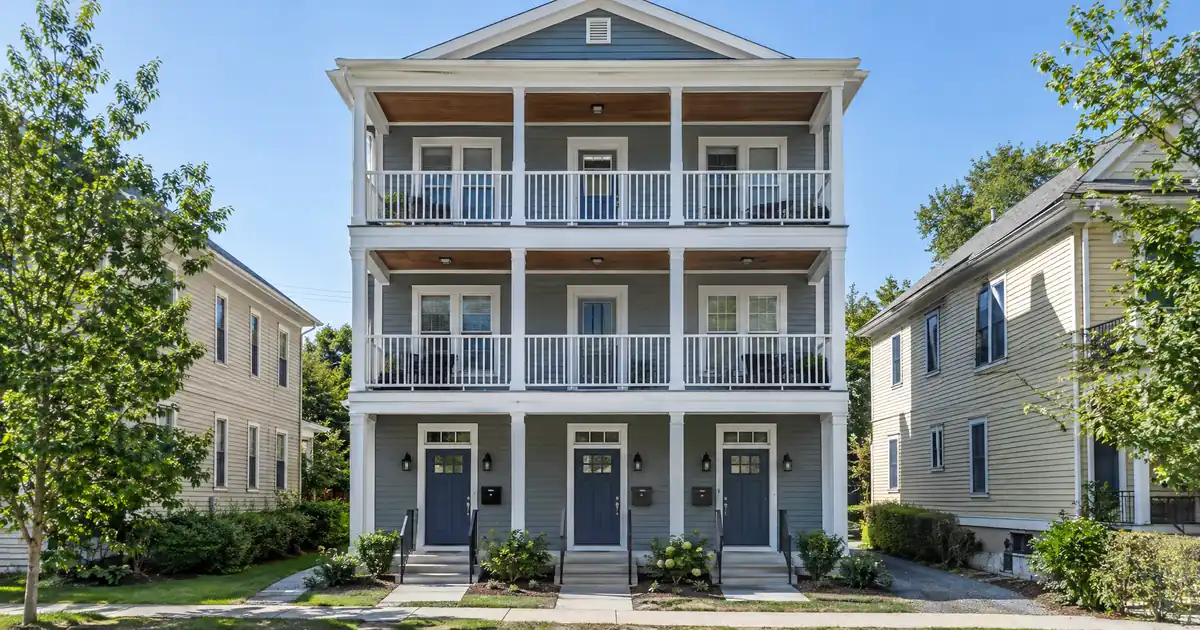
The Quick Read: On a duplex, triplex, or fourplex where you live in one unit, FHA usually lets you borrow a bit more against the building, while conventional usually costs less to carry once the loan closes. FHA reaches 80% of the home’s value, and conventional tops out at 75% on a 2–4 unit. FHA is the better fit if your credit is bruised or your debt load is heavy. Conventional is the better fit if you have strong credit and want to avoid FHA’s monthly mortgage insurance. Both are subject to lender guidelines and a full file review.
Key Takeaways
- A cash-out refinance replaces your current mortgage with a bigger one and hands you the difference in cash.
- FHA cash-out reaches 80% of value. Conventional cash-out on a 2–4 unit is capped at 75%, a step down from the 80% allowed on a single-unit home.
- FHA requires 12 months of owning and living in the property. Conventional looks at six months on title and the age of your current loan.
- FHA charges mortgage insurance on every loan. Conventional usually doesn’t at these leverage levels.
- On a three- or four-unit building, FHA adds a rent test that conventional doesn’t.
Side-by-Side
Here is the comparison on the factors that decide most files. Conventional figures follow Fannie Mae’s guidelines. Other conventional investors can set different overlays.
| Factor | Conventional cash-out | FHA cash-out |
|---|---|---|
| Max leverage, 2–4 units | 75% of value | 80% of value |
| Credit floor | Generally higher | 580 decision score on wholesale programs |
| Mortgage insurance | Usually none at this LTV | 1.75% upfront plus annual premium |
| Occupancy | You live in one unit | You live in one unit |
| Ownership clock | 6 months on title | 12 months owned and occupied |
| Current loan age | At least 12 months old | Payment history reviewed |
| Debt ratios | Set by automated findings | 31/43 base, up to 40/50 |
| Extra tests | Reserves if DTI tops 45% | Rent test on 3–4 units |
| Documentation | Title, note date, income | Occupancy proof, income |
A few cells need explaining. The annual FHA premium runs between 0.15% and 0.75% of the balance, depending on term, loan amount, and LTV. On a thirty-year loan above 90% LTV, it lasts for the life of the loan. At or below 90%, it ends after eleven years. That’s a program fact, not a price quote. Each figure is subject to lender guidelines and a complete review of property type, leverage, and credit.
The ratios are your housing payment and total debts as a share of income. FHA’s base pair is 31/43 with no extra support. Documented strengths such as cash reserves or a strong payment record can stretch it to 40/50 at the top tier. The automated underwriting finding governs most files.
What a 2–4 Unit “Primary Home” Actually Means
You live in one of the units. The others are rented or available to rent. That’s the line that keeps you in the owner-occupied lane, and it’s why both programs treat you as a homeowner rather than a landlord.
Occupancy decides leverage. If you move out and rent every unit, the same building falls into a different loan category with different rules. This article covers only the loan you take while you still live there.
Here is the part that trips people up: the 2–4 unit label cuts the conventional ceiling. Fannie Mae’s Eligibility Matrix caps a principal-residence cash-out at 80% on one unit and 75% on two to four. A limited cash-out refinance, where you only pay off the old loan and closing costs, allows much more. So taking cash back is a real leverage step down. Leverage, reserves, and pricing vary by lender and program; the final terms follow the full file review.
How Each Program Gets You to the Closing Table
Both loans follow the same arc. The lender checks eligibility, runs your income and credit through automated underwriting, orders an appraisal, and sizes the loan at appraised value times the leverage cap. The new first mortgage pays off the old one and any approved liens. You receive what’s left.
The differences sit in the middle of that process.
Conventional starts with title. Per the Fannie Mae Selling Guide, at least one borrower must have been on title for six months before the new loan funds. The mortgage being paid off must also be at least 12 months old, counted from note date to note date. The Selling Guide lists exceptions for inherited homes and properties awarded in a divorce. It also has a delayed-financing path for cash buyers, which lets them skip the six-month wait if the purchase was documented. If your debt-to-income ratio on an automated file exceeds 45%, expect a reserve requirement of six months. Terms vary by lender guidelines, property type, leverage, credit profile, and full file review.
FHA starts with occupancy. Under HUD Handbook 4000.1, cash-out is capped at 80% of value, a limit HUD lowered in 2019. You must have owned and lived in the home as your principal residence for the 12 months before the case number is assigned. Lenders document that with employment records or utility bills. Your recent mortgage payment history is reviewed too. Old lender pages still quote the earlier, higher limit. Treat them as out of date.
When Conventional Is the Better Fit
Conventional wins when your credit and finances are strong and you want a more affordable long-term carry. At 75% or less of value, conventional loans typically don’t need private mortgage insurance. FHA charges its premium regardless. Over a long hold, that gap adds up.
It also fits you if you’ve owned for more than six months but less than 12. Picture a buyer who purchased a fourplex, moved in, and has lived there nine months. FHA’s 12-month clock hasn’t run out. The conventional clock has, as long as the existing mortgage is old enough. That timing difference alone can decide the question.
Conventional also suits a cash buyer. The delayed-financing path lets you recover purchase money without waiting for the seasoning period. FHA has no matching route, and a cash purchase still needs the 12-month occupancy history.
Finally, conventional fits borrowers with a lot of equity who don’t need the extra five points of leverage. If your building is worth far more than what you owe, the 75% cap may already cover your goal. You pay no mortgage insurance and skip the rent test on three- and four-unit buildings.
Across the wholesale programs Lendmire places files with, the borrowers who do best on conventional tend to have strong scores, moderate debt, and a clear reason for the cash. The ones who struggle usually need a higher ceiling or looser ratios than conventional allows. Credit minimums and overlays vary by lender, so a score that works at one shop may not at another.
When FHA Is the Better Fit
FHA wins when you need leverage, flexibility, or both. The 80% cap on a 2–4 unit beats conventional’s 75%. On a building with substantial equity, that five-point gap can mean meaningfully more cash. FHA also tolerates more debt, with ratios reaching 40/50 when the file shows documented strengths. And the wholesale programs Lendmire works with start at a 580 decision score, a lower entry point than most conventional files need.
Consider a homeowner with a duplex, a 600-range score, and a car loan plus student debt that push the ratios high. Conventional automated underwriting may decline that file or demand a bigger cushion. FHA can often work with it.
The tradeoff is cost and paperwork. FHA charges an upfront premium of 1.75% of the base loan, usually financed into the balance. It also charges the annual premium described above. The higher cap isn’t an automatic win once those costs are rolled in, because financing the premium eats into the cash you actually receive.
The three- and four-unit rent test is the other FHA wrinkle. Per HUD guidance, the appraiser estimates market rent for all units, including yours. After a vacancy and maintenance allowance, that rent must cover the full payment of principal, interest, taxes, and insurance. If the building fails, the loan amount gets reduced. Duplexes qualify on your personal income alone.
One more point for current FHA borrowers. If you already have an FHA loan, a cash-out refinance into conventional means leaving FHA’s monthly premium behind. Moving to a new FHA loan means paying a new upfront premium. Neither is automatically better. It depends on your equity and how long you’ll keep the loan.
FHA also has a county loan limit. Limits are set by county and change every year, so use HUD’s loan limit lookup to check your building. On a pricey fourplex, the limit can matter as much as the 80% cap.
If you want the program details in one place, see Lendmire’s FHA cash-out refinance program page.
Where the Rules Break
Some situations knock a file out of either lane.
- You moved out. FHA cash-out is for principal residences. Rent every unit and the loan changes category.
- Occupancy history is thin. If you can’t document 12 months of living there, FHA waits.
- Unusual conventional transactions. The Selling Guide lists ineligible cash-out situations, including loans with a temporary buydown and payoff of an installment land contract.
- Nonprofit or government borrowers. These borrowers are generally not eligible for FHA cash-out.
- Non-occupant co-borrowers. They help on FHA purchase loans but are generally not allowed on FHA cash-out.
- Rent isn’t automatic income. On a 1–2 unit FHA loan, you qualify on your own income. The 3–4 unit rent test is a property test, not a way to add income.
Expect an existing FHA loan to behave differently from a conventional one at payoff, and expect your lender to ask for the paper trail either way.
Before You Take the Cash
The leverage cap is a ceiling, not a promise. Credit, income, payment history, appraisal, and closing costs all shrink what you actually receive.
The CFPB notes that cash-out refinances can raise foreclosure risk. They typically carry bigger balances and higher monthly payments. They can also turn unsecured debt, such as credit cards, into debt secured by your home. A home equity line can mean lower monthly payments, so weigh it if you only need a modest sum.
Tax treatment can depend on your situation; borrowers should speak with a qualified tax professional before relying on any deduction or credit.
The Balanced Verdict
Neither program is “easier.” They’re built for different borrowers.
Pick conventional if your credit is strong, your debts are moderate, you’ve lived there past six months, and you’d rather skip mortgage insurance. Pick FHA if you need the extra five points of leverage, your ratios run high, or your score sits in the range conventional struggles with. It’s a genuine toss-up for borrowers in the middle. For them, the 12-month occupancy clock and the premium on FHA, set against the lower ceiling on conventional, usually decide it.
Frequently Asked Questions
Can I use FHA cash-out on a fourplex if I live in one unit?
Yes, if the file meets the requirements. You must have owned and lived in the property as your principal residence for the previous 12 months, and the building has to pass FHA’s rent test for three- and four-unit properties. County loan limits also apply, and every file is subject to lender guidelines and full review.
Does conventional cash-out allow more cash on a duplex than on a single-family home?
No. Conventional cash-out is capped at 75% of value on a 2–4 unit and 80% on one unit, per Fannie Mae’s matrix. A duplex gets the lower cap. A limited cash-out refinance, where you take no cash beyond closing costs, allows much more leverage than either.
Does FHA still allow 85% cash-out?
No. HUD lowered the FHA cash-out maximum to 80% of value. Some older lender pages still repeat the 85% figure, but it describes a rule that has since changed. Exact terms depend on the lender’s guidelines, property type, leverage, and a full review of the borrower’s file.
Do I need mortgage insurance on each loan?
FHA requires it. You pay an upfront premium of 1.75% of the base loan, usually financed, plus an annual premium that runs between 0.15% and 0.75% of the balance. Conventional cash-out at 75% of value or less typically doesn’t carry private mortgage insurance, though lender guidelines apply.
What if I’ve only owned the building for a few months?
Conventional can work after six months on title, provided your current mortgage is at least 12 months old. FHA needs a full 12 months of ownership and occupancy. Cash buyers may have a conventional delayed-financing option that skips the six-month wait.
If you are weighing a cash-out refinance against keeping the loan you have, Lendmire can help you compare the programs and the equity each one reaches. Program details are subject to lender guidelines and full file review, and nothing here is a commitment to lend.
For your own numbers, request a scenario review with Lendmire.
About Lendmire
Lendmire is a mortgage brokerage (NMLS# 2371349) licensed for consumer mortgage lending in 16 states, arranging FHA, VA, conventional and jumbo purchase and refinance loans through a wholesale lending network. Eligibility is determined by the lender on each file. Scotsman Guide named Lendmire a Top Mortgage Workplace in both 2025 and 2026.
Get Started
Ready to find the right loan for you?
In about 30 seconds you can review financing options available for your home or investment property. No commitment required.
Informational only. Not a Loan Estimate, approval, or commitment to lend. Program availability and eligibility are subject to lender guidelines, credit approval, property review, and underwriting.
References
1. Fannie Mae Eligibility Matrix
2. Fannie Mae Selling Guide B2-1.3-03, Cash-Out Refinance Transactions
3. HUD Handbook 4000.1 transmittal
4. HUD FHA mortgage limits lookup
5. CFPB
This article is part of Lendmire’s FHA Loan series — every loan program’s qualification details, guidelines, and scenarios live on the loan options page.
Related reading: Can You Get an FHA Cash-Out With One Unit Vacant in Your Triplex? · FHA Cash-Out Self-Sufficiency Requirements on a 2-4 Unit Primary Home · FHA Cash-Out vs Conventional Cash-Out on a Paid-Off Home
Brandon Miller
Founder & CEO, Mortgage Loan Originator, Lendmire LLC
- Mortgage Loan Originator · NMLS# 1129696 · Verify on NMLS Consumer Access
- North Carolina Real Estate Broker · License# 343312 · Verify on NCREC
- North Carolina Insurance Producer · License# 19053198 · Property, Casualty, Life, Health · Verify on NAIC SBS
- Lendmire LLC · Firm NMLS# 2371349 · Verify firm licensure
Compliance and disclosures. Lendmire (NMLS# 2371349) is a licensed mortgage broker and is not a direct lender, depository institution, financial advisor, or tax professional. Content in this article is general market analysis and educational information — not financial, legal, or tax advice for any specific situation. Lendmire does not guarantee loan approval; every transaction is subject to underwriting by the funding lender. Mortgage pricing and loan program guidelines are subject to change at any time without notice and vary by borrower characteristics, property type, and state regulations. Lendmire complies with Equal Housing Opportunity. Licensure verification: NMLS Consumer Access.