
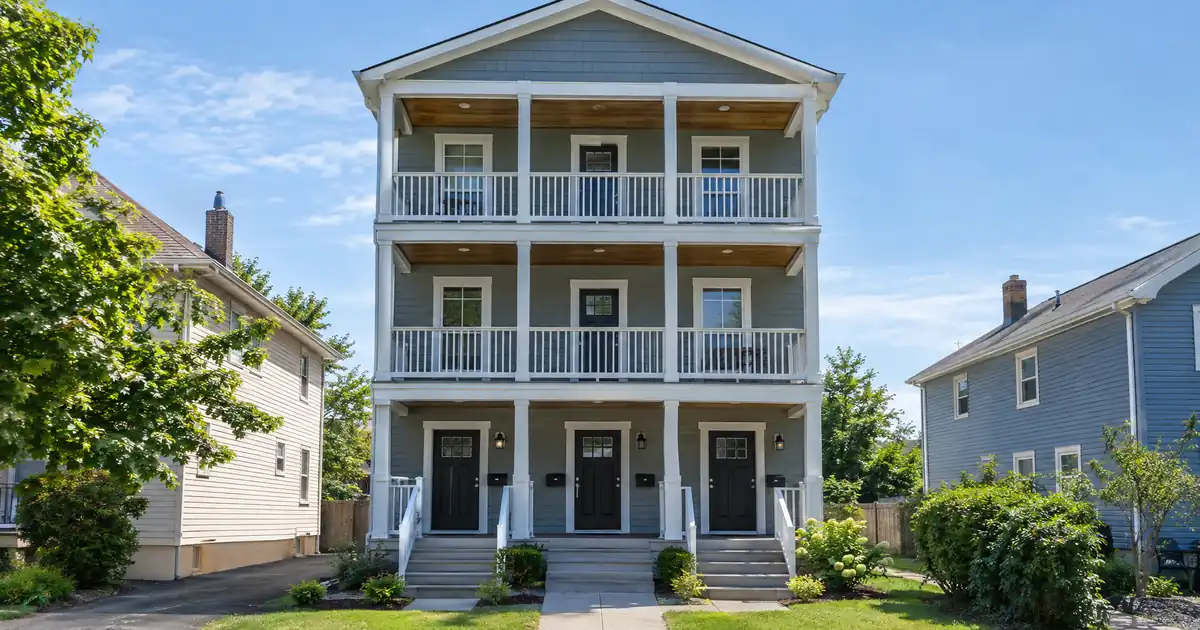
The Quick Read: Usually yes. A vacant unit does not by itself make an owner-occupied triplex ineligible for an FHA cash-out refinance. Two tests decide the file: you must live in one unit and have owned and occupied the home for 12 months before the case number, and the building must pass a self-sufficiency test that runs on market rent, not collected rent. The empty unit mostly changes how much of its rent counts as income, not whether the property qualifies. Everything here is subject to lender guidelines and full file review.
Why Does the Vacant Unit Not Block the Loan?
The vacancy is not the issue because FHA eligibility turns on your occupancy, not your tenants’. The program is built for one-to-four-unit homes where the borrower lives in one unit as a principal residence. Neither occupancy rule requires the other two units to be leased.
Across the wholesale programs Lendmire places FHA files with, the first question is typically whether you live there, and for how long. The FHA cash-out reaches 80% LTV on a home owned and occupied for 12 months before the case number. If you meet that, an empty unit is a rent-evidence question. It is not an eligibility question. Leverage, reserves, and pricing vary by lender and program; the final terms follow the full file review.
Two things do trip files:
- Moving out of your unit. The home becomes a rental, and the standard cash-out path closes.
- Treating the vacant unit as a reason to skip the self-sufficiency math. On a triplex, that test is not optional.
What Occupancy Does FHA Cash-Out Require?
You must live in one unit as your principal residence, and you must have owned and occupied the property for the 12 months before case-number assignment. HUD’s handbook limits standard cash-out refinances to owner-occupied principal residences, and the current edition is HUD Handbook 4000.1.
Lenders typically document the 12 months with employment records or utility bills showing you at the address. They also review mortgage payment history for the prior 12 months. Late payments inside that window can stop a cash-out.
There is one named exception to the 12-month rule: inherited property. The borrower cannot have treated the home as an investment since inheriting it. Rent it out afterward, and the 12-month occupancy clock starts over. Most triplex owners will never use this exception.
How Does the Self-Sufficiency Test Treat an Empty Unit?
It counts the vacant unit at market rent. That is the single most useful fact on this topic. The test applies to three- and four-unit cash-out refinances, per HUD’s guidance, and it does not care which units are currently leased.
Here is the mechanic, step by step.
1. The appraiser gives a market-rent opinion for all three units, including yours and the vacant one.
2. The lender subtracts a vacancy and maintenance allowance from that total. The handbook uses the greater of the appraiser’s estimate or a set percentage floor.
3. The remaining net rent is compared with the proposed monthly mortgage payment. HUD’s reference guide on rental income defines net rental income as fair market rent from all units, including the borrower’s own, less vacancy, collection and maintenance factors. Net rent has to at least equal the payment.
4. If the building falls short, the loan amount comes down until it passes.
The point to hold onto: a vacant unit does not hurt this test any more than a leased one. A leased unit at below-market rent does not help it either. The appraiser’s number drives the result. (Some lender worksheets say the property must be self-sufficient “regardless of occupancy status.” That matches the logic.)
Does the Vacant Unit’s Rent Count as Your Income?
Maybe, and this is where the vacancy actually costs you. Passing the self-sufficiency test is one thing. Using rent to qualify on your debt ratios is another.
HUD’s Mortgagee Letter 2023-17 says proposed rental income on a two-to-four-unit property is documented with a Small Residential Income Property appraisal (Form 1025 / Form 72) showing fair market rent. Prospective leases are used if available. So a signed lease on the empty unit is not a hard requirement.
In practice, a vacant unit with no lease is the weakest rent evidence in the file. Underwriters often credit only a portion of eligible rent, and some lenders set their own overlays on top of FHA. The income credit for a vacant unit is best treated as a file-level decision.
For a borrower, that translates to this:
- Passing the property test: the vacant unit helps at market rent.
- Qualifying on your own ratios: the vacant unit may add little or nothing. The base ratio pair is 31/43 (housing to total), and documented compensating factors can reach 40/50 at the top tier. Your income and debts carry the file.
If your ratios are tight, the vacancy matters more. Lendmire’s piece Can a 2-4 Unit Primary Home With a High DTI Get an FHA Cash-Out? covers that situation in more depth.
Triplex vs. Duplex vs. Fourplex: What Changes?
The unit count decides whether the self-sufficiency test applies at all. A duplex skips it. A triplex and a fourplex face it.
| Factor | Duplex | Triplex | Fourplex |
|---|---|---|---|
| Owner occupies one unit | Required | Required | Required |
| 12-month occupancy | Required | Required | Required |
| Self-sufficiency test | Not applied | Applied | Applied |
| Reserves check | Lender-set | Often required | Often required |
| Max cash-out LTV | 80% | 80% | 80% |
Older HUD reference material says three- and four-unit cash-out refinances need the self-sufficiency test and reserves after closing, with three months commonly cited. That page is archived, and it also shows an 85% limit that is outdated. The cash-out cap has been 80% since HUD lowered it in 2019. Lender overlays vary, so ask the loan officer for the current reserve requirement on your file.
Plain version: adding a third unit adds a test and a reserves question. It does not add an occupancy trap.
What Does the Appraiser Do With the Empty Unit?
The appraiser values the building and gives a market-rent opinion for every unit. The vacant unit gets a rent figure like the others. The appraiser does not need a tenant to do this.
Condition matters more than occupancy here. If the unit is empty because it is under renovation, damaged, or not habitable, the appraisal can carry repair conditions. HUD’s handbook glossary discusses as-is value on refinances. A unit with no kitchen or working systems is a different file from a clean unit waiting for a tenant.
Before the appraiser arrives:
- Make sure utilities are on in the vacant unit.
- Clear out debris and finish any open repairs.
- Have a recent listing or rent history for the unit, if you have one.
A tidy empty unit reads as a rentable unit. A half-finished one reads as a condition problem.
Lease First or Apply Now?
For most owners, apply with the unit as it stands unless the lease is already in progress. A new lease can help the income side. It does not change the self-sufficiency test, because that uses the appraiser’s market rent.
Use this quick decision frame:
| Your situation | What the lender looks at | Typical move |
|---|---|---|
| Unit vacant, in good condition | Market rent from appraisal | Apply as is |
| Lease signed, tenant not yet in | Prospective lease, if provided | Include the lease |
| Unit under renovation | Appraisal conditions, as-is value | Finish repairs first |
| Unit used as short-term rental | Lender treatment varies | Ask before applying |
| You plan to move out soon | Occupancy history | Cash-out likely stops |
The short-term rental row is a real gray area. Some lenders treat a short-stay unit as occupied, others as vacant, and some are wary of the income. Ask early.
What Documents Should You Gather?
A clean packet keeps a vacancy from turning into a pile of conditions. For a triplex with one empty unit, expect to supply:
- Proof you have lived in your unit for 12 months (utility bills, pay records showing the address).
- Twelve months of mortgage payment history.
- Leases for the occupied unit or units, if you have them.
- A short written note on why the third unit is vacant and when it last had a tenant.
- Any listing or rent history for the empty unit.
- Evidence of reserves, if the lender requires it for a three-unit file.
- Repair records, if the unit has had work done.
Skip the guesswork on the vacancy note. A plain two-sentence explanation answers the underwriter’s question before it gets asked.
Where the Borrower Decision Gets Real
Eligibility is the easy half. The harder half is whether a cash-out suits you.
A cash-out refinance replaces your existing first mortgage with a new, larger loan. Unlike a home equity loan or line of credit, it replaces the first lien rather than leaving it intact. FHA mortgage insurance applies: an upfront premium of 1.75% of the base loan, usually financed, plus an annual premium that depends on term, amount and LTV. Your monthly cost can rise, and the vacant unit’s rent will not reliably cover that increase.
The CFPB notes that debt payoff and home repairs are the most common reasons borrowers cash out. Using cash to finish the vacant unit and get it rented is a sensible version of that. Using it to carry an empty unit indefinitely is a risk, since converting other debts into mortgage debt secured by your home can put the home at risk if payments become unsustainable.
Tax treatment can depend on your situation; borrowers should speak with a qualified tax professional before relying on any deduction or credit.
Misconceptions Worth Clearing Up
“A vacant unit makes the loan ineligible.” No. The rules turn on your occupancy and, for triplexes, the self-sufficiency test.
“I need a signed lease on the empty unit.” Not under HUD’s documentation rule, which relies on the appraisal and uses prospective leases if available. A lender may still prefer one.
“Self-sufficiency uses my actual rents.” It uses the appraiser’s market rent for all units, including yours.
“FHA cash-out goes to 85%.” Outdated. It is 80%.
“I can cash out right after buying.” The 12-month ownership and occupancy rule applies.
“A triplex is an investment property, so FHA is out.” FHA covers one-to-four-unit homes when the borrower lives in one unit.
Key Terms Defined
Cash-out refinance: A new mortgage larger than your current balance, with the difference paid to you.
Self-sufficiency test: A check on three- and four-unit properties that the building’s net market rent covers the proposed mortgage payment.
Market rent: The appraiser’s estimate of what each unit would rent for, whether or not it is leased.
Vacancy factor: A deduction from gross market rent that allows for empty units and collection loss.
LTV: Loan-to-value, the loan amount as a percentage of the appraised value.
Principal residence: The home where you live as your main address.
Frequently Asked Questions
Can I do an FHA cash-out if I just bought the triplex?
Not on the standard cash-out path. The home must be owned and occupied as your principal residence for 12 months before the case number. Inheritance is the named exception. A rate-and-term refinance follows different rules, and a different FHA program may fit better, subject to lender guidelines.
Does the vacant unit count against me in the self-sufficiency test?
No more than a leased unit would. The test uses the appraiser’s market rent for all three units, including the empty one and yours, less a vacancy and maintenance allowance. If net rent falls short of the payment, the loan amount comes down until the building passes.
Do I need a lease on the vacant unit to qualify?
HUD’s documentation rule asks for an appraisal showing fair market rent and uses prospective leases if available. A lease helps the income side but is not required by that rule. Individual lenders can add their own requirements, so ask early.
What is the maximum LTV on an FHA cash-out for a triplex?
It is 80% of the appraised value, and county loan limits also apply. The older 85% figure still shows up in archived material, but it is outdated. Your final amount may be lower if the self-sufficiency test caps it.
What if the vacant unit is being renovated?
The appraisal can carry repair conditions, and a unit that is not habitable is a different file from a clean empty one. Finish the work, get utilities on, and document it before the appraiser visits. Lender review decides how the unit is treated.
Next Step
If you are weighing a cash-out refinance against keeping the loan you have, Lendmire can help you compare the programs and the equity each one reaches. The FHA cash-out refinance program page lays out the basics, and the loan officers can walk through your triplex file. Nothing here is a commitment to lend. All figures are subject to lender guidelines and full file review.
For your own numbers, request a scenario review with Lendmire.
About Lendmire
Lendmire (NMLS# 2371349) is a mortgage broker licensed for consumer lending in 16 states. Lendmire arranges FHA, VA, conventional and jumbo purchase and refinance loans through wholesale lenders; every file is underwritten by the lender under the applicable program guidelines. Scotsman Guide named Lendmire a Top Mortgage Workplace in both 2025 and 2026.
For the program’s current guidelines, see FHA loan programs.
Get Started
Ready to find the right loan for you?
In about 30 seconds you can review financing options available for your home or investment property. No commitment required.
Informational only. Not a Loan Estimate, approval, or commitment to lend. Program availability and eligibility are subject to lender guidelines, credit approval, property review, and underwriting.
References
3. HUD HOC Reference Guide, Rental Income
4. HUD Mortgagee Letter 2023-17
5. HUD HOC Reference Guide, Refinances
6. CFPB Office of Research blog on cash-out refinances
7. CFPB: CFPB Report Finds Cash Out Mortgage Refinance Borrowers Improve Credit Scores
This article is part of Lendmire’s FHA Loan series — every loan program’s qualification details, guidelines, and scenarios live on the loan options page.
Related reading: Conventional Cash-Out vs FHA Cash-Out on a Condo · Can You Get an FHA Cash-Out Refinance on a Duplex You Live In? · How to Prepare a 2-4 Unit Primary Home for an FHA Cash-Out Appraisal
Brandon Miller
Founder & CEO, Mortgage Loan Originator, Lendmire LLC
- Mortgage Loan Originator · NMLS# 1129696 · Verify on NMLS Consumer Access
- North Carolina Real Estate Broker · License# 343312 · Verify on NCREC
- North Carolina Insurance Producer · License# 19053198 · Property, Casualty, Life, Health · Verify on NAIC SBS
- Lendmire LLC · Firm NMLS# 2371349 · Verify firm licensure
Important disclosures. Lendmire (NMLS# 2371349) is a licensed mortgage brokerage. Lendmire is not a direct lender, depository institution, or financial advisor. All loan inquiries are subject to lender underwriting; this article does not constitute a commitment to lend. Rates, terms, and program guidelines are subject to change without notice and vary by borrower profile, property type, and state. Information in this article is general in nature and is not financial, legal, or tax advice. Equal Housing Opportunity. NMLS Consumer Access: nmlsconsumeraccess.org.