
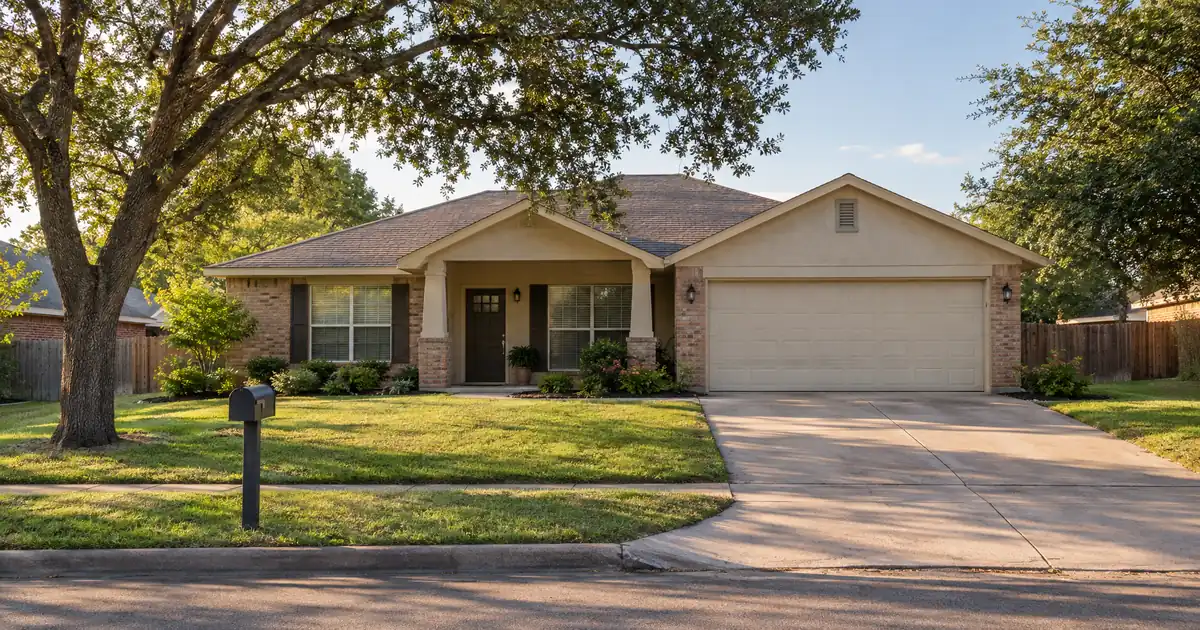
The Quick Read: On a Texas homestead, the state constitution sets the limits and the loan program works inside them. A conventional cash-out is capped at 80% of the home’s value, needs a full appraisal and a clean survey, and follows a set paperwork and waiting-period process. Borrowers who plan for those steps early tend to have the smoothest files.
Key Takeaways
- The 80% cap is the number that matters most. It limits how much equity you can reach, and it leaves no room for a second lien or HELOC behind the new loan.
- Texas law decides whether your loan counts as a home equity loan. The conventional program decides how it is delivered. The two labels can differ.
- A new full appraisal is required, even if an automated system offers a waiver.
- A refinance that takes no cash out can follow different rules than one that does. Know which one you are doing before you apply.
- Program figures below are subject to lender guidelines and full file review. Nothing here is a commitment to lend.
What Is a Conventional Cash-Out on a Texas Homestead?
A Texas cash-out on your homestead is a first-lien refinance that takes equity out of the home you live in. Texas treats it as a “Section 50(a)(6)” home equity loan. Conventional means it is delivered to Fannie Mae or Freddie Mac.
Most states treat a cash-out as an ordinary refinance with a higher price tag. Texas does not. The state’s constitution protects the homestead, so equity loans must meet extra rules before a lender can take a lien. Texas A&M’s Real Estate Research Center notes the rules live in the constitution and that state regulators interpret them.
Across the wholesale programs Lendmire places files with, Texas is one of the few states where the loan has its own name, its own forms and its own closing instructions. A borrower who expects a standard cash-out will be surprised.
Lendmire’s cash-out refinance programs cover the general mechanics. Texas homestead files add the layer described below.
The Rules at a Glance
| Rule | What it means for you | Where it comes from |
|---|---|---|
| 80% cap | Total loan can’t exceed 80% of value | State constitution; agency guides |
| Homestead only | Applies to the home you live in | State constitution |
| Full appraisal | Interior and exterior inspection | Agency guide |
| Clean survey | Homestead is its own platted lot | Agency guide |
| Texas forms | Special affidavit and closing instructions | Agency guide |
| No personal liability | Lender looks to the property | State constitution |
| Waiting period | Pause between notice and closing | State constitution |
The Texas Attorney General confirms the 80% limit and the non-recourse rule. That means the lender’s remedy is the property, absent actual fraud by the owner or spouse.
State-law items that carry exact day counts or fee percentages are best checked against the constitution text or with a Texas title professional. Those figures matter, but they are law, not program guidance.
How Is the Loan Underwritten, Step by Step?
The deal works in a set order. Each step has a Texas twist.
Step 1: Classify the transaction. The lender decides whether the loan is a Texas equity loan. Automated underwriting does not know the Texas rules, so the lender must make that call itself. Fannie Mae’s guide says these loans carry special feature codes when delivered. Cash-out versions also carry cash-out price adjustments, which either raise cost or reduce the cash available.
Step 2: Underwrite the borrower. This part looks familiar. Across the wholesale conventional programs we place with, a 620 decision score is the floor. The automated finding governs most files, with a 50% total ratio ceiling. Manually underwritten loans follow tighter ratio and reserve factors. Fannie Mae adds that automated cash-out files with a debt-to-income ratio above 45% need six months of reserves, per its cash-out refinance policy.
Step 3: Order a new full appraisal. The appraisal must include interior and exterior inspections, and an appraisal waiver is not an option. Fannie Mae’s underwriting and closing guidance says the appraisal is attached to a written acknowledgment of fair market value. A more recent Fannie Mae Selling Guide announcement lets lenders use a desk or field review to address appraisal deficiencies. The review must be obtained before the note and mortgage are dated.
Step 4: Order the survey. The survey must show that the homestead and any adjacent land are separate parcels. It must also show a separately platted lot with full ingress and egress. Extra land cannot add value to the appraisal.
Step 5: Prepare Texas documents. A Texas home equity affidavit and agreement is recorded for each loan. Title insurance must be on Texas Land Title Association forms. Title company instructions must require compliance with the constitutional rules.
Step 6: Close within the waiting periods. Texas requires a pause after the lender gives the required notice. Federal law adds a separate right to cancel after signing, and funds are not disbursed until that window ends. The CFPB’s Regulation Z gives refinances on a principal dwelling this cancellation right. Waiving it is allowed only for a bona fide personal financial emergency.
Don’t confuse the three clocks. The pre-closing pause, the right to cancel and the spacing between equity loans each run on their own.
How Much Cash Can You Actually Reach?
The 80% cap works on the whole loan, not just the cash. On a one-unit principal residence, the new first mortgage plus any other liens cannot exceed 80% of appraised value. For a Texas homestead, the 89.99% no-mortgage-insurance wholesale lane is not written. Because leverage stops at 80%, mortgage insurance, which applies above 80%, generally does not come into play.
Here is how the chain works in words:
1. Start with the appraised value.
2. Take 80% of it. That is the ceiling.
3. Subtract the balance you owe on the current first mortgage.
4. Subtract any other lien that will stay.
5. Closing costs, and any rolled-in items, come out of what remains.
What is left is your cash. A higher appraisal helps. A thin cushion between your balance and the cap leaves little to take. Because of the cap, HELOCs and second liens generally cannot sit behind the new loan. Texas borrowers with an existing HELOC should expect it to be paid off at closing or to be a deal-blocker.
What Do Seasoning and Title Rules Add?
Two timing rules apply to the conventional cash-out. The first mortgage you are paying off should be at least 12 months old, measured note date to note date. At least one borrower must also have been on title for six months. Delayed financing, inheritance and legal awards are the exceptions. A property listed for sale must be taken off the market by disbursement.
Where Does the General Rule Break?
Several cases do not follow the standard path. Knowing them can save a failed application.
Texas rate-and-term versus Fannie cash-out. A refinance that gives cash to pay homestead taxes is not a Texas equity loan, but Fannie Mae treats it as cash-out. A court-ordered divorce equity buyout is neither. The two labels do not always match.
Refinancing an existing equity loan. Texas law treats this as a conversion with conditions. A refinance with no cash back can sometimes convert out of the equity structure. Freddie Mac says a conversion loan that pays off an equity loan and meets Texas requirements is sold as no cash-out. Fannie Mae asks for an affidavit in those cases. Wholesale lenders may add their own seasoning for the conversion, so plan for it.
A defective original loan. A refinance that cures a failure to comply with the Texas rules is eligible for delivery. Otherwise, an equity loan is ineligible unless it complies.
Use of proceeds. The proceeds cannot be used to acquire or improve the homestead if a loan for that purpose could have been made under another constitutional provision. The first payment must be due no later than two months after closing.
Rural and agricultural land. The old ban on equity loans for property with an agricultural exemption was repealed for later closings. Acreage and parcel questions still show up on the survey.
Second homes and rentals. The homestead rules cover the home you live in. Second homes and investment property follow standard cash-out guidelines, and leverage there is 75% on a conventional file.
Government-backed cash-out. FHA and VA each have their own Texas rules.
Which Situation Are You In?
| Your situation | What changes |
|---|---|
| First cash-out on a standard mortgage | Full Texas equity process; 80% cap |
| Refinance of an existing equity loan | Conversion rules; extra seasoning possible |
| Refinance, no cash out | May follow different rules; confirm the label |
A common mistake is assuming the label. A borrower who thinks “I’m just lowering my payment” may still land in the equity process if cash comes back. Ask your loan officer which category your file falls in before ordering the appraisal.
What Blocks a Deal?
These are the usual stoppers:
- An existing HELOC or second lien that cannot be paid off.
- A value that comes in too low to leave cash under the cap.
- A survey that shows the homestead is not a separate lot.
- Land that is not part of the homestead being counted toward value.
- A prior equity loan that triggers conversion conditions.
- A missing spouse signature or missing Texas paperwork.
- Credit or reserves that do not meet the file’s score and ratio factors.
What Does the Decision Look Like in Practice?
Picture a homeowner with a good first mortgage and a growing bill for a large repair. The loan on the books is the thing worth protecting. A cash-out replaces it with a new balance. The question is whether the extra cash is worth giving up the loan already in place, and whether the 80% cap leaves enough to matter.
Three comparisons usually decide it:
- Cash-out versus keeping what you have. The new loan replaces the old one, so you give up the existing terms.
- Cash-out versus a separate equity product. Because of the cap, a HELOC cannot sit behind the new loan. The choice is one or the other.
- Cash-out versus no cash-out. If you only need a different term, a limited cash-out refinance on a one-unit principal residence goes to 95% LTV, with mortgage insurance above 80%. Leverage, reserves, and pricing vary by lender and program; the final terms follow the full file review.
Costs and the new balance are part of the choice. Tax treatment can depend on your situation; borrowers should speak with a qualified tax professional before relying on any deduction or credit.
Key Terms Defined
Section 50(a)(6) loan: A Texas home equity loan that puts a first lien on the homestead, governed by the state constitution.
Homestead: The home you live in as your principal residence, which Texas protects from most forced sales.
Cash-out refinance: A new mortgage that replaces the old one and gives you part of your equity as cash.
Non-recourse: A loan where the lender’s remedy is the property, not your other assets, absent actual fraud.
Rate-and-term refinance: A refinance that changes the loan’s terms without giving you significant cash back.
Seasoning: The minimum time you have held the home or the loan before a new refinance is allowed.
Frequently Asked Questions
Can I use an appraisal waiver on a Texas cash-out?
No. A Texas equity loan needs a new full appraisal with interior and exterior inspections. The automated system may offer a waiver, but the Texas rules override it.
Does the 80% cap include my current mortgage?
Yes. The cap applies to the total of all liens against the home. Your existing balance counts first, and the cash you can take is what remains under 80% of value after costs.
Can I keep my HELOC after a cash-out?
Generally no. The cap leaves no room for a lien behind the new loan, and wholesale guidelines typically do not allow one. Plan to pay the HELOC off at closing or close it.
Does a Texas cash-out apply to a rental or second home?
No. The homestead rules cover the home you live in. A second home or rental follows standard cash-out guidelines, with leverage at 75% on conventional files. Terms vary by lender guidelines, property type, leverage, credit profile, and full file review.
Can I get out of the equity structure later?
Sometimes. A later refinance can convert the loan if it meets the Texas conditions and any lender seasoning. Confirm the steps with your loan officer and a Texas title professional before you apply.
Next Steps
If you are weighing a cash-out refinance against keeping the loan you have, Lendmire can help you compare the programs and the equity each one reaches. Bring your current balance, your best guess at value and any other liens, and ask which category your file falls in before you order anything. For anything involving state law, a Texas attorney or title professional should confirm the details.
For your own numbers, request a scenario review with Lendmire.
About Lendmire
Lendmire — NMLS# 2371349 — is a mortgage broker that arranges FHA, VA, conventional and jumbo home purchase and refinance financing in 16 states through wholesale lenders. Every option is subject to the lender’s guidelines and full underwriting. Scotsman Guide named Lendmire a Top Mortgage Workplace in both 2025 and 2026.
For the program’s current guidelines, see conventional loan programs.
Get Started
Ready to find the right loan for you?
In about 30 seconds you can review financing options available for your home or investment property. No commitment required.
Informational only. Not a Loan Estimate, approval, or commitment to lend. Program availability and eligibility are subject to lender guidelines, credit approval, property review, and underwriting.
References
1. Texas A&M’s Real Estate Research Center
2. Texas Attorney General Opinion KP-0183
3. Fannie Mae Selling Guide, Texas Section 50(a)(6) delivery and servicing
4. Fannie Mae Selling Guide, cash-out refinance transactions
6. CFPB Regulation Z, Section 1026.23
7. Freddie Mac
This article is part of Lendmire’s Conventional Loans series — every loan program’s qualification details, guidelines, and scenarios live on the loan options page.
Related reading: Can a Cash Buyer Do a Conventional Cash-Out Refinance in Six Months? · Conventional Cash-Out Refinance Requirements at a Glance · Conventional Cash-out Refinance Rules On A Primary Residence
Brandon Miller
Founder & CEO, Mortgage Loan Originator, Lendmire LLC
- Mortgage Loan Originator · NMLS# 1129696 · Verify on NMLS Consumer Access
- North Carolina Real Estate Broker · License# 343312 · Verify on NCREC
- North Carolina Insurance Producer · License# 19053198 · Property, Casualty, Life, Health · Verify on NAIC SBS
- Lendmire LLC · Firm NMLS# 2371349 · Verify firm licensure
Compliance and disclosures. Lendmire (NMLS# 2371349) is a licensed mortgage broker and is not a direct lender, depository institution, financial advisor, or tax professional. Content in this article is general market analysis and educational information — not financial, legal, or tax advice for any specific situation. Lendmire does not guarantee loan approval; every transaction is subject to underwriting by the funding lender. Mortgage pricing and loan program guidelines are subject to change at any time without notice and vary by borrower characteristics, property type, and state regulations. Lendmire complies with Equal Housing Opportunity. Licensure verification: NMLS Consumer Access.