
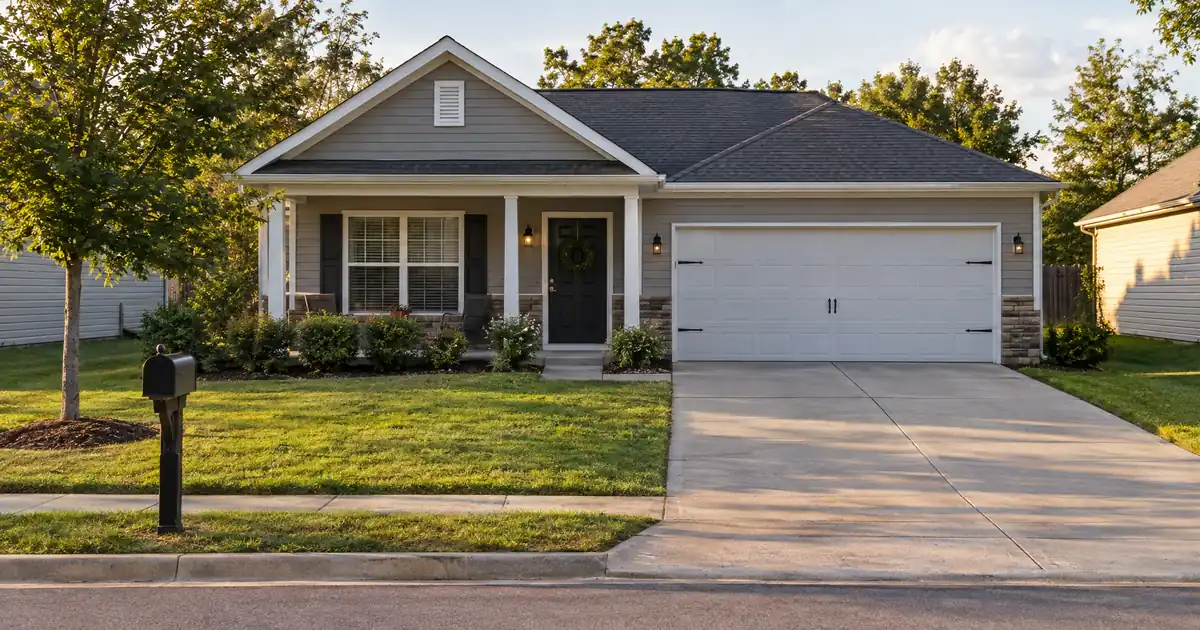
The Quick Read: The most a conventional cash-out refinance lends on a second home you own outright is 75% of the appraised value. Nothing gets subtracted, because there is no balance to pay off. Closing costs come out of that amount (or get financed into it), so what lands in your account is always less than the cap. Your credit, your debt load, and the lender’s full file review decide whether you reach the cap at all.
Why a Paid-Off Second Home Still Counts as Cash-Out
A new loan on a home with no mortgage is a cash-out refinance. It sounds backwards, since you are not paying off anything. But the agencies define the category by the property, not by your intentions.
Fannie Mae’s Selling Guide says it plainly. A cash-out transaction includes a new mortgage on a property that has no mortgage lien against it. Freddie Mac has its own subsection for cash-out loans on property owned free and clear. Same idea.
That matters because the other conventional refinance types need an existing loan to replace. A refinance that swaps your current loan for a new one and gives back only incidental cash has nothing to swap. Cash-out is the only conventional lane for a paid-off second home.
Many borrowers assume otherwise. They figure “no mortgage” means “simple refinance.” Skip that assumption. It changes the leverage cap, the pricing tier, and the paperwork.
Key Terms Defined
Second home: a one-unit home you occupy for part of the year, that is suitable for year-round use, and that you control exclusively. It is not a rental property or a timeshare.
LTV (loan-to-value): the loan amount divided by the appraised value, shown as a percentage.
Cash-out refinance: a new mortgage that gives you cash from your home’s equity, or that goes on a home with no mortgage.
Free and clear: owned with no mortgage lien against the property.
Seasoning: the minimum time you must have held title (or an existing loan) before certain refinances are allowed.
DTI (debt-to-income ratio): your total monthly debts, including the new loan, divided by your gross monthly income.
How Much Can You Borrow? The Formula
Appraised value times the leverage cap equals the maximum loan. That is the whole formula when you own the property outright.
Usually the formula subtracts an existing balance. Yours subtracts zero. So the maximum loan and the maximum gross cash are the same number, before costs.
The cap depends on how you use the home. Here is how the conventional caps step down.
| Occupancy | Cash-out max LTV | Purchase max LTV |
|---|---|---|
| Principal residence, 1 unit | 80% | 95% (97% first-time buyer) |
| Second home | 75% | 90% |
| Investment property, 2-4 units | 75% | 75% |
The second-home figure of 75% appears on the Fannie Mae Eligibility Matrix, the agency’s published grid of maximum leverage by occupancy and loan type. Across the wholesale programs I place files with, the same 75% ceiling applies to second-home cash-out. Subject to lender guidelines and full file review, a given lender can set it lower.
Here is the picture in percentages. Say your lake cabin appraises at a round number you can call 100% of value. At the 75% cap, the largest loan is 75% of that value. You keep 25% of the value as untouched equity. That equity cushion is not a lender quirk. It is the point.
Why the gap between a second-home purchase (90%) and a second-home cash-out (75%)? Lenders treat cash taken out of equity as riskier than money used to buy. A buyer with 10% down has put cash in. A cash-out borrower is pulling value out. The cap reflects that. Every figure here varies by lender and program — guidelines, property type, leverage, and credit profile all apply.
How the Appraisal Sets the Number
The appraisal is the lever. The cap is a percentage, and the appraised value is what it multiplies.
A low appraisal drags the loan down one-for-one at the cap. If the home appraises at 90% of what you hoped, the maximum loan falls to 75% of the lower figure. That is a 10% drop in the loan, not a 10-point swing in the cap.
Second homes sit in vacation markets, and those can be harder to value. Fewer comparable sales exist in a remote mountain town than in a suburb. Appraisers lean on what they can find. Expect more scrutiny, and expect value to be the line item that moves.
Don’t count on the owner’s estimate, a tax assessment, or an online value tool. The appraiser’s number is the only one the cap multiplies.
What Qualifies as a Second Home (and Where Renting Fits)
Occupancy decides the leverage. Get the classification wrong and the whole file changes.
Fannie Mae’s occupancy rules set the test. The property must:
- Be occupied by you for some portion of the year
- Be a one-unit dwelling
- Be suitable for year-round occupancy
- Give you exclusive control
- Not be a rental property or timeshare
Renting it out now and then does not automatically disqualify it. The agency guide allows some rent as long as that income is not used to qualify you. But control and use still matter. A home you rent most of the year, or one run by an outside manager who controls the bookings, can slide out of second-home status.
If your plan is to rent the place, the occupancy type changes and so does the loan. That is a different lane from this article. Occupancy decides the leverage, and the rest of this piece assumes a true second home.
Qualifying: Credit, Debt Ratio, Reserves, and Title
The cap tells you the ceiling. These checks decide whether you get there.
Credit. The wholesale conventional programs I place start at a 620 decision score. A higher score generally improves leverage options and pricing tiers. Individual lenders can require more.
Debt ratio. The new second-home payment goes into your DTI, even though today you have no payment on that house. That can surprise people. You are adding a debt to your monthly picture. The automated underwriting finding governs most files, with a total ratio ceiling of 50%. Manually underwritten loans run tighter, at 36% or 45%, depending on score and reserves.
Reserves. Reserves are savings left after closing that could cover payments. The Fannie Mae matrix notes that minimum reserves apply to cash-out files with DTI above 45%. Second homes tend to draw more reserve attention than primary homes.
Rental income. If the home earns rent, that income generally cannot help you qualify on a second-home loan.
Title and ownership. For cash-out, at least one borrower must have been on title for 6 months. That is the seasoning test that matters when nothing is being paid off. The 12-month rule applies to an existing first mortgage, so it does not come up for a paid-off home.
Title Checks on a “Paid-Off” Property
“Paid off” is what you believe. The title report is what the lender believes.
Lenders order a title search before closing. Sometimes it finds things owners forgot: an old mortgage never formally released, a HELOC that was drawn down and never closed, a contractor lien from a past project. Any of these can sit between you and the loan. Each has to be cleared, and any lien that remains can count against your leverage.
If you inherited the home, the title may still be in an estate’s name. Transfer into your name has to be finished first. The same goes for a home held in an LLC or LP. Freddie Mac’s 2023 seller notice requires the transfer into the borrower’s name on or before the note date in that situation.
Check your own paperwork before applying. A recorded satisfaction of mortgage from the original lender is worth finding.
What It Costs and What You Actually Net
The cap is gross. You net less.
Closing costs are the upfront charges to get the loan and transfer ownership. The agencies allow you to finance closing costs, points, and prepaid items into the loan. Financing them keeps cash in your pocket today but raises the balance. Paying them out of proceeds lowers what you receive. Either way, the cap stays the cap. Costs live inside it.
So the mental math is simple. Maximum loan at 75% of value. Subtract the costs. What is left is cash in hand.
Pricing also moves with the file. Fannie Mae notes that loan-level price adjustments apply to certain cash-out transactions based on leverage and credit score. Freddie Mac has similar credit fees. In plain terms, cost rises with higher leverage and lower scores. Second-home and cash-out pricing generally sits above a primary-residence rate-and-term refinance.
You will see your actual costs on the Loan Estimate, the standardized form a lender must give you after you apply. Compare it line by line before choosing.
Where the Rule Breaks: Edge Cases
Most paid-off second homes fit the 75% picture. A few do not.
A recent cash purchase. If you bought the home with cash within the last six months, delayed financing may apply. It lets you refinance soon after, but only up to your documented investment plus financed costs. It exists so a cash buyer can pull their money back out. It is not a route to more than you put in.
FHA Streamline. This one is a common mix-up. HUD requires that the mortgage being refinanced is already FHA insured, and cash back is capped at $500. A paid-off second home has no FHA loan to streamline.
FHA cash-out. A standard FHA cash-out is generally limited to owner-occupied principal residences. A true second home usually is not eligible.
VA IRRRL. It refinances an existing VA loan and allows no cash out. It cannot pull equity from a paid-off vacation home.
Renovation exceptions. Some agency renovation products can be treated as no cash-out on a free-and-clear property when proceeds fund eligible improvements only. They are not a general workaround.
Manufactured homes. The caps are lower, and certain types, such as single-width, may not be eligible for cash-out at all. Ask before you assume.
Financed-property limits. The agencies cap how many financed properties one borrower can carry. If you own several, confirm where you stand.
What the Decision Looks Like in Practice
Picture a homeowner with a paid-off cabin and a mortgage on their main home. They want cash for a roof, a kitchen, or to clear other debt. Their choices:
| Option | How it works | Trade-off |
|---|---|---|
| Cash-out refinance | New first mortgage on the cabin | Up to 75% of value; fixed payment |
| HELOC | Credit line against the cabin | Flexible draws; variable cost |
| Home equity loan | Lump-sum second lien | Separate payment; own limits |
| Cash-out on primary home | Pull equity from the main home | Up to 80% of that home’s value |
That last row is worth a real look. If your main home has the equity, its higher cap and primary-residence pricing may beat the second home. The tradeoff is putting a different house on the line.
Whatever you pick, mind the downstream effects. A paid-off property has no payment today. A cash-out loan creates one, and it counts in your DTI. That can crowd out qualifying for other credit later.
In my files, the borrowers who are happiest with this loan have a defined use for the money and a payment they can carry without the cabin’s income. The unhappy ones borrowed because the equity was there.
Risks and When Not to Do It
Equity is not free money. You are putting a house that carried no debt behind a new one.
The CFPB’s research found that more than half of cash-out borrowers used the money to pay off other bills or debts. Moving unsecured debt onto a home can put the home at risk if payments slip. A longer term and bigger payment than before are common after a cash-out.
Think twice if:
- You have no clear use for the cash.
- The new payment would strain your budget.
- You would be converting short-term debt into a 30-year secured loan without changing the habits that built it.
- Your job or income is unsteady.
Tax treatment can depend on your situation; borrowers should speak with a qualified tax professional before relying on any deduction or credit.
Frequently Asked Questions
Can I get a cash-out refinance on a second home with no mortgage?
Yes, subject to lender guidelines and full file review. Agency rules treat a new loan on a free-and-clear home as cash-out. You generally need to have been on title for at least 6 months, and the home has to qualify as a second home. Lendmire arranges cash-out refinance programs through wholesale lenders in 16 states.
What is the maximum LTV on a paid-off second home?
Typically 75% on conventional conforming programs. That is lower than the 80% cap on a one-unit primary residence. Because nothing is paid off, the maximum loan is 75% of the appraised value. Your closing costs and the lender’s own overlays can reduce what you actually receive.
Does the loan amount equal the cash I receive?
No. Closing costs, points, and prepaid items come out of the proceeds, or get added to the loan balance if you finance them. The cap applies to the total loan either way. You will see the Estimated Cash to Close on your Loan Estimate.
Can I rent my second home and still qualify?
Sometimes. Occasional rent does not automatically change the classification, but the rental income generally cannot be used to qualify. If the property operates as a rental, it is treated differently and the leverage rules change. Control and use of the home still matter.
Can an FHA Streamline or VA IRRRL pull cash from my vacation home?
No. Both require an existing government-backed loan, and neither is built for taking out equity. The FHA Streamline caps cash back at $500. The IRRRL allows no cash out. A paid-off second home has neither kind of loan.
If you are weighing a cash-out refinance on a home you own outright, Lendmire can help you compare the programs and the equity each one reaches.
For your own numbers, request a scenario review with Lendmire.
About Lendmire
As a mortgage broker (NMLS# 2371349), Lendmire helps homeowners and home buyers in 16 states with FHA, VA, conventional and jumbo purchase and refinance loans arranged through wholesale lenders. Lendmire is never the lender; program terms are set by the lender and the agency guidelines. Scotsman Guide named Lendmire a Top Mortgage Workplace in both 2025 and 2026.
Get Started
Ready to find the right loan for you?
In about 30 seconds you can review financing options available for your home or investment property. No commitment required.
Informational only. Not a Loan Estimate, approval, or commitment to lend. Program availability and eligibility are subject to lender guidelines, credit approval, property review, and underwriting.
References
1. Fannie Mae Selling Guide B2-1.3-03: Cash-Out Refinance Transactions
2. Freddie Mac Guide Section 4301.5
3. Fannie Mae Eligibility Matrix
4. Fannie Mae Selling Guide B2-1.1-01: Occupancy Types
This article is part of Lendmire’s Refinance series — every loan program’s qualification details, guidelines, and scenarios live on the loan options page.
Related reading: How to Handle a Low Appraisal on a Cash-Out Refinance of a Paid-Off Home · How Much a Cash-Out Refinance Lends a Free-and-Clear Homeowner · How to Get a Cash-Out Refinance on a Paid-Off Home in Retirement
Brandon Miller
Founder & CEO, Mortgage Loan Originator, Lendmire LLC
- Mortgage Loan Originator · NMLS# 1129696 · Verify on NMLS Consumer Access
- North Carolina Real Estate Broker · License# 343312 · Verify on NCREC
- North Carolina Insurance Producer · License# 19053198 · Property, Casualty, Life, Health · Verify on NAIC SBS
- Lendmire LLC · Firm NMLS# 2371349 · Verify firm licensure
Compliance and disclosures. Lendmire (NMLS# 2371349) is a licensed mortgage broker and is not a direct lender, depository institution, financial advisor, or tax professional. Content in this article is general market analysis and educational information — not financial, legal, or tax advice for any specific situation. Lendmire does not guarantee loan approval; every transaction is subject to underwriting by the funding lender. Mortgage pricing and loan program guidelines are subject to change at any time without notice and vary by borrower characteristics, property type, and state regulations. Lendmire complies with Equal Housing Opportunity. Licensure verification: NMLS Consumer Access.