
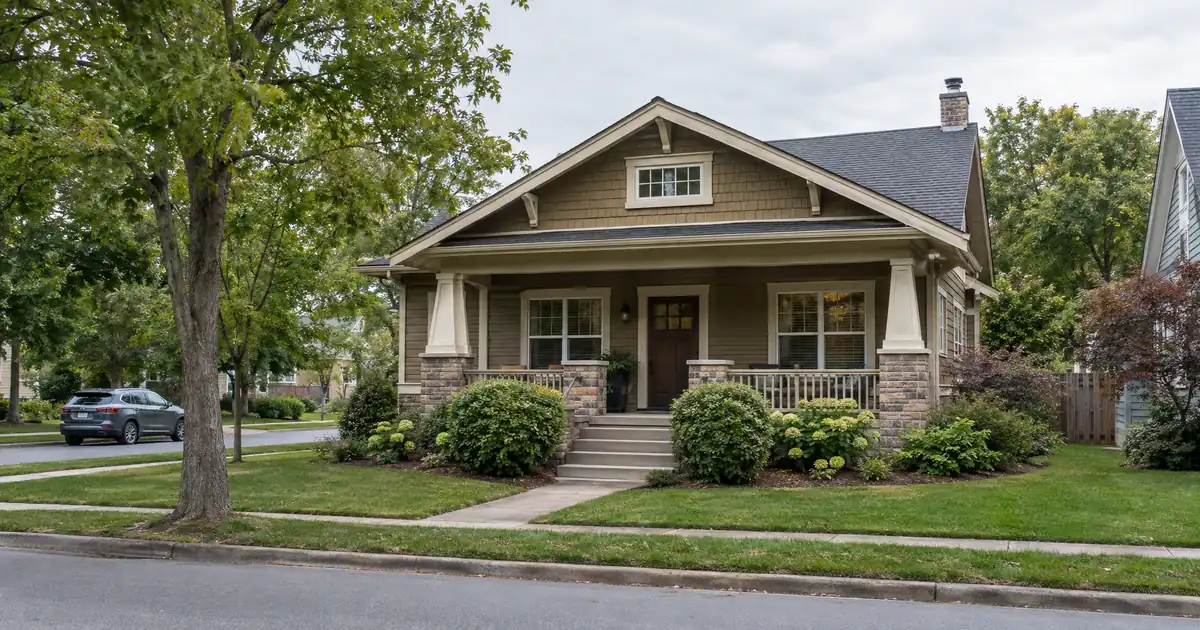
The Quick Read: A self-employed borrower qualifies for a cash-out on a second home by documenting income through bank statements, then keeping the loan within the leverage cap for owner-occupied cash-out. Most files go through a bank-statement program rather than traditional personal-income documentation, because heavy write-offs can shrink the income a return shows.
- A second home is a personal-use property, so the file is underwritten on your income, not the property’s rent.
- Twelve months of business or personal bank statements are the common documentation base.
- Owner-occupied cash-out typically tops out at 80% LTV, and 75% LTV when an accountant prepares the expense ratio, subject to lender guidelines.
- Reserves commonly run around 6 months of the housing payment.
- If the home is really a rental, the file belongs in a different loan category (see below).
The title of this topic mixes two loan categories, and sorting that out is the first step. A second-home cash-out is an occupancy-based loan underwritten on what you earn. A DSCR loan qualifies a property on its rent and is built for investment properties. They are not interchangeable. Lendmire is a mortgage broker that arranges these files through select lenders in its wholesale network.
DSCR Cash-Out Calculator
Run the cash-out numbers in your market
Rate source: Freddie Mac 30-yr average via FRED® — Federal Reserve Bank of St. Louis · effective Oct 8, 2026
Prefilled with starting assumptions — enter your property’s value, balance, taxes, and insurance for a more accurate picture.
Program parameters update from Lendmire’s centralized guideline source. Taxes and insurance are editable estimates.
As of Oct 8, 2026 · General Freddie Mac market benchmark, not a Lendmire loan offer. Property value, balance, taxes, and insurance are editable estimates. Maximum loan-to-value varies by lender, program, property type, and seasoning. Not a Loan Estimate, approval, or commitment to lend. Program availability and eligibility are subject to lender guidelines, credit approval, property review, and underwriting.
What Is a Second-Home Cash-Out, and Why Does Self-Employment Change It?
A second-home cash-out refinance replaces your current loan with a larger one and pays you the difference. The lender treats the property as a home you personally use for part of the year, so the file is judged on your income, credit, and reserves.
Self-employment complicates the income piece. Traditional personal-income documentation reports income after deductions. A business owner who writes off vehicles, equipment, home office, and depreciation can show a low net figure even when cash flow is healthy. A bank-statement program reads the deposits instead. The borrower is reviewed on documented income under the applicable program, subject to lender guidelines.
Here is where most files go sideways: borrowers assume a second home behaves like a primary residence. Leverage, reserves, and occupancy review are usually tighter on a second home. Plan the file around that, not around what a primary-residence refinance allowed.
Key Terms Defined
Cash-out refinance: A new, larger mortgage that pays off the old one and puts the difference in your hands.
Bank-statement loan: A mortgage that qualifies a self-employed borrower on deposit history instead of tax-return net income.
Expense factor: The percentage of business deposits a lender treats as operating costs before counting the rest as income.
Occupancy type: How the property is classified: primary residence, second home, or investment property. It drives leverage, documentation, and which disclosure rules apply.
LTV (loan-to-value): The new loan balance divided by the appraised value.
How Do Lenders Decide a Property Is a Second Home?
A second home is a property you use yourself, with exclusive control, for part of the year. It is typically one unit, suitable for year-round occupancy, and not run under a management agreement that controls who stays there. A property you hold mainly to rent to others is an investment property, whatever the borrower calls it.
The label matters because it sets the whole file. The CFPB’s Regulation Z text treats credit for a non-owner-occupied rental as business purpose, which is why rental properties can run on property-level cash flow. A second home you use personally is a consumer-purpose loan, so the lender must look at your ability to repay.
You sign an occupancy certification at closing. Misstating how you use the property is a serious problem, not a paperwork shortcut. Lenders have little patience for a rental dressed up as a second home.
Does “Non-QM” Mean No Documentation?
No. Bank-statement loans still require verified income, credit review, and reserves. The CFPB’s ability-to-repay summary lists the factors a lender must consider on a consumer mortgage, including income or assets, debt obligations, and credit history, and says they generally must be verified with reliable records. Bank statements are the lender’s way of verifying income when returns understate it.
That is why the phrase “no-doc” misleads. The documentation is different, not absent. Plan to hand over a full set of statements and to explain what is in them.
Which Income Path Fits a Self-Employed Second-Home Borrower?
Bank statements are the most common route for a self-employed second-home file. Other paths exist, and the right one depends on how your income shows up and what you can document.
| Path | Best fit | What you provide | Main trade-off |
|---|---|---|---|
| Bank statements | Strong deposits, heavy write-offs | 12 months, business or personal | Expense factor trims income |
| Accountant-prepared expense ratio | Real expenses below the fixed factor | Accountant letter plus statements | Lower LTV cap applies |
| Traditional personal-income documentation (full doc) | Returns show strong net income | Returns and supporting records | Write-offs reduce qualifying income |
| Asset depletion | Large liquid balances | Asset statements | May not allow cash-out on some programs |
The asset-depletion route deserves a flag. On a primary residence it can reach about 80% LTV across the programs in Lendmire’s network. On a second-home cash-out, many asset programs are limited to purchase and rate-term, so confirm cash-out is allowed before building a file around it. Leverage, reserves, and pricing vary by lender and program; the final terms follow the full file review.
How Does the Income Test Actually Work?
The lender totals eligible deposits, strips out transfers, loan proceeds, and other credits that are not income, applies an expense factor on business accounts, and divides by the number of months. What is left is qualifying income.
Three practical points shape the result:
- Personal versus business statements. Business accounts get an expense factor. Personal accounts usually do not, but a lender will look hard at whether deposits are truly business income.
- Fixed factor versus accountant ratio. For owner-occupied cash-out, the network’s programs typically cap at 80% LTV with a fixed expense ratio, or 75% LTV with an accountant-prepared ratio. The accountant route can raise qualifying income when your real expenses run lower than the fixed factor, at the price of a lower leverage cap.
- Ownership share. If you own part of the business, the lender may scale the income it counts.
Expense factors differ from one program to the next, so a single number is not safe to assume. A strong file shows steady, explainable deposits over the full statement period.
The Second Test: Equity
Income is only half of it. The loan also has to fit under the leverage cap, and the appraisal sets the value. Owner-occupied cash-out, including second homes, typically tops out at 80% LTV, and 75% LTV with the accountant-prepared ratio, depending on loan size and credit. The 90% LTV figure you may see for primary residences applies to purchase and rate-term loans, not to cash-out.
Run both tests and see which one binds. Picture a borrower with strong deposits and a modest equity position. Income clears easily, but the LTV cap limits the cash. Now flip it: a borrower with deep equity and thin, uneven deposits. The equity is there, but the income test limits the loan size. The smaller of the two results is the cash you can actually pull.
Loan amounts across the network’s programs run roughly from $125,000 to $3,500,000, so very small and very large balances can fall outside a given program. Reserves commonly run around 6 months of the housing payment, and the lender will want to see them documented. If you own other financed properties, expect that picture to be reviewed too.
What Does the Document Pack Look Like?
Clean files are built before they are submitted. A typical pack includes:
- Twelve months of business or personal bank statements, all pages.
- Proof of business ownership and how long you have been self-employed.
- A written explanation for large or unusual deposits.
- Statements showing reserves, such as savings or brokerage accounts.
- Recent mortgage statements on the property and any other financed real estate.
- For the accountant-ratio route, a letter that supports the expense figure.
Deposit hygiene matters more than most borrowers expect. Moving money between your own accounts, covering a business shortfall from savings, or depositing a one-time gift all create items the underwriter must explain or exclude. Keep personal and business funds separate in the months before applying, and avoid large unexplained deposits. A transfer left unexplained is a common reason qualifying income comes in lower than the borrower expected.
Step by Step: How the deal works
1. Classify the occupancy honestly. Decide whether you use the home personally or hold it to rent. This sets the whole path.
2. Choose the income route. Compare bank statements, an accountant-prepared ratio, and full documentation against your actual numbers.
3. Gather statements and clean the deposits. Pull the full statement set and prepare explanations for anything irregular.
4. Check both tests. Estimate qualifying income and the leverage cap against a realistic value before you apply.
5. Document reserves and other debts. Assemble asset statements and the payment history on every financed property.
6. Order the appraisal and review it. The appraisal sets value. If it comes in light, a reconsideration request with recent comparable sales is a normal step.
7. Sign the occupancy certification. Make sure your actual use of the property matches what you certify.
An owner-occupied second-home file is a consumer mortgage, so the consumer disclosure rules apply to it. That is different from a business-purpose loan on a rental, which is exempt from those rules.
Where the General Rule Breaks
A second home you rent out. Occasional rental of a vacation home does not automatically make it an investment property, but regular rental use can change how a lender classifies it. A short-term rental run as a business tends to push the file toward investment treatment. The Regulation Z text references a 14-day owner-occupancy test for rental property, though how that interacts with a lender’s own occupancy standard varies, so treat it as context rather than a safe harbor.
Re-classifying to a rental. If the home really operates as a rental, the honest path is a DSCR loan on a non-owner-occupied property. That swaps your personal income for the property’s rent as the qualifying basis, and the occupancy certification must be true. Investment-property cash-out tops out around 75% LTV in the network’s programs. Read more on that fork in Lendmire’s piece on whether a bank-statement cash-out can fund the next rental, and in the complete DSCR loans guide. DSCR is not a way to cash out a home you actually live in part-time. Terms vary by lender guidelines, property type, leverage, credit profile, and full file review.
Rental income on a second home. Rent from a true second home generally cannot be counted to qualify it. Income has to come from you.
Entity ownership. Lending to an LLC falls outside the consumer-credit framework under 12 CFR 1026.3, which is one reason investment files are often vested in an entity. Second-home loans usually require individual ownership.
Use of proceeds. Cashing out to fund personal spending is a different purpose from reinvesting in a rental business. Lenders may ask how the funds will be used.
Cash-Out, HELOC, or DSCR: Which Fits?
| Option | Best fit | Reviewed on | Trade-off |
|---|---|---|---|
| Second-home cash-out (bank statement) | Need cash, existing loan is worth replacing | Your documented income | New lien on the full balance |
| HELOC or second lien | Keep existing first loan | Varies by lender | Separate payment, separate review |
| DSCR cash-out | Property truly operates as a rental | Rent covering the payment | Non-owner-occupied only |
A cash-out replaces the entire first mortgage, so closing costs apply to the full new balance. If your existing first loan is worth keeping, a second lien may cost less overall. DSCR coverage is also not the same as profit: the ratio compares rent to the housing payment and does not capture vacancy, repairs, or management costs.
Why Second-Home Files Stall or Get Declined
- Income comes in below expectations. Transfers and one-time deposits get stripped out.
- Occupancy does not match the facts. Regular rental use or a management agreement raises questions.
- Reserves are thin or undocumented. Other financed properties add to the requirement.
- Appraisal comes in light. The LTV cap then limits the cash.
- Self-employment history is short. Many programs want a minimum track record.
- Credit or debt load is out of range. Credit and debt-to-income review still apply.
Tax treatment can depend on how the funds are used and how the property is held; investors should keep clear records and speak with a qualified tax professional before relying on any deduction.
Frequently Asked Questions
Can I cash out a second home if I am self-employed?
Yes, through a bank-statement program that is reviewed on documented income under the applicable program, subject to lender guidelines. Owner-occupied cash-out typically reaches 80% LTV, or 75% with an accountant-prepared expense ratio. Loan size, credit, and reserves all affect the final terms.
How many months of bank statements are needed?
Twelve months of business or personal statements is the common base across the network’s programs. Some lenders ask for more. A clean, consistent history makes the income easier to support.
Can I use a DSCR loan on my vacation home?
Only if the home is a true non-owner-occupied rental. A second home you use personally is underwritten on your income. A DSCR loan is reviewed primarily on property-level rental income covering the payment, subject to lender guidelines, and the occupancy certification must be accurate.
What is the difference between 80% and 75% LTV on owner-occupied cash-out?
The 80% cap pairs with a fixed expense ratio. The 75% cap applies when an accountant prepares the expense ratio, which can raise qualifying income if your actual expenses run low. Which one fits depends on your numbers. Exact terms depend on the lender’s guidelines, property type, leverage, and a full review of the borrower’s file.
Does the asset-depletion route work for cash-out?
Not always. Asset-based programs can reach about 80% LTV on a primary residence, but cash-out on a second home may be limited, so confirm availability before relying on it.
Availability of this consumer lane covers 16 states, and every file is reviewed individually. For the related question of using statements to fund another property, see Lendmire’s piece Does a Second Home Qualify for a Bank Statement Cash-Out Refinance?.
For the mechanics of pulling equity out of a rental property, see Lendmire’s guide to cash-out refinance on an investment property.
About Lendmire
Lendmire (NMLS# 2371349) is a mortgage brokerage focused on DSCR investor financing, helping arrange programs through wholesale and investor-lending channels in 41 markets, including Washington, D.C. DSCR loans are evaluated by the lender on property cash flow rather than personal income, subject to lender guidelines, supporting LLC closings and accommodating investors with four or more financed properties. Scotsman Guide Top Mortgage Workplace in both 2025 and 2026.
Get Started
Ready to find the right loan for you?
In about 30 seconds you can review financing options available for your home or investment property. No commitment required.
Informational only. Not a Loan Estimate, approval, or commitment to lend. Program availability and eligibility are subject to lender guidelines, credit approval, property review, and underwriting.
References
1. CFPB – Regulation Z §1026.3
2. CFPB – Ability-to-Repay and Qualified Mortgage Summary
This article is part of Lendmire’s bank statement loan program — full qualification details, guidelines, and scenarios live on the program page.
Related reading: Cash-Out Refinance Documentation for a Self-Employed Divorce Buyout · Conventional Cash-Out for a Self-Employed Owner With Understated Income · FHA Cash-Out Qualifying Ratios for Self-Employed Homeowners
Brandon Miller
Founder & CEO, Mortgage Loan Originator, Lendmire LLC
- Mortgage Loan Originator · NMLS# 1129696 · Verify on NMLS Consumer Access
- North Carolina Real Estate Broker · License# 343312 · Verify on NCREC
- North Carolina Insurance Producer · License# 19053198 · Property, Casualty, Life, Health · Verify on NAIC SBS
- Lendmire LLC · Firm NMLS# 2371349 · Verify firm licensure
Legal disclosures. Lendmire (NMLS# 2371349) is a state-licensed mortgage brokerage that arranges financing through wholesale lender relationships. Lendmire is not a direct lender, depository institution, or registered financial advisor. The discussion above is general informational content about real estate financing — it is not financial, legal, or tax advice, and readers should consult licensed professionals for guidance on their individual circumstances. Loan inquiries are subject to lender underwriting; this article does not represent a commitment to lend. Loan terms, rates, and qualification standards vary by borrower, property, and state, and are subject to change at any time. Equal Housing Opportunity. NMLS Consumer Access: nmlsconsumeraccess.org.