
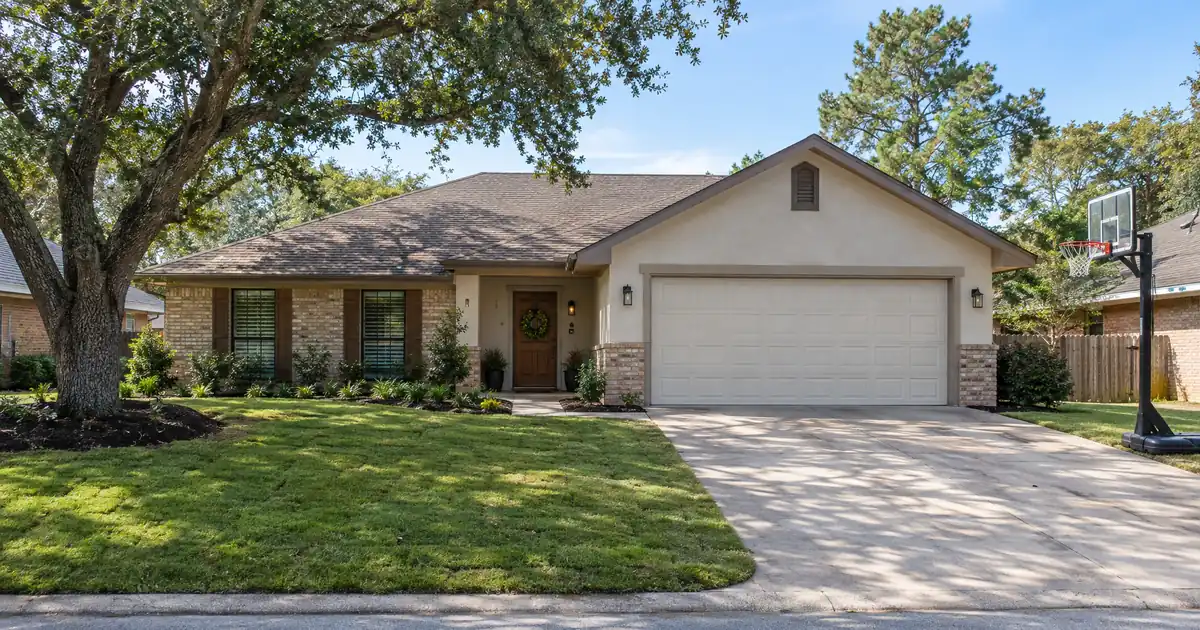
The Quick Read: Usually the question never gets that far, because a VA cash-out refinance generally cannot be closed on a Texas homestead at all. The Texas Attorney General concluded that the VA guaranty counts as extra collateral, and the state constitution does not allow that on a home equity loan. The funding fee matters only in scenarios outside Texas homestead law, and the real decision for a Texas veteran is which other route to the equity makes sense.
Why Does Texas Block the VA Cash-Out on a Homestead?
The block is legal, not financial. It comes from the Texas Constitution and a formal state opinion, and no credit score or equity position overrides it.
In Opinion KP-0183, the Texas Attorney General reasoned that the VA guaranty is collateral other than the homestead. That conflicts with Article XVI, §50(a)(6)(H) of the Texas Constitution, so a VA cash-out on a homestead is precluded. The opinion is advisory rather than binding law, but lenders treat the product as unavailable in practice. A separate compliance analysis from Black, Mann & Graham adds a second obstacle: the constitution bars recourse against the owner on these loans, and the firm reasons that a VA program in Texas would need a constitutional amendment.
Here’s the catch. Plenty of national pages describe the VA cash-out and mention Texas in a footnote, and a few suggest it works with Texas rules layered on top. That is not how it plays out on real files. As of this writing, the conclusion holds, and only a court ruling or a constitutional amendment would change it.
What Does the VA Cash-Out Look Like Everywhere Else?
Outside Texas homestead law, the program is generous. The VA cash-out refinance program replaces your current loan with a new one, and it can turn a non-VA loan into a VA-backed loan. Per VA’s own cash-out page, you need a Certificate of Eligibility (COE), you must meet VA and lender credit and income standards, and you must live in the home.
Across the wholesale programs Lendmire places VA files with, the cash-out reaches 100% of the appraised value, including the financed funding fee. That is a flat 100% ceiling with no mortgage insurance. The new loan also has to show a net tangible benefit, and the file carries the same seasoning as other VA refinances: the later of 210 days from the first payment and the sixth payment. VA’s lender training material, the cash-out lender call deck, describes the 100% ceiling and the net tangible benefit test, and it requires a comparison disclosure at application and at closing.
Compare that to Texas. A Texas homestead equity loan caps the new principal plus all other liens at 80% of fair market value, per the Texas Constitution text. VA’s 100% does not override the constitution. The 80% line is a constitutional rule, not a lender being cautious.
How Does the Funding Fee Work on a Cash-Out?
The cash-out funding fee is 2.15% on first use and 3.3% on later use, and it turns only on prior use of the benefit. VA News lists both figures. Down payment tiers apply to purchase loans, not cash-outs, so putting more equity in does not lower the cash-out fee.
The fee can be financed. On a loan already at the 100% ceiling, though, a financed fee comes straight out of your cash, because the fee counts toward that ceiling. Net cash is the new loan minus the payoff, the fee, and closing costs. That’s the whole equation.
Exemptions matter a great deal. Veterans receiving VA compensation for a service-connected disability are exempt. So are certain surviving spouses receiving DIC and service members with a pre-discharge proposed or memorandum rating. For an exempt veteran, the fee drops out and the question changes from “is the fee worth it” to “does this structure beat the alternatives.” In Texas, that question is moot for a homestead cash-out. Elsewhere, it’s a much easier yes.
Is It Worth It? A Decision Table
The honest framing is that “worth it” depends on whether the product exists for your property. This table sorts the common situations.
| Situation | Is VA cash-out available? | What the fee does |
|---|---|---|
| Texas homestead, first-use veteran | Generally no | Never reached |
| Texas homestead, subsequent-use veteran | Generally no | Never reached |
| Texas homestead, fee-exempt veteran | Generally no | Waived, but moot |
| Non-Texas owner-occupied home | Yes, subject to guidelines | 2.15% first use, 3.3% later |
| Texas home you do not live in | No, VA requires occupancy | Not applicable |
Notice the last row. Texas homestead protections apply to the home you occupy, but VA cash-out requires you to live there. So a rental or second home does not rescue the VA route. Occupancy decides the leverage and the program, and that one sentence covers it.
What Can a Texas Veteran Do Instead?
A Texas veteran who wants cash generally moves to a conventional Texas home equity loan, known as a 50(a)(6) loan. That usually means giving up the VA structure on that loan, and it may affect how much entitlement stays available later. A veteran with significant plans to buy again should ask how a refinance would affect entitlement before committing.
The rules for a 50(a)(6) loan are tight:
- 80% cap on all liens. The new loan plus every existing lien cannot exceed 80% of fair market value. You must keep at least 20% equity, and a second lien shrinks the cash you can take.
- No personal recourse. The loan is non-recourse, and foreclosure requires a court order, per FindLaw’s constitution text.
- A consumer notice. The Texas Finance Commission publishes the notice lenders must provide.
- Procedural conditions. Compliance sources describe a waiting period, a rescission window, a fee cap, a limit on how often you can take one, and special closing-location rules. Those details come from secondary sources, so confirm the specifics against the constitution text and with your loan officer.
There’s no VA funding fee on a conventional 50(a)(6). Fees are limited by the Texas cap instead. Different cost structure, not a savings. Treat the comparison with care. The VA’s 100% and no mortgage insurance are real advantages, and losing them is a real cost, even if the specific dollar comparison depends on the file.
Two other paths come up. A second lien or home equity line sits behind your VA loan and leaves the first loan alone. If that existing first loan is a good one, keeping it and borrowing separately can beat refinancing everything. Whether that fits depends on the combined lien total staying under the 80% line.
Could an IRRRL Help?
An IRRRL is the VA’s streamline refinance. It carries a 0.5% funding fee unless you are exempt, needs no VA appraisal, and requires a net tangible benefit plus the same seasoning noted earlier. It does not give you cash. For a Texas veteran, it can be a way to change the terms of an existing VA loan without touching homestead equity. Whether an IRRRL works on a given Texas file depends on whether it is a true rate-and-term change with no cash out, so that is a question for a full file review, not a promise.
If you already hold an A6 loan, a non-cash-out refinance into an ordinary mortgage is possible only when every condition in the constitution’s 50(f)(2) path is met, including no cash out and at least 12 months since the prior loan.
Common Misconceptions
“VA lets me borrow 100%, so I can in Texas.” The 100% ceiling does not override the constitution’s 80% cap.
“I’m fine if I stay under 80%.” The obstacle is the VA guaranty itself, not the percentage.
“A bigger down payment lowers my cash-out fee.” It does not. Only purchase loans use down payment tiers.
“Disabled veterans still pay the fee.” Veterans receiving VA compensation are exempt.
“My lender is just being conservative.” Texas homestead limits are constitutional rules, not lender overlays.
What the Lender Looks For (Where VA Cash-Out Is Available)
For a non-Texas file, residual income is the controlling test. The 41% debt-to-income figure is a guideline, not a cap, and a ratio above it needs residual income well above the table. VA sets no minimum credit score, and the wholesale programs Lendmire places VA loans with start at a 580 decision score. Some lenders set a higher floor. All of it is subject to lender guidelines and full file review, and none of it is a commitment to lend.
Key Terms Defined
Homestead: The home you occupy as your primary residence, which Texas law protects with special limits on borrowing against it.
50(a)(6) loan (A6): A Texas home equity loan under Article XVI, §50(a)(6) of the constitution, with an 80% total-lien cap and borrower protections.
Funding fee: A one-time VA charge that varies by use and loan type and is waived for exempt veterans.
Certificate of Eligibility (COE): VA’s document confirming you qualify for the benefit.
Net tangible benefit: A test showing the refinance actually improves your position.
Residual income: What is left of your income after taxes, debts, and living costs, which VA treats as the controlling test.
Frequently Asked Questions
Can I do a VA cash-out on my Texas homestead if I stay under 80% of value?
No, generally not. The obstacle is the VA guaranty itself, which the Attorney General treated as prohibited extra collateral. Staying under 80% matters for a conventional Texas equity loan, but it does not change how the guaranty is viewed.
Why do some websites say a Texas VA cash-out is possible?
Many are national pages that describe the program without applying Texas law, and others blur the line between a cash-out and a rate-and-term refinance. The Attorney General opinion is advisory rather than binding, which leaves room for disagreement on paper. In practice, lenders treat the product as unavailable on a Texas homestead.
Does a fee-exempt veteran have a better shot at a Texas VA cash-out?
No. The exemption waives the funding fee, but it does nothing about the constitutional problem. Outside Texas homestead law, exemption makes the VA route much easier to justify.
Does a VA cash-out require me to live in the home?
Yes. VA’s cash-out page requires occupancy, which also undercuts the idea of using a rental or second home to get around Texas homestead rules.
Could the rule change?
Only through a court ruling or a constitutional amendment, and neither has happened as of this writing. Ask your loan officer for the current position before planning around it.
Tax treatment can depend on your situation; borrowers should speak with a qualified tax professional before relying on any deduction or credit.
If you are weighing a cash-out refinance against keeping the loan you have, Lendmire can help you compare the programs and the equity each one reaches.
For your own numbers, request a scenario review with Lendmire.
About Lendmire
Lendmire (NMLS# 2371349) is a mortgage broker licensed for consumer lending in 16 states. Lendmire arranges FHA, VA, conventional and jumbo purchase and refinance loans through wholesale lenders; every file is underwritten by the lender under the applicable program guidelines. Scotsman Guide named Lendmire a Top Mortgage Workplace in both 2025 and 2026.
Get Started
Ready to find the right loan for you?
In about 30 seconds you can review financing options available for your home or investment property. No commitment required.
Informational only. Not a Loan Estimate, approval, or commitment to lend. Program availability and eligibility are subject to lender guidelines, credit approval, property review, and underwriting.
References
1. Texas Attorney General Opinion KP-0183
3. VA: Cash-out refinance loan
4. VA: Aq42 Lender Call Jan2019
5. Texas Constitution, Article XVI, Section 50
6. VA News: Funding fee, who pays and who is exempt
7. FindLaw’s constitution text
This article is part of Lendmire’s VA Loans series — every loan program’s qualification details, guidelines, and scenarios live on the loan options page.
Related reading: VA Cash-Out Funding Fee Exemption Rules for a Surviving Spouse · VA Cash-Out Seasoning and Fee Rules With Restored Entitlement · VA Cash-Out Requirements in Texas When the Fee Is Included in the Cap
Brandon Miller
Founder & CEO, Mortgage Loan Originator, Lendmire LLC
- Mortgage Loan Originator · NMLS# 1129696 · Verify on NMLS Consumer Access
- North Carolina Real Estate Broker · License# 343312 · Verify on NCREC
- North Carolina Insurance Producer · License# 19053198 · Property, Casualty, Life, Health · Verify on NAIC SBS
- Lendmire LLC · Firm NMLS# 2371349 · Verify firm licensure
Compliance and disclosures. Lendmire (NMLS# 2371349) is a licensed mortgage broker and is not a direct lender, depository institution, financial advisor, or tax professional. Content in this article is general market analysis and educational information — not financial, legal, or tax advice for any specific situation. Lendmire does not guarantee loan approval; every transaction is subject to underwriting by the funding lender. Mortgage pricing and loan program guidelines are subject to change at any time without notice and vary by borrower characteristics, property type, and state regulations. Lendmire complies with Equal Housing Opportunity. Licensure verification: NMLS Consumer Access.