
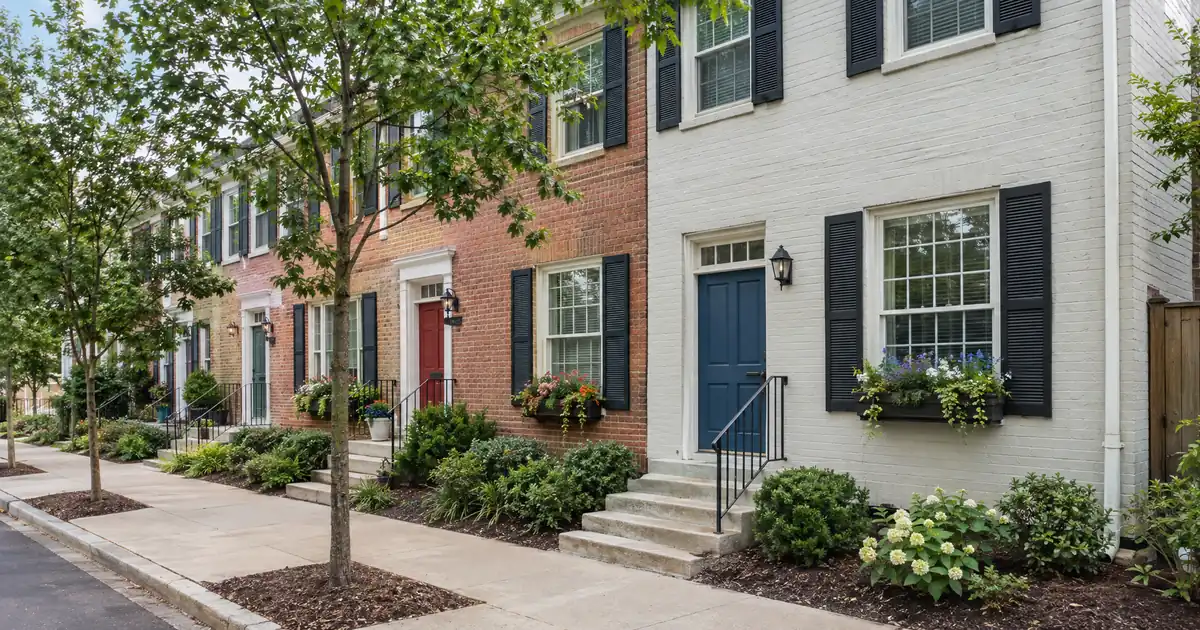
The Quick Read: Yes, but only on a two- to four-unit home you live in. On an FHA cash-out refinance, a lender can count rent from the units you don’t occupy as qualifying income. Only a discounted share counts, and the rent must be documented. It doesn’t help if the extra unit is an accessory dwelling unit (ADU) on a one-unit house, and it never shrinks the payment itself.
Subject to lender guidelines and full file review, that is the whole answer in short form.
Which Units’ Rent Counts on an FHA Cash-Out?
Rent from the other units in a two- to four-unit property you live in can count. HUD Mortgagee Letter 2023-17 rewrote the cash-out section of the FHA handbook. It lets subject-property rent be effective income when the home is a one-unit with an ADU or a two- to four-unit dwelling. The same letter then excludes ADU rent on cash-out loans, so the two cases end up very different.
| Rent source | Counts on FHA cash-out? |
|---|---|
| Other units in a 2–4 unit you occupy | Yes, discounted and documented |
| Your own unit | No |
| ADU on a one-unit home | No |
| Commercial space in the building | No |
| Boarder rent | Not confirmed for cash-out; ask |
The ADU line is the trap. A house with a rented basement or garage apartment is a different file from a duplex. HUD’s letter says a one-unit property with a single ADU stays a one-unit property. A property with two or more units counts the extra dwelling as an additional unit. So the label on the property type decides whether rent helps you at all.
Rent from commercial space is also out. The same letter says no commercial-space income may go into the rental calculation. A fourplex with a ground-floor shop gets sorted out at the appraisal.
Why Your Own Unit’s Rent Doesn’t Help
The income that counts comes from the units you don’t live in. HUD’s archived reference guide says projected rents of rental units only, not the owner-occupied unit, may be counted after the vacancy and maintenance deduction. That guide is archived, so treat it as background and not as the current rule. Current handbook text controls.
Borrowers sometimes ask whether they can “charge themselves rent” or count a room rented to a roommate. Roommate and boarder income is its own subject. HUD Mortgagee Letter 2025-04 says the occupying borrower needs a 12-month history of receiving boarder income, with evidence of rental history over that period, and must be receiving it now. It doesn’t settle whether boarder income can be used on a cash-out, so don’t plan around it until a loan officer confirms.
The Eligibility Gate Comes First
Rent doesn’t matter if the file fails the gate. Across the wholesale programs Lendmire places FHA files with, a standard FHA cash-out reaches 80% LTV on a home you owned and occupied as your principal residence for the 12 months before the case number was assigned. FHA cash-out is an owner-occupied product. An investment property or second home isn’t eligible, and occupancy decides the leverage. These specifics are subject to lender guidelines and a full review of property, leverage, and credit.
Three related points come up often:
- Inherited homes. If you inherit a home and rent it out, you generally need your own 12 months of occupancy before a cash-out.
- Non-occupant co-borrowers. On a cash-out, income from a co-borrower who doesn’t live in the home generally can’t be used to qualify, even though a non-occupant co-borrower is allowed on an FHA purchase.
- Payment history. Lenders review your mortgage payment history on the existing loan. Details vary by lender, so expect a clean record to matter.
Some of this comes from reproductions of the HUD handbook, so a loan officer should confirm it against the live text before you rely on it.
How the Lender Sizes the Rent
The lender doesn’t use the rent you advertise. It uses a documented figure, and which one depends on whether the units already have rental history.
1. Existing rental history. The lender looks at current leases and rental history over the previous 24 months. HUD’s ML 2023-17 text, as reproduced by an industry association, calls for that history to be free of unexplained gaps greater than three months. It also ties the history to your Schedule E, which is part of traditional personal-income documentation. Verify the exact wording in the official letter.
2. Limited or no history. The file leans on the appraisal’s market-rent opinion and the lease. Draft versions of the letter used 75 percent of the lesser of appraiser market rent or lease rent. Confirm the final figure with your loan officer before running numbers.
3. The appraisal. A cash-out needs a full appraisal. For two- to four-unit homes, the appraiser documents market rent on a small residential income property report, Form 1025. The appraisal drives two numbers at once: the value, which sets how much cash you can take, and the rent opinion, which sets how much income counts.
The lender takes the lesser of two numbers on a limited-history file. A lease signed well above market doesn’t lift the figure. A market-rent opinion above the lease doesn’t either.
Counted as Income, Not Subtracted From the Payment
This is where borrowers misread the rule. The rent is added to your qualifying income. It is not a credit against the mortgage payment. HUD’s archived guide says rental income may not be used as a direct offset to the mortgage payment.
In practice, the lender uses the full new payment in your debt-to-income ratio. Your counted rent raises the income side of the ratio. Base FHA ratios start at 31/43 (housing to total) with no compensating factors. Documented compensating factors can reach 40/50 at the top tier, and the automated finding governs most files. All of that is subject to lender guidelines and full file review.
The practical effect: a cash-out raises your balance and your payment. If that larger payment pushes your ratio past what the automated finding will accept, counted rent can close the gap. It can be the difference between approval and denial. It won’t make the payment smaller, and it won’t replace your own income.
The Self-Sufficiency Test on Three- and Four-Unit Homes
HUD’s archived reference describes a test for three- and four-unit properties. Net rental income must be equal to or greater than the projected monthly mortgage payment. The archive defines net rent as the appraiser’s fair market rent from all units, including the one you choose to occupy, less vacancy, collection and maintenance factors.
Notice what that means. On a three- or four-unit home, your own unit’s market rent shows up in that test even though it doesn’t count as your qualifying income. How the test applies to a refinance versus a purchase can differ, so ask your loan officer whether it applies to your file before you assume either way. Duplex owners generally don’t face it.
A Decision Walk-Through
Picture a borrower with a fourplex she has lived in for several years. She occupies one unit, and the other three have leases and tax-return rent history. She wants cash for repairs and a new roof.
Without counting rent, the new, larger payment sits against her wages alone. Her ratio lands just over the limit the automated finding will take. With the three other units’ discounted, documented rent added to income, the ratio drops under the line. That is the case where rent matters. It cleared the ratio. It did not shrink her payment.
Now change it. Her wages already carry the new payment comfortably. Here the rent is a documentation exercise. The lender may still ask for leases and traditional personal-income documentation, but the approval doesn’t hinge on them. So the first question is always: do I need the rent to qualify? If not, don’t let a thin rental history delay a file your income can carry.
Now a third borrower. He owns a single-family house with a rented basement apartment. He assumes the rent will help him cash out. Under ML 2023-17 it won’t, because it’s an ADU on a one-unit home. If the property is legally a two-unit, the answer changes. That is a property-classification question, and the appraisal and local permitting facts settle it. Don’t assume.
What You’ll Need to Document
Expect a longer file than a one-unit refinance. The rent figure has to agree across three places. A mismatch between them can slow the file down.
- Current signed leases for every non-occupied unit
- Traditional personal-income documentation with Schedule E showing rent history
- The appraisal’s rent schedule on the small income property form
- Proof of your own occupancy for the prior 12 months
- Explanations for any vacancy gaps longer than three months
- A clear account of which unit you live in
Misstating occupancy is a serious problem on any owner-occupied loan. Be plain with your loan officer about who lives where.
FHA Cash-Out vs. Streamline vs. Conventional
| Feature | FHA cash-out | FHA Streamline | Conventional cash-out |
|---|---|---|---|
| Pays you cash | Yes | No | Yes |
| Appraisal | Full | None | Usually |
| Rent from other units | Documented, discounted | Not the focus | Rules differ |
| Max leverage | 80% LTV | Existing FHA loan only | Varies by lender |
An FHA Streamline refinances an existing FHA loan with no appraisal and a limited credit review. It pays no cash, so rent documentation isn’t the issue. An FHA rate-and-term refinance with an appraisal reaches 97.75% on a principal residence you’ve occupied for the previous twelve months, again with no cash taken out.
Conventional rules differ, and the leverage limit on two- to four-unit homes is generally lower. Rent from your occupied unit generally isn’t counted there either.
Mortgage Insurance and the Cash You Can Reach
An FHA cash-out replaces your existing loan, and mortgage insurance applies. The upfront premium is 1.75% of the base loan, and it’s financed. The annual premium runs between 0.15% and 0.75% of the balance depending on term, loan amount and LTV. On a thirty-year loan above ninety percent LTV it lasts for the term. At or below ninety percent it ends after eleven years. These are program facts, not an advertised price. County loan limits apply and change every year.
A low appraisal hurts twice. It shrinks the cash-out, and a low market-rent opinion shrinks the qualifying income.
Key Terms Defined
- Effective income: The income a lender agrees to count toward qualifying, after any discount or documentation test.
- ADU (accessory dwelling unit): A second, smaller dwelling on a one-unit lot, such as a garage apartment or basement unit.
- Market rent: The appraiser’s opinion of what a unit would rent for, documented on the appraisal.
- Offset: A credit that lowers the payment. FHA doesn’t allow rent to work this way.
- Self-sufficiency test: A check on three- and four-unit homes that net rent must cover the projected payment.
- Compensating factor: A documented strength, such as reserves, that lets a file carry higher ratios.
Frequently Asked Questions
Does rent from my own unit count?
No. Only rent from the units you don’t occupy counts as qualifying income on a two- to four-unit home. Your own unit’s market rent can matter in the three- and four-unit self-sufficiency test, but it doesn’t become your income.
Do I need current tenants?
Not necessarily. A file with limited or no rental history can lean on the appraiser’s market rent and a lease, discounted. But a file with tenants and a documented history of roughly 24 months gives the lender more to review. Confirm which path fits your property.
Does rent count if I don’t need it to qualify?
It can sit in the file as documentation, but it doesn’t change anything if your own income already carries the new payment. Ask your loan officer whether leaving it out simplifies the file.
Can I cash out on a house with a rented basement or garage apartment?
You can apply for an FHA cash-out on a one-unit home with an ADU, subject to guidelines. But the ADU rent can’t be used as income on that cash-out. Your own income has to carry the loan.
Can I use an FHA cash-out on a rental property while I live elsewhere?
No. FHA cash-out is for an owner-occupied principal residence you’ve owned and lived in for 12 months. Investment properties and second homes aren’t eligible.
If you are weighing a cash-out refinance against keeping the loan you have, Lendmire can help you compare the programs and the equity each one reaches. Review the FHA cash-out refinance program to see how the pieces fit, and bring your lease and tax-return documents when you talk it through. Program figures are subject to lender guidelines and full file review, and nothing here is a commitment to lend. Tax treatment can depend on your situation; borrowers should speak with a qualified tax professional before relying on any deduction or credit.
For your own numbers, request a scenario review with Lendmire.
About Lendmire
As a mortgage broker (NMLS# 2371349), Lendmire helps homeowners and home buyers in 16 states with FHA, VA, conventional and jumbo purchase and refinance loans arranged through wholesale lenders. Lendmire is never the lender; program terms are set by the lender and the agency guidelines. Scotsman Guide named Lendmire a Top Mortgage Workplace in both 2025 and 2026.
Get Started
Ready to find the right loan for you?
In about 30 seconds you can review financing options available for your home or investment property. No commitment required.
Informational only. Not a Loan Estimate, approval, or commitment to lend. Program availability and eligibility are subject to lender guidelines, credit approval, property review, and underwriting.
References
1. HUD Mortgagee Letter 2023-17
2. HUD Archives, Reference Guide, rental income
3. HUD Mortgagee Letter 2025-04
4. ML 2023-17 reproduction (NRMLA)
This article is part of Lendmire’s FHA Loan series — every loan program’s qualification details, guidelines, and scenarios live on the loan options page.
Related reading: How to Get an FHA Cash-Out on an Inherited Home After Probate · Is an FHA Cash-Out Easier to Qualify for When Consolidating Debt? · How to Get a First FHA Cash-Out on an Inherited Home
Brandon Miller
Founder & CEO, Mortgage Loan Originator, Lendmire LLC
- Mortgage Loan Originator · NMLS# 1129696 · Verify on NMLS Consumer Access
- North Carolina Real Estate Broker · License# 343312 · Verify on NCREC
- North Carolina Insurance Producer · License# 19053198 · Property, Casualty, Life, Health · Verify on NAIC SBS
- Lendmire LLC · Firm NMLS# 2371349 · Verify firm licensure
Disclosure information. Lendmire is a state-licensed mortgage brokerage under NMLS# 2371349. Lendmire is not a depository institution, direct lender, or financial advisor — all loans referenced are placed through wholesale lender partners and are subject to each lender's underwriting standards. This article is provided for general informational purposes and is not a commitment to lend, nor does it constitute financial, legal, or tax advice. Loan programs, terms, rates, and qualification standards change without notice and depend on borrower profile, property type, and the state in which the subject property is located. Equal Housing Opportunity provider. NMLS Consumer Access: nmlsconsumeraccess.org.