
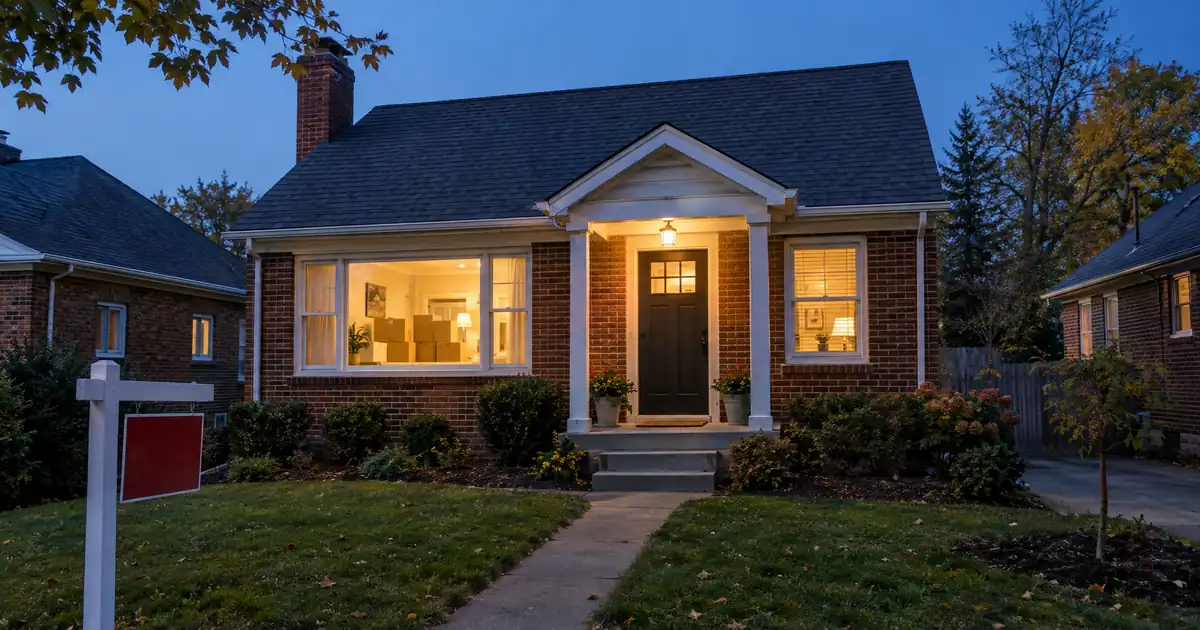
The Quick Read: Usually yes, but only with a true cash-out refinance on the home you live in now. It replaces your mortgage with a larger one and hands you the difference as cash for the next down payment. The catch is qualifying. Your next lender counts the bigger payment on the old home. The “streamline” refinances cannot do this job at all.
Cash-out refinance estimate
The starting figures are an example value with a balance and a cash request in proportion. Replace them with yours.
Editable benchmark: 7.40% as of October 15, 2026 · Freddie Mac 30-year average via FRED®. A conventional market reference, not a cash-out refinance quote.
Illustrative starting assumptions: a $350,000 home value, a $193,000 current balance, the agency cap on a one-unit principal residence, a thirty-year term at the current Freddie Mac benchmark, and property taxes and insurance estimated at typical national rates. Every field is editable.
Illustrative estimate only — not a Loan Estimate, approval, quote, or commitment to lend. The rate field carries the weekly Freddie Mac thirty-year conventional benchmark, a market reference and not a cash-out refinance quote; a cash-out loan is priced by the lender at lock. The cash available is the loan the program cap allows less the balances paid off, before closing costs, which are not included. The HELOC line is the program’s combined loan-to-value ceiling applied to the same value and balance. Taxes and insurance are editable estimates. Licensed in sixteen states for consumer mortgages.
What Does a Cash-Out Refinance Do in This Situation?
A cash-out refinance swaps your current mortgage for a new, larger one. The new loan pays off the old balance and the closing costs. You keep the rest as cash.
That cash is your equity turned into money you can spend. Equity is what your home is worth minus what you owe. It sits locked in the walls until a loan or a sale releases it.
Here is the buy-first plan in one sentence. You refinance the home you own, use the cash as a down payment on the next home, then sell the old home and pay off the larger loan from the sale.
The appeal is simple. You can make an offer with no sale condition attached, and sellers like that. You also skip the scramble of selling first and finding a place to live in between.
The cost is just as simple. You carry a bigger loan on a home you plan to sell. You may carry two housing payments for a while. And you must qualify for the next loan with all of that on your record.
Lendmire’s cash-out refinance programs cover this kind of equity release. Lendmire is a mortgage broker, so it compares programs for you across wholesale lenders. It does not lend the money itself. Every figure below is subject to lender guidelines and a full file review, and nothing here is a commitment to lend.
What Is the Order of Operations?
The sequence matters more than any single step. A cash-out refinance has to finish before you write the offer, not after.
1. Check that the current home qualifies. It must be your principal residence. The loan you are paying off needs some age on it, and you need time on title. Both tests are covered below.
2. Get the appraisal. The appraised value sets the ceiling on the new loan. A low number shrinks your cash.
3. Run the refinance. The new loan pays off the old lien and the closing costs. You receive what is left.
4. Get preapproved on the next home with both homes counted. Tell the next lender about the refinance up front. Do not let them find it later.
5. Make a non-contingent offer and close on the new home. The refinance cash funds the down payment and closing costs.
6. Move, then list the old home. You can stage and show it on your schedule, with no pressure to accept a weak offer.
7. Pay off the larger loan at the sale. The sale proceeds retire the refinance loan, and whatever is left is yours.
Notice step 4. Most plans that fall apart fall apart there.
Which Refinances Cannot Fund a Down Payment?
Three common refinances sound like they should work. None of them do.
FHA Streamline. This is for people who already hold an FHA loan. It trades speed and light paperwork for a rule: no meaningful cash back. An older HUD reference on refinances allows only a small incidental amount at closing. Treat that as a rounding adjustment, not a down payment. That page is archived, so confirm current limits with your lender.
VA IRRRL. This is the VA’s interest rate reduction loan for people who already hold a VA mortgage. The FDIC’s summary of the program says the borrower may not receive cash from the proceeds, except for energy-efficiency improvements. That exception has nothing to do with a down payment. If you hold a VA loan and want equity, the product is a VA cash-out. Lendmire’s piece Can Active-Duty Use VA Cash-Out to Buy the Next Home on a PCS? walks through that route.
Rate-and-term (limited cash-out) conventional refinance. Across the wholesale programs Lendmire places files with, this loan pays off the existing first mortgage and the closing costs. It can reach 95% loan-to-value on a one-unit principal residence, with mortgage insurance above 80%. Only incidental cash comes back. It is built to change your loan, not to fill your bank account.
Many people mix these up, and it is an easy mistake. The names all say “refinance.” The cash rules are not the same.
How Much Cash Can You Actually Pull Out?
Less than you think, usually. Two things cap it: how much of the value a lender will let you borrow, and how long you have held the loan.
The loan-to-value cap. Loan-to-value (LTV) compares your loan to your home’s appraised value. On a conventional cash-out refinance of a one-unit principal residence, the cap is 80% LTV. For two- to four-unit homes, second homes and investment property it drops to 75%, per the Fannie Mae eligibility matrix. One sentence covers a second home or rental: the occupancy of the property decides the leverage, so the home you live in gets the most room. These specifics are subject to lender guidelines and a full review of property, leverage, and credit.
One wholesale lane reaches 89.99% LTV with no mortgage insurance. It needs a 680 decision score, a 50% total ratio, a thirty-year fixed rate, a primary residence and a conforming loan balance. It has its own six months of seasoning. In Texas, a cash-out on the homestead is capped by the state constitution at the agency figure, so that lane is not written there. Terms depend on the lender’s guidelines, the property type, the leverage, and a full review of the credit profile.
Seasoning. Seasoning is the waiting period a lender wants before you can refinance or cash out. For a conventional cash-out, the first mortgage being paid off must be at least 12 months old, measured from the old note date to the new note date. At least one borrower must also have been on title for six months. Fannie Mae announced this rule in a cash-out eligibility update. Exceptions exist for delayed financing (recent all-cash buyers), inheritance and legal awards.
So a home you bought or refinanced recently may simply be blocked. No amount of equity changes that.
A Percentages-Only Example
Say your home is appraised at 100% of its value. You owe 50% of that value. An 80% cap leaves about 30% of value as the gross cash, before closing costs come out.
Now say you owe 70% of value. The same cap leaves about 10% of value, and the closing costs eat into that. The cash may not cover a down payment on a bigger home.
Run this check before you do anything else. If your equity is thin, a cash-out refinance is the wrong tool, and a cheaper refinance will not help.
How Does the Next Lender Count Two Housing Payments?
This is the part most articles skip. The new lender does not look at your old home and see a house about to be sold. It sees a mortgage payment.
A housing payment is the loan payment plus taxes, insurance and any association dues. Lenders call it PITIA. When you buy the next home before the old one is sold, Fannie Mae’s rules say the current PITIA and the proposed PITIA must both be used to qualify. That is in its guidance on other real estate owned. After your cash-out, the “current PITIA” is the bigger one.
The relief valve is narrow. The old payment can be left out only if there is an executed sales contract on the current home and any financing contingencies have been cleared. “Listed for sale” does not count. “Under contract” is not enough either if the buyer’s financing is still open.
Freddie Mac has its own provision for a primary residence pending sale. The conditions differ from Fannie Mae’s, so ask your loan officer which applies to your file.
Lenders look at several things together:
- Debt-to-income (DTI). This is your monthly debts divided by your monthly income. Two housing payments push it up fast. The wholesale conventional programs generally allow a total ratio up to 50% on an automated approval, with tighter limits on manually underwritten files.
- Reserves. Reserves are the savings left after closing. Higher ratios can bring higher reserve requirements.
- Credit. The wholesale conventional programs start at a 620 decision score, and some lanes need more.
- Documents. Expect the new note, the closing paperwork on the refinance, the purchase contract and the usual income and asset files.
(A tip from the broker side: ask for the numbers on the next home before you refinance, not after. A refinance that wrecks your DTI cannot be undone.)
Cash-Out Refinance vs. the Other Ways to Buy First
A cash-out refinance is one tool among several. Here is how the common ones compare.
| Option | How it works | Main trade-off |
|---|---|---|
| Cash-out refinance | New first mortgage on old home | Bigger loan; closing costs |
| HELOC or home equity loan | Second loan on old home | Access may tighten once listed |
| Bridge loan | Short-term loan against old home | Counted in DTI; short repayment |
| Sale contingency | Offer depends on selling first | Weaker offer in many markets |
| Rent-back | Sell first, rent from the buyer | Needs the buyer’s agreement |
A few notes on the table.
A HELOC is a revolving credit line secured by your home, usually behind your first mortgage. A cash-out refinance replaces the first mortgage instead. The difference matters: a cash-out gives you one loan, while a HELOC leaves your existing loan alone and adds a second.
Lenders often restrict or close equity lines once a home is listed, so timing is a real risk. Open any line before you list, and confirm the terms.
Fannie Mae’s rules also cover bridge loans. The funds can close a new principal residence before the old one sells, but the loan creates a liability that counts in DTI, with a waiver available in some cases.
The honest comparison: a HELOC can be cheaper to set up if you keep a loan you already like. A cash-out is cleaner if you were going to refinance anyway. It is a toss-up that depends on what your current loan is worth keeping. A bridge loan helps when you need the money for a short time only.
Is It Worth Refinancing a Home You Are About to Sell?
Often not. That is the hard truth.
A refinance carries closing costs. You pay them to replace a loan that you plan to pay off soon. The longer the old home stays yours, the more those costs spread out. The shorter the stay, the worse the math.
Closing costs appear on your Loan Estimate and Closing Disclosure. Ask for the Loan Estimate before you commit and compare the total, not just the monthly line. Be wary of the “no-cost” refinance too. In practice the costs are built into the rate or the loan balance. They did not disappear.
The refinance usually earns its place when at least one of these is true:
- You have a long gap before the old home sells, such as a major repair or a slow market.
- You want the new loan terms on the old home anyway, in case it does not sell on schedule.
- You need a non-contingent offer to win the new home, and no cheaper tool delivers it.
- The old home may become a second home or a rental. Fannie Mae counts its payment as a recurring obligation in that case.
If you are likely to sell within a few months and have decent savings, another path may serve you better. That might be a HELOC opened early, or a sale contingency in a market that tolerates one.
What Can Go Wrong?
Plan for the bad case. It decides whether this is smart or reckless.
The old home sells slowly. Two housing payments run longer than planned. Your reserves are the buffer, so size them before you start.
The old home sells for less. Your larger loan leaves less room. If values drop, you could owe more than a buyer pays.
The appraisal comes in low. The cash shrinks, and the whole down payment plan can fall short. Have a backup source.
The loan restarts your clock. A new mortgage can restart your term. That can raise what you pay in total interest if you keep the loan.
The home secures the debt. Money you borrow against the home you live in is secured by that home. Missing payments can put it at risk of foreclosure. A cash-out turns equity into debt, and that debt must come back out of the sale.
Tax treatment can depend on your situation; borrowers should speak with a qualified tax professional before relying on any deduction or credit.
If you have a VA loan and the equity is larger than the standard cap allows, Lendmire’s article How to Keep Your Home and Buy Next With a VA Cash-Out Above the Limit covers that path.
Who This Fits (and Who Should Look Elsewhere)
A good fit if:
- You have substantial equity, well beyond what the 80% cap would consume.
- The existing loan is at least 12 months old, and you have six months on title.
- Your income and reserves still qualify with two housing payments counted.
- Your market rewards non-contingent offers.
Consider something else if:
- Your equity is thin, or you bought or refinanced recently.
- You hold an FHA or VA loan and a streamline is the only thing you have priced.
- You expect to sell in a short window and have savings to bridge.
- Two payments would stretch your budget past comfort.
Key Terms Defined
Cash-out refinance: A new, larger mortgage that pays off the old one and gives you the difference in cash.
Limited cash-out (rate-and-term) refinance: A refinance that changes your loan terms and pays costs, with only incidental cash back.
Seasoning: The waiting period a lender requires before you can refinance or take cash out.
Loan-to-value (LTV): Your loan balance divided by your home’s appraised value.
PITIA: Principal, interest, taxes, insurance and association dues, which together make your housing payment.
Debt-to-income (DTI): Your monthly debt payments divided by your monthly gross income.
Streamline: A government-backed refinance for an existing FHA or VA loan with lighter paperwork and no real cash back.
Where to Start
Start with the numbers on both homes: your equity, the age of your current loan, and what two payments would do to your ratios. If you are weighing a cash-out refinance against keeping the loan you have, Lendmire can help you compare the programs and the equity each one reaches.
Frequently Asked Questions
Can I use the cash right away?
Yes, once the refinance closes and the funds are released, you own that cash. The practical limit is sequencing. Your next lender will want to see the refinance on your record and the funds in your account before the purchase closes.
Can I do a cash-out refinance after I list my home?
Rarely, and it is risky to try. A listed home signals a sale, and lenders on both loans take note. Many equity lines also freeze at listing. Refinance before you list, or choose a different tool.
Will the refinance hurt my chances of qualifying for the next home?
Yes, it can, because the new, larger payment on the old home counts in your debt ratios. The old payment drops out only with a signed sales contract and cleared financing contingencies. Get preapproved with the refinance included before you commit.
What if my old home does not sell?
You keep paying the larger loan and the costs on the new home. That is why reserves matter. Some owners keep the old home as a second home or rental, but its payment still counts in the new lender’s math.
Do I need an appraisal?
For a cash-out refinance, yes. The appraised value sets the maximum loan and therefore your cash. A low appraisal can shrink the amount below what your down payment needs. FHA and VA streamlines often skip appraisals, but they cannot hand you cash.
For your own numbers, request a scenario review with Lendmire.
For current guidelines and terms, see Lendmire’s refinance programs page.
About Lendmire
Lendmire (NMLS# 2371349) is a mortgage broker licensed for consumer lending in 16 states. Lendmire arranges FHA, VA, conventional and jumbo purchase and refinance loans through wholesale lenders; every file is underwritten by the lender under the applicable program guidelines. Scotsman Guide named Lendmire a Top Mortgage Workplace in both 2025 and 2026.
Get Started
Ready to find the right loan for you?
In about 30 seconds you can review financing options available for your home or investment property. No commitment required.
Informational only. Not a Loan Estimate, approval, or commitment to lend. Program availability and eligibility are subject to lender guidelines, credit approval, property review, and underwriting.
References
1. HUD Archives, Appraising Refinances
2. FDIC summary of the VA Interest Rate Reduction Refinance Loan
3. Fannie Mae Eligibility Matrix
4. Fannie Mae cash-out refinance eligibility update
5. Fannie Mae Selling Guide B3-6-06, Other Real Estate Owned
This article is part of Lendmire’s Refinance series — every loan program’s qualification details, guidelines, and scenarios live on the loan options page.
Related reading: Should You Cash-Out Refinance a 2-4 Unit Primary Home to Renovate? · Cash-Out Refinance Right of Cancellation on a Primary Home · Should You Take the Maximum Cash-Out Refinance on a Second Home?
Brandon Miller
Founder & CEO, Mortgage Loan Originator, Lendmire LLC
- Mortgage Loan Originator · NMLS# 1129696 · Verify on NMLS Consumer Access
- North Carolina Real Estate Broker · License# 343312 · Verify on NCREC
- North Carolina Insurance Producer · License# 19053198 · Property, Casualty, Life, Health · Verify on NAIC SBS
- Lendmire LLC · Firm NMLS# 2371349 · Verify firm licensure
Legal disclosures. Lendmire (NMLS# 2371349) is a state-licensed mortgage brokerage that arranges financing through wholesale lender relationships. Lendmire is not a direct lender, depository institution, or registered financial advisor. The discussion above is general informational content about real estate financing — it is not financial, legal, or tax advice, and readers should consult licensed professionals for guidance on their individual circumstances. Loan inquiries are subject to lender underwriting; this article does not represent a commitment to lend. Loan terms, rates, and qualification standards vary by borrower, property, and state, and are subject to change at any time. Equal Housing Opportunity. NMLS Consumer Access: nmlsconsumeraccess.org.