
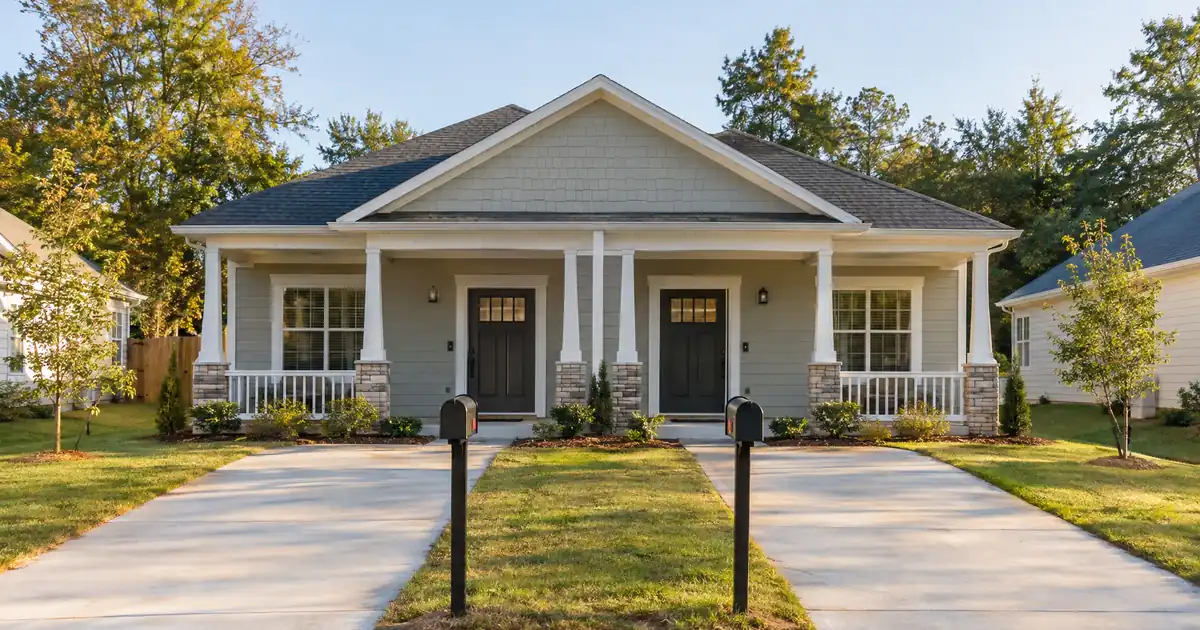
The Quick Read: On a two-unit home you live in, the cash comes from a lower ceiling than a single-family house gets. The lender takes 75% of the appraised value, subtracts your current mortgage and the costs of the new loan, and the rest is what you can spend. That is usually less than owners expect, and a renovation-specific loan can change the math.
Key Takeaways
- A conventional cash-out on a two- to four-unit principal residence tops out at 75% of appraised value. A one-unit home gets 80%.
- The released cash is the ceiling minus your payoff, minus financed closing costs. It is never the full gap between your balance and the home’s value.
- “Cash-out refinance” covers three different products. Only one of them hands you equity to use as you like.
- An unbuilt ADU generally is not credited in today’s appraisal. A renovation loan values the home as if the work were finished.
- Your current loan is replaced, not added to. Its terms go away with it.
Which of the Three Products Are You Actually Using?
A duplex owner funding a project is choosing among three loans that sound alike. A limited cash-out refinance (also called rate-and-term) pays off your mortgage and closing costs and returns only incidental cash. A cash-out refinance releases equity for any purpose. A renovation mortgage sizes the loan off the home’s value after the work is done and holds the money for the project.
Here is how they compare:
| Product | Cash back to you | Sized on | Best for |
|---|---|---|---|
| Limited cash-out | Small, incidental | Current value | Changing terms, no project |
| Cash-out | Whatever the ceiling leaves | Current value | Flexible spending, any purpose |
| Renovation mortgage | Held for the work | After-completion value | A defined ADU or remodel |
Limited cash-out allows higher leverage than cash-out. Across the wholesale programs Lendmire works with, the limited version reaches 95% on a one-unit principal residence. The catch is that it was built for payoff and costs, not project money. Owners who pick it for the higher leverage usually discover the cash isn’t there.
The FHA Streamline and the VA IRRRL are in the same family of “simple” refinances. Both exist to improve an existing government loan. Neither is a way to fund a build. A VA borrower who wants cash needs VA’s cash-out product, and an FHA borrower needs FHA’s cash-out.
One more fork, answered in a sentence: occupancy decides leverage. This article assumes you live in one of the two units. If you don’t, the same property is a different loan type with different limits.
Lendmire’s cash-out refinance programs cover the equity-release lane. A broker can also show you where a renovation mortgage fits better.
How Much Cash Does a Duplex Cash-Out Refinance Release?
The formula has four steps. Start with the appraised value. Multiply by the ceiling for your property type. Subtract the payoff of your existing loans. Subtract the costs financed into the new loan. What remains is your cash.
Written out:
Cash released = (ceiling × appraised value) − payoff − financed costs
Two things shrink that number.
The ceiling is lower on a duplex. The Fannie Mae Eligibility Matrix lists 80% for a one-unit principal residence and 75% for a two- to four-unit principal residence on a cash-out. Same equity, less cash.
The payoff comes first. The new loan must retire your first mortgage. Under Fannie Mae’s cash-out rules, it can also pay off other liens against the home, and closing costs and points can be financed into the loan. Each of those eats into the cash before you see it.
The federal consumer bureau’s guide to using home equity makes the same point in plain terms: no option converts 100% of your equity into cash. Ratio caps, payoffs and costs always stand in the way.
How the Loan Is Underwritten, Step by Step
Underwriting a duplex cash-out follows the same order on most files. Here is the sequence.
1. Pick the product. Decide whether you want spendable cash or a held pot for a defined project. That choice sets the ceiling and the valuation basis.
2. Clear the gates before the math. These can disqualify you whatever your equity looks like:
- Occupancy. You must live in the home as your primary residence.
- Loan age. The first mortgage being paid off must be at least 12 months old, measured note date to note date, per Fannie Mae’s seasoning update.
- Time on title. One borrower needs to have been on title for 6 months, with exceptions such as delayed financing, inheritance and legal awards.
3. The appraisal sets the value. A cash-out needs a new appraisal. For a duplex, the appraiser values both units as a two-unit property. On a renovation loan, the appraiser also gives an “as completed” value, meaning the home’s worth as if the work were done.
4. Run the leverage math. Ceiling times value, less payoff, less financed costs.
5. Underwrite credit, income and ratios. The wholesale conventional programs start at a 620 decision score, and the automated finding governs most files. The total ratio ceiling is 50%. When ratios run high, expect the lender to ask for cash reserves. How rent from the other unit counts toward your income is an underwriting question. Ask early rather than assume.
6. Renovation files add paperwork. Expect plans and specifications, a cost estimate, contractor information, a cushion for overruns, and the as-completed appraisal. The money is held and released against the work. It does not arrive as one check.
7. The project must be lawful. Zoning and permit rules for an ADU are local. The lender will want the work to be legal and permitted where it is built. A national article can’t tell you your city’s rules, so check with your local building department.
Worked Example: Three Duplexes in Percentages
These figures are modeled assumptions, not market data. They are shown as percentages of appraised value so the logic stays clear.
Scenario A: plenty of equity. The duplex appraises at 100% of value. Your mortgage balance is 55% of that. The 75% ceiling leaves a 20-point gap. Assume closing costs and prepaids financed into the loan take about 3 points. You net about 17% of the home’s value.
If your ADU budget is around 15% of value, it fits with a small cushion. Tight, but workable.
Scenario B: thin equity. Same home, but the balance is 70% of value. The ceiling leaves 5 points before costs, and costs take most of that. Net cash is close to nothing. A project budget of 15% of value is far out of reach.
This is where owners get stuck. The home looks like it has plenty of equity. It doesn’t, by the lender’s math.
Scenario C: no mortgage. A new loan on a free-and-clear home is still a cash-out. The ceiling applies, minus costs, and the rest is yours. Having no mortgage doesn’t change the category.
The shortfall in scenario B has three possible fixes. Scale the project down. Phase it, building part now and part later. Or look at a renovation mortgage, which may size the loan on the finished value. Sequencing matters too. Some owners pull cash, build, then refinance again once the improved value is appraised. That means paying closing costs twice, so run the numbers both ways.
ADU or Renovation: What Changes?
The valuation basis changes, and that is the biggest difference. A standard cash-out values the home as it stands today. An unbuilt ADU generally adds nothing to that appraisal. You are borrowing against what exists.
A renovation mortgage works the other way around. Fannie Mae’s HomeStyle FAQ says refinance renovation funds are limited to a share of the as-completed appraised value. Note the wording: a share of the appraiser’s estimate of the finished home, not a share of your budget. An ADU that costs a lot to build may appraise for less. The renovation limit follows the appraisal.
Freddie Mac has a parallel product, and its rules treat proceeds used only for eligible renovations as “no cash-out.” The practical effect is that a renovation loan can reach higher leverage than a cash-out, with money tied to the work.
The ADU also raises a unit-count question. A two-unit home with an added unit may become a three-unit property. The cash-out ceiling is the same 75% for two to four units. But the lender and appraiser must treat the new unit as legal and count it correctly. That is an underwriting call, so confirm it with your broker before the plans are drawn.
Manufactured-home ADUs add rules of their own. The unit generally must be legal real property on a permanent foundation and described in the mortgage documents.
Cash-Out Versus Other Ways to Pay
| Option | Keeps your first mortgage? | Sized on | Funds arrive as |
|---|---|---|---|
| Cash-out refinance | No, replaced | Current value | Lump sum at closing |
| Renovation mortgage | No, replaced | After-completion value | Held, released with work |
| Second loan or HELOC | Yes | Equity left over | Lump sum or credit line |
| FHA Streamline / VA IRRRL | No, replaced | Existing loan | No cash back |
The big tradeoff is your existing loan. A cash-out or renovation mortgage replaces it. The CFPB guide above notes that a larger new loan can mean a higher payment, a restarted term, and new loan terms. If your current loan is one you’d hate to lose, a separate second loan may fit better. If it isn’t, one new loan can cover everything.
Lendmire’s how much cash a cash-out refinance should fund for a renovation or ADU goes deeper on that comparison.
Where the General Rule Breaks
The 75% rule is a starting point, not a promise. These are the named exceptions.
- Limited cash-out plus a new second. A limited cash-out first mortgage can still be treated as limited when new subordinate financing is taken alongside it, and cash from that second is acceptable. It is a structure to ask about.
- Buying out a co-owner. A limited cash-out generally can’t pay a borrower who is taking sole ownership. Freddie Mac handles buyouts as a special-purpose cash-out under cash-out ceilings.
- Recent cash-out. A second cash-out soon after a first on the same home can run into the agencies’ refinance-abuse rules. Wait, or ask first.
- A higher-leverage wholesale lane. One wholesale lane reaches 89.99% with no mortgage insurance, but it requires a 680 score, a 50% ratio, a thirty-year fixed rate, a primary residence, a conforming loan balance, and its own six months of seasoning. Whether a two-unit home fits it is a question for your broker, not an assumption.
- State limits. In Texas, a cash-out on a homestead is capped by the state constitution at the agency figure, and the wholesale lane isn’t written there.
- Streamlines. The FHA Streamline and VA IRRRL cut paperwork and don’t release cash.
Key Terms Defined
Cash-out refinance: A new first mortgage that pays off the old one and returns the leftover equity as cash.
Limited cash-out refinance: A refinance that pays off your loan and costs and gives back only a small amount of cash.
Appraised value: The appraiser’s written opinion of what the home is worth today.
As-completed value: The appraiser’s estimate of the home’s worth once the planned work is finished.
LTV (loan-to-value): The new loan divided by the appraised value, shown as a percentage.
Seasoning: The minimum time you must hold a loan or title before refinancing.
ADU: An accessory dwelling unit, a smaller second home on the same lot.
What the Decision Looks Like in Practice
Start with the project budget as a share of your home’s value. Compare it to the cash a 75% ceiling leaves after your payoff and costs. If it fits with room, a plain cash-out works. If it doesn’t, ask whether a renovation mortgage sized on finished value closes the gap.
Then ask the harder question. What are you giving up? Your current loan’s terms go away. Closing costs reduce the net cash. And the CFPB’s research notes that converting other debt into mortgage debt can raise foreclosure risk. Home repairs and new construction are the second most common reason borrowers give for a cash-out, so you aren’t an outlier. Still, borrow what the project needs, not what the ceiling allows.
A short checklist before you apply:
- Confirm how long you’ve owned the home and how old your current mortgage is.
- Get a realistic contractor estimate, not a guess.
- Check local rules on the ADU or remodel.
- Ask your broker how the unit count and any rent from the other unit are treated.
- Compare the full terms on the Loan Estimate before choosing.
Tax treatment can depend on your situation; borrowers should speak with a qualified tax professional before relying on any deduction or credit.
Here is Lendmire’s honest read. The question is rarely “how much can I borrow?” It is “what does this do to the loan I already have?” Lendmire’s piece How Much a Cash-Out Refinance Releases for Renovation After Payoff covers that tradeoff from the single-payoff side.
If you are weighing a cash-out refinance against keeping the loan you have, Lendmire can help you compare the programs and the equity each one reaches. Every figure above is subject to lender guidelines and full file review, and none of it is a commitment to lend.
Frequently Asked Questions
How much cash can I get from a duplex refinance?
It depends on your payoff and costs, but the ceiling is 75% of appraised value on a conventional cash-out for a two-unit principal residence. Subtract your current mortgage and financed closing costs. What is left is your cash.
Can I use a cash-out refinance to build an ADU on a duplex lot?
Yes, the proceeds can go to any purpose, including an ADU. The appraisal generally values the property as it stands today, so an unbuilt unit adds nothing yet. A renovation mortgage sizes the loan on the finished value instead, with funds held for the work.
Why is a duplex ceiling lower than a single-family one?
Conventional guidelines treat multi-unit homes as higher risk. The 75% ceiling for two- to four-unit principal residences compares with 80% for one unit. The same equity releases less cash on a duplex.
Can a streamline refinance fund my renovation?
No. The FHA Streamline and VA IRRRL are for improving an existing government loan and don’t release cash. A VA or FHA borrower who wants project money needs that program’s cash-out product, or a conventional option.
Do I need to wait before I can cash-out refinance?
Usually. The first mortgage being paid off must be at least 12 months old, and one borrower needs 6 months on title. Delayed financing, inheritance and legal-award exceptions exist. Your broker can confirm which one applies.
For your own numbers, request a scenario review with Lendmire.
For current guidelines and terms, see Lendmire’s refinance programs page.
About Lendmire
Lendmire (NMLS# 2371349) is a mortgage broker licensed for consumer lending in 16 states. Lendmire arranges FHA, VA, conventional and jumbo purchase and refinance loans through wholesale lenders; every file is underwritten by the lender under the applicable program guidelines. Scotsman Guide named Lendmire a Top Mortgage Workplace in both 2025 and 2026.
Get Started
Ready to find the right loan for you?
In about 30 seconds you can review financing options available for your home or investment property. No commitment required.
Informational only. Not a Loan Estimate, approval, or commitment to lend. Program availability and eligibility are subject to lender guidelines, credit approval, property review, and underwriting.
References
1. Fannie Mae Eligibility Matrix
2. Fannie Mae Selling Guide B2-1.3-03: Cash-Out Refinance Transactions
3. CFPB: Using Your Home Equity Guide
4. Fannie Mae: Updates to Cash-Out Refinance Eligibility
5. Fannie Mae HomeStyle Renovation FAQs
This article is part of Lendmire’s Refinance series — every loan program’s qualification details, guidelines, and scenarios live on the loan options page.
Related reading: How Much a Cash-Out Refinance Returns to a Recent Cash Buyer · How Much Equity a Cash-Out Refinance Leaves Usable vs. a Sale · How Much a Cash-Out Refinance Releases on a 2-4 Unit Primary Home
Brandon Miller
Founder & CEO, Mortgage Loan Originator, Lendmire LLC
- Mortgage Loan Originator · NMLS# 1129696 · Verify on NMLS Consumer Access
- North Carolina Real Estate Broker · License# 343312 · Verify on NCREC
- North Carolina Insurance Producer · License# 19053198 · Property, Casualty, Life, Health · Verify on NAIC SBS
- Lendmire LLC · Firm NMLS# 2371349 · Verify firm licensure
Disclosures. The information presented in this article is general market commentary, not financial, legal, or tax advice. Lendmire is a mortgage brokerage (NMLS# 2371349) — not a direct lender or depository institution — and loan placement is subject to lender underwriting. Nothing in this content represents a commitment to lend. Loan terms, pricing, and program availability vary based on borrower qualifications, property characteristics, and state of subject property, and are subject to change at any time. Lendmire complies with Equal Housing Opportunity requirements. Consumer access: nmlsconsumeraccess.org.