
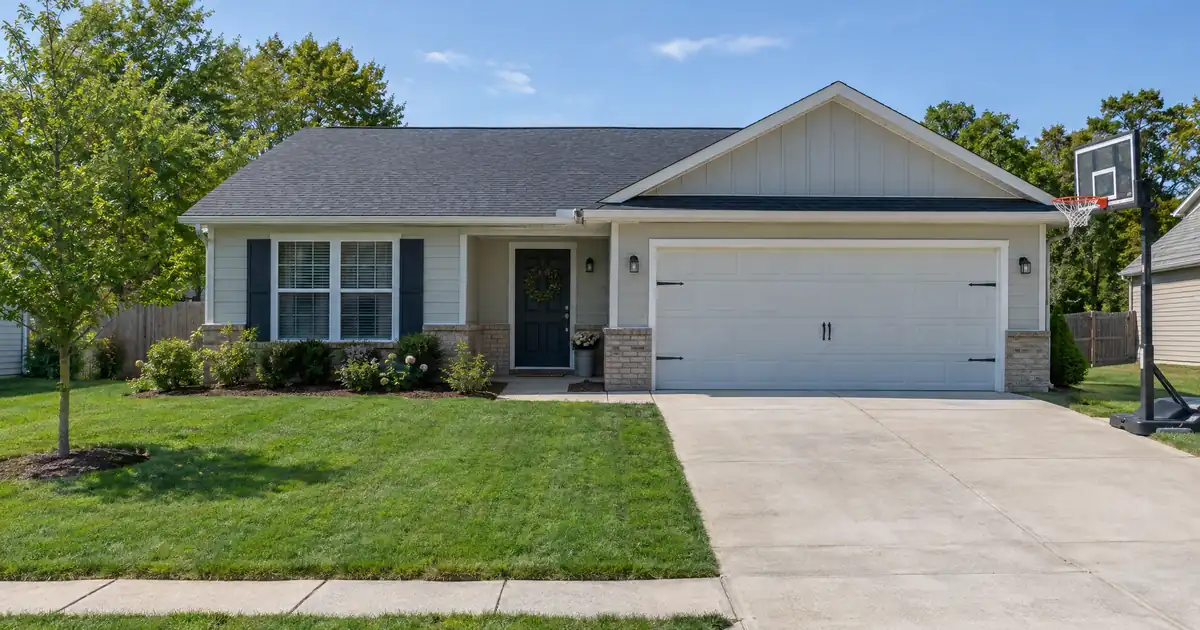
The Quick Read: Yes, in most cases. An FHA cash-out refinance can be taken on a home with no mortgage, and the cash is yours to spend on a renovation. The home must be your owner-occupied primary residence, and you must have owned and lived in it for 12 months. The loan tops out at 80% of the appraised value, and you still have to qualify on credit and income for a brand-new payment. Whether it is the right tool depends on the size of the project and how you feel about putting a first lien on a debt-free house.
Why a Paid-Off Home Is Not a Dealbreaker
A paid-off home is eligible. Many owners assume a cash-out refinance needs an existing loan to “refinance,” but the FHA version does not. HUD defines a cash-out as refinancing any mortgage, or withdrawing equity where no mortgage exists. That second clause covers you.
In practice, the payoff line on the loan is simply zero. The new loan is all new money. You get the cash, minus whatever closing costs and mortgage insurance are rolled into the loan.
There is one small upside for a free-and-clear owner. Mortgaged homes get a review of recent payment history. You have no payments to review, so that test has nothing to look at. Your file is judged on the title, the appraisal, your credit, your income and your occupancy.
Another point surprises people. The cash is not restricted. HUD’s rules do not limit what the proceeds can be used for, so a kitchen, a roof, a new HVAC system or an accessibility remodel are all fair uses. Nobody checks receipts afterward. That freedom is the good news and the risk, and the rest of this article keeps coming back to it.
What the Lender Checks on a Paid-Off Home
Across the wholesale programs Lendmire places FHA files with, five items decide the outcome on a no-mortgage home. Everything here is subject to lender guidelines and a full file review. Nothing is a commitment to lend.
| Requirement | What it means for a paid-off owner |
|---|---|
| Occupancy | Principal residence only, owned and lived in for 12 months |
| Maximum loan | Up to 80% of the appraised value |
| Credit | A decision score of 580 or higher on these programs |
| Ratios | Base pair of 31/43, up to 40/50 with documented factors |
| Title | Clean, with no liens left open |
Let’s walk through the ones that trip people up.
Occupancy. FHA cash-out is for the home you live in. Second homes and rentals do not qualify. Lenders usually want proof that you have owned and occupied the home for the full 12 months before the case number is assigned. A non-occupant co-borrower cannot help you qualify on this loan.
Credit. The programs Lendmire works with start at a 580 decision score. Some lenders set a higher floor, so a 580 borrower may find one lender says yes while another says no.
Ratios. The two ratios compare your monthly housing cost and your total monthly debts to your income. The base pair is 31/43. Documented compensating factors, such as strong savings or a low-debt profile, can stretch that toward 40/50 at the top tier. The automated underwriting finding governs most files.
Title. Old liens matter. A forgotten HELOC, a tax lien or a contractor’s lien shows up in the title search. A “paid-off” home with a dormant equity line is not truly free and clear, and any second lien left in place counts toward the 80% limit.
The Part Retired Owners Often Miss
An owner with no mortgage has no mortgage payment. A cash-out creates one. The new loan needs income to support it.
Picture a retired homeowner living on Social Security and a modest pension. They have 100% equity and a roof that has to be replaced. They assume the equity speaks for itself. It does not. The lender looks at the new monthly obligation against documented income, and a thin income can sink a file that looks wonderful on paper.
Say you are in that spot. Before you spend on an appraisal, ask a broker to run your income against the 31/43 and 40/50 ratio ranges. That is a short conversation, and it can save you from an appraisal fee on a loan you cannot carry.
The Math When the Payoff Is Zero
Here is how the numbers flow, in percentages only. Assume the home appraises at 100% of its value, a round benchmark.
1. The loan can reach up to 80% of that appraised value. A county loan limit sits above this as a separate ceiling, and the lower of the two controls.
2. The upfront mortgage insurance premium of 1.75% of the base loan is typically financed into the loan.
3. Other closing costs can be financed too, as long as the total stays inside the cap.
4. What remains is your net cash.
So the cash in your hand is less than 80% of value. The costs come out of the same bucket.
Two things follow from this. First, at least 20% equity always stays in the home, and that cushion is by design. Second, a bigger project does not stretch the loan. If the work costs more than the net proceeds, you need another source of money.
A second scenario: you want to borrow for a renovation and you have an old HELOC you would like to clear. The HELOC balance comes out of the same 80% before you see a dollar of cash. Some owners find the “free” cash is half of what they pictured.
Why the 80% Cap Is What It Is
The cap is lower than it used to be. HUD Mortgagee Letter 2019-11 reduced the maximum loan-to-value on FHA cash-out refinances to 80%. HUD’s announcement said the change aligned FHA with the cash-out limit used by Fannie Mae and Freddie Mac. It also said the cut was meant to protect borrower equity and reduce default losses.
Older web pages still print the higher, pre-change cap. Ignore them. If a source quotes a number above 80% for an FHA cash-out, it is out of date. (A rare exception exists for certain Hawaiian Home Lands mortgages under Section 247, which the cut did not touch.)
How the Appraisal Treats a Home You Plan to Fix
The appraiser sets the value, and the loan is sized from it. For a cash-out refinance, the appraisal reflects the home as it stands on the day of the visit. Your planned kitchen does not add value on paper until it is built.
That has consequences. A home in rough shape appraises lower. A home with safety or condition problems may draw repair requirements before the loan can proceed. A dated-but-sound home is usually fine, but the as-is value limits how much cash you can take out.
This is the biggest planning trap. Owners often count on the after-renovation value in their head. The cash-out loan does not. If your project is large and the home is dated, run the numbers on today’s value, not tomorrow’s.
Cash-Out or a Renovation Loan? The Real Choice
FHA has a product built just for this. The FHA 203(k) program insures one loan that covers a purchase or a refinance plus the rehab work. On a refinance, part of the loan pays off any existing mortgage, and the rest sits in escrow. It is released as the work is completed. The home generally must be at least a year old.
The loan amount on a 203(k) is tied to the home’s projected value after the work, taking the cost of the work into account. That is a very different calculation from the cash-out’s as-is appraisal. Larger and structural projects often fit a 203(k) better. There is a Standard version that uses an FHA-approved consultant and a Limited version for lighter, non-structural work. The HUD 203(k) consumer fact sheet lists eligible property types, including one-to-four unit homes and eligible condos where only interior work is involved.
Does a 203(k) work on a paid-off home? Confirm that with the lender you plan to use, since it is a program-by-program question.
The key difference is control. A cash-out hands you a lump sum. A 203(k) controls the money and ties it to the work. The 203(k) involves more paperwork, a work scope and cost estimates, and draws as the job progresses. Some people want that discipline. Others find it a burden, particularly for smaller jobs.
Here is a side-by-side look at the common ways to pay for a renovation on a paid-off home:
| Option | How the money arrives | New first lien? | Best fit |
|---|---|---|---|
| FHA cash-out | One lump sum | Yes | Flexible, mixed or mid-size projects |
| FHA 203(k) | Escrow, released as work is done | Yes | Larger or structural projects |
| Home equity loan or HELOC | Lump sum or credit line | No, second lien | Smaller projects, keeping a lien-free first position |
| Conventional cash-out | One lump sum | Yes | Borrowers with stronger credit |
| Personal loan or cash | Lump sum | No | Small jobs, quick payoff |
Lendmire’s piece Should a Paid-Off Home Get an FHA Cash-Out Instead of a Second Lien? goes deeper on the second-lien comparison. And if your home is worth more than a standard loan can reach, see Lendmire’s article Should You Use a Jumbo Cash-Out to Renovate a Paid-Off Home?.
Choose FHA Cash-Out If, Choose Something Else If
FHA cash-out is a good fit when:
- You live in the home and have owned it at least 12 months.
- Your credit score is in the 580-and-up range, so conventional options may be tight.
- The project is mixed or flexible, or you do not want draw inspections.
- You can carry a new payment comfortably.
Look elsewhere when:
- The project is small. A new first lien with mortgage insurance is heavy machinery for a modest job.
- The project is large or structural, and the funds need to be tied to the work. Ask about a 203(k).
- Your credit is strong. A conventional loan may fit better because mortgage insurance on FHA is a long-term cost.
- You want to keep your lien position clean. A HELOC or home equity loan leaves the first position untouched.
This is a genuine toss-up for many mid-size jobs. The FHA cash-out is simpler to use, but the 203(k) is better matched to the work. Honestly, the smaller the project, the more a second lien or cash tends to win.
What It Costs You Over Time
An FHA cash-out has a long tail, and it is worth looking at before you sign.
Mortgage insurance. There are two pieces. The upfront premium is 1.75% of the base loan, and it is financed. The annual premium runs between 0.15% and 0.75% of the balance, depending on term, loan amount and LTV. On a 30-year loan above 90% LTV, the annual premium lasts for the full term. At or below 90% LTV, it ends after 11 years. Since a cash-out tops out at 80%, the shorter schedule typically applies, though that depends on your exact loan.
A new lien and a new payment. Your home goes from debt-free to mortgaged. If income dips later, the payment still comes due. Skip this loan if that thought keeps you up at night.
Costs reduce the cash. Because costs can be financed inside the cap, they shrink your net proceeds rather than showing up as a separate check.
Interest and taxes. Tax treatment can depend on your situation; borrowers should speak with a qualified tax professional before relying on any deduction or credit.
The Cancellation Window, and a Smart Rule for Contractors
A cash-out refinance on your principal residence carries a right to cancel. Under CFPB guidance, you have three business days to cancel for any reason. Waiving that right is only allowed for a bona fide personal financial emergency, and it requires a written statement from you.
Here is the practical angle. Do not pay a contractor until the window ends. If you cancel, the money is not coming. A deposit paid early could be gone, and the loan with it. Funds are normally disbursed after the cancellation period closes.
Treat that as a planning rule, not a legal one. Line up the contractor’s start date after your funds arrive, not before.
Edge Cases Worth Knowing
Owned less than 12 months. This is the biggest barrier. HUD’s rules carve out a few special situations, such as an inherited home or buying out an ex-spouse’s equity. An heir can sometimes skip the wait if the home was never treated as an investment. Renting it out can restart the clock. Ask a loan officer to check the current wording.
An existing FHA loan with a repair escrow. If your current FHA loan has a repair escrow that is still open, you may be blocked from a new FHA refinance until the escrow is closed out. That rarely applies to paid-off homes, but it matters if you just paid one off.
Multi-unit primary residences. A three- or four-unit home you live in can qualify, but older HUD guidance describes extra tests and reserves for those. Check with the lender.
Texas homestead. Texas has its own limits on cash-out lending against a homestead. They can override what FHA would otherwise allow.
Rentals and second homes. Not eligible. Occupancy decides which program and leverage apply.
County loan limits. FHA limits are set by county and change each year. The loan cannot exceed the limit, and the lower of the limit or the 80% cap controls.
Key Terms Defined
Cash-out refinance: a new loan that replaces your current loan, or on a paid-off home creates a first loan, and puts the difference in cash in your hands.
Loan-to-value (LTV): the loan amount divided by the home’s appraised value, shown as a percentage.
Decision score: the credit score a lender uses to decide whether you meet its minimum.
Mortgage insurance premium: FHA’s insurance on the loan, with an upfront piece that is financed and an annual piece based on the balance.
Escrow (rehab): a holding account where renovation funds sit until work is completed and released.
Compensating factors: documented strengths, such as savings or low debt, that allow higher ratios.
Frequently Asked Questions
Do I need an existing mortgage to get an FHA cash-out?
No. HUD’s definition includes withdrawing equity where no mortgage exists. The loan is written as a new first lien, so the payoff line is simply zero. You still need the 12 months of ownership and occupancy, a clean title, an appraisal and enough income to carry the new payment.
Does FHA require the cash to go to renovations?
No. FHA cash-out proceeds are not limited to specific purposes, and no one monitors how you spend them. Only a 203(k) escrows the money and releases it as work is done. That freedom is helpful, but it also puts the discipline on you.
How much can I borrow against a paid-off home?
Up to 80% of the appraised value, subject to the county loan limit, with the lower of the two controlling. Financed closing costs and the upfront mortgage insurance premium come out of that, so your net cash is lower. At least 20% equity stays in the home.
What if I inherited the home and have not lived in it for a year?
It depends. HUD’s rules give an inherited home a special path around the 12-month wait in some cases, particularly when the home was not treated as an investment. Renting it out can restart the clock. A loan officer should review the current guideline wording against your facts.
Is a 203(k) better for a big renovation?
Often, yes. A 203(k) ties the loan to the planned work and releases funds as the job progresses, which suits larger or structural projects. It involves more steps, such as a work scope and cost estimates. A cash-out is simpler but gives you no controls.
For the program’s current guidelines, see the FHA cash-out refinance program.
About Lendmire
Lendmire (NMLS# 2371349) is a mortgage brokerage serving homeowners and home buyers in 16 states. FHA, VA, conventional and jumbo purchase and refinance loans are arranged through wholesale lending channels; Lendmire brokers the financing and the lender underwrites each application. Scotsman Guide named Lendmire a Top Mortgage Workplace in both 2025 and 2026.
For the program’s current guidelines, see FHA loan programs.
Get Started
Ready to find the right loan for you?
In about 30 seconds you can review financing options available for your home or investment property. No commitment required.
Informational only. Not a Loan Estimate, approval, or commitment to lend. Program availability and eligibility are subject to lender guidelines, credit approval, property review, and underwriting.
References
1. HUD Mortgagee Letter 2019-11
2. HUD press release 19-114 (archive)
3. HUD: FHA 203(k) rehabilitation mortgage insurance
4. CFPB: Can I ever waive my right to rescind on my mortgage loan?
This article is part of Lendmire’s FHA Loan series — every loan program’s qualification details, guidelines, and scenarios live on the loan options page.
Related reading: FHA Cash-Out Documentation for an S-Corp Owner Paid by Distributions · Can an FHA Cash-Out on a 2-4 Unit Primary Home Drop MIP? · How to Document an Inherited Home for an FHA Cash-Out
Brandon Miller
Founder & CEO, Mortgage Loan Originator, Lendmire LLC
- Mortgage Loan Originator · NMLS# 1129696 · Verify on NMLS Consumer Access
- North Carolina Real Estate Broker · License# 343312 · Verify on NCREC
- North Carolina Insurance Producer · License# 19053198 · Property, Casualty, Life, Health · Verify on NAIC SBS
- Lendmire LLC · Firm NMLS# 2371349 · Verify firm licensure
Disclosures. The information presented in this article is general market commentary, not financial, legal, or tax advice. Lendmire is a mortgage brokerage (NMLS# 2371349) — not a direct lender or depository institution — and loan placement is subject to lender underwriting. Nothing in this content represents a commitment to lend. Loan terms, pricing, and program availability vary based on borrower qualifications, property characteristics, and state of subject property, and are subject to change at any time. Lendmire complies with Equal Housing Opportunity requirements. Consumer access: nmlsconsumeraccess.org.