
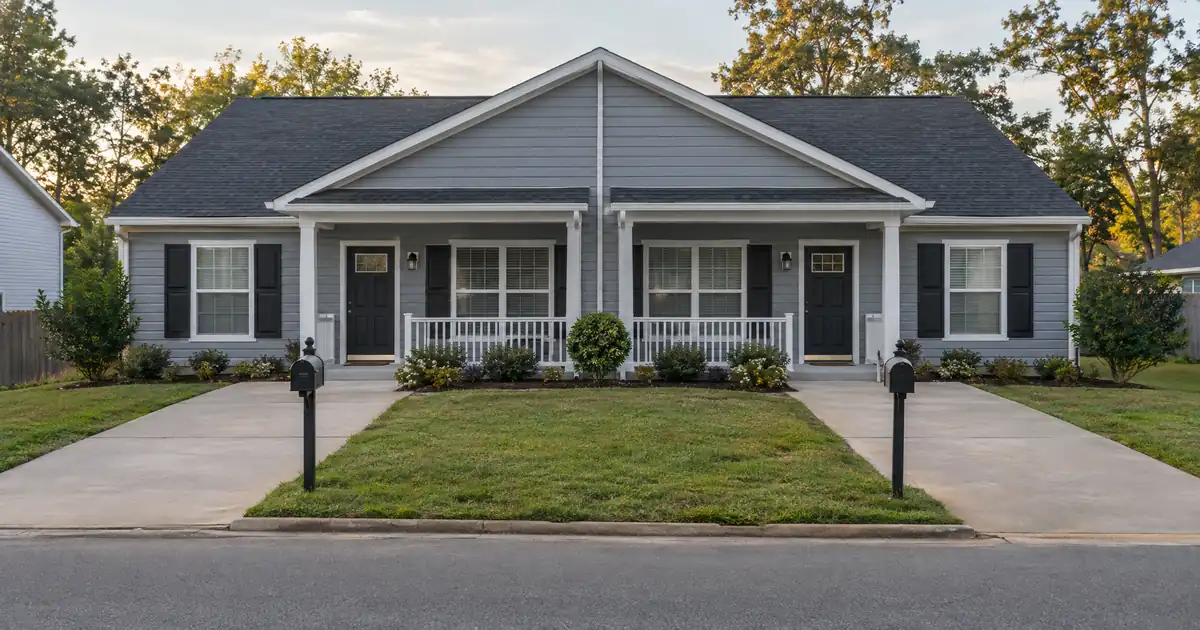
The Quick Read: A VA cash-out on a duplex, triplex, or fourplex can reach up to 100% of the appraised value, including the financed funding fee. The VA does not set a lower cap because the building has more units. What you actually receive is that ceiling minus your current payoff, minus the funding fee and closing costs paid out of proceeds. You must live in one of the units, and the appraisal sets the number.
What Does a VA Cash-Out Actually Release?
A VA cash-out releases the gap between the maximum new loan and everything that has to be paid off or paid out of proceeds. The maximum new loan is set by the appraised value. The federal rule at 38 CFR 36.4306 says a VA refinance loan cannot exceed 100 percent of the reasonable value of the home. “Reasonable value” is the VA appraisal.
Here is the plumbing, in order:
1. Appraised value sets the ceiling. 2. The new loan can go up to 100% of that value, including the financed funding fee. 3. The payoff of your existing liens comes off the top. 4. Closing costs and any funding fee you don’t finance come out of what’s left. 5. What remains is your cash.
That’s it. No special multi-unit formula.
On files across the wholesale programs Lendmire places VA loans with, the surprise is rarely the formula. It’s the appraised value on a multi-unit building coming in lower than the owner expected, because the appraiser is working from comparable sales of similar small buildings and there are fewer of them than there are single-family comps.
Key Terms Defined
Reasonable value: The value VA assigns to the home through its appraisal. The loan ceiling is measured against it.
Type I cash-out: A VA refinance where the new loan, including the funding fee, does not exceed the payoff of the loan being refinanced. Per a VA program notice 26-18-30, this puts no equity cash in your hands.
Type II cash-out: A VA refinance where the new loan exceeds the payoff. This is the version that releases cash.
Funding fee: A one-time VA charge that can be financed into the loan. It is waived for veterans receiving compensation for a service-connected disability and other exempt groups.
Net tangible benefit: A test showing the new loan improves your position in a defined way compared with the old one.
Residual income: What’s left of monthly income after the mortgage, taxes, debts, and living costs. It is the controlling test in VA underwriting.
Does a 2–4 Unit Change the Cash-Out Cap?
No. This is the sharpest difference from conventional lending. The regulation draws no line between a one-unit home and a four-unit building on the 100% ceiling, and no VA source sets a lower cap for 2–4 units. Many conventional programs pull cash-out leverage down as the unit count rises. VA does not.
The multi-unit effect shows up elsewhere: in the appraisal, in the occupancy requirement, and in how rent is treated in underwriting.
Some lenders place their own cap below 100%. That’s a lender policy, not a VA rule. Across the wholesale programs Lendmire works with, the VA cash-out reaches 100% of the appraised value including the financed fee, subject to lender guidelines and full file review. Ask what the specific lender’s ceiling is before you plan around the full amount.
Do You Have to Live There?
Yes. VA’s cash-out page says you must live in the home you’re refinancing. On a 2–4 unit, that means one unit is your home and the others are the rentals.
This is where files break. An owner who moved out two years ago and rents every unit cannot use the VA cash-out. A fully tenant-occupied building is not a candidate. The streamline (the VA streamline refinance) is looser on occupancy, but it pays no cash, so it doesn’t solve the same problem.
Occupancy is certified on the file. Plan for the lender to want it documented, not just stated.
Does the Rent Count?
Partly, and only under conditions. Rent from the other units is not automatic qualifying income. Under 38 CFR 36.4340, the VA’s rules on multi-unit rental income are reported to require a showing that you can manage as a landlord and that you have reserves to carry the payment for a stretch without the rent. They also reportedly count only a portion of the lease amount, often 75 percent. Read the regulation text before you rely on those specifics, since lenders apply them with their own overlays.
Two practical points:
- Rent helps you qualify. It does not raise the loan ceiling.
- Lenders can discount rent further than VA does. That’s lender policy.
Cash-out proceeds generally don’t count as the reserves a lender wants to see. Treat reserves as money you already hold, documented with statements.
What Reduces Your Check
Five things shrink the number between the ceiling and your bank account:
- Your payoff. The existing first lien and any other liens secured by the home come off first.
- The funding fee. For a cash-out refinance it is 2.15% on first use and 3.3% after, waived for exempt veterans. It can be financed, but only up to the 100% cap. Any part that would push the loan over the cap is paid in cash at closing.
- Closing costs. VA warns these can add up to thousands of dollars. Your Loan Estimate and Closing Disclosure show them line by line.
- Lender charges, if any. Any optional upfront lender charges can be added to the loan only within VA’s leverage conditions.
- Repairs. Every unit must meet VA minimum property requirements. A repair on one unit can hold up the appraisal result for the whole building.
Financing the fee raises your balance, and a larger balance means a larger monthly payment. The cash you take is borrowed against your home.
A Scenario in Percentages
Picture a veteran who owns a fourplex, lives in one unit, and rents three. The appraisal comes in. The lender sets the new loan at 100% of that value, with the funding fee financed inside it. Say the existing mortgage is paid off at about 70% of value. After the payoff, the gap is roughly 30% of value, and the funding fee and closing costs come out of it. A first-time cash-out user pays the 2.15% fee; a repeat user pays 3.3%. That difference alone moves the check by more than a point of value.
Now change one variable: the lender caps leverage at a lower percentage. The gap shrinks fast, because every point of cap comes straight out of your cash. This is why the lender’s ceiling matters as much as VA’s.
Seasoning, Net Tangible Benefit, and Type I vs. Type II
Three tests gate every VA cash-out:
1. Seasoning. If you’re refinancing a VA loan, the later of 210 days from the first payment and the 6th payment must have passed. VA Circular 26-19-05 sets this. A recent purchase can’t be cashed out right away.
2. Net tangible benefit. The new loan must meet at least one listed benefit, and the lender must give you a comparison against the old loan. One listed path is a new loan at 90 percent or less of reasonable value.
3. Type I or Type II. If the new loan doesn’t exceed the payoff, you get no cash. Only Type II puts equity in your hands.
A non-VA loan can be refinanced into a VA cash-out. The seasoning rule applies to VA-to-VA refinances.
Cash-Out vs. IRRRL
| Factor | VA Cash-Out | IRRRL |
|---|---|---|
| Pays equity cash | Yes | No |
| Loans eligible | Any loan type | Existing VA loan |
| VA appraisal | Yes | No |
| Funding fee | 2.15% first use, 3.3% after | 0.5% unless exempt |
| Occupancy | Must live in the home | Looser certification |
If you want cash, the IRRRL is the wrong tool. If you want a lower rate or a switch from adjustable to fixed on an existing VA loan, the streamline is usually less work.
What About Entitlement and Loan Size?
With full entitlement, there is no VA loan limit. The wholesale programs Lendmire places VA loans with serve amounts to $4,000,000 with full entitlement. With remaining entitlement, a down payment may be required, which on a refinance means equity. Speak with a loan officer about your specific entitlement position. On high-value multi-unit buildings, entitlement can bind before the leverage cap does.
Credit is a lender decision. VA sets no minimum score, and the wholesale programs start at a 580 decision score. Some lenders set a higher floor on multi-unit files. Underwriting centers on residual income. The 41% debt-to-income figure is a guideline, not a cap. A ratio above it needs residual income well above the table.
Is This the Right Move?
Run these questions before you apply:
- Do you live in the building today, and will you keep living there?
- Is your current loan seasoned?
- Has a VA appraisal-level value been estimated against your payoff?
- Is the lender’s leverage cap at 100% or lower?
- Does the cash have a defined use that justifies a bigger balance?
Tax treatment can depend on your situation; borrowers should speak with a qualified tax professional before relying on any deduction or credit.
Compare against keeping your current loan and borrowing nothing. A cash-out resets your balance and your funding fee exposure. Lendmire’s VA cash-out refinance program page lays out how the product fits together. For how the same question plays out on conventional financing, see Lendmire’s piece How Much a Cash-Out Refinance Releases on a 2-4 Unit Primary Home.
If you are weighing a cash-out refinance against keeping the loan you have, Lendmire can help you compare the programs and the equity each one reaches. Every figure here is subject to lender guidelines and full file review, and nothing is a commitment to lend.
Frequently Asked Questions
Can I do a VA cash-out on a fourplex?
Yes, if you live in one of the four units and meet VA and lender standards. VA lending covers residential property of up to four units. The 100% ceiling does not change with unit count, though a lender may set its own lower cap.
Is the cash-out cap lower for a duplex than a single-family home?
No. VA’s regulation draws no distinction between one unit and 2–4 units on the ceiling. The differences come from the appraisal, occupancy, and how rent is treated in underwriting.
Does rent from the other units count?
Partly. It is not automatic income. VA’s rules reportedly require landlord capability and reserves, and count a portion of the lease amount. Lenders can discount it further. Confirm the current text of 38 CFR 36.4340.
Can I use the proceeds for another property?
Proceeds beyond the payoff may generally be used for purposes acceptable to the lender. Cash-out funds typically don’t count as reserves for the next purchase, so document reserves separately.
Does a streamline refinance pay cash?
No. The IRRRL lowers the rate or converts an adjustable loan to fixed. It carries a 0.5% fee unless exempt and does not release equity.
For your own numbers, request a scenario review with Lendmire.
About Lendmire
As a mortgage broker (NMLS# 2371349), Lendmire helps homeowners and home buyers in 16 states with FHA, VA, conventional and jumbo purchase and refinance loans arranged through wholesale lenders. Lendmire is never the lender; program terms are set by the lender and the agency guidelines. Scotsman Guide named Lendmire a Top Mortgage Workplace in both 2025 and 2026.
Get Started
Ready to find the right loan for you?
In about 30 seconds you can review financing options available for your home or investment property. No commitment required.
Informational only. Not a Loan Estimate, approval, or commitment to lend. Program availability and eligibility are subject to lender guidelines, credit approval, property review, and underwriting.
References
3. VA cash-out refinance loan page
This article is part of Lendmire’s VA Loans series — every loan program’s qualification details, guidelines, and scenarios live on the loan options page.
Related reading: How Much a VA Cash-Out Releases for a Lock-in Homeowner · How Much a Funding Fee Costs on a VA Cash-Out With an Existing VA Loan · VA IRRRL vs VA Cash-Out for a 2-4 Unit Primary Home
Brandon Miller
Founder & CEO, Mortgage Loan Originator, Lendmire LLC
- Mortgage Loan Originator · NMLS# 1129696 · Verify on NMLS Consumer Access
- North Carolina Real Estate Broker · License# 343312 · Verify on NCREC
- North Carolina Insurance Producer · License# 19053198 · Property, Casualty, Life, Health · Verify on NAIC SBS
- Lendmire LLC · Firm NMLS# 2371349 · Verify firm licensure
Important disclosures. Lendmire (NMLS# 2371349) is a licensed mortgage brokerage. Lendmire is not a direct lender, depository institution, or financial advisor. All loan inquiries are subject to lender underwriting; this article does not constitute a commitment to lend. Rates, terms, and program guidelines are subject to change without notice and vary by borrower profile, property type, and state. Information in this article is general in nature and is not financial, legal, or tax advice. Equal Housing Opportunity. NMLS Consumer Access: nmlsconsumeraccess.org.