
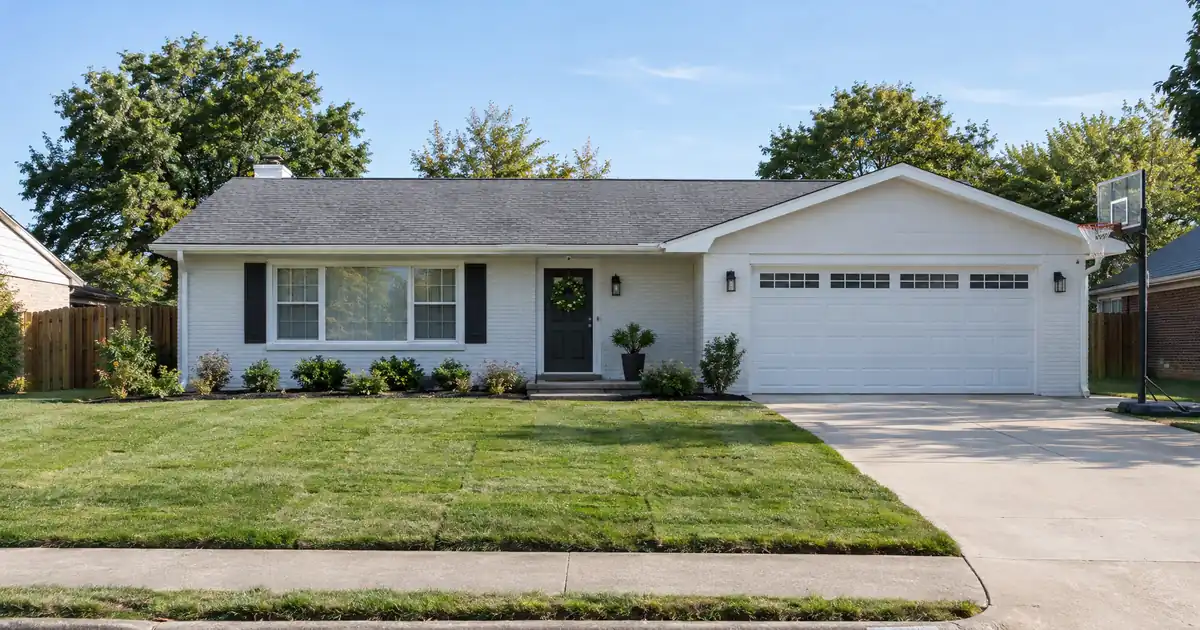
The Quick Read: A new mortgage on a home with no mortgage is always a cash-out refinance, because there is no old loan to replace. The agencies place no restrictions on what you do with the cash. The limits that do apply are about the loan, not the spending: how much of the home’s value you can borrow against, how long you have owned it, and whether your income supports a payment you do not have today.
Key Takeaways
- A paid-off home has no “rate-and-term” version. Any new first mortgage on it is classified as cash-out.
- Conventional cash-out tops out at 80% of the home’s value on a one-unit primary residence, subject to lender guidelines.
- Lenders generally do not police how you spend the money. They do check title, ownership history, occupancy, credit, income, and reserves.
- You go from no housing payment to a lifelong one. That is the real cost to weigh.
Why Does a Paid-Off Home Still Count as Cash-Out?
A refinance is “rate-and-term” when the new loan replaces an old one and only incidental cash comes back. With no old loan, nothing gets replaced. Every dollar of the new loan is money you are pulling out of equity. So the loan is cash-out by definition.
The agencies say this plainly. Fannie Mae’s Selling Guide states that a cash-out refinance can be a new mortgage on a property with no mortgage lien, meaning the borrower owns it free and clear.
This matters for a practical reason. Many owners of paid-off homes assume they qualify for the friendlier “rate-and-term” treatment, with its higher leverage and lighter pricing. They do not. Across the wholesale programs we place files with, a free-and-clear home goes into the cash-out lane every time. The cash-out limits then govern the file.
The only “no cash-out” labels are narrow, purpose-built products. Those are exceptions built around the use of funds. They do not describe an ordinary cash-out.
Are There Rules About How You Spend the Money?
Not in the way most people fear. You can pay off cards, fund a renovation, cover tuition, or build a reserve. The loan program does not ask for receipts afterward.
Two things sit close to that rule, and they get confused with it.
The lender’s underwriting is not a spending rule. A lender will ask why you are borrowing, and the answer shapes how they read the file. Paying off high-balance debt can improve your monthly obligations on paper. A large, vague withdrawal with no plan can draw more questions. Neither one is a restriction. It is just underwriting.
Occupancy is a rule. On a primary residence, the borrower has to live in the home. FHA requires owner-occupancy, and VA requires you to live there. If the home is a second home, the leverage limit drops. One sentence covers it: occupancy decides the leverage, and a conventional cash-out on a second home or rental tops out at 75% of value.
The Consumer Financial Protection Bureau describes a refinance with cash as something that can pay off the old mortgage and other consumer debt, such as a credit card. That is the law acknowledging the common use, not limiting it.
How the Loan Is Underwritten, Step by Step
Here is the sequence a cash-out on a paid-off home follows.
1. Classification. The file is set up as cash-out because no lien exists.
2. Title and ownership check. The lender confirms who is on title and for how long.
3. Occupancy check. The lender confirms you live in the home if it is your primary residence.
4. Value and maximum loan. The appraised value sets the ceiling on what you can borrow.
5. Credit, income, and ratios. The lender verifies your credit, your income, and your total monthly debts against your income.
6. Reserves. Some files need cash left over after closing, held in the bank.
7. Disclosures and closing. You receive a Loan Estimate, then a Closing Disclosure. Cash is paid out after closing.
Step 4 drives the number. If the home appraises at a given value, the maximum loan is that value times the leverage limit. For a conventional cash-out on a one-unit primary residence, Fannie Mae’s eligibility matrix caps leverage at 80%. For two- to four-unit primary residences it is 75%. Because the home is free and clear, the whole loan is cash, minus closing costs and any prepaid items collected at closing. Final terms depend on lender guidelines, property type, leverage, and the borrower’s complete credit picture.
On the credit side, the wholesale conventional programs we work with start at a 620 decision score. The automated underwriting finding governs most files, with a total debt-to-income ceiling of 50%. Manually underwritten loans run tighter, at 36% or 45%, with reserve and score factors from the eligibility matrix. Fannie Mae’s matrix also notes that reserves apply on automated cash-out files where debt-to-income runs above 45%.
One wholesale lane goes further. It reaches 89.99% leverage with no mortgage insurance, at a 680 score and a 50% ratio, on a thirty-year fixed loan on a primary residence with a conforming balance. It carries its own six months of seasoning. In Texas, a cash-out on the homestead is capped by the state constitution at the agency figure, and that wholesale lane is not written there. All of this is subject to lender guidelines and full file review.
How Long Must You Own the Home First?
Usually six months. If you are paying off an existing first mortgage, that loan must be at least 12 months old, counted note date to note date. A paid-off home has no such loan, so the six-month title clock is the one that matters.
That clock has exceptions, and this is where paid-off homes get interesting.
- Recent cash purchase. A delayed financing exception lets a cash buyer borrow against the home without waiting six months. The purchase has to be arm’s-length, and the lender documents it. The archived Fannie Mae guide language lays out the conditions. Treat it as a starting point and confirm the current version with your loan officer.
- Court-awarded property. A home awarded in a divorce or separation also carries no wait.
- Home held in an LLC or trust. Time in a borrower-controlled LLC, or a revocable trust where you are the primary beneficiary, can count toward the six months. The home has to be moved into your personal name to close.
FHA has its own version. Properties owned free and clear can be refinanced as cash-out, and the home must be owner-occupied. For an inherited home, FHA waives its occupancy wait only if the home was never treated as an investment property. If it was rented, the borrower needs a period of living in it first. Confirm the current handbook language with your loan officer before relying on it.
What a Cash-Out on a Paid-Off Home Looks Like in Practice
Picture a homeowner who has owned a one-unit primary residence outright for years. The home appraises at a figure the owner is happy with. The borrower applies for a conventional cash-out at the 80% limit.
Because there is nothing to pay off, the settlement statement is simple. The new loan is the gross amount. Closing costs and any prepaid items, such as the first escrow deposits for taxes and insurance, come out of it. What remains is the cash to you. Mortgage insurance does not enter the picture at 80% or below. Above 80%, it would apply, and it cancels when you reach 78% of the original value.
Now look at what changed. Before closing, the housing cost was taxes, insurance, and upkeep. After closing, there is also a principal-and-interest payment that runs for decades. The Loan Estimate shows this in black and white. Read the cash-to-you line and the monthly payment line together. Taking a modest amount of cash still creates a permanent payment where there was none.
This is why, in practice, the decision is rarely “how much can I take.” It is “how much do I need, and what does the payment do to my budget?” The maximum is a ceiling, not a target.
Where the General Rule Breaks
“No restrictions on use” holds up in most files. These are the places it bends.
Here the use is the structure of the loan.
PACE liens. A PACE loan is an energy-improvement assessment that sits on the property. Fannie Mae treats a cash-out as ineligible if you have enough equity to pay off a PACE loan but choose not to.
Temporary buydowns. Fannie Mae says a cash-out refinance with a temporary interest rate buydown is ineligible.
Back-to-back refinances. Fannie Mae will not treat a new refinance as a limited cash-out if you closed a cash-out on the same property 30 days or less before applying. This only affects a second refinance, not your first.
Student debt. Fannie Mae has a feature that waives its cash-out pricing adjustment when student loans are paid off through the refinance. Conditions apply, and they are in the guide.
Government streamlines. FHA Streamline and the VA IRRRL are not cash-out tools. The FHA Streamline allows only minor closing adjustments, with HUD‘s reference guide setting that limit at $500. The VA IRRRL exists only for a loan already guaranteed by VA, and it focuses on lowering the rate and payment. A VA cash-out refinance does exist. It requires a Certificate of Eligibility, meeting VA and lender credit and income standards, and living in the home. Whether a VA cash-out works on a home with no existing loan is a question for the specific lender, so ask early.
Smart Uses, Risky Uses
Because the loan will not tell you what to do, the judgment is yours. Here is how we see it across files.
| Use of cash | What it does | Main caution |
|---|---|---|
| Home repairs | Adds value or protects it | Keep the scope realistic |
| Paying off cards | Turns unsecured debt into home-secured debt | Balances can come back |
| Tuition or education | Funds a long-term goal | Compare with other financing |
| Emergency reserve | Builds a cushion | You pay interest on cash you hold |
| Large purchase | Meets a one-time need | The payment outlasts the item |
The Consumer Financial Protection Bureau’s research notes the key risk in the debt-payoff row. Converting non-mortgage debt into mortgage debt puts the home behind the payment. Defaulting on a credit card is unlikely to cost you the house. Defaulting on a mortgage can. The agency’s survey of cash-out borrowers found that paying off other bills or debts was a common reason, with home repairs or new construction second.
Tax treatment can depend on your situation; borrowers should speak with a qualified tax professional before relying on any deduction or credit.
Key Terms Defined
Cash-out refinance: A new mortgage that pays you cash from your home’s equity, beyond paying off any old loan.
Free and clear: Owning a home with no mortgage or other loan secured by it.
Limited cash-out (rate-and-term) refinance: A refinance that replaces an existing first mortgage and allows only a small amount of cash back.
Use of proceeds: What you do with the money a loan puts in your hands.
Seasoning: The waiting period a lender wants before you can refinance, such as time on title.
Loan-to-value (LTV): The loan amount divided by the home’s appraised value, shown as a percentage.
Delayed financing: An exception that lets a recent cash buyer take a cash-out loan without the usual six-month wait.
The Decision, Reduced to Four Questions
1. Do you need the cash, and how much? Borrow what the goal requires, not what the ceiling allows.
2. Does the new payment fit your budget with room to spare? Check this against your income, not against the maximum loan.
3. Does your ownership history clear the clock? If you bought recently, ask about delayed financing. If you inherited, ask about the waiver.
4. Is this the right tool? A cash-out replaces nothing and creates a new first mortgage. Other ways to tap equity, such as a home equity loan or line of credit, leave no first loan behind. They carry their own tradeoffs, and a loan officer can walk you through them.
The CFPB reported that borrower-paid loan costs rose sharply in its most recent market-wide data. Treat that as a reminder to read your Loan Estimate line by line, not as a forecast.
If you are weighing the loan alongside other choices, Lendmire’s cash-out refinance programs page lays out the options. For a closely related situation, Lendmire’s piece How to Use a Cash-Out Refinance on a Paid-Off Home to Repay a Note covers one common purpose in detail.
Frequently Asked Questions
Can I take a cash-out refinance if my home has no mortgage?
Yes. The loan is classified as cash-out. Expect a new appraisal, the 80% leverage ceiling on a one-unit primary residence for conventional loans, and a review of your credit, income, and reserves, all subject to lender guidelines.
Does the lender check what I spend the money on?
No, not after closing. Lenders may ask your purpose during the application, and renovation or energy products tie the money to improvements. An ordinary cash-out does not.
I just bought my house with cash. Do I have to wait?
Usually six months on title, but delayed financing is an exception for cash buyers. The purchase has to be arm’s-length and documented.
Can I use an FHA Streamline or VA IRRRL to pull out equity?
No. FHA Streamline allows only minor cash back, up to $500 per HUD’s reference guide, and the VA IRRRL is for an existing VA loan and focuses on lowering the rate and payment. If you want meaningful cash, the path is a cash-out refinance.
How much can I borrow?
It depends on the appraised value and your occupancy. Conventional cash-out is 80% of value on a one-unit primary residence and 75% on two- to four-unit primary residences, second homes, and investment property. Credit, income, and reserves can lower the practical number. Nothing here is a commitment to lend.
If you are weighing a cash-out refinance on a home you own outright, Lendmire can help you compare the programs and the equity each one reaches.
For your own numbers, request a scenario review with Lendmire.
For current guidelines and terms, see Lendmire’s refinance programs page.
About Lendmire
Lendmire (NMLS# 2371349) is a mortgage broker licensed for consumer lending in 16 states. Lendmire arranges FHA, VA, conventional and jumbo purchase and refinance loans through wholesale lenders; every file is underwritten by the lender under the applicable program guidelines. Scotsman Guide named Lendmire a Top Mortgage Workplace in both 2025 and 2026.
Get Started
Ready to find the right loan for you?
In about 30 seconds you can review financing options available for your home or investment property. No commitment required.
Informational only. Not a Loan Estimate, approval, or commitment to lend. Program availability and eligibility are subject to lender guidelines, credit approval, property review, and underwriting.
References
1. Fannie Mae Selling Guide B2-1.3-03, Cash-Out Refinance Transactions
2. CFPB Regulation Z, Section 1026.37
3. Fannie Mae Eligibility Matrix
4. Fannie Mae Selling Guide B2-1.3-03, archived version on delayed financing
5. HUD
6. CFPB Office of Research, Cash-Out Refinances and Paydown Behavior
This article is part of Lendmire’s Refinance series — every loan program’s qualification details, guidelines, and scenarios live on the loan options page.
Related reading: Does a Paid-Off Home Carry the Cash-Out Refinance Cap? · Texas Cash-Out Refinance Rules for a Paid-Off Home · How Much More a Cash-Out Refinance Costs on a Paid-Off Home
Brandon Miller
Founder & CEO, Mortgage Loan Originator, Lendmire LLC
- Mortgage Loan Originator · NMLS# 1129696 · Verify on NMLS Consumer Access
- North Carolina Real Estate Broker · License# 343312 · Verify on NCREC
- North Carolina Insurance Producer · License# 19053198 · Property, Casualty, Life, Health · Verify on NAIC SBS
- Lendmire LLC · Firm NMLS# 2371349 · Verify firm licensure
Required disclosures. Lendmire (NMLS# 2371349) operates as a licensed mortgage broker, not a direct lender or depository. The discussion in this article is general in nature and should not be relied upon as financial, legal, or tax advice — every investment scenario is unique and should be reviewed by a qualified professional. Any loan inquiry is subject to lender underwriting, and this article is not a commitment to lend or a guarantee of approval. Mortgage rates, loan terms, and program guidelines vary by borrower, property, and state, and may change without notice. Equal Housing Opportunity. Verify licensure at NMLS Consumer Access.