
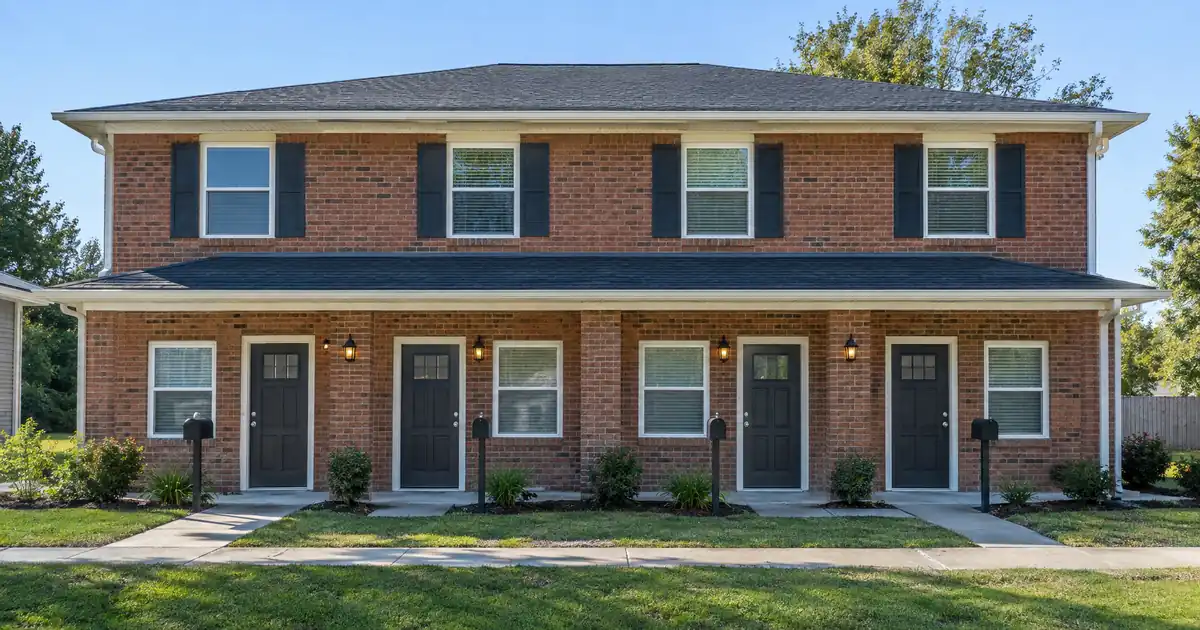
The Quick Read: The FHA cash-out is for the owner-occupant who wants unrestricted equity to spend as they choose. The 203(k) refinance is for the owner-occupant whose main goal is repairing or upgrading the building, with the money held back and released as the work gets done. Both apply to a primary home with up to four units. Which one fits depends mostly on what the money is for and how much of the building’s value comes from the repairs.
FHA cash-out estimate
Seeded with an example value, a balance to match, and a round cash request; change any field.
Editable benchmark: 7.40% as of October 15, 2026 · Freddie Mac 30-year average via FRED®. A conventional market reference, not an FHA cash-out refinance quote.
Illustrative starting assumptions: a $350,000 home value, a $193,000 current balance, the FHA cap on a principal residence with the upfront premium financed, a thirty-year term at the current Freddie Mac benchmark, and property taxes and insurance estimated at typical national rates. Every field is editable.
An illustration, not a Loan Estimate, an approval, a quote, or a commitment to lend. The rate shown is the weekly Freddie Mac thirty-year conventional benchmark, used as a market reference; an FHA cash-out is priced by the lender at lock, and this is not an FHA cash-out refinance quote. HUD’s cap limits the base loan; the upfront premium is financed on top of the capped base loan; the monthly premium for the first year follows the snapshot’s schedule. Cash available means the base loan the cap permits less the balances retired, before closing costs, which this calculator leaves out. The line figure applies the line program’s combined loan-to-value ceiling to the same value and balance. Taxes and insurance are estimates you can edit. Licensed in sixteen states for consumer mortgages.
Many owners of duplexes, triplexes and fourplexes mix these two loans up. They sound similar because both replace your current mortgage with a bigger one. The structure underneath is very different, and on a multi-unit home a few property-level rules can decide the outcome before your goals even matter.
Side-by-Side
| Factor | FHA Cash-Out | 203(k) Refinance |
|---|---|---|
| Purpose of funds | Any use you choose | Repairs and rehab only |
| How money is released | Cash to you at closing | Escrowed, released in draws |
| How value is measured | Current appraised value | Value after improvements |
| Leverage | Up to 80% LTV | Sized on after-improved value |
| Credit floor | 580 decision score on the network’s programs | Lender-set; varies by program |
| Mortgage insurance | Upfront 1.75% plus annual premium | FHA premiums apply |
| Occupancy | Owner-occupied, 1-4 units | Owner-occupied, 1-4 units |
| Ownership history | Owned and occupied 12 months | Home at least one year old |
| Extra file items | FHA appraisal, standard underwriting | Work scope, cost estimate, permits, consultant on larger jobs |
Every figure above is subject to lender guidelines and full file review, and none is a commitment to lend. Where a cell says “varies,” individual lenders layer on their own rules.
What Each Loan Actually Does
An FHA cash-out replaces your current mortgage with a larger one and hands you the difference. The CFPB describes it as taking a larger mortgage, paying off the current one and taking the rest in cash. It also notes that your payment may rise, your payoff may stretch out, and your loan terms reset. Across the wholesale programs Lendmire places FHA files with, the cash-out reaches 80% loan-to-value on a home you have owned and occupied for 12 months before the case number.
A 203(k) works differently. HUD’s 203(k) program insures a loan that covers buying or refinancing a home at least a year old plus the cost of rehabilitating it. On a refinance, part of the proceeds pays off your old mortgage. The rest sits in an escrow account until work is completed. HUD lists two- to four-family homes as eligible.
That one difference, cash in your hand versus cash in escrow, shapes nearly everything else.
Why 2-4 Units Change the Math
The unit count matters more than most borrowers expect.
Duplexes are usually the simplest. Both programs treat them like a larger single-family home, and the borrower lives in one unit.
Three- and four-unit homes face an added property-level test on FHA loans, often called the self-sufficiency test. In plain terms, the building’s expected net rent, as estimated by the appraiser, has to cover the mortgage payment on the property. The appraiser’s rent estimate feeds that test, so a conservative number can cap the loan on either program. HUD’s Handbook 4000.1 is the governing source for the exact standard, so ask your loan officer to walk you through how it applies to your building. HUD publishes the Handbook on its handbooks page.
Here’s the catch. Because both loans replace your mortgage with a bigger one, a larger cash-out or a bigger renovation budget raises the payment, and a three- or four-unit building that would pass with a modest refinance may not pass with an aggressive one. That’s an inference from how the test works, not a HUD statement, but it’s a practical risk to plan around.
Rental income from your other units is another area where the details matter. Whether and how it counts toward qualifying can differ by program, transaction type and the lender’s own overlays. Ask early rather than assuming it all counts.
When FHA Cash-Out Is the Better Fit
Cash-out is usually the stronger choice in these situations:
- You want flexibility. Proceeds aren’t limited to specific purposes. You might fund repairs, pay off higher-cost debt, cover a major expense, or some mix.
- The work is light or hard to scope. If you’re replacing a roof section, updating a unit between tenants, or doing a series of small jobs, building a formal work write-up and cost estimate may be more process than the project deserves.
- The work doesn’t fit rehab rules. Rehab loans restrict what funds may pay for and require the property to meet standards after the work. Projects outside those rules often fit better with unrestricted cash.
- You want to control the timing. Cash at closing means you choose contractors and schedule without draw inspections.
- You have enough equity at the 80% cap. If the home’s current value already supports the amount you need, there’s no reason to pay for a more complicated structure.
The tradeoffs are real, though. You borrow against today’s value, not the improved value, so the equity you can reach is capped by what the building is worth now. Mortgage insurance applies, including the upfront premium of 1.75% of the base loan, which is financed. And converting other debt into a mortgage secured by your home carries risk. CFPB research found that doing so can put the home at risk of foreclosure if payments become unsustainable.
One more point on discipline. When cash lands in your account, nothing forces it into the building. Owners who intend to renovate should be honest about whether they’ll actually spend it that way.
When the 203(k) Refinance Is the Better Fit
A 203(k) tends to win in these cases:
- The repairs are substantial. If the building needs real work and the improved value is much higher than today’s value, sizing the loan on after-improved value can reach money a cash-out never would. HUD’s 203k calculator shows the refinance case using both an as-is value and an after-improved value.
- You want one loan for payoff and work. Rolling the repair budget into the mortgage avoids a second loan or a separate line of credit.
- You want controlled spending. Escrowed funds released as work is completed protect you from paying for work that hasn’t happened. They also protect the lender, which is why the process has more steps.
- The scope is structural or involves several units. Larger projects generally call for the Standard version with an FHA-approved consultant. Lighter, non-structural work can use the Limited version, where the consultant is optional.
HUD’s program types page describes the Limited version as covering up to $75,000 of repairs and the Standard version as requiring at least $5,000 of rehabilitation, with the property value still within the FHA limit for the area. Permits must be pulled before work starts. Those are HUD program rules, and county loan limits apply to the total.
The drawbacks are mostly about friction. There’s more paperwork, a consultant on bigger jobs, permit-driven schedules and contingency reserves. Cost overruns and contractor delays can stall a project mid-stream. Cash back to the borrower generally isn’t part of the structure, since the funds go to payoff and repairs. And if your plan is to convert a one-family structure into a multi-unit or otherwise reconfigure units, the Limited version typically won’t cover it.
A practical note from the broker’s chair: on multi-unit files, the appraisal is where plans most often get adjusted. The “subject to completion” appraisal drives the 203(k) loan size, and the rent estimate drives the self-sufficiency test on three- and four-unit homes. Owners who get a realistic work scope and a sober view of rents before applying avoid most mid-file surprises.
Living in the Building During Work
If you occupy one unit and tenants live in the others, construction affects everyone. A cash-out leaves scheduling entirely to you. A 203(k) layers in a work plan, inspections and draws, though the structure can include provisions for units that can’t be occupied during the work. The specifics vary by lender, so raise tenant impact at the start. Also, HUD describes both programs as for your principal residence. Investor-owned buildings don’t qualify, and you need to keep living there.
Key Terms Defined
Cash-out refinance: A new, larger mortgage that pays off your current loan and gives you the difference in cash.
203(k) refinance: An FHA-insured loan that pays off your mortgage and funds repairs held in escrow.
After-improved value: The appraised value of the home once the planned repairs are finished.
Self-sufficiency test: An FHA check on three- and four-unit homes that compares the building’s net rent to its payment.
Draw: A release of escrowed repair funds as portions of the work are completed.
LTV (loan-to-value): The loan balance as a percentage of the home’s appraised value.
Common Mistakes
- Treating the 203(k) as a purchase-only tool. HUD says it covers homeowners refinancing and combining renovation costs into a single loan.
- Assuming rent from the other units always counts. It depends on program, transaction and lender.
- Using outdated repair caps. Older pages show a lower Limited cap. Check HUD’s current program page.
- Expecting cash back from a 203(k). Plan the budget around repairs, not spending money.
- Ignoring the payment effect. Both options enlarge your loan. Run your budget before choosing.
Tax treatment can depend on your situation; borrowers should speak with a qualified tax professional before relying on any deduction or credit.
A Balanced Verdict
Neither loan is better in the abstract. For the owner whose goal is flexibility, or whose work is modest, cash-out usually fits with less friction. For the owner whose building needs significant work and who wants the loan sized on what it will be worth afterward, the 203(k) can reach further and keeps spending tied to the work.
The flip points are fairly clear. If the planned work doesn’t fit rehab rules, lean cash-out. If cash-out equity at the 80% cap falls short of the project budget, the 203(k) deserves a serious look. If you own a three- or four-unit building, test the self-sufficiency math first, because it can constrain either path. And if you only need modest repairs and don’t want to refinance at all, HUD points to the Title I Property Improvement Loan Program as an alternative worth asking about.
If you are weighing a cash-out refinance against keeping the loan you have, Lendmire can help you compare the programs and the equity each one reaches. The FHA cash-out refinance program page lays out the basics. Lendmire’s piece FHA vs Conventional Cash-Out When You Live in a 2-4 Unit Primary Home covers the other major decision.
Frequently Asked Questions
Can I take cash out of a 203(k) refinance?
Generally no. In HUD’s framework, 203(k) proceeds go to paying off your existing mortgage and funding the repairs, with repair money held in escrow and released as work is completed. If you want money to spend freely, the cash-out is the structure built for that. Lender guidelines can vary, so confirm on your specific file.
Can I do a 203(k) on a duplex, triplex or fourplex I live in?
Yes, HUD lists two- to four-family homes as eligible, as long as you occupy the property as your principal residence. The building has to be at least a year old. Three- and four-unit homes also face the added self-sufficiency test, so the rent estimate matters.
Which is better for a big renovation?
Often the 203(k), because the loan is sized on after-improved value rather than today’s value. That can reach more money than a cash-out limited to 80% of current value. The tradeoff is more process: a work scope, permits, a consultant on larger jobs and draw-based funding.
Does the 2-4 unit property type change the cash-out rules?
Mainly through occupancy and the self-sufficiency test on three- and four-unit homes. You must live in the property, own it and occupy it for 12 months before the case number, and the appraiser’s rent estimate can limit the loan. Duplexes generally avoid that extra test.
Can I use both loans, one after the other?
Technically possible, but it usually means paying closing costs and mortgage insurance twice. Most owners are better off picking the structure that matches the main goal. If a 203(k) project is underway, you generally can’t refinance until the work is completed and the case is closed out.
For your own numbers, request a scenario review with Lendmire.
About Lendmire
Lendmire, NMLS# 2371349, is a mortgage brokerage with consumer lending licenses in 16 states. FHA, VA, conventional and jumbo purchase and refinance loans are arranged through wholesale lending partners, and each application is reviewed individually by the lender. Scotsman Guide named Lendmire a Top Mortgage Workplace in both 2025 and 2026.
For current guidelines, see FHA loan programs.
Get Started
Ready to find the right loan for you?
In about 30 seconds you can review financing options available for your home or investment property. No commitment required.
Informational only. Not a Loan Estimate, approval, or commitment to lend. Program availability and eligibility are subject to lender guidelines, credit approval, property review, and underwriting.
References
1. CFPB: Using home equity to meet financial needs
2. HUD 203(k) Rehabilitation Mortgage Insurance Program
4. CFPB: Cash-out refinances and paydown behavior of non-mortgage debt balances
This article is part of Lendmire’s FHA Loan series — every loan program’s qualification details, guidelines, and scenarios live on the loan options page.
Related reading: Can a 2-4 Unit Primary Home With a High DTI Get an FHA Cash-Out? · FHA Cash-Out MIP Duration on a 2-4 Unit Primary Home · How to Qualify for an FHA Cash-Out on a 2-4 Unit Primary Home
Brandon Miller
Founder & CEO, Mortgage Loan Originator, Lendmire LLC
- Mortgage Loan Originator · NMLS# 1129696 · Verify on NMLS Consumer Access
- North Carolina Real Estate Broker · License# 343312 · Verify on NCREC
- North Carolina Insurance Producer · License# 19053198 · Property, Casualty, Life, Health · Verify on NAIC SBS
- Lendmire LLC · Firm NMLS# 2371349 · Verify firm licensure
Compliance and disclosures. Lendmire (NMLS# 2371349) is a licensed mortgage broker and is not a direct lender, depository institution, financial advisor, or tax professional. Content in this article is general market analysis and educational information — not financial, legal, or tax advice for any specific situation. Lendmire does not guarantee loan approval; every transaction is subject to underwriting by the funding lender. Mortgage pricing and loan program guidelines are subject to change at any time without notice and vary by borrower characteristics, property type, and state regulations. Lendmire complies with Equal Housing Opportunity. Licensure verification: NMLS Consumer Access.